Choosing an inner hole cutting machine comes down to one number: the smallest internal feature you actually have to cut. There are really only two types of inner hole cutting machine to pick between — and that single dimension decides which one you need. Everything else — wire speed, surface finish, even brand — is secondary. If your tightest internal hole or slot is below about 1.8 mm, a large share of the machines on the market are out before you read a single spec line, because they physically cannot get a wire through that feature. This is the decision rule we use in our own shop, in the order we use it.
The reason inner holes are special: you can’t drop the wire over the outside of the part the way you would for a profile cut. The wire has to get inside — threaded through a pre-drilled starter hole, then cutting outward from there. Whether a machine can do that, and how small a hole it can reach, comes entirely down to the wire form and the wire diameter.
What an inner hole cutting machine actually has to do
Two things have to be true before a wire can cut an internal feature.
First, the wire needs a way in. Either it has two free ends you can feed through the hole, or it’s a loop you can open and rejoin around the part. A continuous closed wire with no ends and no joint can never get inside a hole — it can only go around the outside.
Second, the wire has to be thinner than the feature. This is the part people forget. The limiting factor in any inner hole cutting machine is almost never its motion system — it’s the diameter of the thinnest wire that machine can run reliably. You cannot cut a 1 mm internal slot with a 1.8 mm wire, no matter how good the rest of the machine is. The wire plus its kerf has to fit through the starter hole and inside the finished feature.
So the whole problem reduces to a single question per machine type: what’s the finest wire it can use, and can that wire be threaded?
Three ways to thread a wire through a hole — and their diameter floors
There are three single-wire approaches, and they sort cleanly by how fine a wire they support.
| Wire type | Can cut an inner hole? | Finest wire | Best for |
|---|---|---|---|
| Non-splice-able endless loop | No — no ends to thread | 0.25 mm | Outer contour only |
| Splice-able endless loop | Yes — thread, then rejoin | ~1.8 mm | Larger inner holes |
| Reciprocating single wire | Yes — two free ends | 0.25–0.5 mm | Small, precise inner holes |
Non-splice-able endless loop. Manufactured as one continuous closed ring with no joint anywhere — the electroplated diamond wire loop is the usual form. Because there’s no joint to engineer around, it can be made very fine — down to about 0.25 mm. But a ring with no ends can’t be threaded through anything. It drops over the outside of a part only, so it cuts outer contours and slices, never inner holes. Great wire, wrong job here.
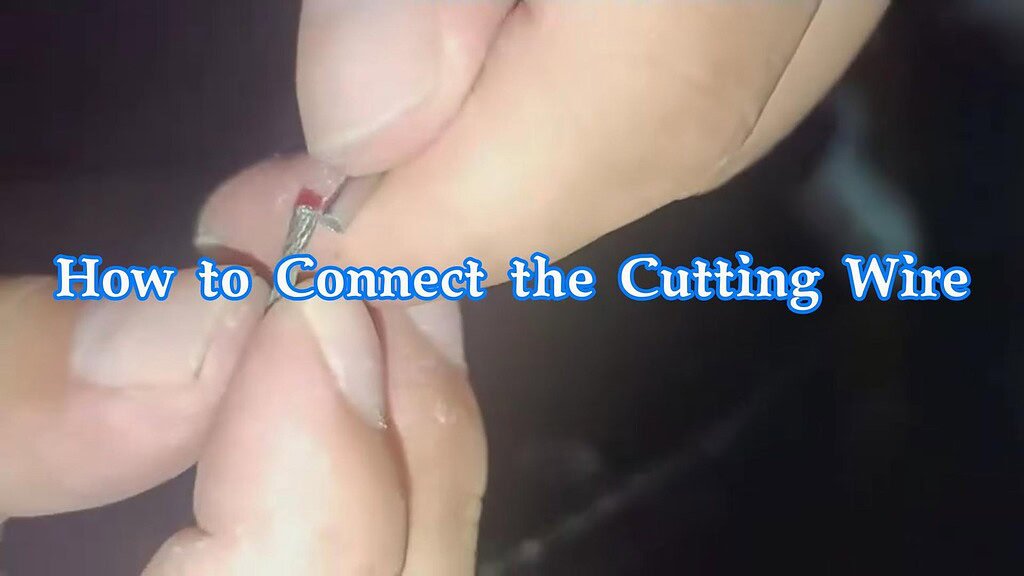
Splice-able endless loop. This one can be opened, threaded through the hole, and rejoined into a loop to cut from the inside connectable diamond wire built for exactly this. The catch is the joint. A reliable splice needs enough cross-section to hold tension, and below roughly 1.8 mm the joint becomes the weak point instead of the wire body — so the finest splice-able loop is about 1.8 mm. That’s fine for a generous inner hole, useless for a small precise one. If you’ve never spliced a loop, fair warning: the joint is where loops fail early, not the wire body, and a sloppy splice will let go mid-cut and usually take the part with it. The methods matter — see loop joint methods.
Here’s a spliced loop threading through a pre-drilled hole and cutting the inner profile on one of our machines: loop wire inner-hole cutting .
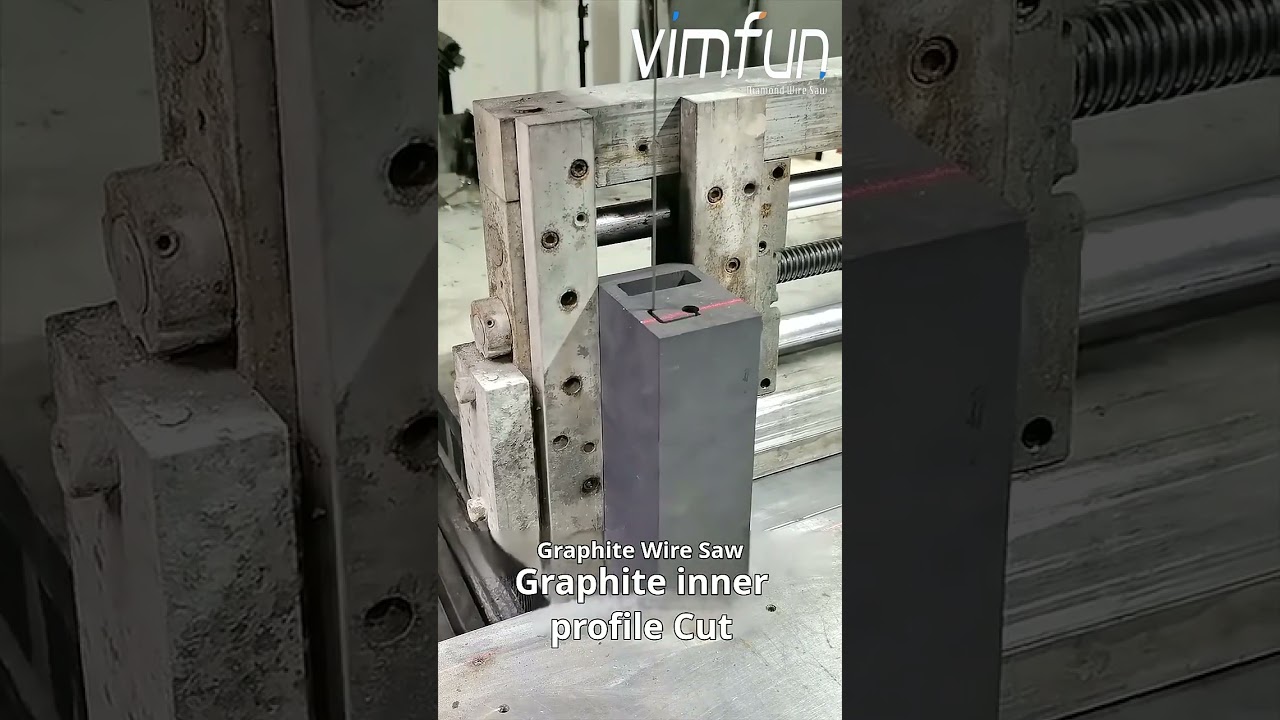
Reciprocating single wire. A finite coil (typically 200–300 m) with two free ends, wound onto a spool and run back and forth across the cut. Those two ends thread through a small hole easily, and you can use a thin wire — 0.25 to 0.5 mm — so this is the approach when the internal feature is small or the contour is tight and precise.
Same internal cut, Here is a reciprocating wire inner-hole cutting video.

There’s a physical reason the floors land where they do, and it isn’t marketing: fine welded loops below ~0.3 mm are genuinely hard to manufacture, while a threaded thin wire can go much finer. The underlying material-removal mechanism is the same fixed-abrasive process in every case (a good technical overview is this review of diamond wire sawing for hard and brittle materials — what changes is how small a tool you can deliver to the cut.
When you don’t need an inner hole, the endless loop wins
Here’s the flip side, because most parts don’t have internal features — and for those, the ranking reverses hard.
If the job is slicing or an outer profile only, an endless diamond wire loop beats a reciprocating wire on three counts:
Speed. A loop runs unidirectionally at 80–85 m/s. A reciprocating wire has to decelerate, stop, and reverse on every pass, so it tops out around 20 m/s. That 4x linear-speed gap means more fresh abrasive through the kerf per second. (Wire speed isn’t cutting speed — feed rate and material do most of that, see wire speed, tension, and feed rate — but it sets the ceiling.)
Surface finish. A unidirectional loop leaves a consistent single-direction face. A reciprocating wire reverses, and each reversal leaves a faint band where the wire slowed and changed direction. On optical and precision parts that banding shows up under inspection. If you’re holding surface texture to an ISO 21920-2 spec, the loop’s steady motion is a measurable advantage — it’s why we steer most optical glass cutting onto loop machines like the SG20, and there’s more on dialing it in under surface quality optimization.
Setup. Slip the loop over two wheels, tension it, go. No spool to wind. One thing that trips up new operators every time: if you don’t wind 200–300 m onto a reciprocating spool evenly, you get uneven pay-off tension and a wavy first cut — a hastily wound spool can add 30+ minutes and still need a few passes to settle. The loop sidesteps that entirely.
And the wire-diameter penalty everyone worries about? For outer work there barely is one — a non-splice-able loop reaches 0.25 mm, the same range you’d run a reciprocating wire at for precision. For the full structural side-by-side, we cover it in reciprocating vs circular diamond wire saw.
How to choose: a 3-step decision rule
Skip the spec-sheet comparison and answer three questions in order.
- Measure your smallest internal feature. Find the tightest inner hole, slot, or radius across all your parts and write down the dimension. No internal features at all? Stop here — buy a loop machine, it’ll cut faster and cleaner.
- Compare that number to the wire floors. Feature comfortably above ~1.8 mm (plus kerf)? A splice-able loop can do it. Below 1.8 mm, or precision-critical? You need a threaded thin wire — reciprocating single wire or a contour machine.
- Weight it by volume. If inner-hole parts are a rare exception, buy the loop machine for your bread-and-butter work and outsource or keep a small contour setup for the exceptions. If inner holes are recurring and tight, lead with the reciprocating/contour machine and treat the loop as secondary.
That’s the whole job of choosing an inner hole cutting machine in practice: the smallest feature picks the wire, the wire picks the machine, and volume decides whether you need one machine or two.
Limitations and trade-offs
A few boundaries so nothing surprises you on commissioning day.
The 1.8 mm splice floor is hard — it’s a joint-reliability limit, not a number we can negotiate. Don’t expect a 1 mm internal slot from any loop, splice-able or not.
Reciprocating setup rewards operator skill; uneven spool winding is the most common cause of a poor first cut on those machines, and it’s a training issue more than a machine fault.
This isn’t the multi-wire conversation. Every option here cuts one piece at a time. High-volume slicing of identical wafers (50–100 per pass) is a different machine category with different trade-offs.
And smaller wire always means finer features but shorter wire life — that trade applies to loops and reciprocating wire alike.
Practical next steps
Pull the drawing for your hardest part and dimension the tightest internal feature. That single number — smallest inner radius or hole — usually picks the machine in about five minutes. If it’s below 1.8 mm, you’re looking at a threaded thin-wire setup; if there’s no internal feature at all, a loop will serve you better and faster.
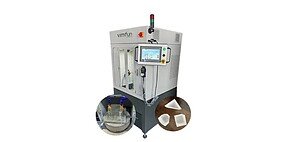
If you want a second opinion, send us that drawing with the internal feature called out, and see the precision contour option here: SGI20 contour cutting machine.