
Vimfun Diamond Wire Saw
Diamond
Wire Loops
Endless Cutting Technology for High-Precision Cutting Applications
What Are Diamond Wire Loops?
Diamond wire loops are closed-loop abrasive cutting wires engineered for continuous one-direction motion. Unlike spool-type diamond wire, loop wires do not reverse direction. This structure eliminates speed fluctuation and minimizes vibration, resulting in highly stable cutting.
Diamond wire loops are widely used for precision slicing of hard and brittle materials, especially in semiconductor, optics, ceramics, and advanced material R&D.
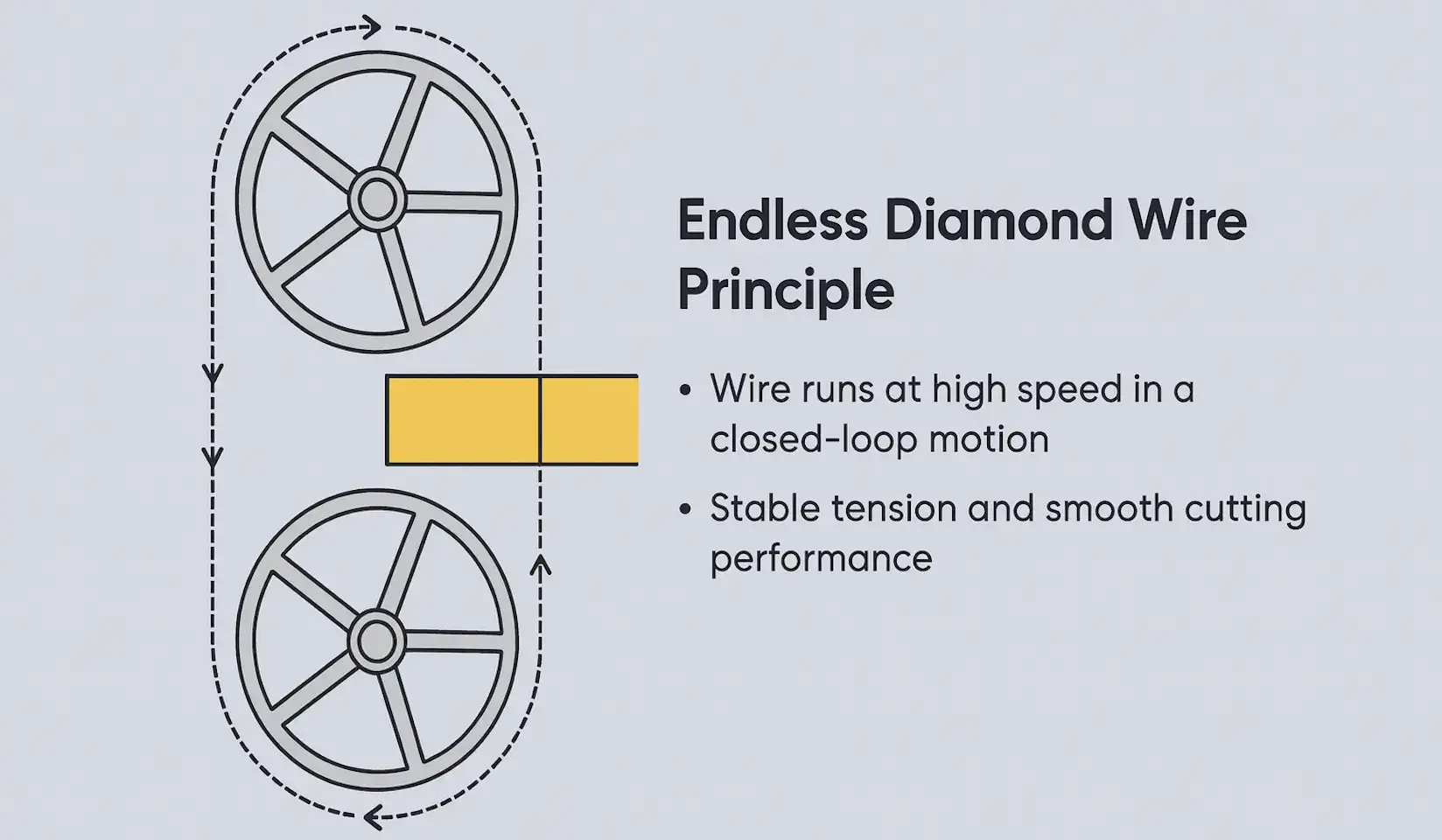
Endless Diamond Wire
Principle
- Wire runs at high speed in a closed-loop motion
- Stable tension and smooth cutting performance
Diagram showing closed-loop diamond wire loop running on drive wheel + guide wheel + tension wheel
Cutting Principle of Diamond Wire Loops
Diamond wire loops operate on a mechanically simple yet highly efficient closed-loop structure. Unlike spool-based wire systems, which require forward–reverse motion, a diamond wire loop is tensioned between 2–5 synchronized guide wheels. These wheels support and drive the loop in a constant unidirectional rotation, forming a stable cutting loop.
The wheels—typically including a drive wheel, tension wheel, and optional auxiliary guide wheels—pull the loop into motion. Once engaged, the diamond wire loop runs continuously in a single direction, eliminating reversal impact and speed fluctuation.
High Line Speed (20–80 m/s)
Depending on machine model and wheel diameter, the loop maintains a cutting line speed between 20 m/s and 80 m/s, far higher than most reciprocating spool-wire systems. This high linear velocity, combined with the abrasive action of the diamond-coated surface, determines the primary material removal rate.
Abrasive Removal Under Stable Tension
The cutting mechanism remains purely mechanical abrasive grinding. The diamond particles on the wire surface remove material through micro-cutting, assisted by:
- Uniform tension (150–250 N) from the tension wheel
- Consistent wire trajectory maintained by the loop's fixed circumference
- No directional shock, since motion never reverses
- Lower vibration amplitude, reducing chipping on brittle materials
Because the loop is short (typically 1–10 meters total circumference), tension stability is significantly better than long spool systems.
Benefits of the Endless Loop Structure
due to higher line velocity
without reversal marks
because the contact zone is small and coolant removes heat efficiently
improving precision for high-value materials
This simple yet powerful loop-driven mechanism is why endless diamond wire loop systems have become the preferred choice for precision cutting of sapphire, ceramics, silicon, and advanced engineering materials.
Structure & Materials of Diamond Wire Loops
Diamond wire loops are engineered as closed-loop abrasive tools composed of three fundamental elements: core wire (mother wire), electroplated coating, and diamond abrasive grains. Each layer has a dedicated structural role, and their combined performance determines cutting speed, lifespan, and material compatibility.
Core Wire (Mother Wire)
The core wire provides the loop's tensile strength and structural stability. Material options include:
- High-carbon steel wire — most common, good strength–cost balance
- Tungsten wire / tungsten alloy wire — higher stiffness and heat resistance, used for advanced applications (sapphire, ceramics)
- Carbon-steel micro-filament — used in small-diameter economical loops
Most diamond loops use a 7-strand braided construction (1+6 structure) for higher tensile strength, better flexibility over pulleys, and reduced risk of strand fatigue during high-speed rotation.
A critical engineering point is that the loop is woven and closed before electroplating, not welded afterward. This ensures a seamless circumference, eliminates weak points or thermal distortion from welding, and provides uniform coating thickness around 360° of the loop.
Electroplated Coating
The coating forms the bond matrix holding diamond grains on the loop surface. Diamond loops use single-layer electroplating, commonly referred to as bare-grit plating, which provides:
- Sharp cutting edges
- High initial cutting speed
- Low kerf loss
- Minimal thermal load due to low contact pressure
Since the plating is applied after the loop is formed, circularity of the loop becomes essential for vibration suppression, balanced motion at 20–80 m/s, and precision cutting surfaces.
Diamond Abrasive Grains
The wire's cutting performance depends directly on the morphology and distribution of the diamond grains. Common shapes include:
- Plate-shaped diamonds — sharp, suitable for high-speed brittle material cutting
- Spherical diamonds — smoother cutting, longer life
- Irregular crushed diamonds — aggressive cutting, used for hard ceramics and composites
Diamond shape and size directly influence surface roughness, chip size, and cutting forces.
Core Wire (Mother Wire)
The core wire provides the loop's tensile strength and structural stability. Typical characteristics include:
- Material Options
- High-carbon steel wire — most common, good strength–cost balance
- Tungsten wire / tungsten alloy wire — higher stiffness and heat resistance, used for advanced applications (sapphire, ceramics)
- Carbon-steel micro-filament — used in small-diameter economical loops
- Stranded Structure
Most diamond loops use a 7-strand braided construction (1+6 structure). Benefits:
- Higher tensile strength
- Better flexibility over pulleys
- Reduced risk of strand fatigue during high-speed rotation
- Closed Loop Forming Before Plating
A critical engineering point is that the loop is woven and closed before electroplating, not welded afterward. This ensures:
- Seamless circumference
- No weak points or thermal distortion from welding
- Uniform coating thickness around 360° of the loop
The pre-looped construction is one of the key technical challenges and differentiators of high-quality endless diamond wire manufacturing.
Diamond Abrasive Grains
The wire's cutting performance depends directly on the morphology and distribution of the diamond grains.
Diamond Shapes
Plate-shaped Diamonds
Sharp cutting edges suitable for high-speed brittle material cutting. This shape provides aggressive cutting action and excellent precision for delicate materials.
Spherical Diamonds
Smoother cutting action with extended lifespan. The rounded morphology reduces chipping and provides more uniform wear, ideal for applications requiring surface quality.
Irregular Crushed Diamonds
Aggressive cutting performance used for hard ceramics and composites. The jagged edges provide maximum cutting force for toughest materials.
Diamond shape and size directly influence:
- Surface roughness of cutting results
- Chip size and removal efficiency
- Cutting forces and power requirements
Loop Joint and Circumference Control
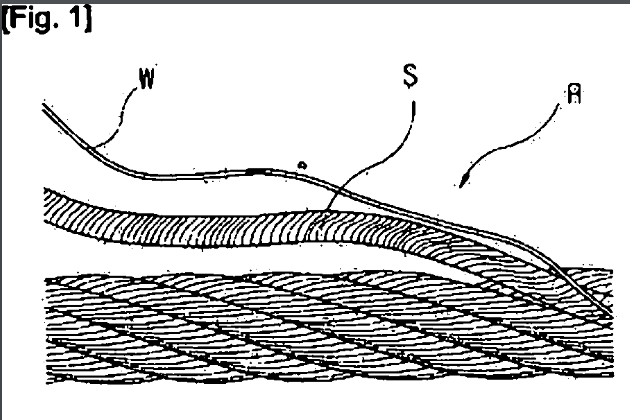
Since the loop is braided closed before plating, the “joint” is formed by interweaving strands rather than thermal welding.
Key engineering difficulties include:
Maintaining circular consistency
Preventing strand slippage
Ensuring smooth transition at the braided closure
Keeping plating thickness consistent across the joint region
High-end loop manufacturers must control the loop’s roundness tolerance, tension uniformity, and circumference deviation to ensure vibration-free operation at high speed.
Performance Characteristics of Diamond Wire Loops
Diamond wire loops provide superior cutting performance due to their structural and kinematic advantages:
High linear speed: up to 80 m/s
Stable running tension: 150–250 N
50–200% longer lifetime compared with reciprocating spool wire
Ultra-smooth surface finish without directional marks
Minimal kerf width: as small as 0.35 mm
Low material stress and minimal subsurface damage
Because the loop is continuous, it maintains constant abrasive engagement, reducing fatigue cycles and extending service life.
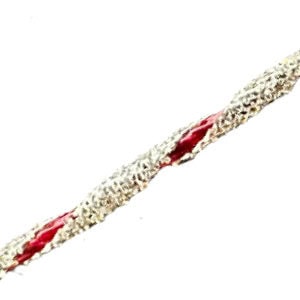
Thread Coated Cutting Wire Saw
- Wire Diameter (mm): 0.55-1.0 mm
- Wire Length (m): 1-10
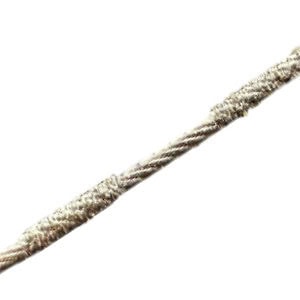
Segment Coated Cutting Wire Saw
- Wire Diameter (mm): 0.65-3.5 mm
- Wire Length (m): 1-10
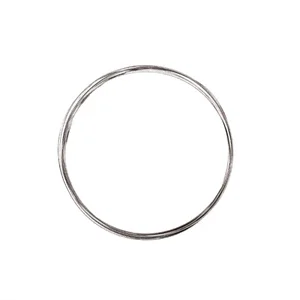
THIN WIRE SAW
- Wire Diameter (mm): 0.65
- Wire Length (mm): 700 – 10000
Vimfun Diamond Wire Saw
Application Areas of Diamond Wire Loops
Diamond wire loops are optimized for high-precision, high-value material cutting, including:
Semiconductor materials
*GaAs, GaN, InP wafers
Optical crystals
*Quartz
*Lithium niobate / lithium tantalate
Engineering ceramics
*Zirconia (ZrO₂)
*SiC, Si₃N₄
FAQ of Diamond Wire Loops
Diamond wire loops are available in a wide range of diameters, typically 0.30 mm to 2.50 mm.
Thin loops (0.3–0.5 mm) are used for precision slicing of brittle crystals, while thicker loops (>1.0 mm) are used for heavy-duty or abrasive materials.
Loop length is fully customized based on machine size and wheel layout.
For most laboratory and industrial endless-wire systems, the loop circumference is below 10 meters, commonly 4–8 meters.
Diamond wire
- Very long wire mounted on supply & take-up spools
- Requires back-and-forth reciprocating motion
- Commonly used on multi-wire saws (50–200 wires in parallel)
Diamond wire loops
- A closed-loop, endless wire with no start/end
- Runs in one continuous direction without reversal
- Provides higher line speed, smoother cutting, and lower vibration
- Typically 2–5 wires on multi-wire loop systems
Diamond wire loops are preferred for high precision, low chipping, and fast cutting.
No.
Diamond wire loops come in multiple grit sizes, plating structures, and diamond shapes, each optimized for different materials.
Related Diamond Wire Loop Resources
Explore supporting guides for diamond wire loops, including loop structure, joint methods, tension distribution, manufacturing, fatigue testing, alignment, and performance comparison.
Related Diamond Wire Resources
To understand the cutting medium behind loop systems, see our diamond wire guide. For complete machine options that use endless loop technology, review our diamond wire saws product range.