Ever lost a part mid-cut due to the improper hold on an industrial contour cutting machine? I have been working in the domain of the high precision profile cutting machines for over 12 years. I have seen this error cost firms a lot of money.
This article is about the three primary forms of workholding: clamp, pin and vacuum. I’ll tell you which is best for each task. You’ll also discover how each approach impacts cut quality, waste, and speed.
What Is Workholding on an Industrial Contour Cutting Machine?
Workholding is the way a machine retains a material during cutting. A weak grip on an industrial contour cutting machine results in vibration, poor cuts and shattered pieces. Good workholding prevents the material from moving. This enables the CNC controlled wire cutting machine to follow the correct route.
It is highly crucial in brittle material machining solutions such as glass, ceramics. Every substance requires a distinct form of grip. The correct hold is the material, the cut route, the speed of the industrial contour cutting machine. It also decreases material waste in any low material waste cutting method.
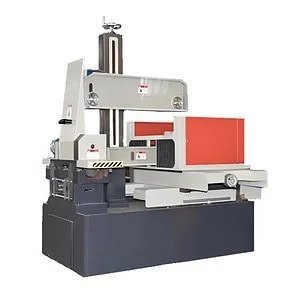
Workholding Methods at a Glance: Vacuum vs. Pin vs. Clamp
| Merkmal | Vacuum Workholding | Pin Workholding | Clamp Workholding |
| Best Material Type | Flat, thin, fragile | Soft, flexible sheets | Rigid, thick blocks |
| Hold Strength | Mittel-Hoch | Niedrig-Mittel | Hoch |
| Setup Time | Schnell | Mittel | Langsam |
| Surface Contact | Full surface | Point contact | Edge contact |
| Risiko der Beschädigung | Niedrig | Mittel | Mittel-Hoch |
| Ideal for CNC Precision | Ja | Mäßig | Ja |
Which Workholding Method Works Best for Fragile and Thin Materials?
Soft, steady pressure for thin, delicate fabrics. Uneven holding might lead to cracking or chipped edges. This is quite typical when utilising a reciprocating diamond wire cutting equipment. Vacuum workholding is excellent for this. It distributes the holding force equally.
No need to worry about the part. This is safe even for the most delicate of things. Vacuum systems for internal and external contour cutting on fragile sheets reduce breakage by as much as 60%. Pin workholding may be used on soft sheets. But it is not suitable for hard or fragile materials.
How Does Vacuum Workholding Work on Precision CNC Cutting Equipment?
Vacuum workholding employs suction to draw the material flat to the table. The precise CNC cutter then cuts across the workpiece with no chance of shift.
- Works well on smooth surfaces
- Keine Oberflächenschäden oder Klemmspuren
- Schnelles Be- und Entladen von Teilen
- Ideal für Glas-, Keramik- und beschichtete Oberflächen
Vakuum-Spannsysteme: Schneller Vergleichsleitfaden
| Vakuumtyp | Oberfläche | Druckniveau | Bester Anwendungsfall | Einrichtgeschwindigkeit |
| Einzelne Saugplatte | Kleinteile | Niedrig | Dünne Fliesen | Sehr schnell |
| Gittertisch | Große Platten | Hoch | Wafer-Schneiden | Schnell |
| Zonen-Vakuum | Komplexe Formen | Einstellbar | Konturprofile | Mittel |
| Venturi System | Medium parts | Mittel | Layered sheets | Schnell |
When Should You Use Pin Workholding Instead?
Pin workholding raises the workpiece off the table. This allows the instrument to cut all the way through.
- Allows full-depth cuts without touching the table
- Suitable for foam, soft composite & layered sheets
- Reduces drag imprints on the rear surface
- Works well with difficult form cutting technologies
How Does Clamp Workholding Change Cut Accuracy on Contour Machines?
In cutting, the most prevalent kind of holding is using clamps. They take hold of the material’s edges. If the object is heavy or rigid, like a metal block or thick stone, the best way to hold it is using clamps. An innovative contour machining technique keeps a clamped object in place even at high cut rates.
The difficulty is that the clamps only touch the edges. The center might bend on thin sections. A little flex might compromise a precise cut on High accuracy profile cutting machine. Clamps function well on thick rigid materials where flex isn’t an issue.
Vacuum vs. Pin vs. Clamp: A Direct Comparison
| Verfahren | Hold Strength | Material Risk | Setup Time | CNC Precision Impact |
| Vakuum | Mittel-Hoch | Niedrig | Schnell | Hoch positiv |
| Stift | Niedrig-Mittel | Mittel | Mittel | Mäßig |
| Klemme | Hoch | Mittel-Hoch | Langsam | Hoch – wenn Teil steif ist |
Vakuum ist ausgezeichnet für dünne, empfindliche Teile. Stifte stecken durch weiche Dinge. Klemmen sind für dicke, steife Blöcke. Keine Technik gewinnt jeden Job.
Vorteile und Nachteile nach Sektor
Glas- und Keramiksektor:
- Vakuum: Keine Oberflächenspannung, saubere Kanten
- Klemme: Risiko von Ausbrüchen an den Kanten
Metallblockbearbeitung:
- Klemme: Fester Griff, keine Bewegung
- Vakuum: Nicht genug Vakuum bei schwereren Teilen
Verbund- und Schaumstoffschneiden:
- Stift: Spielraum für vollständiges Tiefschneiden
- Vakuum: Geringe Saugkraft auf poröser Oberfläche
Wichtige Nachteile, die Sie vor der Wahl kennen sollten
- Vakuum erfordert eine saubere, versiegelte Oberfläche – poröse Materialien lassen die Saugkraft entweichen.
- Klemmen behindern einen Teil des Schnittwegs – Sie müssen möglicherweise neu positionieren
- Es ist schwieriger, Stifte für winzige oder ungewöhnlich geformte Gegenstände anzubringen
- Alle drei Systeme benötigen häufige Überprüfungen, um korrekt zu sein
Was sind reale Branchenbeispiele für jeden Werkstückhalttyp in der Anwendung?
Reale Beispiele erleichtern die Entscheidung erheblich. Die industrielle Präzisionsbearbeitungsausrüstung Industrie nutzt alle drei Formen der Halterung in ihren Anwendungen. Bei einem Hersteller von Solarwafern brechen Siliziumwafer unter Punktbelastung auf Vakuumtischen. Ein Steinbetrieb verwendet Klemmen für schwere Granitstücke.
Stifttische werden von Schaumstoffschneidern für Schnitte über die gesamte Tiefe verwendet. Alle Entscheidungen werden von tatsächlichen Produktionsdaten bestimmt. Fast ausschließlich setzt die Diamantdrahtsägetechnologie Vakuum- oder kundenspezifische Vorrichtungen ein. Die Teile sind zu empfindlich zum Klemmen.
Fallstudienbeispiele nach Branchen
| Industry | Material | Verwendete Werkstückspannung | Result |
| Solarpanel-Herstellung. | Siliziumwafer | Vakuumgittertisch | Keine Brüche, schneller Zyklus |
| Steinbearbeitung | Granitplatte | Edge clamps | Clean profile, no shift |
| Foam Packaging | PE foam | Pin table | Full-depth cut, no drag |
| PCB Manufacturing | FR4 board | Vacuum + pins | Precision edge, no flex |
| Ceramic Tile Cutting | Porcelain | Vacuum cup array | Chip-free finish |
How VIMFUN Supports Multi-Method Workholding
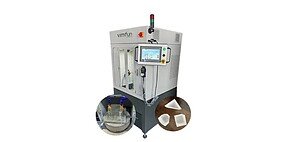
VIMFUN creates industrielle Konturschneidemaschinen unter Verwendung von Vakuum-, Stift- und Klemmsystemen. Typischerweise können Sie die Techniken auf demselben Maschinenrahmen ändern. Dies macht die Maschine vielseitig für viele verschiedene Materialarten.
Sie verfügen über offene Tischlayouts für ihre CNC-gesteuerten Drahtschneidanlagen. Diese unterstützen kundenspezifische und Fremd-Werkstückspannvorrichtungen ohne Adapterprobleme.
Welche zusätzlichen Faktoren beeinflussen die Werkstückspannleistung an einer Konturmaschine?
Das ist eine Seite des Bildes für die Halteart. Die Halterung wird auch von anderen Faktoren beeinflusst. Dies sind die Schnittgeschwindigkeit, die Art des Werkzeugwegs, die Oberflächengüte und die Vibration des Bodens. Ein schnelles, hin- und hergehendes Diamantdrahtschneidsystem verursacht zusätzliche Vibrationen.
Wenn der Griff schwach ist, können die Vibrationen das Teil verschieben. Eine raue oder fettige Oberfläche ruiniert auch die Vakuumabsaugung. Nahegelegene Maschinen auf dem Werkstattboden verursachen mehr Vibrationen.
Schlüsselfaktoren, die die Haltequalität beeinflussen
- Schnittgeschwindigkeit: Je schneller Sie fahren, desto mehr Vibrationen erhalten Sie, daher müssen Sie fester halten.
- Tischplanheit: Ein rauer Tisch bricht die Vakuumdichtung
- Oberflächenbeschaffenheit: Vakuum kann durch Öl, Staub oder unebene Rauheit gebrochen werden
- Gewicht des Teils: Schwere Teile benötigen möglicherweise Klemmen anstelle von Saugnäpfen
- Temperatur: Hitze kann weiche Materialien verformen und Stifte ungenauer machen
Tipps zur Verbesserung jeder Werkstückspannvorrichtung
- Tisch und Teile vor jedem Schnitt sauber wischen
- Weiche Vakuumauflagen für beschichtete oder empfindliche Oberflächen
- Überprüfen Sie immer das Drehmoment der Klemmen mit einem Drehmomentschlüssel, nicht nur handfest
- Replace hoover seals after 200–300 hours of usage
- For increased accuracy, place anti-vibration mats beneath the machine.
FAQs – Industrial Contour Cutting Machine Workholding
Can I use vacuum workholding on porous materials, such as foam?
No. Vacuum doesn’t seal properly on porous surfaces like foam. The material breathes. The suction is down and the portion would not hold steady. Use pin tables or clamps for porous materials instead. Some establishments use sealed hoover bags but this takes time to setup.
- Pin tables for soft composites and foams
- Vacuum is the only option, then try sealed fixture bags only
- Always examine the grip before commencing the cut
What workholding is best for an industrial contour cutting machine cutting Glass?
Vacuum is the finest option for cutting Glass on an industrial contour cutting machine. Glass is flat, smooth and delicate on the edges. The hoover distributes the holding power equally. It leaves no surface tension or markings. Clamps may break the edge of the glass, particularly on thin pieces.
- For big sheets use a complete vacuum table or zonal vacuum.
- Add soft rubber cushions to protect coated Glass
- Keep metal away from glass at all points of contact
Can one machine use more than one workholding method?
Yes. Many current advanced contour machining systems permit various hold kinds on the same table. It also allows operators to transition from vacuum to pin to clamp configurations in minutes. VIMFUN machines work on open table platforms. They accommodate replaceable hold systems with zero down time.
- Plan your hold setup before you purchase the machine
- Ask your supplier about choices for modular tables
- Test all procedures on your materials as part of setup
Does workholding affect material waste in a low material waste cutting system?
Yes. More waste from poor holding. If the part moves when it is being cut , the cut goes off course . The part could be eliminated. In a reduced material waste cutting system effective holding is as critical as the cutting tool. Better grip equals less discarded components and a better yield.
- Invest in quality to decrease scrap rates
- Track scrap before and after upgrading the hold mechanism
- A 5% decrease in scrap may save you thousands per month
Abschluss
How you grip varies on your material and task. Vacuum fits delicate, fragile parts Pins are great for full depth incisions. Clamps work well for hefty, stiff blocks. Smart shops adapt and change tactics as required. The appropriate grip reduces scrap, rework and downtime.
Want to pimp your setup? VIMFUN produces industrial contour cutting machines and innovative contour machining systems supporting all three approaches. They are made for accuracy and lasting value. Go to VIMFUN Today.