
Germaniumlinsenherstellung — Alles aus einer Hand Vom Schneiden bis zur Beschichtung
Optische Qualität Ge kostet 1.800–2.400 € pro Kilogramm. Wenn eine Boule mehr wert ist als die Säge, die sie schneidet, ist die Schnittbreite kein technisches Detail mehr, sondern die BOM-Zeile, die über die Rentabilität entscheidet. Wir liefern die gesamte Kette – Drahtsäge, Zentrierung, sphärisches Schleifen, Polieren, AR-Beschichtung – unter einem technischen Verantwortlichen.
Germanium sieht auf dem Papier einfach aus. In der Praxis, machen drei Dinge es bestrafend.
Es ist teuer – und wird immer teurer
Die Nachfrage aus den Bereichen Verteidigung und Wärmebildtechnik trieb die Ge-Preise 2023–2024 stark in die Höhe. Jeder Millimeter Schnittbreite ist ein realer Dollarbetrag. Ein 5 mm breiter Schnitt durch eine $2.000/kg Kugel verschwendet einen messbaren Prozentsatz des Umsatzes pro Scheibe.
Es splittert entlang (111) Ebenen
Einkristallines Ge spaltet sich entlang seiner (111) Flächen sauber ab. Ein Kernbohrer, der durch die Kugel schleift, wirft jedes Mal Mikrochips auf der Austrittsfläche ab. Austrittsseitige Splitterzonen von 0,3 bis 0,8 mm bei Kernscheiben sind üblich – alles Material, das der Linsenschleifer vor dem Formen entfernt.
Schäden verstecken sich bis zum Polieren
Ge absorbiert im sichtbaren Bereich. Unterflur-Schäden durch einen schlechten Schnitt zeigen sich erst im Polierstadium der Linse, bis zu diesem Zeitpunkt haben Sie Schleifstunden in ein Teil gesteckt, das streuen wird. Referenz: Crystran Ge Datenblatt.
Vom rohen Ge-Ingot bis zur beschichteten Linse, unter einem Ingenieurverantwortlichen.
Drei Dinge unterscheiden diese Kette vom Kauf jeder Maschine einzeln: dasselbe Ingenieurteam verantwortet das Toleranzbudget durchgängig; Vorrichtungen werden von Station zu Station übernommen; ein Angebot, ein Lieferfenster. Für Werkstätten, die eine neue IR-Optiklinie einrichten, reduziert dies eine RFQ mit 6 Anbietern auf ein einziges technisches Gespräch.
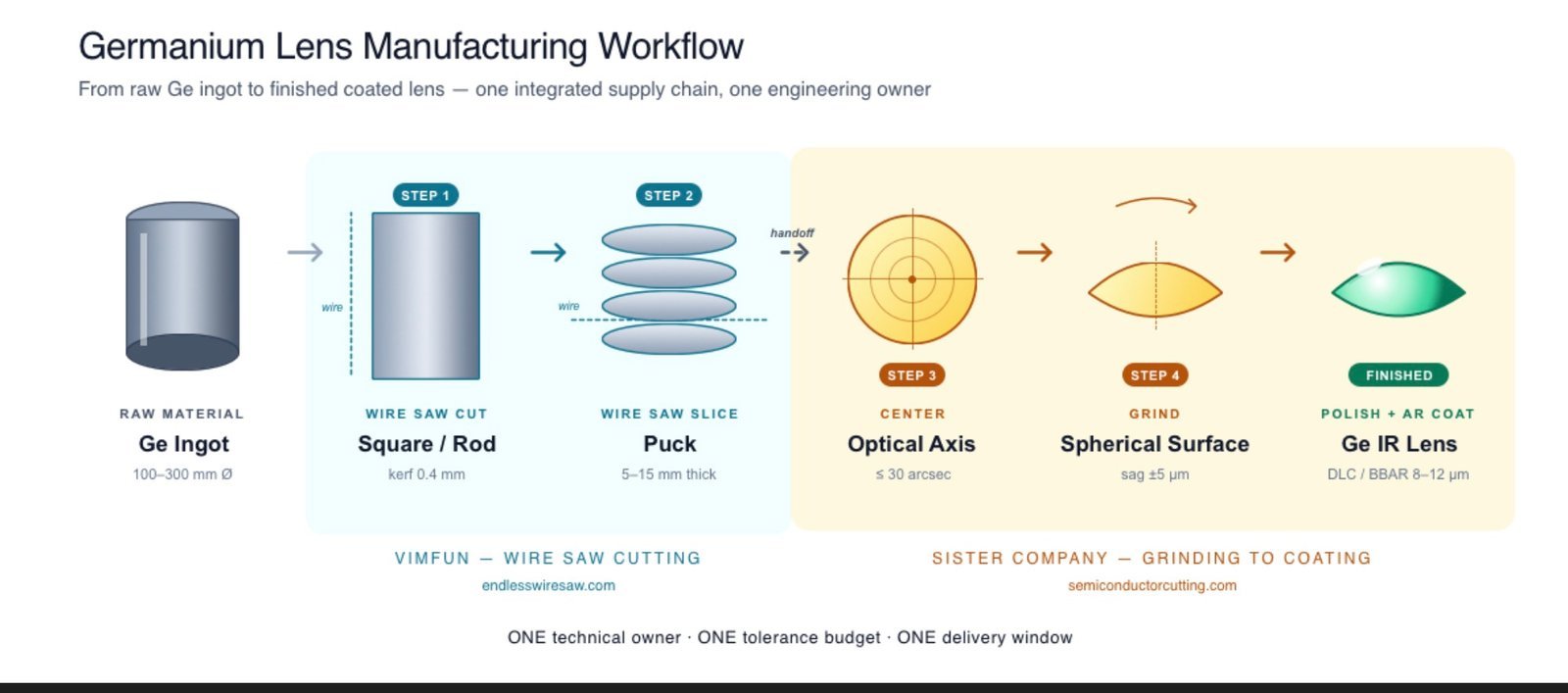
Was passiert an jeder Station, mit den Parametern, die wirklich wichtig sind.
Ingot zu Stab — Ausrichten und Kernentfernung
Die meisten Ge-Kristalle kommen als Zylinder mit 100–300 mm Durchmesser und einer Länge von 100 bis 400 mm an. Die erste Aufgabe besteht entweder darin, den Kristall für rechteckige Optiken zu quaderförmig zu bearbeiten oder kleinere Stäbe aus einem großen Kristall zu extrahieren. Hier ersetzt die Endlosdrahtsäge den Kernbohrer.
Anstatt einen 5–10 mm breiten Ring um den Kern herum abzuschleifen, SGI 40 Kontur-Drahtsäge umfährt die Kontur jedes Stabes mit einer 0,42–0,5 mm dicken Schleifschleife. Der Schnittverlust pro Schnitt beträgt etwa 0,5 mm. Bei einem 200-mm-Kristall ist das der Unterschied, ob man vier 80-mm-Kerne aus einem Kristall gewinnt oder fünf.
Die Konturschneidgeschwindigkeit beträgt 4–8 mm/min entlang des Umfangs, sodass die Gewinnung eines Φ34 mm Stabes (Umfang ≈ 107 mm) bei der typischen Einstellung von 6 mm/min etwa 18 Minuten pro Stab dauert.
| Drahtdurchmesser | 0,42 – 0,5 mm |
| Drahtspannung | 110 – 140 N |
| Drahtgeschwindigkeit | 40 – 60 m/s |
| Konturvorschubgeschwindigkeit | 4 – 8 mm/min |
| Kühlung | Weißes Mineralöl |
| Typische Schnittbreite | 0,5 – 0,6 mm |
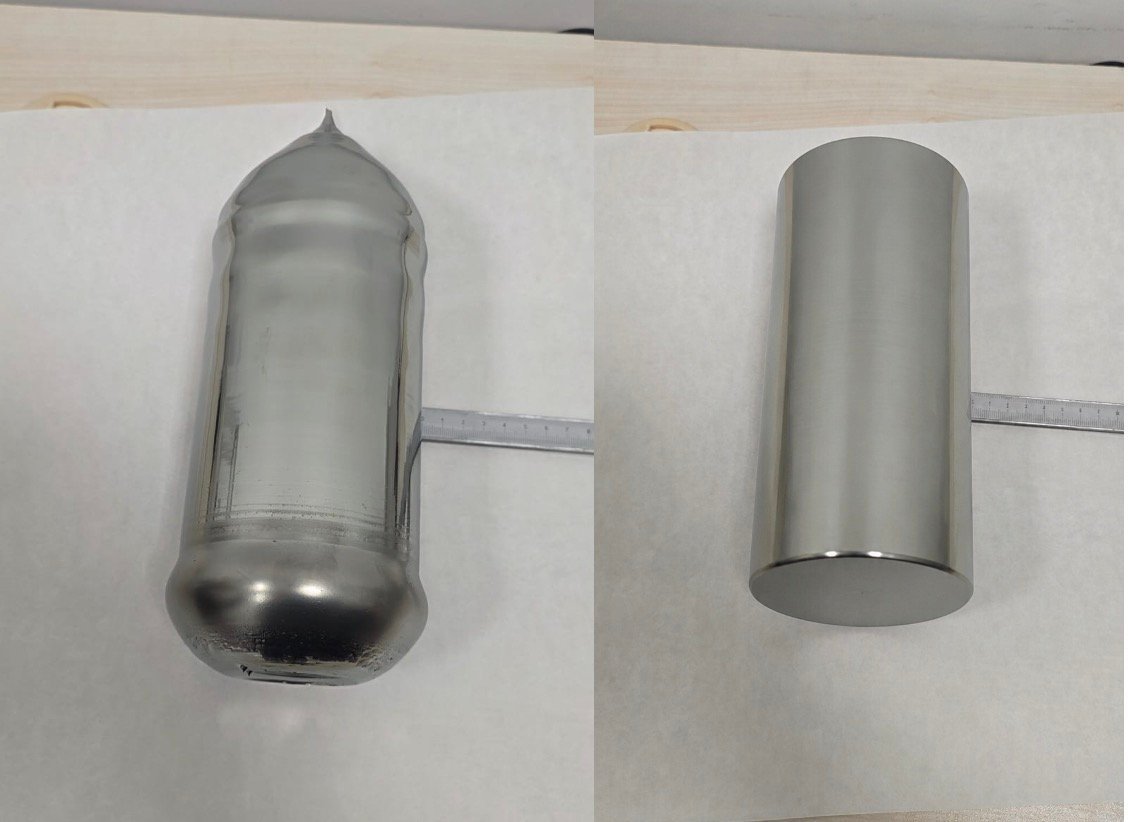
Stab zu Puck – Querschnittsschneiden
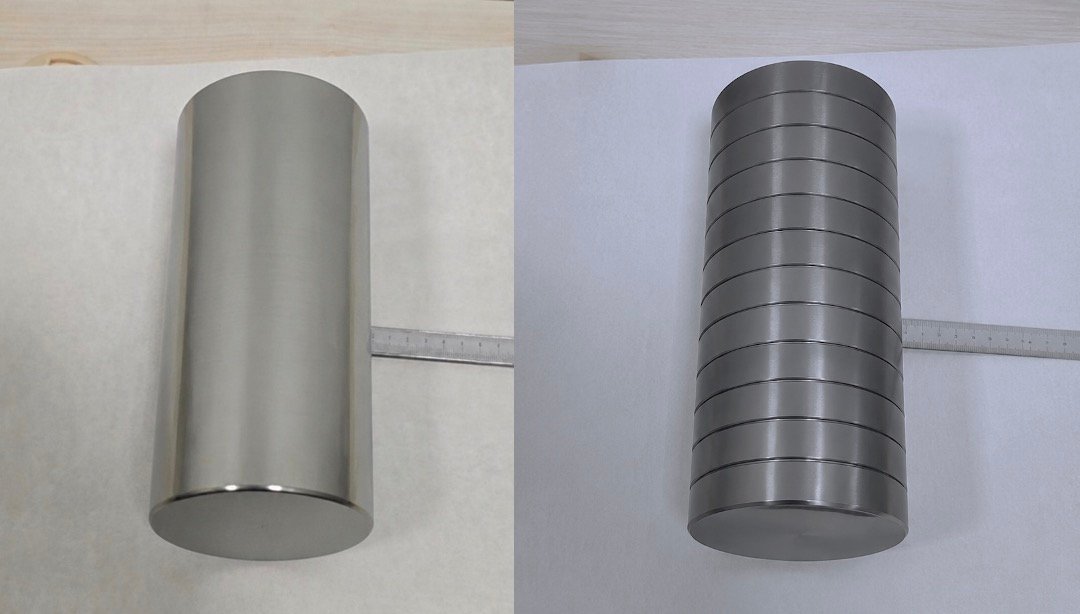
Sobald wir zylindrische Stäbe haben, ist der nächste Schritt, sie in Pucks zu schneiden – typischerweise 5 bis 15 mm dick, je nachdem, ob die endgültige Linse ein Meniskus-, Plan-konvex- oder Voll-Asphäre-Rohling ist. Die in Schritt 1 verwendete SGI 40 schaltet in den Schneidemodus; Werkstätten mit hohem Bedarf an geraden Schnitten können die SGSM40 als dedizierten Schneider hinzufügen.
Im Geradschnittmodus durchläuft der Draht den Stabdurchmesser, anstatt einen Umfang zu verfolgen, sodass die Vorschubgeschwindigkeit schneller ist – 10 bis 20 mm/min bei Ge. Ein einzelner Geradschnitt durch einen Φ180 mm Stab dauert etwa 12 Minuten am oberen Ende dieses Bereichs.
Geschnittene Pucks kommen von der Drahtsäge mit einer Oberflächenrauheit im Bereich von Ra 0,6–1,2 µm – fein genug, dass der erste Schleifschritt sehr wenig Material abträgt. TTV bei Produktionsläufen liegt im Bereich von 8–15 µm über einen 50 mm Puck, vergleichbar mit guten ID-Sägeergebnissen bei vielleicht einem Drittel des Schnittverlusts.
| Drahtdurchmesser | 0,35 – 0,42 mm |
| Drahtspannung | 100 – 130 N |
| Drahtgeschwindigkeit | 30 – 50 m/s |
| Schnittvorschubgeschwindigkeit | 10 – 20 mm/min |
| Kühlung | Weißes Mineralöl |
| Oberflächenrauheit Ra | 0,6 – 1,2 μm |
| TTV (typisch) | 8 – 15 µm |
Kanten schleifen und zentrieren
Nach dem Schneiden werden die Pucks zu unserer Zentrierungsanlage der Schwesterfirma gebracht für die Kantenbearbeitung. Dieser Schritt schleift den Außendurchmesser des Pucks rund und fasen die Ecken ab – und das geschieht vor der Erzeugung der sphärischen Oberfläche, nicht danach. Der Grund dafür ist mechanisch: Ein zentrierter zylindrischer Außendurchmesser gibt der sphärischen Schleifmaschine eine vorhersagbare Referenzdrehung, was bedeutet, dass die Oberfläche von der nächsten Maschine bereits konzentrisch zur Linsenoberfläche kommt.
Die Zykluszeit beträgt je nach Durchmesser, Fasenspezifikation und Materialabtrag 1 bis 3 Minuten pro Teil. Für Ge-Linsen, die in athermalisierten Wärmebildsystemen verwendet werden, ist die Dezentrierungstoleranz oft auf 30 Bogensekunden oder enger spezifiziert – alles, was ungenauer ist, führt dazu, dass die Kaltbildverschiebung für den Benutzer sichtbar wird.
Schleifen sphärischer Oberflächen
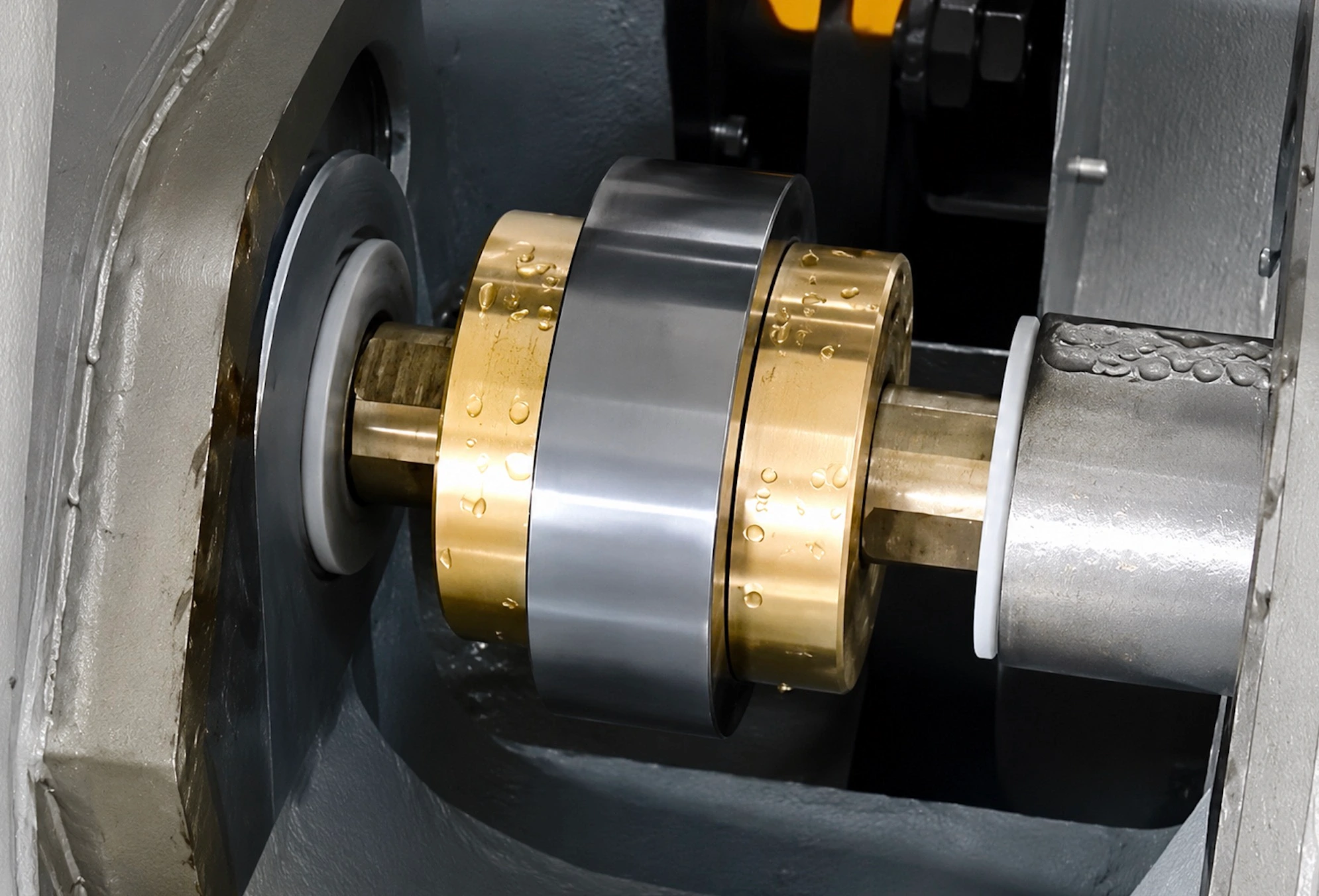
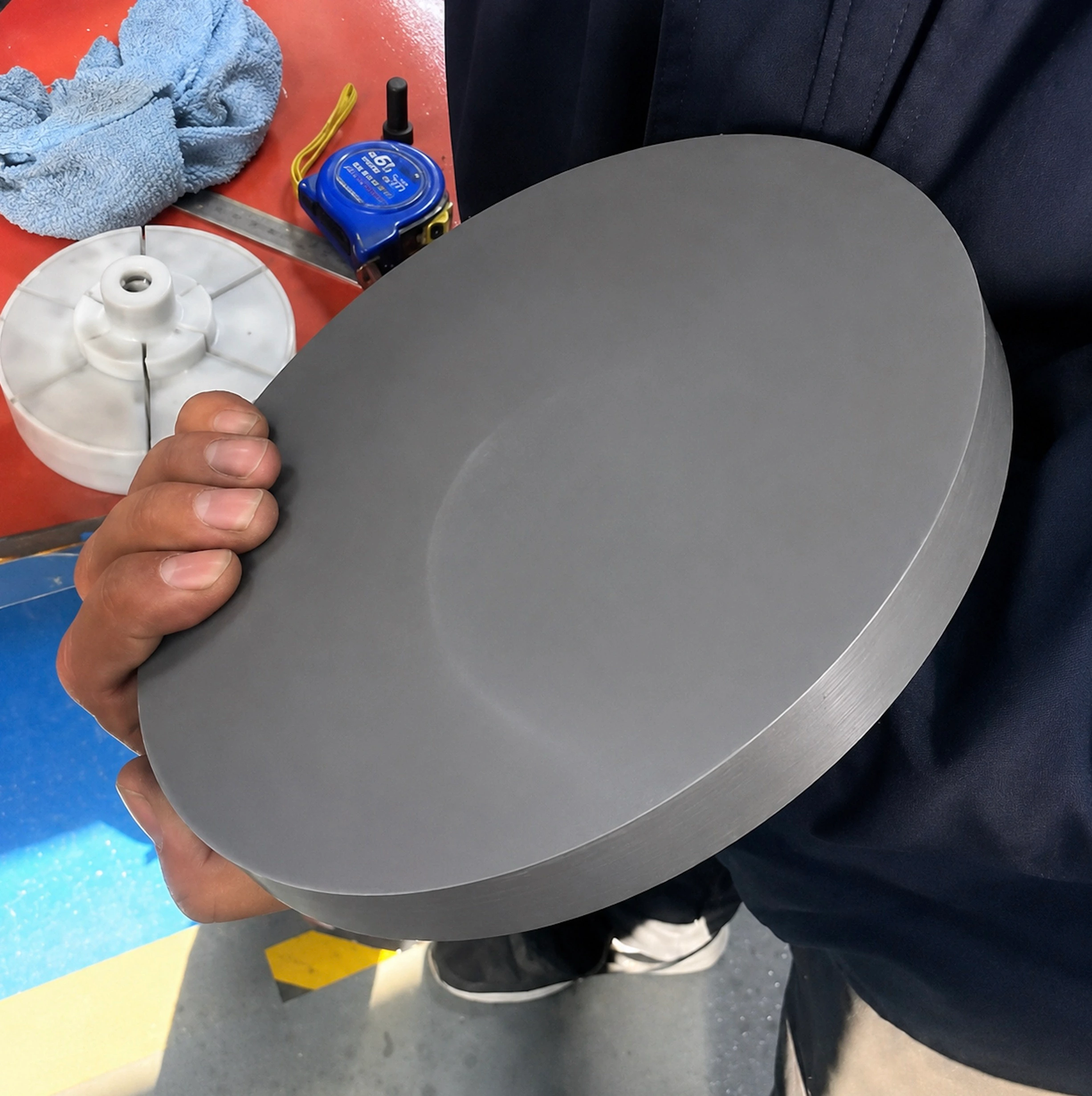
Nachdem der Außendurchmesser des Pucks zentriert und gefast wurde, erzeugt der nächste Schritt die sphärische (oder asphärische Rohling-) Oberfläche. Beide Schleifmaschinenmodelle verarbeiten konvexe (CX) und konkave (CC) Profile sowie Planflächen, ohne die Spindel einzurichten – nützlich für beidseitig geschliffene Linsen und Meniskusgeometrien.
Die Schleifmaschine verwendet gebundene Diamantpellet-Werkzeuge, die gegen einen rotierenden Puck auf einer Präzisionsspindel laufen. Die typische Materialabtragsrate beträgt 0,2 bis 0,5 mm pro Seite von der geschnittenen Oberfläche. Da die drahtgesägten Pucks mit geringer TTV und minimalen Schäden unter der Oberfläche ankommen, sinkt die Zykluszeit pro Oberfläche bei der Standard-Kugelgenerierung auf etwa 5 Minuten.
Für asphärische Germanium-Linsen (üblich in kompakten Wärmebildmodulen) führt die Schleifmaschine eine CNC-gesteuerte Trajektorienprofilierung durch. Die Sag-Toleranz auf der geschliffenen Oberfläche beträgt typischerweise ±5 µm, sodass der Polierer die endgültige Form übernimmt.
Polieren und AR-Beschichtung
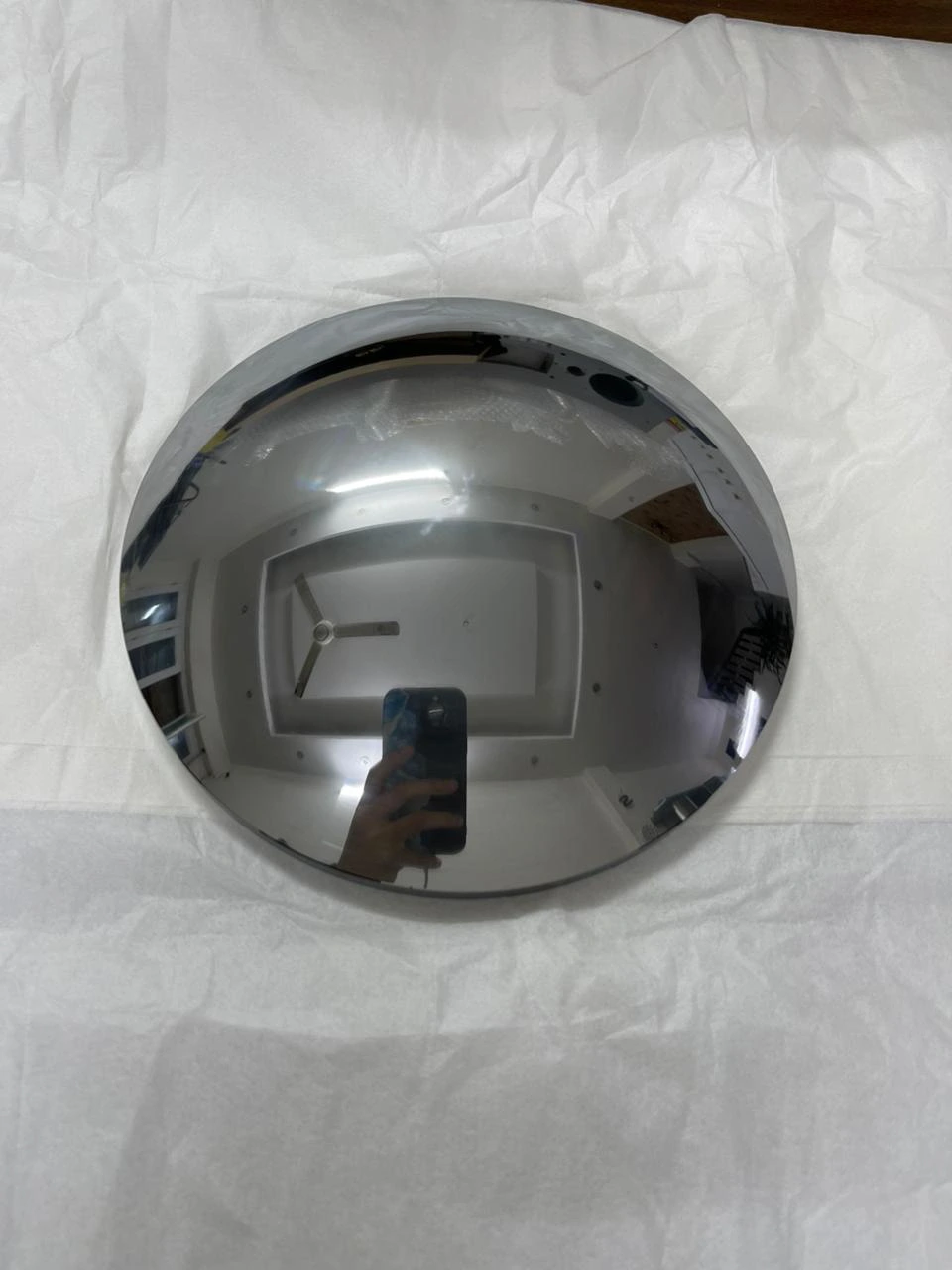
Die meisten Ge-Linsen in der Produktion erhalten eine Breitband-Antireflexbeschichtung. Blankes Germanium reflektiert aufgrund seines hohen Brechungsindex (n ≈ 4,0 bei 10 µm) etwa 36 % pro Oberfläche bei IR-Wellenlängen. Ohne AR-Beschichtung verliert eine einzelelementige Ge-Linse mehr als die Hälfte ihrer einfallenden Energie, bevor das Licht den Detektor erreicht.
Die Zykluszeit beträgt etwa 3 Minuten pro Oberfläche bei Standard-Kugelbearbeitungen; asphärische Formen dauern je nach Toleranz länger. Die endgültige Oberflächenrauheit erreicht Ra < 5 nm für High-End-Wärmebildtechnik.
DLC vs. BBAR-Beschichtungen. Standard-BBAR-Mehrschichtfilme zerkratzen leicht auf Ge – weiches Material, harte Realität. DLC (diamantähnlicher Kohlenstoff) tauscht eine geringe Transmission (vielleicht 2–3 % pro Oberfläche) gegen eine wesentlich bessere Abriebfestigkeit. Für Linsen, die in einem Fahrzeug oder einer Handkamera nach außen zeigen, ist DLC in der Regel nicht verhandelbar.
Wie lange dauert eine Ge-Linse tatsächlich?
Für eine typische mittelgroße Wärmebildlinse — Φ50 mm bikonvexe Ge-Linse — taktet die integrierte Linie ungefähr wie folgt. Pufferzeiten für Materialtransport zwischen den Stationen sind enthalten.
| Bühne | Maschine | Zykluszeit |
|---|---|---|
| Konturschnitt, Entnahme eines Φ50-Stabs aus größerem Barren | SGI 40 | ~26 min |
| Stab in einen Puck schneiden (ein gerader Schnitt) | SGI 40 | ~5 min |
| Kanten schleifen + anfasen | C-120L | 1–3 min |
| Erzeugung der sphärischen Oberfläche (Seite 1) | G-100 | ~5 min |
| Kugelflächenerzeugung (Seite 2) | G-100 | ~5 min |
| Anfasen (falls erforderlich) | C-120L | ~1 Min. |
| Polieren (Seite 1) | Asphärische Poliermaschine | ~3 Min. |
| Polieren (Seite 2) | Asphärische Poliermaschine | ~3 Min. |
| AR-Beschichtung (DLC oder BBAR) | Beschichtungskammer | Charge (50+/Lauf) |
Gesamte Bearbeitungszeit pro Φ50 mm Ge-Linse über alle Spanabhebungsstationen, ohne Beschichtung. Die Beschichtung erfolgt chargenweise; der Beitrag pro Linse sinkt auf Minuten, wenn die Kammer voll ist.
Asphärische Figuren dauern länger als sphärische, nämlich 2- bis 3-mal so lange, abhängig von der Abweichung von der besten Kugel und der endgültigen Toleranz der Figur. Wir dimensionieren die Kapazität von Schleif- und Poliermaschinen entsprechend Ihrer Teile-Mischung während der Angebotserstellung.
Der ehrliche Vergleich. Draht gewinnt nicht bei allem.
Für Geschäfte, die abwägen, ob sie von traditionellen Methoden wechseln sollen, sind die wichtigsten technischen Kompromisse.
| Faktor | Kernbohrer + ID-Säge | Endlosdrahtsäge (Vimfun) |
|---|---|---|
| Schnittverlust pro Schnitt | 5 – 10 mm Bohrer / 0,3 – 0,5 mm ID | 0,4 – 0,6 mm |
| Kantenabsplitterung (Austrittsseite) | 0,3 – 0,8 mm typisch | < 0,1 mm typisch |
| Durchsatz pro Stunde | Höher für kleine Teile | Niedriger für winzige Teile, besser auf großen Barren |
| Werkzeugkosten pro Schnitt | Niedriger (kunststoffgebundene Klinge) | Höher (Diamantdrahtschleife) |
| Maximale praktische Werkstückgröße | ~150 mm Ge | 300 mm+ Ge (Schleife erweitern) |
| Einrichtzeit | Schnell | Moderat (Drahtzuführung) |
| Subsurface damage | Mäßig bis hoch | Niedrig |
| Materialersparnis pro 200 mm Ingots | Ausgangswert | $200 – $600 |
Drei Installationen – drei Kontinente, drei Endmärkte.
Sie decken sehr unterschiedliche Branchen ab, teilen aber denselben technischen Schmerzpunkt: Ge-Material ist teuer, Toleranzbudgets sind eng und die Verwaltung von fünf separaten Ausrüstungsanbietern schafft mehr Probleme als sie löst.
Sunny Optical
Sunny Optical Technology Group ist einer der größten Hersteller von optischen Komponenten weltweit – Smartphone-Objektive, Automotive ADAS, Wärmebildoptiken.
Sunny betreibt mehr als 30 Vimfun Diamantdrahtsägemaschinen, mit einer beträchtlichen Flotte, die speziell für die Herstellung von Germanium-Objektiven eingesetzt wird. Bei diesem Volumen dominierten zwei Kennzahlen über die reine Schnittgeschwindigkeit: die Drahtverbrauchskosten pro Objektiv und die stationäre Handhabungskonsistenz.
Wärmebild-OEM
Ein großer türkischer Hersteller von Wärmebildgeräten kaufte eine komplette integrierte Ge-Objektivlinie: SGI 40 Drahtsägen, C-185L Zentrierung, G-250 sphärische Schleifmaschine und die Asphärische Poliermaschine – konfiguriert, in Betrieb genommen, qualifiziert unter einem technischen Umfang.
Der entscheidende Faktor war nicht der Spitzenpreis. Es war die Verkürzung der Lieferkette (direkt China–Türkei vs. europäische Beschaffung bei mehreren Anbietern) in Kombination mit der Materialertragssteigerung bei importiertem Ge-Material.
Precision Optics Group
Ein niederländisches Unternehmen für optische Systeme betreibt die integrierte Vimfun + Schwesterfirmen-Lösung für industrielle und wissenschaftliche IR-Optiken und beliefert europäische Instrumenten- und Sensorhersteller.
Genannte Gründe für die integrierte Kette gegenüber der stückweisen Beschaffung: geringerer Schnittverlust bei importiertem Ge-Rohmaterial, reduzierte Spannmittelübergaben zwischen Schneiden und Schleifen und eine Einzelanbieterverantwortung für den Toleranzdurchfluss.
Was Ingenieure tatsächlich fragen bevor sie diese Linie spezifizieren.
Unser Standard-SGI 40 verarbeitet Ingots bis zu einem Durchmesser von 350 mm × 400 mm Länge. Für größere Boules bauen wir kundenspezifische Rahmen – die Drahtsäge skaliert durch Verlängerung der Schleife, nicht durch Austausch der Maschine. Größte bisherige Sonderanfertigung: 1200 mm Arbeitsbereich.
Für die meisten Produktionslinien konfigurieren wir Folgendes:
| Bühne | Maschine | Arbeitsbereich |
|---|---|---|
| Ingot-Kontur + Stangenschneiden | SGI 40 | Ingot Φ ≤ 185 × 400 mm |
| Kanten schleifen + anfasen (klein) | C-120L | Φ 1,8 – 120 mm |
| Kanten schleifen + anfasen (groß) | C-185L | Φ 50 – 185 mm |
| Kugelfräsen (klein) | G-100 | Φ 10 – 100 mm |
| Kugelfräsen (groß) | G-250 | Φ 80 – 250 mm |
| Polieren | Asphärische Poliermaschine | Φ ≤ 300 mm |
| AR-Beschichtung | DLC- oder BBAR-Kammer | Charge |
Kleine Thermografie-Werkstätten benötigen typischerweise nur SGI 40 + C-120L + G-100 + Polierer. Große Optik-Werkstätten für die Verteidigungsindustrie fügen C-185L und G-250 hinzu.
Ja. Poly-Ge lässt sich tatsächlich etwas leichter schneiden als Einkristall, da es keine bevorzugte Spaltfläche gibt. Die gleichen Parameter funktionieren.
Ungefähr vergleichbar mit optischem Glas – 7 bis 10 Tage bei 8 Stunden/Tag, abhängig von Spannung und Vorschub. Ge ist weicher als Saphir oder Quarz, daher ist der Drahtverschleiß moderat.
Ja, alle unsere Standard- Diamantdrahtschleifen werden intern gefertigt. Die Lieferzeit für Schleifen beträgt ca. 7 Tage. Wir verwenden eine Fadenbeschichtung (kontinuierlich) für Germanium – dies ergibt die beste Oberflächengüte auf spröden Halbleitern.
End-to-End auf einer fertigen Ge-Linse hält unsere Germanium-Linsenfertigungskette: Durchmesser ±0,02 mm, Mittendicke ±0,025 mm, Dezentrierung 30 Bogensekunden, Oberflächenform 1λ bei 633 nm Referenz. Engere Toleranzen sind bei spezifischen Spezifikationen möglich – sprechen Sie mit der Technik. Wir dokumentieren Liefergegenstände in ISO 10110 Format für den Austausch von Designdaten.
Gleiche Drahtsägeplattform, unterschiedliche Probleme pro Markt.
Der Integrationswinkel ist in einigen Sektoren wichtiger als in anderen – für die Wärmebildtechnik in großen Stückzahlen dominieren die Kosten für die Chargenbeschichtung; für Verteidigungsoptiken ist die Rückverfolgbarkeit über Stationen hinweg am wichtigsten.
Wärmebildmodule
Automotive ADAS, Gebäudeinspektion, elektrische Thermografie. Volumengetrieben, Kosten für die Beschichtung kritisch.
Verteidigungs- und Sicherheitsoptiken
Ungekühlte Mikrobologormodule, Zielfernrohre, Überwachung. Rückverfolgbarkeit und DLC-Haltbarkeit sind wichtig.
Industriesensoren
Gasanalysatoren (Ge-Fenster für FTIR), Prozessüberwachung. Geringere Stückzahlen, höhere Toleranzanforderungen.
Medizinische IR-Diagnostik
Handgehaltene Wärmebildkameras für vaskuläre und entzündliche Bildgebung. Mittleres Volumen, ergonomisches Format.
Forschungslabore
IR-Spektroskopie, kundenspezifische optische Baugruppen. Einzelstückgenauigkeit über Durchsatz.
Kundenspezifisch / Sonstiges
Strahlteiler, Strahlerweiterer, Fenster im kundenspezifischen Format. Senden Sie Zeichnungen, wir erstellen ein Angebot.
Senden Sie eine Zeichnung. Wir senden Zahlen zurück.
Wenn Sie eine Fertigungslinie für Germaniumlinsen planen – Neubau, Nachrüstung oder Kapazitätserweiterung – werden wir gemeinsam folgende Fragen durchgehen:
- Durchmesser und Längenbereich des Boules – bestimmt die Drahtsägegestellgröße
- Durchmesser, Dicke, Krümmungsspezifikation der fertigen Linse – bestimmt die Auswahl der Schleif- und Zentriermaschine
- Oberflächenrauheit und Beschichtungsanforderungen – bestimmt die Polier- und Beschichtungsleistung
- Volumen pro Monat – bestimmt, ob Sie eine Zelle oder parallele Linien benötigen