The Problem Nobody Talks About in Horticulture Manufacturing
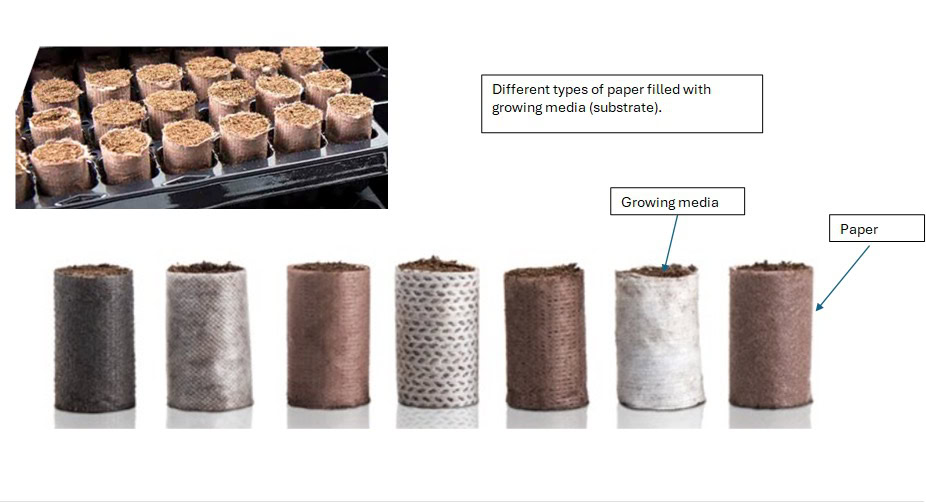
If you manufacture propagation plugs, Ellepot-style paper sleeves, or peat-based growing media, you already know the cutting problem intimately. You have a continuous sleeve — paper outer layer, soft composite substrate inside — and you need to cut it into uniform units at speed, without destroying what makes the product work.
The substrate mix typically contains peat, wood fiber, coco pith, perlite, and bark — each with a specific role in water retention, aeration, and root development. It holds its shape when intact. But apply the wrong cutting force, and the pore structure compresses. The paper edge frays. The unit deforms and becomes unsellable.
Most conventional cutting methods were never designed for this. They solve a different problem — cutting hard materials fast. For soft, structured composites, they create more problems than they solve.
Why Conventional Methods Fall Short
| Cutting Method | Mechanical Pressure | Heat Generated | Edge Quality | Structure Preserved | Suitable for Paper + Substrate |
|---|---|---|---|---|---|
| Rotary blade | High | Moderate | Fraying | Compresses pores | Poor |
| Hot wire / thermal | Low | Very high | Melted edge | Burns organics | Poor |
| Ultrasonic cutter | Medium | Low | Acceptable | Partial | Moderate |
| Water jet | High pressure | None | Variable | Saturates substrate | Poor |
| Endless diamond wire saw | Very low | Negligible | Clean, no fraying | Fully preserved | Excellent |
Rotary blades are the most common choice, but they apply significant downward and lateral force during the cut. For a paper sleeve filled with loose composite substrate, this means compressed edges, deformed cross-sections, and scattered debris. At production speeds, reject rates climb fast.
Hot wire cutting avoids pressure but introduces heat — the last thing you want near organic material like peat and coco pith. The paper scorches, the substrate dries unevenly near the cut, and the product’s moisture balance is disrupted before it even reaches the grower. Our thermal analysis of cold cutting vs. heat-based methods explains why temperature-sensitive materials require a fundamentally different approach.
Water jet might seem gentle, but water is the enemy of a pre-inoculated growing medium. Saturating the substrate at the cut point changes its structure and can introduce contamination. For a deeper comparison, see our overview of waterjet cutting vs. diamond wire cutting.
How Endless Diamond Wire Cutting Works
An endless (closed-loop) diamond wire saw uses a single continuous loop of wire embedded with diamond abrasive particles. Unlike reciprocating saws that move back and forth, the wire runs continuously in one direction at high speed. This is one of the core advantages covered in our comparison of endless diamond wire saws vs. traditional cutting methods.
The cutting action is pure abrasion — thousands of microscopic diamond particles each remove a tiny amount of material. There is no blade wedging, no impact force, no heat buildup from friction.
For growing media, this matters for three specific reasons:
1. Cutting force is near zero. The wire diameter used for this application is typically 0.35–0.5 mm. The tension on the wire is 100–150 N — just enough to keep it taut and cutting straight. Compare this to a rotary blade that bears down with kilograms of mechanical force.
2. No heat. Wire speed for this application runs between 15–40 m/s. At these speeds, the contact time at any single point on the substrate is measured in microseconds. Organic materials — peat, bark, coco pith — come through the cut chemically unchanged.
3. The kerf (cut width) is as narrow as 0.35–0.5 mm. Material loss per cut is minimal. For high-value growing media formulations, this directly reduces cost per unit.
Cutting Parameters for Growing Media
The table below shows reference parameters for cutting paper sleeve + substrate composites. For a full technical breakdown of how wire speed, tension, and feed rate interact, our dedicated guide covers the tradeoffs in detail.
| Parameter | Recommended Range | Notes |
|---|---|---|
| Wire diameter | 0.35–0.5 mm | Finer wire = lower cutting force |
| Wire tension | 100–150 N | Start low, increase if wire bows |
| Wire speed | 15–40 m/s | Lower than hard-material applications |
| Feed speed | 0.5–5 mm/min | Start at 0.5, increase after trial cuts |
| Kerf loss | 0.35–0.5 mm per cut | Minimal material waste |
| Cutting precision | ±0.03 mm tolerance | Consistent across full batch |
| Cooling method | Dry cutting | No coolant — protects substrate moisture |
| Wire lifespan | 7+ days at 8 hrs/day | Longer than hard-material applications |
One practical note on feed speed: start at the lower end (0.5–1 mm/min) for the first test cuts. The substrate is soft, so the wire moves through quickly — the risk is not cutting too slowly, it is cutting faster than the paper layer can cleanly separate. Once you establish the right balance, the process is highly repeatable.
Dry cutting is standard for this application. No coolant means no moisture introduced to the substrate during processing — a meaningful advantage if your growing medium is pre-inoculated or moisture-sensitive.
Which Machine Configuration Fits
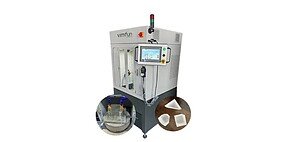
R&D and small-batch production — Recommended machine: SG 20 or SGI 20 (gantry structure, max cut size 200×200×250 mm). Desktop-scale, touchscreen parameter adjustment, automatic slicing cycles. Set the slice thickness, set the number of cuts, and the worktable advances automatically.
Medium-to-high volume production — Recommended machine: SV 60-60 or SVI 60-60 (vertical structure, max cut size 600×600×600 mm). Handles larger workpiece formats and supports contour cutting. Not sure which model fits your needs? Our machine selection guide walks through the decision step by step.
| Application Scale | Recommended Model | Max Cut Size | Auto Slicing | Contour Cutting |
|---|---|---|---|---|
| R&D / small batch | SG 20 / SGI 20 | 200×200×250 mm | Yes | SGI 20 only |
| Medium–high volume | SV 60-60 / SVI 60-60 | 600×600×600 mm | Yes | SVI 60-60 only |
Both machine families support automatic slicing cycles. Set the target slice thickness and the number of cuts — the worktable feeds automatically and repeats until the batch is complete. Operators run 12-hour continuous cycles without intervention.
What the Cut Surface Actually Looks Like
The paper layer cuts cleanly — no tearing, no fraying at the edge. Under magnification, the paper fibers at the cut face are sheared, not pulled. The edge holds its shape without any post-processing.
The substrate cross-section shows no compression zone. Perlite particles, bark fragments, and fiber structures remain intact right up to the cut surface. The pore network — which determines how air and water move through the plug — is undisturbed within 0.5 mm of the cut face. Dimensional repeatability across a batch is ±0.03 mm.
Other Growing Media Applications Worth Considering
Once a diamond wire saw is in your facility, the same process logic applies to other materials in the horticulture supply chain. The key principle — low cutting force, no heat, narrow kerf — works across a wider range of soft and structured composites than most people expect. For an overview of how growing media ingredients interact structurally, the mechanics of why pore integrity matters become clear.
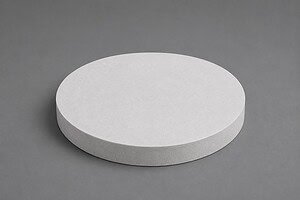
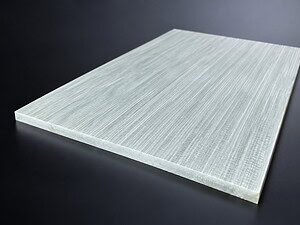
- Rockwool / mineral wool grow blocks — rigid but brittle, prone to edge crumbling with blade cutting. Diamond wire gives clean faces with no fiber pullout.
- Foam and sponge propagation media — soft enough that blades compress before cutting. The same low-force approach we use for PU insulation cutting applies directly to foam-based growing media.
- Coconut coir bricks and compressed peat blocks — high-value materials where kerf loss and edge quality directly affect product yield. The structural preservation principles are similar to those used in porous material cutting, where maintaining internal structure at the cut face is the primary objective.
Talk to Us About Your Specific Sleeve Format
Growing media products vary significantly — sleeve diameter, substrate density, paper weight, moisture content at the time of cutting. What works perfectly for one formulation may need minor parameter adjustment for another.
We offer free test cuts for qualified customers. Send us a sample of your sleeve format and we will run it on the appropriate machine configuration, document the parameters, and share the cut results with you before you make any purchasing decision.