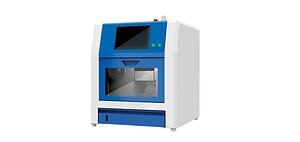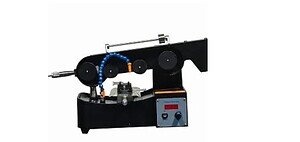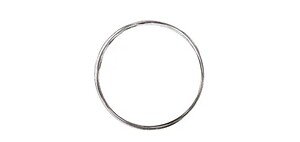
A carbide grinding wheel cutting Al₂O₃ at full depth of cut generates enough heat to initiate micro-cracks before the surface is even inspected. That’s not a hypothetical — it’s the failure mode we trace back to most rejected parts in precision ceramic machining. If your current process is producing dimensional drift, edge chipping, or surface Ra values above 2 μm, the cutting method is almost always the root cause.
Diamond wire saw ceramic cutting accuracy has become the benchmark for precision ceramic work for a specific reason: it addresses the mechanical and thermal sources of error at the same time, rather than trading one for the other.
What Limits Accuracy in Conventional Ceramic Cutting?
Conventional ceramic cutting methods each impose a different accuracy penalty, and they compound in ways that are hard to control in production.
Rotary blade grinding (diamond cup wheels or abrasive discs) applies high normal forces — typically 50–200 N depending on material hardness and feed rate. For brittle ceramics, that force doesn’t distribute evenly across the cut zone; it concentrates at grain boundaries and pre-existing microvoids. The result is subsurface damage extending 20–50 μm below the finished surface, and dimensional variance that widens as the wheel wears.
ID (inner diameter) saws rely on a rotating thin blade held in tension around its outer rim. The blade tension fluctuates with rotational speed and thermal expansion during cutting. Any tension variation translates directly into positional error at the cut line. For wafers and thin ceramic substrates, this produces TTV (total thickness variation) values that drift as the blade heats up — a problem that’s notoriously hard to compensate for without stopping the machine.
Abrasive grinding for surface finishing introduces a different problem: wheel wear drift. As the abrasive face wears, the effective cutting geometry changes, and dimensional tolerance widens systematically over the wheel’s life. Unless you’re compensating in real time, your tolerance band at the end of a wheel’s life is not the same as at the start.
The common thread: all three methods introduce either high-force mechanical damage, thermal stress, or time-dependent geometric drift.
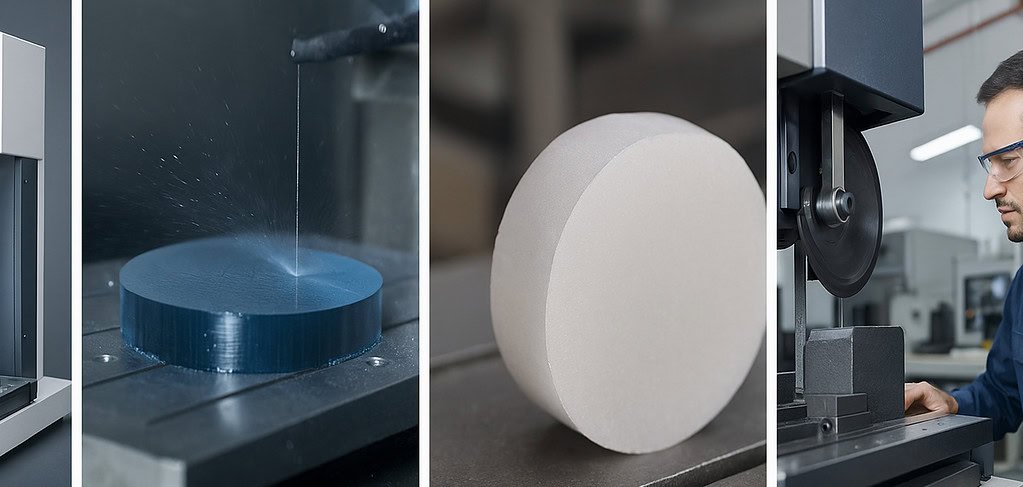
How Diamond Wire Saw Ceramic Cutting Accuracy Works
The precision advantage of diamond wire cutting comes from four physical mechanisms, not just one.
Low cutting force. A diamond wire under tension contacts the workpiece over a very small arc, distributing the abrasive action across many diamond grits simultaneously. The normal force per contact point is low — typically 1–10 N per unit length of wire, compared to the concentrated forces in a blade cut. For ceramics with low fracture toughness, this difference matters. SiC, for example, has a KIC of approximately 3 MPa√m. Any impulsive cutting force preferentially propagates cracks at existing microdefects. Diamond wire’s continuous, distributed contact avoids force spikes. Subsurface damage depth drops to 5–15 μm versus 20–50 μm with conventional methods.
Consistent kerf width. Diamond wire diameter is controlled tightly during manufacturing, and wear during cutting is gradual and predictable. The resulting kerf width runs 0.3–0.8 mm — roughly 3–5× narrower than a grinding wheel cut (1.5–3 mm). Narrower kerf means less material removal per pass, less abrasive loading, and better dimensional repeatability across a batch.
No heat accumulation. Wire cutting with coolant keeps the cut zone temperature low. Without heat buildup, there’s no thermal stress in the ceramic, no temper-induced micro-cracking, and no dimensional growth from thermal expansion of the workpiece. This is where conventional grinding fails most visibly on thin-wall ceramics — the heat doesn’t have anywhere to go.
Stable force across cut depth. On a fixed-wire or endless-wire configuration, the tension is constant throughout the cut. That consistency means the accuracy you get at 5 mm depth is the same accuracy you get at 50 mm depth — no mechanical compliance variation with cut depth. This is critical for thick ceramic blocks where blade-based methods lose accuracy as deflection increases with depth.
Together, these mechanisms define diamond wire saw ceramic cutting accuracy: it’s not marketing language, it’s a measurable consequence of how the process interacts with brittle material physics.
Key Accuracy Parameters in Diamond Wire Saw Ceramic Cutting
The following comparison reflects typical production values across multiple ceramic material types. All figures assume optimized process parameters; individual results will vary based on workpiece geometry and material grade.
| Parameter | Conventional Grinding/ID Saw | Diamond Wire Saw |
|---|---|---|
| Dimensional tolerance (±mm) | ±0.05 – ±0.15 | ±0.01 – ±0.05 |
| Surface roughness Ra (μm) | 1.5 – 5.0 | 0.6 – 1.2 |
| Subsurface damage depth (μm) | 20 – 50 | 5 – 15 |
| Edge chipping severity | Moderate to severe | Minimal to none |
| TTV (Φ50 mm substrate, μm) | 15 – 40 | 8 – 15 |
| Kerf width (mm) | 1.5 – 3.0 | 0.3 – 0.8 |
The Ra and TTV figures are consistent with what we measure in practice. The subsurface damage numbers come from cross-section TEM and SEM analysis of cut faces — the difference is visible even at 500× optical magnification.
Which Ceramics Benefit Most from Diamond Wire Saw Accuracy?
Not all ceramics respond equally to wire cutting. Here’s where the accuracy gain is most significant:
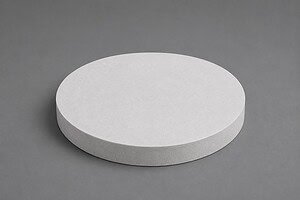
Alumina (Al₂O₃, Mohs 9) — The combination of high hardness and moderate fracture toughness makes Al₂O₃ sensitive to the thermal stress from grinding. Pre-sintered alumina parts in particular crack at surface flaws during grinding heat cycles. Wire cutting eliminates this failure mode. See the pre-sintered alumina ceramic cutting case for documented dimensional outcomes.
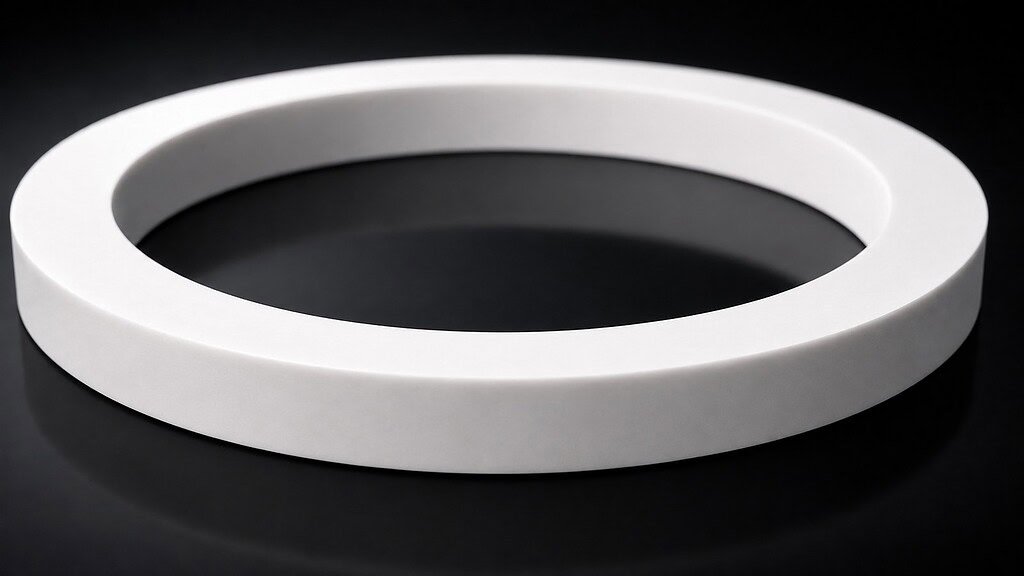
Silicon carbide (SiC, Knoop ~2800 kg/mm²) — SiC has the lowest fracture toughness of the common structural ceramics (KIC ~3 MPa√m). It cracks before it deforms. Any conventional grinding process that applies even moderate cutting forces produces subsurface crack networks that don’t show on surface inspection but cause fatigue failure in service. Wire cutting’s low force profile keeps the subsurface zone intact. Reference: silicon carbide ring cutting for SiC-specific parameter details.
Silicon nitride (Si₃N₄) — Used extensively in bearing races and engine components where dimensional accuracy directly affects fatigue life. The fracture toughness is better than SiC (~6 MPa√m), but surface roughness requirements are extremely tight. Diamond wire typically delivers Ra 0.8–1.0 μm on Si₃N₄, achievable without post-cut grinding in many cases.
Zirconia (ZrO₂) — Partially stabilized zirconia is used in dental and biomedical applications where sub-50 μm dimensional accuracy is standard. Grinding-induced phase transformation (tetragonal to monoclinic) near the cut surface is a known failure mechanism. Wire cutting’s low thermal and mechanical loads suppress this transformation.
Aluminum nitride (AlN) and boron nitride (BN) — Both are thermal management ceramics where surface condition directly affects thermal interface resistance. Subsurface damage from grinding creates micro-voids that reduce effective thermal conductivity. Wire cutting preserves near-surface crystal structure and keeps thermal performance on spec.
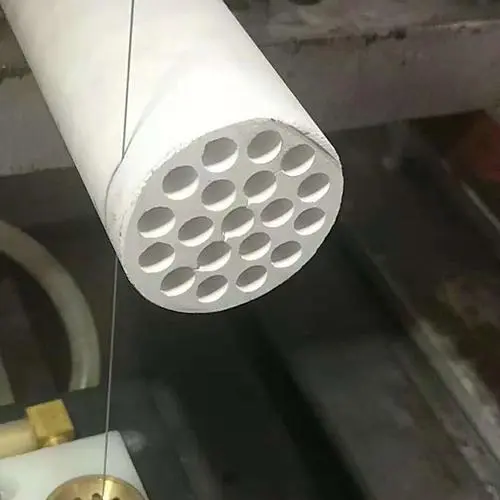
Process Parameters That Control Diamond Wire Saw Ceramic Cutting Accuracy
This is where most engineers lose accuracy gains — the machine capability is there, but the parameters aren’t dialed in. For a full breakdown of parameter relationships, see wire speed, tension, and feed rate.
Wire Speed
For ceramic cutting, typical wire speeds run 30–70 m/s. Higher wire speed increases the number of diamond grits passing through the cut zone per second, which lowers the force per grit and produces a finer surface finish. The mechanism: fewer grit interactions per unit time means shallower material removal per pass, reducing crack propagation depth.
The caveat: wire speed above 65–70 m/s on high-porosity ceramics can cause grit pullout from the wire matrix, which suddenly changes the effective cutting diameter and introduces dimensional error. This isn’t a theoretical concern — it’s a real process boundary that depends on your specific wire bond type (resin vs. electroplated).
Wire Tension
Tension range for ceramic cutting is typically 150–300 N, adjusted by material hardness and wire diameter. Higher tension reduces wire bow during cutting, which is the primary source of kerf geometry error. An insufficiently tensioned wire sags at mid-span during a deep cut, creating a curved kerf cross-section that looks like a slightly concave surface on the workpiece. That “banana effect” shows up in TTV measurements.
In our experience cutting SiC seal rings, we found that tension needs to increase by roughly 10–15% when moving from 50 mm to 100 mm cut depth to maintain the same dimensional accuracy. Most process recipes don’t account for this, and it’s the main reason for depth-dependent accuracy drift.
Feed Rate
Feed rate is the parameter that most directly trades accuracy against throughput. Lower feed rate allows more cutting passes per unit depth, which averages out abrasive irregularities and produces better surface finish. For tight-tolerance work (±0.02 mm or better), feed rates below 0.5 mm/min are common on hard ceramics.
Pushing feed rate to increase throughput is fine until you see the subsurface damage increase. The transition isn’t gradual — there’s a threshold above which crack propagation depth jumps, and it’s material and wire-condition specific.
Coolant
Coolant serves two functions in ceramic wire cutting: it flushes cut debris (essential for preventing abrasive re-cutting that degrades surface quality), and it suppresses thermal gradients. For most structural ceramics, deionized water with a cutting additive (typically at 1–3% concentration) works well. AlN is the exception — it reacts with water to form aluminum hydroxide, so cutting AlN requires oil-based coolant. Missing this detail will produce a surface that looks fine until you do a SEM cross-section and see the hydroxide layer.
Limitations: When Diamond Wire Saw Accuracy Has Boundaries
This is the section most product pages skip. I’ll be direct.
Extremely hard materials (above Mohs 9.5) — Diamond wire cutting relies on the abrasive being harder than the workpiece. Cubic boron nitride (cBN) and polycrystalline diamond (PCD) are at or near diamond hardness. Wire cutting these materials is possible but wire wear rates become commercially impractical, and accuracy degrades rapidly as the wire wears unevenly.
Curved or contoured cuts — Diamond wire saws cut in straight or simple arc paths. If your ceramic part requires complex 3D geometry, contoured pockets, or blind cuts, wire sawing isn’t the right tool. EDM machining or ultrasonic machining handles those geometries better.
Ultra-thin substrates below 0.3 mm — Below 0.3 mm thickness, the wire force, even though low, can cause warping during cut. Parts that need to come out flat at 0.2 mm or less typically need specialized fixturing, very low tension, and slower feeds — and even then, yield drops. It’s achievable in some cases but requires significant process development.
High-volume cuts with no post-processing budget — Wire cutting achieves Ra 0.6–1.2 μm. If your specification requires Ra below 0.3 μm, you’ll still need a post-cut lapping or polishing step. Wire cutting gets you close, but it’s not a replacement for lapping on ultra-tight surface finish specs.
Knowing these boundaries upfront avoids the situation where you’ve committed to wire cutting for a part that actually needs a different approach.
Ready to Evaluate Diamond Wire Saw Accuracy for Your Ceramic Application?
If you’re evaluating wire cutting for a ceramic machining application — whether it’s Al₂O₃ structural components, SiC wear parts, or ZrO₂ precision substrates — the process parameters and material-specific requirements discussed above are the starting point, not the endpoint. The actual accuracy you’ll achieve depends on part geometry, tolerance specification, and material grade.
Our engineering team regularly evaluates cutting feasibility for precision ceramic applications. We can assess your drawing requirements against proven wire cutting parameters and provide sample cuts for dimensional validation.
Contact us to discuss your ceramic cutting requirements. Include your target material, part dimensions, and the accuracy specification you’re working toward — that gives us enough to give you a real answer, not a generic one.

FAQ
Q: What surface roughness can diamond wire cutting achieve on Al₂O₃?
A: On standard-density Al₂O₃ (96–99.5% purity), optimized diamond wire cutting produces Ra values of 0.6–1.0 μm. Higher-purity material with finer grain size typically achieves the lower end of this range.
Q: Can diamond wire saws cut ceramic at the same throughput as grinding?
A: For flat-section cuts on blocks or ingots, wire cutting throughput is comparable or faster than grinding. For complex form grinding or surface finishing, grinding remains faster. The wire cutting advantage is accuracy and subsurface integrity, not always cycle time.
Q: How does wire diameter affect cutting accuracy on ceramics?
A: Smaller wire diameter (e.g., 0.2 mm vs. 0.5 mm) produces a narrower kerf and lower cutting forces, which benefits thin or fragile parts. The tradeoff is lower wire tension capacity and faster wear, which can introduce dimensional drift on long cuts. For most structural ceramic applications, 0.3–0.5 mm wire is the practical accuracy-throughput balance.
Author: Senior Process Engineer, Precision Ceramics Division — 10 years’ experience in structural ceramic cutting for semiconductor, aerospace, and industrial wear applications.
Published: 2026-09-15