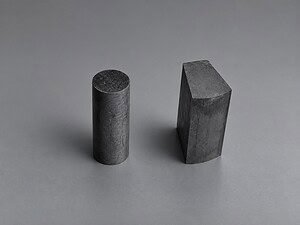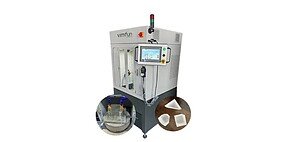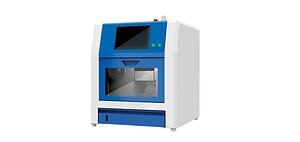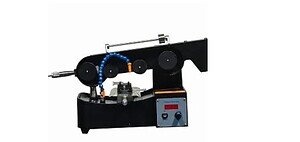
Sintered NdFeB is one of the hardest permanent magnet materials to cut cleanly. The grain boundaries are brittle, the Nd-rich phase oxidizes fast when exposed to moisture, and any thermal input during cutting can permanently damage the microstructure — reducing the magnet’s achievable performance when it’s finally magnetized downstream. We’ve processed hundreds of NdFeB blocks on our endless diamond wire saws — from small 10 × 10 mm lab samples to 60 × 40 mm production blocks — and the lesson is always the same: the cutting method you choose determines whether you end up with usable parts or expensive scrap.
This guide covers what actually matters in NdFeB cutting: which methods work, which don’t, what process parameters to use, and how to avoid the chipping, cracking, and oxidation problems that plague most magnet machining operations.
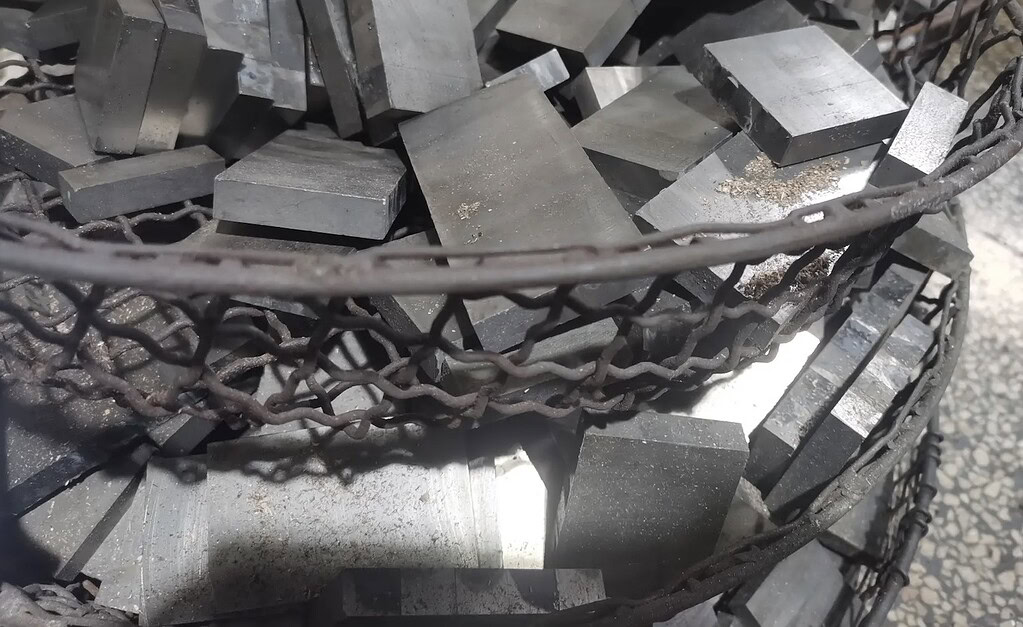
Why Is NdFeB So Difficult to Cut?
NdFeB isn’t metal in any practical machining sense. It’s a sintered powder metallurgy product — as classified under IEC 60404-8-1 for hard magnetic materials — essentially ceramic particles bonded at grain boundaries by a thin Nd-rich phase. That microstructure creates three problems that interact during cutting:
Brittleness without warning. NdFeB has a Vickers hardness around HV 570–650, comparable to hardened tool steel. But unlike steel, it has near-zero ductility. There’s no plastic deformation before fracture — cracks initiate at grain boundaries and propagate instantly. A 5–10 cm drop onto a hard surface can shatter a finished magnet. During cutting, any lateral force or vibration at the wrong moment produces edge chipping that no amount of post-processing can fix.
Oxidation sensitivity. The Nd-rich grain boundary phase is chemically reactive. Expose a freshly cut NdFeB surface to humid air, and you’ll see discoloration within hours. Use water-based coolant without corrosion inhibitors, and the cut surface develops a grey oxide layer that weakens the grain boundaries further. This is why coolant selection during NdFeB cutting isn’t optional — it’s a process-critical decision. We’ll cover this in detail in our cooling and lubrication guide.
Thermal sensitivity of the microstructure. NdFeB cutting happens before magnetization — the blanks coming off the sintering furnace are unmagnetized, so demagnetization during cutting isn’t the concern. What IS a concern is thermal damage to the grain boundary microstructure. The Nd-rich phase that bonds grains together begins to degrade above 200 °C, and excessive localized heating from EDM or aggressive blade cutting can create micro-voids and phase changes at grain boundaries. These defects don’t show up visually, but they reduce the magnet’s achievable energy product (BHmax) when it’s finally magnetized downstream. We’ve seen batches lose 3–8% of their rated grade performance because of cutting-stage thermal damage that wasn’t caught until final QC.
One practical issue worth mentioning: NdFeB cutting swarf contains fine iron-rich particles. While the workpiece itself isn’t magnetized during cutting, the swarf can still cause problems — it clogs coolant filters quickly, embeds in soft guide wheel grooves, and creates abrasive contamination if not managed. A good filtration system in the coolant loop is essential, not optional.
How NdFeB Cutting Methods Compare
Not every cutting technology handles NdFeB equally. Here’s what we’ve observed across different methods, based on both our own testing and feedback from customers who switched to diamond wire after struggling with other approaches.
Inner-Diameter (ID) Blade Cutting
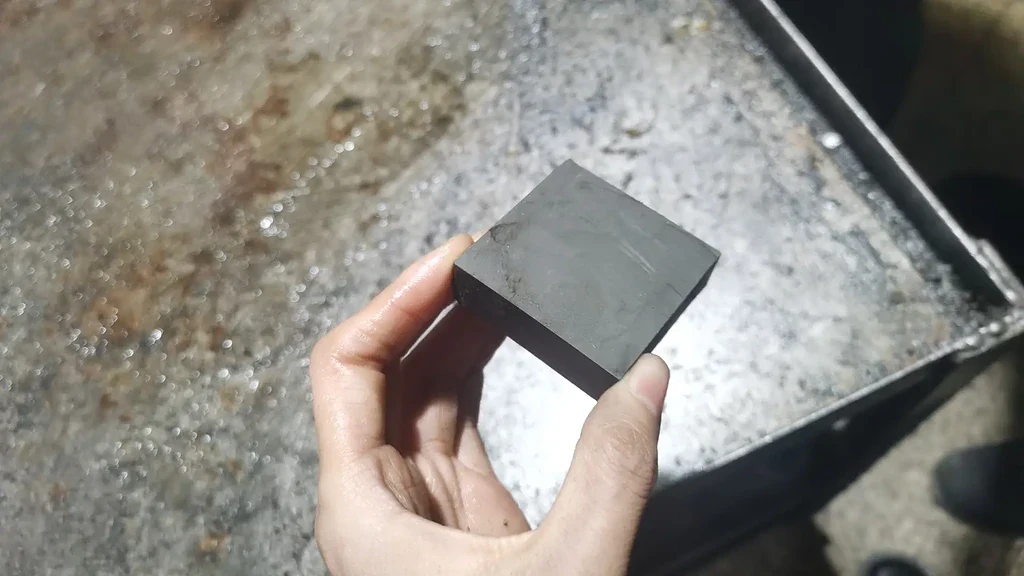
This is the traditional go-to for small NdFeB parts. An annular blade with diamond abrasive on the inner edge rotates at high speed while the workpiece feeds through. It works — but with limitations.
Blade thickness is typically 0.3–0.5 mm, which means kerf loss is significant when you’re cutting expensive rare-earth material. For a 50 mm block sliced into 2 mm wafers, you lose roughly 15–20% of the raw material just to sawdust. The lateral cutting force from the rigid blade also creates a real chipping problem on entry and exit edges, especially on blocks thinner than 5 mm.
Feed rates are typically limited to 1–2 mm/min for clean cuts. Push harder, and you get subsurface micro-cracks that show up as coating adhesion failures downstream.
EDM Wire Cutting
EDM works well for complex shapes — arcs, slots, custom profiles. The problem is physics: EDM removes material through electrical discharge, which means localized melting. The heat-affected zone on NdFeB typically extends 20–50 μm from the cut surface, creating recast layers with altered microstructure. Even though the blanks aren’t magnetized yet at this stage, the thermal damage to the Nd-rich grain boundary phase permanently degrades the material’s magnetic potential — you won’t get the full energy product when these parts are finally magnetized.
There’s also the carbonization issue. The recast layer on the EDM-cut surface contains carbon deposits that interfere with NiCuNi plating adhesion. Customers doing precision motor assemblies have told us this is a persistent reject cause.
Reciprocating Diamond Wire Saw
EDM also can’t cut ferrite or any non-conductive magnetic material. If your production mix includes both NdFeB and ferrite, you need two different cutting setups.
Long-wire saws using 1000+ meter wire spools with reciprocating motion were an improvement over blades for larger blocks. But the direction reversal — the wire stops, reverses, accelerates again — creates two problems. First, the reversal zones leave visible marks on the cut surface, creating periodic waviness that researchers have measured at PV values of 5–15 μm depending on wire speed and tension settings. Second, the maximum effective wire speed is limited to about 20 m/s because the wire can’t accelerate fast enough between reversals.
The equipment is also substantially more complex and expensive than what most small-to-medium magnet manufacturers can justify.
Endless Diamond Wire Cutting — How It Solves These Problems
The core difference is simple: a short, closed-loop diamond wire (typically 1–5 meters) runs continuously in one direction. No reversal. No acceleration cycles. No periodic marks.
On our SG20-R machines, we run NdFeB cutting with these typical parameters:
| Parameter | Typical Range | Notes |
|---|---|---|
| Wire diameter | 0.35–0.50 mm | Thinner wire = less kerf loss, but shorter life |
| Wire speed | 30–60 m/s | Higher speeds improve surface finish |
| Wire tension | 100–150 N | Lower than glass or quartz — NdFeB is relatively soft |
| Feed rate | 1.5–3.0 mm/min | Can push to 5 mm/min on smaller cross-sections |
| Coolant | Oil-based (white mineral oil) | Prevents oxidation of freshly cut surface |
| Surface roughness (Ra) | 0.3–0.5 μm | Often eliminates the need for grinding |
A few things stand out from these numbers. The wire diameter at 0.35 mm gives a kerf of roughly 0.40–0.45 mm — about half the material loss compared to ID blade cutting. For NdFeB priced at $50–80/kg for higher grades, that kerf reduction pays for itself quickly.
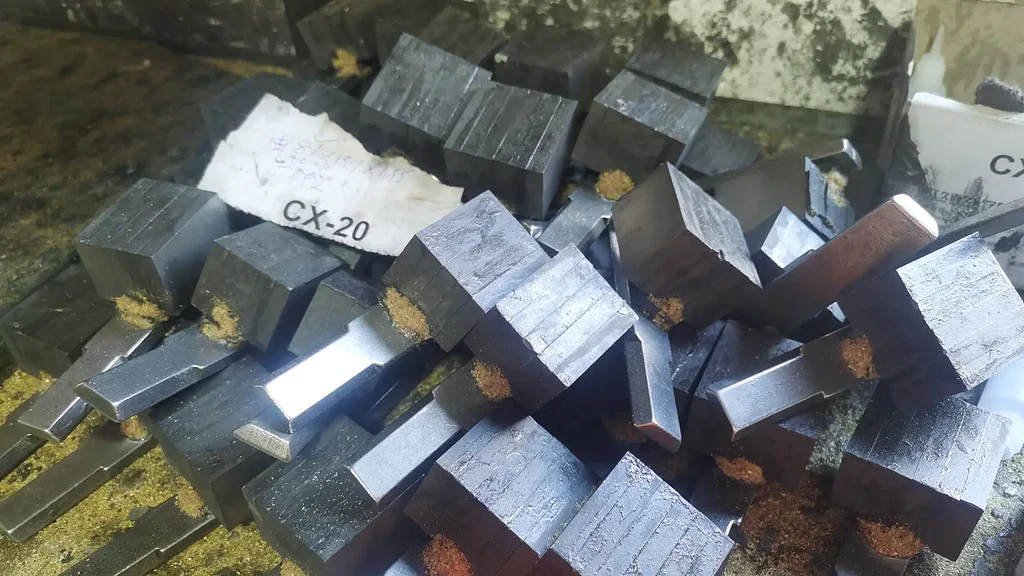
The feed rate of 1.5–3.0 mm/min might seem conservative compared to some competitor claims. In our experience, pushing beyond 3 mm/min on blocks larger than 30 mm cross-section leads to increased wire deflection and measurable waviness on the cut surface. Research published in Materials (MDPI) confirms that feed rate is the dominant factor affecting both surface roughness and waviness in diamond wire sawing of NdFeB — more so than wire speed or workpiece size.
What Happens at the Cut Surface
Understanding what’s actually going on at the microscopic level helps explain why process parameters matter.
When diamond grits on the wire contact the NdFeB surface, material removal happens through a combination of micro-cutting and brittle fracture. At the grain level, the Nd₂Fe₁₄B phase is relatively hard but cleavable, while the Nd-rich grain boundary phase is softer and more ductile. The diamond grits cut through the grain boundary phase easily, but when they hit the main phase grains, the removal mechanism shifts to fracture along crystallographic planes.
This dual-mechanism removal creates a characteristic surface morphology: relatively smooth plateaus where micro-cutting dominated, interspersed with small fracture pits where grains pulled out at the boundary. The density and depth of these fracture pits is what determines your final Ra value — and it’s directly controlled by feed rate and wire tension.
Lower feed rates mean less force per grit, which keeps more of the removal in the micro-cutting regime rather than fracture. That’s the trade-off: productivity versus surface quality. For motor magnet segments where surface flatness directly affects air-gap consistency, we recommend staying at or below 2 mm/min.
Fair warning: if you see periodic waviness on your cut surfaces (regular ridges at 0.5–2 mm intervals), the cause is almost always wire lateral vibration, not feed rate. Check your guide wheel grooves — worn grooves let the wire oscillate sideways, and the oscillation pattern transfers directly to the workpiece surface.
Coolant Selection: Oil vs. Water for NdFeB
This is where NdFeB cutting diverges sharply from cutting other hard materials like sapphire or quartz.
For most ceramics and crystals, water-based coolant works fine — it dissipates heat efficiently and is easy to manage. NdFeB is different because of the Nd-rich grain boundary phase. Water molecules react with exposed neodymium at the cut surface, forming Nd(OH)₃ and releasing hydrogen. This isn’t just surface discoloration — it’s active corrosion that weakens the grain boundaries and can cause delayed cracking hours or days after cutting.
Our recommendation: use oil-based coolant (white mineral oil or cutting oil) for all NdFeB cutting operations. The oil film protects the freshly exposed surface from moisture contact during cutting and provides adequate lubrication for the diamond wire. Heat dissipation is slightly lower than water, but since the endless wire cutting process generates minimal heat to begin with, this isn’t a practical issue.
If you must use water-based coolant (some production environments require it for fire safety or environmental reasons), add a corrosion inhibitor at minimum 3% concentration and ensure cut parts are dried and oil-coated within 30 minutes of cutting. Any longer, and you risk surface degradation that affects downstream coating adhesion.
For a detailed comparison of coolant options across different magnetic materials, see our cooling and lubrication technical guide.
Fixturing: Clamping Fragile Sintered Blanks Without Damage
Since NdFeB blanks are unmagnetized during cutting (magnetization is a downstream step), you don’t have to worry about magnetic attraction between workpiece and fixture. The real challenge is mechanical: sintered NdFeB is brittle, and excessive clamping pressure can initiate cracks before the wire even touches the material.
We use aluminum worktables as standard on all our magnet cutting setups — not because of magnetic concerns, but because aluminum is softer than NdFeB and won’t chip the workpiece edges during loading. For clamping force, less is more. The goal is to prevent workpiece movement during cutting, not to crush it into position.
For thin blanks (under 3 mm final thickness), mechanical clamping often applies too much localized stress. Adhesive mounting on a sacrificial substrate works better — wax or UV-release adhesive holds the workpiece firmly during cutting and releases cleanly afterwards without damaging the cut surfaces. This approach also eliminates the vibration that can occur when clamp contact points shift slightly during the cut.
For larger blocks and batch production, a simple vise with rubber-padded jaws provides adequate holding force without the risk of edge damage.
More detail on fixture design options in our workpiece fixture guide.

Typical NdFeB Cutting Applications
Motor Magnet Segments
Electric vehicle and servo motor manufacturers need arc-shaped NdFeB segments with tight thickness tolerances (±0.05 mm or better) and consistent surface finish for reliable coating adhesion. The endless wire saw handles the initial block slicing, producing flat blanks that go directly to profile grinding with minimal stock removal. Some customers have reduced their grinding cycle time by 40% after switching from blade cutting, simply because the wire-cut surface is flatter and has less subsurface damage.
Sensor Magnets
Precision sensors for automotive and industrial applications require small NdFeB pieces — often 3 × 3 × 2 mm or smaller. At these dimensions, the low cutting force of diamond wire is critical. Blade cutting at these sizes has unacceptably high reject rates due to corner chipping.
R&D Sample Preparation
Research labs cutting NdFeB for magnetic property measurement need clean surfaces without thermal or mechanical damage artifacts. Our SG20 desktop model handles this well — one operator can set up and cut a test sample in under 10 minutes, including fixturing.
Large Block Sectioning
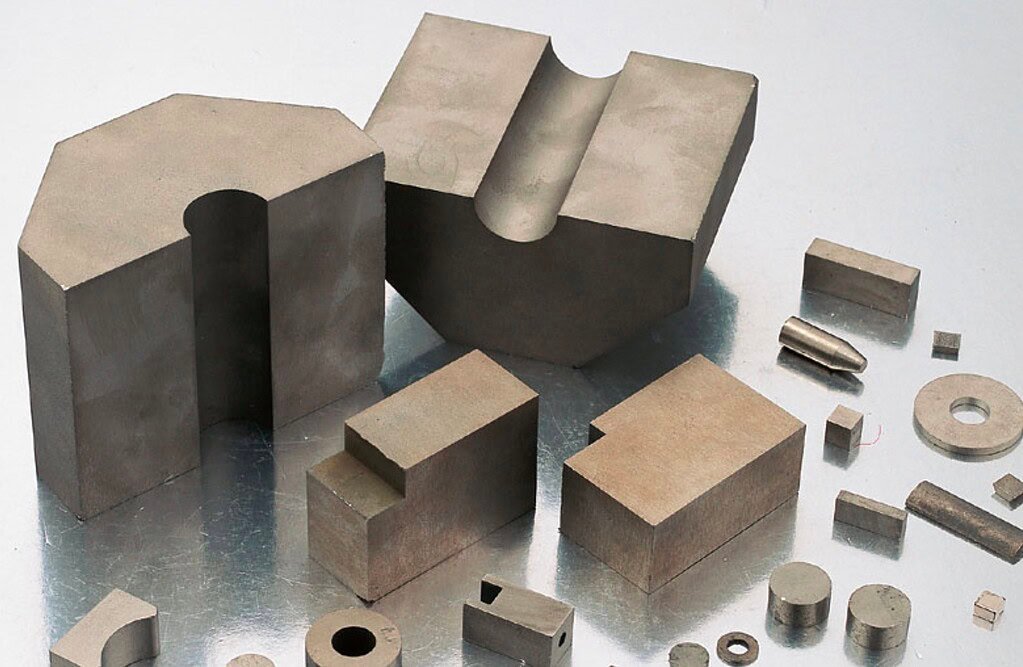
Production-scale NdFeB blocks (50 × 40 × 30 mm or larger) from sintering furnaces need to be sectioned into smaller blanks before final machining. The endless wire’s thin kerf directly reduces material waste compared to blade cutting — and for N52 or higher grades priced at $70+/kg, that waste reduction is significant.
Post-Cutting: What to Do Immediately After NdFeB Cutting
The 30 minutes after cutting are critical for NdFeB. Freshly cut surfaces are chemically active, and exposure to humid air starts the oxidation clock.
Step 1: Remove cutting swarf. Use compressed air (dry, filtered) or an ultrasonic bath in oil. Do not use water for cleaning uncoated NdFeB parts.
Step 2: Apply protective oil film. If parts aren’t going immediately to coating, apply a thin layer of anti-rust oil. This buys you 24–48 hours of handling time in a normal shop environment.
Step 3: Store in sealed bags with desiccant. For parts waiting for downstream operations (grinding, coating), sealed polyethylene bags with silica gel packets prevent moisture-induced corrosion.
Step 4: Move to surface treatment. The final protection is electroplating (NiCuNi is most common), epoxy coating, or other barrier treatment. Our surface finishing guide covers the edge preparation and chamfering steps that improve coating adhesion and longevity.
Common NdFeB Cutting Problems and Solutions
Edge chipping on entry/exit: Reduce feed rate to 1.0 mm/min for the first and last 2 mm of each cut. If chipping persists, check wire tension — too high causes the wire to “dig in” at the edges.
Surface discoloration after cutting: Almost always moisture-related oxidation. Switch to oil-based coolant and reduce time-to-protective-coating. If already using oil coolant, check for water contamination in your oil supply.
Inconsistent slice thickness: Usually caused by wire deflection under load. Reduce feed rate, increase wire tension slightly (in 10 N increments), and verify guide wheel groove condition. Worn grooves are the most common root cause we see in the field.
Wire breakage: On NdFeB, wire breakage is less common than with harder materials like SiC, but it happens. Check for sharp corners on the workpiece that create stress concentration on the wire. Pre-chamfering workpiece edges before cutting can help. Also verify your wire isn’t past its service life — track cutting meters and replace proactively.
Swarf accumulation clogging coolant system: NdFeB cutting generates fine metallic particles that settle in coolant tanks and clog filters quickly. Install a high-capacity filtration system (magnetic separators won’t help here since the swarf is unmagnetized) and clean the coolant tank regularly. Some of our customers use multi-stage filtration — coarse mesh plus paper filter — to keep coolant flowing clean.
When Endless Wire Isn’t the Right Choice for NdFeB
We should be honest about limitations. Endless diamond wire cutting is excellent for precision slicing and block sectioning, but it’s not the answer for every NdFeB machining operation.
For complex 3D profiles — arcs, tapered slots, radius features — EDM wire cutting still offers more geometric flexibility, despite the thermal tradeoffs. Our machines can do profile cuts using the SGI20 contour cutting model, but true freeform shapes are better handled by EDM.
For very high-volume wafer production (thousands of identical slices per day), a multi-wire saw cutting 50–100 slices simultaneously will outproduce any single-wire system. The trade-off is equipment cost, complexity, and the fact that all slices must be the same thickness.
For surface grinding to final dimension, you still need dedicated grinding equipment. The wire saw gets you close — often within 0.05 mm of final thickness with Ra 0.3–0.5 μm — but applications requiring Ra < 0.1 μm or tolerances under ±0.01 mm need grinding or lapping as a finishing step.
Getting Started: Recommended Machine Configuration for NdFeB
If you’re evaluating endless diamond wire cutting for NdFeB magnet production, here’s what we’d suggest as a starting setup:
Machine: SG20-R with oscillation function — the rotation axis lets you cut both flat slices and cylindrical magnets. Handles workpieces up to 200 × 200 × 200 mm.
Wire: 0.35 mm diameter electroplated diamond wire loop, medium grit (recommended for sintered NdFeB). Expected wire life: 5–7 days at 8 hours/day continuous operation.
Coolant: White mineral oil. Flow rate sufficient to maintain a continuous film at the cutting zone — typically 2–4 L/min.
Fixturing: Aluminum worktable with rubber-padded clamps. For thin slices (under 3 mm), consider adhesive mounting on a sacrificial plate to avoid clamp-induced cracking.
We offer free test cutting for customers evaluating the technology. Send us your NdFeB samples — we’ll cut them with documented parameters and return the samples with a surface quality report. That’s the fastest way to determine if the process meets your specific requirements.
Learn more about magnet machining →
Related Magnet Machining Resource
For the complete process overview, see our magnet machining guide.