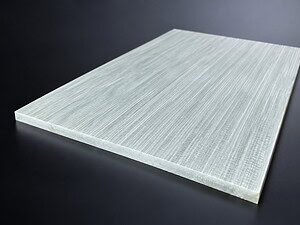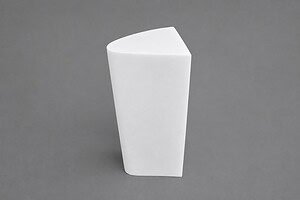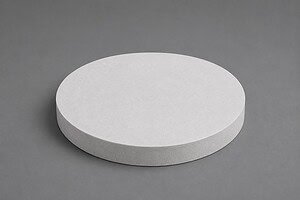
GFRP diamond wire cutting solved a difficult production problem on a 50mm-thick glass fiber reinforced plastic blank: achieving clean through-cuts with no exit-edge delamination, no frayed fibers, and no glass fiber dust entering the work environment.
The first batch was cut with a conventional carbide-tipped band saw. Delamination appeared on most of the thick sections. Frayed fibers at the exit edge needed secondary trimming. And the dry cut sent fine glass fiber particulate into the air — a respiratory hazard that required PPE and ventilation upgrades the shop hadn’t budgeted for.
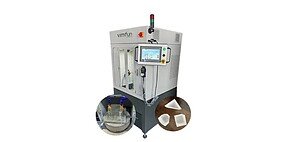
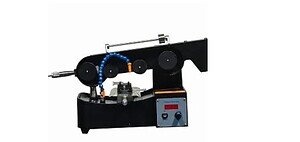
This GFRP cutting case study explains how we processed the same blanks on the VIMFUN SH60-60 endless diamond wire saw, which parameters we used, and how the finished parts compared with band-sawn blanks.
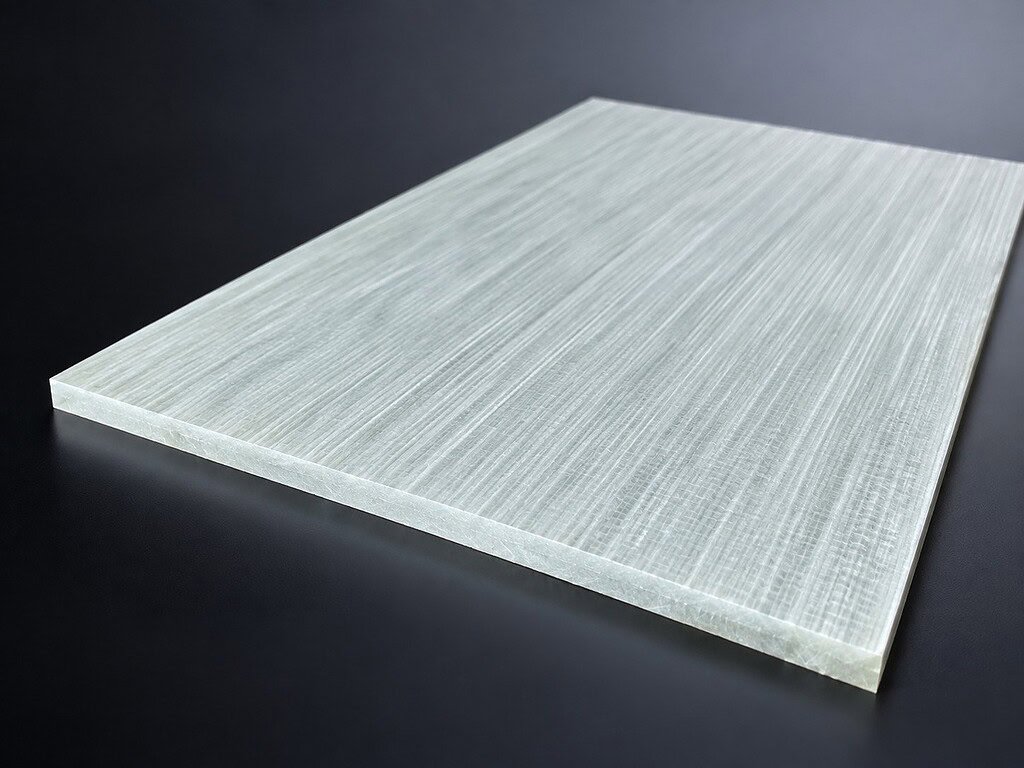
GFRP Diamond Wire Cutting Results at a Glance
- 50mm GFRP blanks cut without exit-edge delamination
- Clean, uniform fiber edges with no secondary trimming
- 0.8mm kerf instead of the band saw’s 2.5–3mm kerf
- Continuous wet cutting that captures fiber particulate at the source
- Consistent cut geometry from entry to exit
The Application: GFRP Blanks for Precision Component Manufacturing
GFRP — glass fiber reinforced plastic — is a composite material made of woven or chopped glass fibers embedded in a polymer resin matrix, most commonly epoxy, polyester, or vinylester. The layered construction gives GFRP a high strength-to-weight ratio and useful electrical insulating properties, which is why it shows up in wind turbine blade components, aerospace structural brackets, industrial insulation panels, and printed circuit board substrates.
In these applications, blanks need to be cut to shape before further processing: profiling, drilling, bonding, or lamination. The cutting step sounds simple. The material properties make it anything but.
の composites industry has documented GFRP cutting challenges extensively, particularly for structural-grade laminate used in applications where post-cut surface condition directly determines whether the part passes or fails downstream inspection.
The Challenge: Three Failure Modes in One Material
GFRP’s layered structure creates three simultaneous cutting problems that conventional saws cannot solve together.
Delamination. The glass fiber plies are bonded by resin, not fused. Any cutting method that applies lateral peel force — which includes every toothed blade or abrasive disc rotating through the workpiece — risks shearing the inter-ply bond before the cut is finished. On blanks thicker than about 20mm, this shows up as visible separation at the exit edge. The deeper the cut, the worse the delamination, because the blade vibration has more distance to propagate before it exits.
Frayed fiber exits. Tooth geometry on conventional saws catches and pulls glass fibers at the cut exit rather than cleanly severing them. The result is a frayed border that looks fine at entry and ragged at exit. Secondary trimming adds cost and handling time — and handling GFRP with frayed edges generates more loose fiber particulate.
Airborne glass fiber dust. Glass fiber cut dry produces fine respirable particulate. According to OSHA guidelines on fiber dust exposure, engineering controls — not just PPE — are required when workers are exposed to airborne glass fibers. Wet cutting is the standard engineering control. Conventional saws typically aren’t set up for full-kerf coolant flooding on composite blanks.
All three failure modes appeared on the first GFRP batch. The band saw handled one cut at a time with reasonable cycle times, but scrap from delamination, rework from fraying, and the respiratory control requirement made the conventional approach unworkable for production volume.
GFRP Diamond Wire Cutting Process and Parameters
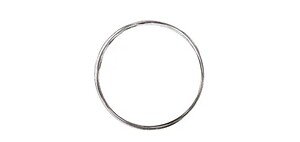
We ran the GFRP blanks on the VIMFUN SH60-60 endless diamond wire saw. This GFRP diamond wire cutting process uses a 0.8mm electroplated ダイヤモンドワイヤーループ at continuous speed, with no tooth engagement, impact loading, or lateral peel force.
| パラメータ | 価値 | 備考 |
|---|---|---|
| 機械 | VIMFUN SH60-60 | エンドレスダイヤモンドワイヤーソー |
| ワイヤーの直径 | 0.8 mm | Endless loop, no weld joints |
| ワイヤースピード | 50 m/s | Constant throughout cut |
| ワイヤーテンション | 120–160 N | Adjusted by material density |
| 送り速度 | 30–60 mm/min | Varies with resin content and blank thickness |
| 冷却水 | Continuous flood — full kerf depth | Water-based coolant throughout cut |
| 切り込み幅 | ~0.8 mm | Matches wire diameter |
| 表面仕上げ | Clean matte, no delamination | No secondary finishing required |
For the relationship between wire speed, tension, and feed rate and how these interact in practice, see the ワイヤ速度、張力、および送り速度ガイド.
Setting the Feed Rate
Feed rate is the parameter with the widest range here — 30 to 60 mm/min — and it’s the one most likely to cause problems if set by feel rather than by material.
The range exists because GFRP isn’t uniform. Resin content varies between grades and suppliers. Fiber orientation (0°/90° vs. ±45° layups) changes how much abrasive resistance the wire encounters. Blank thickness determines how long the wire stays in the cut zone per unit depth.
For the 50mm blanks in this case study, we started at 35 mm/min regardless of grade — because the longer contact path at this thickness generates heat even at moderate feed — then stepped up in 5 mm/min increments while monitoring the cut surface. On standard E-glass/epoxy construction, 50 mm/min produced clean matte surfaces consistently. At 60 mm/min, some grades showed faint texture variation near the exit edge — still within spec, but noticeably different under oblique light.
One thing worth knowing: feed rate optimization doesn’t carry over unchanged between material lots. If your supplier changes their GFRP formulation — which can happen within the same grade designation — resin content shifts enough to move your optimal feed rate by 10–15 mm/min. We run a test cut at the start of each new batch.
Coolant: More Than Just Dust Control
The obvious function of wet cutting is particulate capture. Continuous coolant flood prevents glass fiber dust from becoming airborne — every particle generated at the kerf gets carried away in the coolant stream before it reaches the breathing zone.
The less obvious function is thermal management. The GFRP resin matrix softens at elevated temperature. At 50 m/s wire speed, the cut zone generates enough heat to cause local resin softening if the kerf runs dry, which produces surface smearing and slight dimensional instability in the exit region. Coolant keeps the cut zone at near-ambient temperature throughout.
At a feed rate of 50 mm/min through 50mm thickness, the kerf accumulates depth quickly. We found that coolant flow below about 2 L/min left the lower half of the kerf underserved — visible as a slightly different texture in the bottom 10–12mm versus the top. Maintaining a minimum of 2–3 L/min across the full cut depth resolved it. This detail doesn’t appear in most parameter tables, but it matters.
For a comparable example of how full-kerf coolant delivery affects surface consistency in another material class, see the 新しい生産例は.
GFRP Cutting Results: No Delamination or Secondary Finishing
After switching to GFRP diamond wire cutting on the SH60-60, the three failure modes disappeared.
Zero delamination. The endless wire applies cutting force along the feed direction — there is no lateral peel component across the ply interfaces. Delamination at the exit edge went from appearing on most thick-section cuts to zero across the full production run.
No frayed fibers. The abrasive action of the diamond wire severs glass fibers cleanly at the kerf wall. The cut surface comes off the machine with a uniform matte finish — no fraying, no loose fiber ends, no secondary trimming required.
No airborne dust. Continuous coolant flood captures all particulate at the kerf. No airborne fiber exposure, no PPE escalation, no ventilation modifications.
Kerf loss is 0.8 mm — equal to the wire diameter. The band saw kerf was 2.5–3 mm. On tight-tolerance blanks, that difference matters for material yield.
The cut geometry is consistent across the full 50mm depth. There is no taper between entry and exit, which was an occasional issue with the band saw on thick sections where blade deflection grew over the cut depth.
On the pre-sintered alumina ceramic cutting case, we saw similar behavior — a hard, layered material where controlled low-force abrasion eliminated the fracture damage that pulsed cutting caused. The pre-sintered alumina ceramic cutting case study covers the parallel in detail.

Can We Cut Your GFRP Blank?
We provide GFRP diamond wire cutting for blanks, panels, and structural laminate sections in a range of geometries. If you’re dealing with delamination on thick sections, frayed exit edges, or dust-control requirements that conventional saws don’t meet, the SH60-60 process described here is a practical starting point.
プロセス推奨事項を提供するために、以下をお送りください。
- Blank thickness and dimensions
- GFRP grade or resin system if known (epoxy, polyester, vinylester; fiber orientation)
- Cut geometry — straight through-cuts, profiling, or step cuts
- Surface quality requirement or existing tolerances
- Volume (sample qualification vs. production)
We’ll confirm parameter ranges for your material, advise on fixturing, and offer trial cutting on your actual blank before production commitment. VIMFUN also cuts a broad range of other hard and brittle materials — from optical quartz to advanced ceramics — and if your application involves multiple materials or processes, the Faraday rotator garnet cutting page gives a sense of the platform’s range.
Frequently Asked Questions About GFRP Diamond Wire Cutting
Can diamond wire cut thick GFRP without delamination?
Yes. The continuous abrasive cutting action applies low cutting force without the tooth impact and lateral peel force associated with conventional saw blades. In this case, 50mm GFRP blanks were cut with no visible exit-edge delamination.
What kerf width does GFRP diamond wire cutting produce?
With the 0.8mm wire used in this case, the kerf was approximately 0.8mm. By comparison, the previous band saw produced a 2.5–3mm kerf, so the diamond wire process improved material yield.
Does wet diamond wire cutting control glass fiber dust?
Continuous full-kerf coolant captures cutting debris at the source and prevents dry fiber particulate from becoming airborne. Coolant also limits resin softening by controlling heat in the cut zone.
What information is needed for a GFRP cutting trial?
Send the blank dimensions, thickness, resin system, fiber orientation, required cut geometry, tolerance, surface-quality target, and expected production volume. We can then recommend starting parameters and trial-cut the actual material.