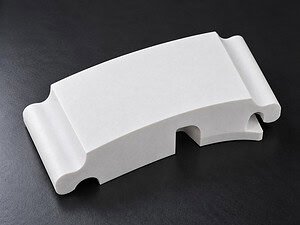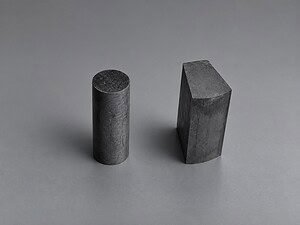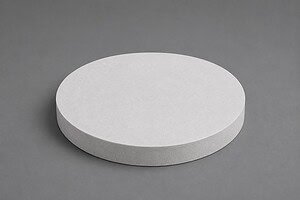
In modern industrial material processing, slicing hard, brittle, and advanced composite materials requires an optimal balance between precision surface quality and high throughput. While single-wire diamond saws are widely used for individual R&D sample preparation and large-ingot sectioning, high-volume production facilities rely on multi-wire cutting technology to dramatically multiply manufacturing output. Among these, the 5-wire cutting machine—an industrial multi-wire diamond saw configured with five parallel endless diamond wire loops—has become a cornerstone for simultaneous multi-slice wafering.
However, technical documentation online often creates confusion between two completely unrelated concepts: electrical cable stripping tools and industrial precision multi-wire diamond saws. This guide addresses industrial manufacturing engineers, workshop technicians, and laboratory specialists, providing a comprehensive, step-by-step operating manual for setting up, running, and maintaining an industrial 5-wire diamond cutting machine for high-value substrates.
What is a 5 Wire Cutting Machine in Industrial Manufacturing?
In precision manufacturing, a 5-wire cutting machine is an advanced multi-wire saw that utilizes five high-tensile core wires electroplated or embedded with microscopic diamond abrasives. These wires run parallel to each other over precision-grooved guide rollers (pulleys) at high linear speeds (typically 30–60 m/s [待确认]).
Unlike single-wire machines that execute one cut at a time, a 5-wire diamond saw sections a single workpiece block into four complete uniform slices (plus two end-pieces) in a single synchronized downfeed cycle. This configuration offers substantial advantages:
- 5x Slicing Throughput: Multiplies production capacity without requiring multiple separate machine footprints.
- Uniform Thickness Tolerances: Because all five cutting channels are guided by precision-machined roller grooves, thickness variation between adjacent slices is strictly controlled.
- Ultra-Narrow Kerf Loss: Utilizing ultra-fine diamond wires (typically 0.25–0.5 mm in core diameter) minimizes kerf loss compared to heavy circular saw blades or bandsaws.
- Low Thermal and Mechanical Stress: The continuous unidirectional micro-grinding motion generates minimal cutting forces, preventing micro-cracking and chipping on brittle crystal lattices.
How Does an Industrial 5-Wire Diamond Saw Work?
The operating mechanism of an industrial 5-wire cutting machine relies on four synchronized mechanical and digital sub-systems:
- Multi-Wire Web Drive: An endless diamond wire loop is routed across multi-grooved guide rollers to form a flat, horizontal or vertical web of five tensioned, parallel cutting lines. Driven by a high-torque brushless spindle motor, the wires run continuously in a single direction.
- Pneumatic/Mechanical Tensioning: Precise tension control maintains consistent line stiffness across all five cutting channels, eliminating wire deflection and ensuring parallel cut faces.
- Precision Z-Axis Downfeed: A servo-driven ball screw system feeds either the wire web or the workpiece table at microscopic downfeed rates (typically 0.1–5 mm/min depending on material hardness and block thickness).
- Fluid Management or Vacuum Exhaust: For semiconductor silicon, quartz, and technical ceramics, continuous liquid coolant flushing dissipates frictional heat and clears swarf. For dry-cut materials like high-density graphite, an integrated industrial dust collection vacuum exhausts fine particulates immediately.

Step-by-Step Guide to Operating a 5-Wire Diamond Cutting Machine
Step 1: Workpiece Preparation and Carrier Mounting
Before initiating any cut, ensure the workpiece is properly prepared and rigidly fixtured:
- Surface Inspection: Clean the raw ingot, boule, or block (e.g., silicon, optical glass, sintered ceramic, or graphite) to remove loose grit, oil, or contaminants.
- Carrier Fixturing: Secure the workpiece onto a sacrificial mounting carrier (such as an aluminum fixture plate or phenolic resin board) using specialized mounting wax, epoxy, or mechanical chucks. Rigid bonding is essential; any workpiece vibration during cutting will induce wire deflection and surface striations.
- Orientation Alignment: Mount the carrier onto the machine worktable and verify alignment relative to the wire cutting web using a dial indicator.
Step 2: Inspecting and Tensioning the 5 Diamond Wire Channels
The structural integrity of the diamond wire web directly dictates cut flatness and surface roughness:
- Groove Seating: Verify that each of the five diamond wire loops is correctly seated in the designated guide roller grooves. The spacing between grooves defines the nominal thickness of the sliced wafers.
- Tension Calibration: Engage the pneumatic or mechanical wire tensioning unit. Verify that tension levels across all five wire channels match the manufacturer’s specified range [待确认]. Uneven tension can cause individual wires to bow under feed load, creating uneven slice thicknesses.
- Wire Condition Check: Inspect the wire surface under optical magnification for diamond abrasive stripping, kinks, or localized core fatigue. Replace worn wire loops prior to starting high-value batch production.
Step 3: Programming Cutting Parameters via the CNC/PLC Controller
Modern 5-wire machines utilize touch-screen PLC or CNC interfaces. Configure process parameters based on the physical properties of the target material:
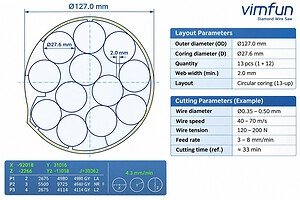
- Linear Wire Speed (m/s): Set the optimal surface speed. Higher speeds (40–60 m/s [待确认]) are standard for dense, brittle ceramics and silicon; moderate speeds are selected for softer carbon materials.
- Feed Rate (mm/min): Set a conservative downfeed rate for entry to prevent initial shock on sharp edges, transition to steady-state slicing speed across the main cross-section, and reduce speed during final breakthrough into the sacrificial carrier.
- Coolant Delivery: Ensure coolant nozzles are precisely aimed at the entry kerfs across all five cutting lines, verifying steady liquid pressure and unimpeded spray patterns.
Step 4: Executing the Synchronized Multi-Wire Cut
With parameters verified, execute the automated cutting cycle:
- Coordinate Zeroing: Jog the machine axes to set the workpiece reference zero point, ensuring adequate clearance before feed engagement.
- Interlock Verification: Confirm that safety enclosure doors are closed and that emergency stop circuits, wire-break sensors, and coolant pressure switches are operational.
- Cycle Start: Initiate the program. The machine will spool the diamond wires up to target linear velocity, engage the coolant pump or dust collector, and initiate controlled downfeed.
- In-Process Monitoring: Observe real-time spindle load and feed resistance on the control panel. Any sudden spike in motor current indicates potential wire binding or material inclusion.
Step 5: Post-Cut Unloading, Cleaning, and Quality Inspection
Once the wire web cuts through the workpiece and enters the sacrificial substrate:
- Wire Web Retraction: The system automatically stops wire motion and retracts the wire frame or table to the clearance home position.
- Component Extraction: Release the fixturing plate. Carefully unmount the sliced wafers from the mounting wax using hot water, mild heating plates, or chemical release solvents.
- Ultrasonic Cleaning: Wash the cut components in an ultrasonic bath to remove residual swarf and coolant droplets.
- Metrology Inspection: Measure slice thickness across multiple points using a digital micrometer to verify Total Thickness Variation (TTV), face Perpendicularity, and surface roughness (Ra).

Preventive Maintenance for 5-Wire Diamond Saws
To preserve tight micron-level slicing tolerances over extended production campaigns, adhere to a rigorous maintenance schedule:
- Guide Roller Inspection: Guide rollers with U-shaped or V-shaped grooves experience gradual wear from diamond wire abrasion. Inspect groove depth and profile weekly; worn grooves allow lateral wire play, causing taper errors.
- Coolant Filtration Management: In wet-cutting configurations, fine particulate swarf (especially from silicon or ceramics) can degrade pump seals and re-enter kerfs. Regularly clean magnetic separators, paper band filters, and cartridge strainers.
- Spindle and Axis Lubrication: Lubricate linear guide rails, ball screws, and high-speed bearings in accordance with manufacturer maintenance schedules to ensure smooth, stick-slip-free feed motion.
Advanced 5-Wire Slicing Solutions: Vimfun SVM Series
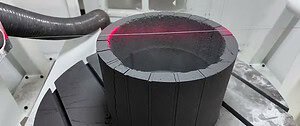
When selecting or upgrading multi-wire cutting equipment, engineering reliability and structural rigidity are vital. Vimfun (manufactured by Zhengzhou Shine Smart Equipment Ltd.) specializes in industrial endless diamond wire cutting machinery. Our flagship SVM 60-60 Advanced 5-Wire Multi Wire Saw is engineered specifically for parallel slicing of high-density graphite, green-body ceramics, semiconductor ingots, and advanced composites.
Featuring customizable roller groove pitch, high-speed endless diamond wire drive, and rigid gantry construction, Vimfun multi-wire platforms deliver exceptional slicing throughput while minimizing kerf loss. Explore our complete range of diamond wire saws or consult our technical team for custom trial cuts.
Frequently Asked Questions (FAQ)
Can a 5-wire cutting machine slice wafers of different thicknesses?
The slice thickness on an endless multi-wire saw is fundamentally determined by the groove pitch machined into the guide rollers. To adjust wafer thickness, operators install interchangeable guide roller sets machined with different groove spacings.
What is the difference between a 5-wire saw and a single-wire saw?
A single-wire saw operates with one continuous diamond wire loop, cutting a single slice per feed cycle. It is highly versatile for varying cut sizes and laboratory research. A 5-wire cutting machine utilizes five parallel cutting loops simultaneously, multiplying production throughput by five times while maintaining identical cutting conditions across all slices.
Does a 5-wire machine cut wet or dry?
Operating mode depends on the material being sliced. Dense, thermal-sensitive, or crystalline materials (silicon ingots, quartz, ceramics) require wet flood-coolant cutting to remove swarf and dissipate heat. Conversely, porous or high-purity graphite is commonly processed dry using a sealed cutting chamber connected to an industrial dust collection system.
What materials can be cut on an industrial 5-wire saw?
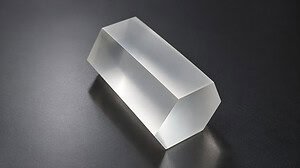
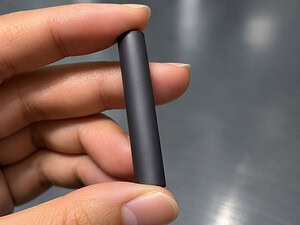
Industrial 5-wire diamond saws are widely utilized for slicing monocrystalline and polycrystalline silicon, high-purity isostatic graphite, pre-sintered (green body) technical ceramics, optical quartz, porous metals, and carbon-carbon composites.