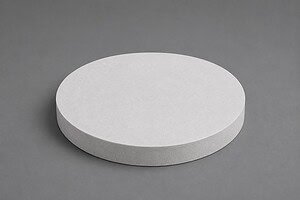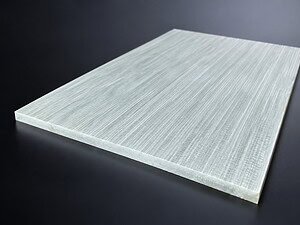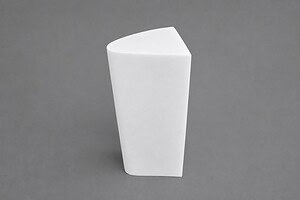
When scaling up the production of precision-sliced components—whether for semiconductor devices, optical filters, structural ceramics, or graphite electrodes—process engineers inevitably face a critical bottleneck: cutting throughput. While single-wire diamond saws offer unmatched flexibility for prototype cutting and complex profiling, high-volume manufacturing demands parallel multi-line slicing. Investing in a 5-wire cutting machine provides the ideal production bridge, delivering 5x the wafering throughput of a single-wire unit within a compact machine footprint.
However, selecting the right industrial multi-wire cutting equipment requires a thorough evaluation of technical specifications, mechanical kinematics, and material compatibility. This comprehensive buyer’s guide breaks down the essential engineering criteria for choosing the best 5-wire diamond cutting machine for your manufacturing requirements.
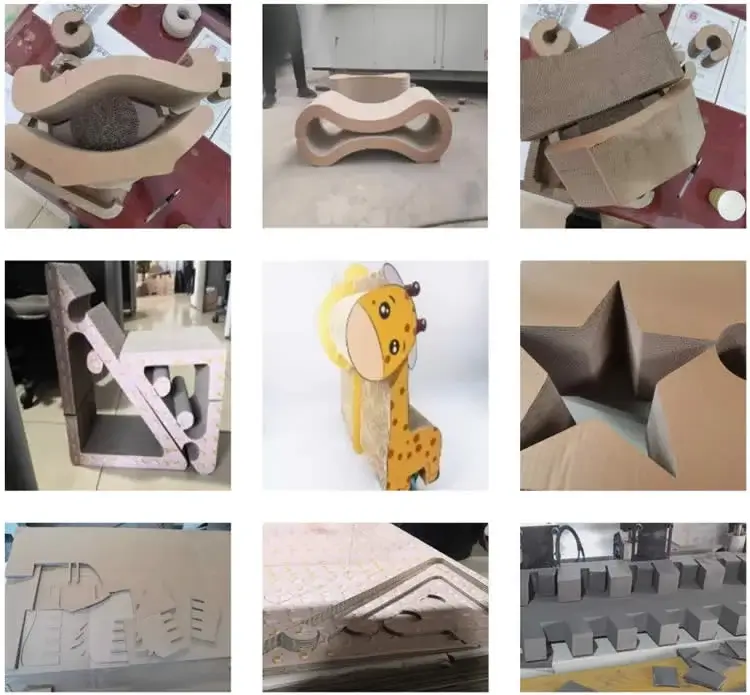
What is an Industrial 5-Wire Cutting Machine?
In advanced material processing, a 5-wire cutting machine is an industrial multi-wire saw that drives five continuous, parallel diamond wire loops simultaneously. Running over precision-machined grooved guide rollers at high linear speeds (typically 30–60 m/s [待确认]), the wire web slices an entire workpiece block into four uniform wafers plus two end-pieces in a single, automated downfeed cycle.
Unlike electrical cable cutting tools or wire strippers often confused by search engines, industrial 5-wire saws utilize microscopic diamond abrasives bonded to high-tensile core wires to gently micro-grind through ultra-hard, brittle, or composite substrates with minimal kerf loss and zero thermal damage.
Key Factors to Consider When Choosing a 5-Wire Cutting Machine
1. Roller Groove Pitch and Slicing Thickness Flexibility
On an endless multi-wire diamond saw, the nominal wafer thickness is determined by the spacing (pitch) between the grooves on the guide rollers. When evaluating equipment, consider your production requirements:
- Dedicated High-Volume Production: If your facility produces a standardized wafer thickness (e.g., standard graphite plates or solar wafers), fixed-pitch roller systems deliver maximum mechanical rigidity and long-term repeatability.
- Multi-Product Flexibility: If your production line or R&D lab handles diverse component thicknesses, choose a machine designed for rapid guide roller interchangeability. Ensure the manufacturer provides precision-machined custom roller sets tailored to your target slice thicknesses.
2. Workpiece Capacity and Effective Cutting Stroke
Assess the maximum physical dimensions of the blocks you intend to slice. Key geometric envelopes include:
- Maximum Workpiece Dimensions (L × W × H): For example, industrial-class machines like the Vimfun SVM 60-60 accommodate block cross-sections up to 600 × 600 mm [待确认], allowing large-format graphite blocks or stacked multi-boule configurations.
- Z-Axis Feed Stroke: Verify that the vertical feed axis provides sufficient clearance for loading carriers, sacrificial mounting fixtures, and tall ingots without risk of collision.
3. Wire Tensioning System and High-Speed Drive Stability
Maintaining uniform, stable tension across all five wire channels is the single most critical factor in preventing wire deflection, wafer taper, and surface waviness:
- Pneumatic vs. Mechanical Tensioning: Closed-loop pneumatic tensioning systems automatically compensate for micro-elongation of diamond wire loops during prolonged high-speed running, ensuring identical tension across every wire channel.
- High-Speed Unidirectional Movement: Ensure the drive spindle is powered by a high-torque, dynamically balanced brushless motor. Endless unidirectional diamond wire loops eliminate the shock, wire chatter, and surface striations associated with reciprocating wire systems.
4. Diamond Wire Capability and Kerf Loss Reduction
For expensive or high-purity substrates—such as monocrystalline silicon, laser crystals, or specialty ceramics—material lost as kerf dust represents a direct operational cost:
- Compatible Wire Diameters: Look for a machine capable of handling fine diamond wire loops (typically 0.25 mm to 0.5 mm in core diameter). Thinner wires significantly reduce kerf width, allowing you to yield more usable slices per raw ingot.
- Diamond Abrasive Bonding: Confirm compatibility with both electroplated and resin-bonded endless diamond wire loops to match the abrasion characteristics of your target materials.
5. Environmental Processing: Wet Coolant vs. Dry Dust Collection
Different materials require different cutting environments. The best 5-wire machine must accommodate the correct processing mode:
- Wet Flood-Coolant Systems: Mandatory for semiconductor silicon, optical quartz, and dense ceramics to flush swarf and prevent frictional heat buildup. Ensure the machine features closed-loop filtration, splash-proof enclosures, and corrosion-resistant stainless-steel components.
- Dry Dust-Collection Integration: Crucial for materials like high-density isostatic graphite or pre-sintered green ceramics that can be contaminated or ruined by liquid contact. Verify that the cutting chamber is sealed and equipped with standardized vacuum exhaust ports.

Material Processing Capabilities of 5-Wire Saws
An industrial 5-wire diamond saw is engineered to process a broad range of non-metallic, hard, brittle, and advanced composite materials:
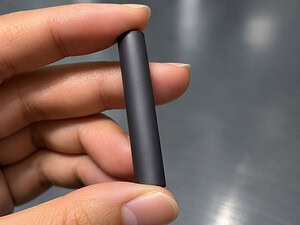
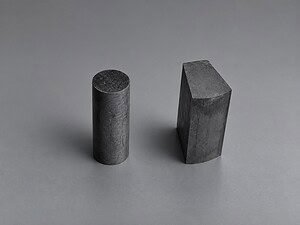
- High-Density Isostatic Graphite: Ideal for slicing graphite EDM electrodes, heat-exchanger plates, and semiconductor furnace hot-zone components with sharp, chip-free edges.
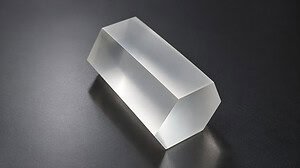
- Semiconductor & Photovoltaic Substrates: Monocrystalline silicon, polycrystalline ingots, and compound semiconductors sliced with minimal Sub-Surface Damage (SSD).
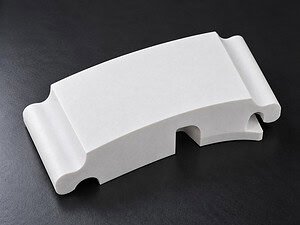
- Advanced Structural Ceramics: Pre-sintered (green body) zirconia, alumina, and silicon carbide blocks sliced rapidly prior to final furnace firing.
- Optical & Laser Glass: Borosilicate glass blocks, fused quartz plates, and synthetic crystals where kerf minimization and surface parallelism are paramount.
- Composite Materials: Carbon-carbon (C/C) composites and porous metals sliced cleanly without delamination or internal pore collapse.
Comparison: 5-Wire Diamond Saw vs. Alternative Slicing Technologies
| Feature / Technology | 5-Wire Endless Diamond Saw | Single-Wire Diamond Saw | Diamond Gang Saw / Blade Pack |
|---|---|---|---|
| Throughput | High (5 simultaneous cuts per cycle) | Moderate (1 cut per cycle) | High (multiple blades) |
| Kerf Loss | Ultra-Narrow (~0.3–0.6 mm) | Ultra-Narrow (~0.3–0.6 mm) | Substantial (>1.5–3.0 mm) |
| Cutting Stress & Chipping | Minimal (gentle micro-grinding) | Minimal (gentle micro-grinding) | High mechanical & shear stress |
| Surface Finish & Flatness | High flatness, low Ra, no striations | High flatness, low Ra | Blade deflection causes dishing |
| Setup Flexibility | Fixed or interchangeable pitch rollers | Completely arbitrary cut dimensions | Complex blade spacers and tensioning |

Why Choose Vimfun 5-Wire Cutting Machinery?
Selecting the best multi-wire saw requires partnering with an experienced manufacturer that understands diamond wire dynamics. Vimfun (manufactured by Zhengzhou Shine Smart Equipment Ltd.) is a pioneer in precision endless diamond wire cutting systems.
Our flagship SVM 60-60 Advanced 5-Wire Multi Wire Saw represents the benchmark in multi-wire slicing technology:
- Optimized Multi-Wire Drive: Engineered for continuous high-speed loop operation, maximizing wire life while maintaining flawless surface integrity.
- Heavy-Duty Gantry Architecture: Premium cast and welded structural gantry eliminates vibration, ensuring exceptional thickness uniformity across every slice.
- Intelligent PLC/CNC Control: Programmable multi-stage downfeed curves, automatic wire tension monitoring, and immediate wire break safety shutdown.
- Step-by-Step Operator Guidance: For practical operating procedures on these systems, review our detailed guide on how to use a 5-wire cutting machine.
To discuss your custom slicing requirements, request sample test cutting, or explore our full line of diamond wire saws, contact our application engineering team today.
Frequently Asked Questions (FAQ)
How many slices are produced in one cutting cycle on a 5-wire machine?
A 5-wire diamond cutting machine uses five parallel wires, which simultaneously produce four fully enclosed slices plus two outer end-cuts per cycle.
Can the SVM 60-60 multi-wire saw process materials other than graphite?
Yes. Although highly recognized for clean graphite slicing, the SVM platform is also widely utilized for cutting green-body ceramics, silicon blocks, porous metals, and carbon-carbon composites.
What safety features should I look for in a 5-wire saw?
Key safety systems include fully interlocked safety enclosure doors, automatic wire break detection sensors that immediately halt feed motion, coolant pressure sensors, and easily accessible emergency stop switches.
How does an endless multi-wire saw differ from a reciprocating multi-wire saw?
Endless multi-wire saws run high-speed continuous wire loops in a single direction, eliminating the deceleration, reversal, and acceleration cycles inherent to reciprocating spool saws. This results in smoother cut surfaces, zero wire mark reversals, and higher cutting efficiency.