In high-throughput manufacturing, slicing ingots, boules, and thick blocks into uniform wafers or slabs one cut at a time creates severe production bottlenecks. A 5-wire cutting machine—or multi-wire diamond saw—solves this throughput constraint by driving multiple parallel diamond wire loops simultaneously. Running at high linear speeds (30–60 m/s), these synchronized abrasive wires execute multiple parallel cuts in a single automated pass, multiplying productivity by 400–500% while maintaining sub-millimeter kerf loss and superior surface parallelism.
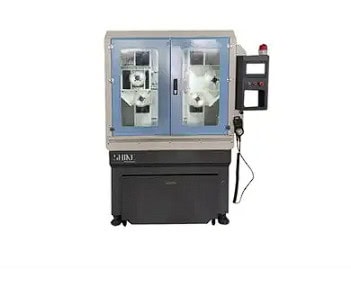
However, multi-wire cutting is not a universal process for all raw materials. Because the cutting mechanism is continuous diamond abrasive micro-grinding rather than chip-shearing or thermal melting, material hardness, brittleness, and thermal conductivity determine process feasibility. For detailed equipment configurations, explore our multi-wire saw lineup, review the dedicated SVM multi-wire cutting machine, and check our broader catalog of diamond wire saw machines.
Primary Industrial Materials Suitable for Multi-Wire Cutting
A multi-wire diamond saw excels in processing hard, brittle, and high-value materials where narrow kerf loss, minimal subsurface damage (SSD), and high surface parallelism are paramount:
1. Semiconductor & Photovoltaic Crystals
Monocrystalline and polycrystalline silicon ingots, silicon carbide (SiC) boules, and gallium arsenide (GaAs) are standard applications. Multi-wire cutting delivers:
- Minimal Kerf Loss: Utilizing ultra-fine diamond wires (Ø0.20–0.35 mm), kerf loss is kept under 0.35 mm per slice, saving tons of costly crystalline raw stock annually.
- Shallow Subsurface Damage (SSD ≤ 10 μm): Gentle abrasive micro-grinding eliminates deep micro-cracks, significantly shortening downstream chemical-mechanical planarization (CMP) and lapping cycles.
2. Optical Glass & Laser Crystals
Optical materials such as fused silica, borosilicate (BK7), optical quartz, and synthetic sapphire are highly vulnerable to thermal shock and edge chipping when cut with conventional circular blades. Multi-wire diamond saws slice multiple optical blanks or windows simultaneously under continuous fluid cooling, eliminating thermal stress and achieving surface roughness of Ra ≤ 0.2–0.4 μm.
3. Technical Ceramics & Sintered Carbides
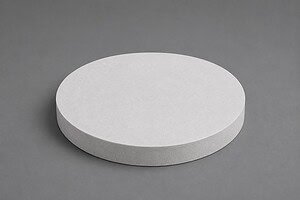
Advanced engineering ceramics—including alumina (Al2O3), zirconia (ZrO2), silicon nitride (Si3N4), and boron carbide (B4C)—exhibit extreme Vickers hardness (HV 1500–2500+). High-speed electroplated diamond loops easily grind through dense ceramic matrices without blade binding, tool deflection, or structural chipping.
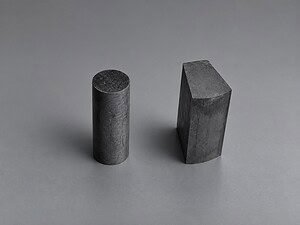
4. High-Purity Isostatic Graphite & Carbon Composites
In EDM electrode manufacturing and thermal field component fabrication, isostatic graphite and carbon-carbon (C/C) composites require clean, dry slicing. Multi-wire diamond saws slice multiple graphite plates simultaneously with dedicated negative-pressure dust extraction, preventing dust buildup while ensuring precise thickness uniformity.
5. Advanced Fiber-Reinforced Composites
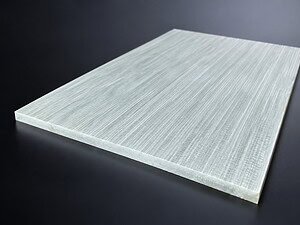
Carbon fiber reinforced polymers (CFRP) and glass fiber reinforced polymers (GFRP) are notoriously prone to matrix cracking, fiber pull-out, and delamination under conventional shearing or sawing forces. The omnidirectional grinding action of diamond wires cleanly shears carbon and glass fibers flush with the resin matrix, producing clean, burr-free edges.

Materials Incompatible with Multi-Wire Diamond Cutting
To avoid machine damage, wire breakage, and poor cutting performance, it is critical to recognize materials that should never be processed on a diamond wire saw:
- Soft Elastomers & Rubber: Rubber, silicone, and soft elastomers bend under wire pressure rather than fracturing under diamond abrasive grinding. Elastomeric friction generates severe heat, gummy adhesion, and wire jamming.
- Soft Ductile Plastics & Packaging Foam: Unreinforced thermoplastics (such as soft polyethylene, polypropylene, and EPS foam) melt under linear wire friction, coating the diamond particles (wire loading) and halting cutting action. Such materials belong on toothed bandsaws or hot-wire cutters.
- Wood & Organic Cellulose: Natural timber, plywood, and fibrous wood products are efficiently processed with mechanical toothed blades. Diamond abrasive wires offer zero economic or technical advantage for wood and will quickly clog from wood resins.
- Soft Bulk Metals (Pure Copper, Mild Aluminum): Pure, ductile non-ferrous metals create long ductile chips that fill the diamond grit interspaces, causing premature wire glazing. Diamond wire saws are reserved for hard brittle metals, superalloys, or composite metal matrices.
Multi-Wire vs. Single-Wire Cutting: Selection Matrix
Understanding whether a project calls for a multi-wire saw or a single-wire cutting machine depends directly on production batch size and part geometry:
| Factor | Multi-Wire Saw (e.g., SVM 60-60) | Single-Wire Precision Saw (e.g., SG 40 / SH 60-60) |
|---|---|---|
| Wire Configuration | 4 to 5+ parallel continuous wire loops | Single continuous diamond wire loop |
| Primary Purpose | Batch wafering, uniform multi-slab slicing | Single straight cuts, thick ingot sectioning, 2D contouring |
| Throughput | 400–500% higher for parallel slicing | Single-cut throughput; highly flexible setup |
| Geometry Versatility | Strictly parallel flat cuts (fixed/indexed spacing) | Flat cuts, angled bevels, rotational slicing, and 2D curves |
| Workpiece Envelope | Up to 600 × 600 × 600 mm (SVM series) | From 150 mm (benchtop) up to 2500 mm (heavy-duty) |
Consumables and Setup Requirements for Multi-Wire Saws
Operating a multi-wire diamond saw requires precise tension synchronization across all parallel lines. Vimfun multi-wire systems feature pneumatic independent tensioning arrays paired with premium endless diamond wire loops. Depending on target wafer thickness and kerf limits, wire diameters can be selected from Ø0.25 mm up to Ø0.55 mm.
To schedule sample test cuts on your advanced materials, evaluate multi-wire spacing fixtures, or consult on machine footprint and coolant management, contact the engineering team at Vimfun (Zhengzhou Shine Smart Equipment Ltd.) through our diamond wire saw equipment directory.