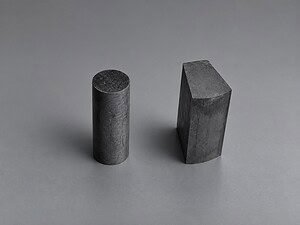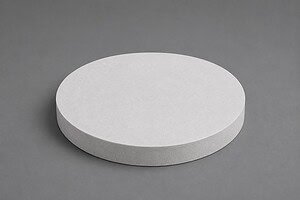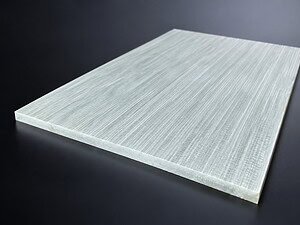
In modern precision manufacturing, “wire cut machines” play a pivotal role in producing intricate contours, tight geometric tolerances, and smooth surface finishes across demanding industries. However, when engineers and procurement teams evaluate wire cutting technology, it is essential to distinguish between the two primary technological classifications that share this name:
- Wire Electrical Discharge Machining (Wire EDM): A non-contact thermoelectric material removal process that utilizes controlled, high-frequency electrical spark discharges between an energized electrode wire (typically brass or zinc-coated wire) and an electrically conductive workpiece.
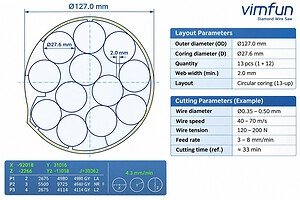
- Diamond Wire Saws (Mechanical Diamond Wire Cutting): A mechanical micro-grinding process that uses a high-tensile core wire embedded with industrial diamond micro-abrasives—often arranged in an endless, continuous high-speed loop—to slice through materials via physical abrasion.
The defining boundary between these technologies lies in material electrical conductivity and thermal sensitivity. Wire EDM is fundamentally restricted to electrically conductive metals (such as tool steels, titanium, superalloys, and aluminum). In contrast, Diamond Wire Saws excel where EDM cannot operate: cutting hard, brittle, non-conductive, or heat-sensitive materials such as optical glass, technical ceramics, quartz, sapphire, monocrystalline silicon, and composites. Understanding this division is critical for selecting the correct equipment for your production line.
Top Industries Utilizing Wire Cutting Machines
Both Wire EDM and Diamond Wire Saws serve critical manufacturing functions across global industries, each aligned with specific workpiece properties:
1. Aerospace and Defense
The aerospace sector requires extreme reliability and components capable of withstanding severe mechanical and thermal stress:
- Wire EDM Application: Machining complex conductive metal components from nickel-based superalloys (such as Inconel), titanium brackets, turbine blade root slots, and landing gear assemblies where mechanical tool deflection must be avoided.
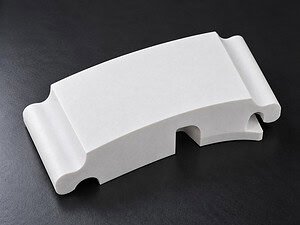
- Diamond Wire Saw Application: Sectioning non-conductive aerospace ceramics, radome ceramic composites, infrared optical windows (sapphire and quartz), and thermal barrier coatings where electrical discharge is impossible and thermal recast layers cannot be tolerated.
2. Semiconductor, Solar, and Electronics
Miniaturization and substrate integrity dominate the electronics and renewable energy sectors:
- Wire EDM Application: Fabricating hardened steel stamping dies, micro-switch components, precision lead-frame tooling, and conductive copper connectors.
- Diamond Wire Saw Application: Primary ingot processing, including monocrystalline and polycrystalline silicon ingot cropping, quartz furnace tube sectioning, gallium arsenide (GaAs) wafering, and slicing ceramic electronic substrates without mechanical micro-cracking or sub-surface thermal damage.
3. Medical and Laboratory Devices
Medical manufacturing requires stringent biocompatibility, clean surface finishes, and zero structural degradation:
- Wire EDM Application: Precision cutting of conductive stainless-steel surgical instruments, endoscopic biopsy jaws, titanium bone plates, and implantable orthopedic joint anchors.
- Diamond Wire Saw Application: Slicing biocompatible non-conductive technical ceramics (such as zirconia and alumina dental blanks), optical glass capillary arrays, and extracting metallurgical research coupons without introducing a Heat-Affected Zone (HAZ).
4. Tool, Die, and Mold Manufacturing
Toolrooms rely heavily on wire cutting to achieve tight dimensional tolerances on high-hardness workpieces:
- Wire EDM Application: Cutting through hardened tool steels (e.g., D2, M2), tungsten carbide punches, extrusion dies, and complex internal gear cavities.
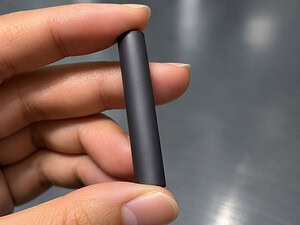
- Diamond Wire Saw Application: Rapid pre-machining and dimensioning of graphite EDM electrodes. Because diamond wire cuts graphite mechanically with high linear speeds, it achieves clean, sharp edges without the corner chipping or dust compaction common in conventional milling.
5. Optics, Photonics, and Research Crystals
Optical materials require cold, gentle material separation to preserve optical transmission and avoid micro-fractures:
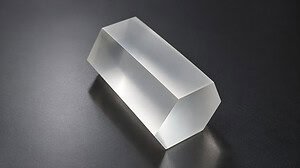
- Diamond Wire Saw Dominance: Because optical glasses (borosilicate, fused silica), laser crystals (Nd:YAG), and synthetic sapphire are electrical insulators, Wire EDM cannot cut them. Diamond wire saws serve as the primary technology for precision prism cutting, optical lens pre-forming, and crystal sectioning with narrow kerf loss.
Technology Comparison: Wire EDM vs. Diamond Wire Saw
To assist manufacturing engineers in determining the appropriate equipment for specific part requirements, the key process characteristics are compared below:
| Parameter | Wire EDM (Electrical Discharge) | Diamond Wire Saw (Mechanical Grinding) |
|---|---|---|
| Cutting Mechanism | Non-contact thermal spark erosion (electrical discharge) | Mechanical micro-abrasive grinding via fixed diamond grits |
| Material Electrical Conductivity | Mandatory (conductive metals, alloys, graphite) | Independent (cuts non-conductive ceramics, glass, sapphire, silicon, quartz, graphite) |
| Thermal Effect / Heat-Affected Zone | Leaves a recast layer and localized thermal stress (HAZ) | Zero thermal damage; cold mechanical cut flushed with liquid coolant |
| Kerf Loss | Extremely narrow (typically 0.15–0.35 mm depending on wire) | Narrow kerf margins (typically 0.20–0.45 mm depending on core and coating) |
| Cutting Fluid Medium | Dielectric fluid (deionized water or specialized oil) | Water-based coolant with lubricity and anti-foaming agents for debris flushing |
| Primary Industrial Role | High-precision metal tooling, punch dies, conductive aerospace parts | Hard/brittle non-conductive crystals, optical glasses, semiconductor ingots, ceramics |
Selecting the Right Wire Cutting Solution
When selecting a wire cutting machine, material characteristics dictate the correct technological choice:
- Choose Wire EDM: When your production requires sub-micron tolerances, intricate blind contours, or internal keyways in conductive hardened steels, titanium, or exotic aerospace alloys.
- Choose an Endless Diamond Wire Saw: When processing electrically non-conductive, ultra-hard, or fragile materials (such as quartz, advanced ceramics, optical glasses, sapphire, and semiconductor silicon), or when complete elimination of thermal stress and micro-cracking is paramount.
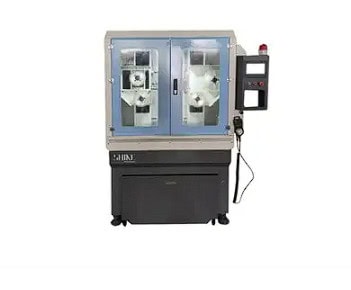
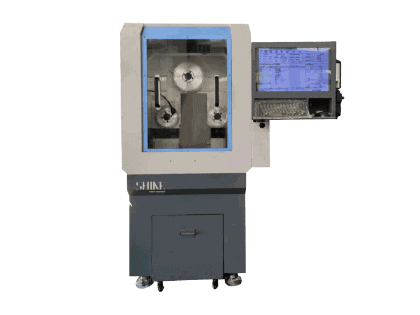
For specialized hard and brittle material processing, explore precision endless wire equipment options on our Diamond Wire Saws category page. Manufactured by Vimfun (Zhengzhou Shine Smart Equipment Ltd.), our platforms deliver smooth cut surfaces, minimal kerf loss, and stable high-speed performance across industrial laboratory and production environments.
Frequently Asked Questions (FAQ)
- Can a Wire EDM machine cut non-conductive materials like ceramics or quartz?
No. Wire EDM relies on an electrical circuit between the wire electrode and the workpiece to generate spark discharges. Electrically insulating materials such as quartz, optical glass, and technical ceramics cannot conduct electricity and therefore cannot be cut using Wire EDM. Diamond wire saws are the established standard for these materials. - What is the fundamental difference between Wire EDM and a Diamond Wire Saw?
Wire EDM is a non-contact, thermal spark erosion process specifically designed for conductive metals. A diamond wire saw is a cold, mechanical micro-grinding process that uses diamond-plated core wires to slice through any hard, brittle material regardless of its electrical conductivity. - Why is a Diamond Wire Saw preferred for semiconductor silicon and optical crystals?
Diamond wire saws eliminate the Heat-Affected Zone (HAZ) and thermal micro-cracking associated with spark erosion. In monocrystalline silicon and optical crystals, preserving crystal lattice integrity and minimizing sub-surface damage (SSD) are vital for downstream polishing and performance. - Can graphite be cut by both Wire EDM and Diamond Wire Saws?
Yes. Because graphite is electrically conductive, Wire EDM can cut it. However, high-speed endless diamond wire saws are widely preferred for graphite electrode blanking and sizing because mechanical diamond cutting is significantly faster and avoids tool wear and dielectric contamination.