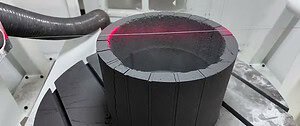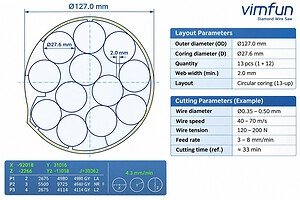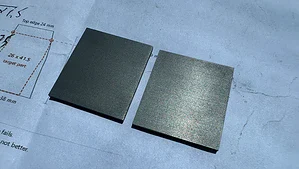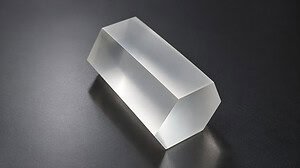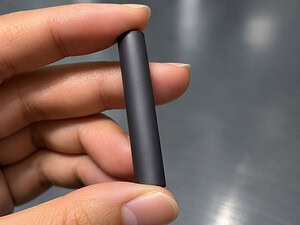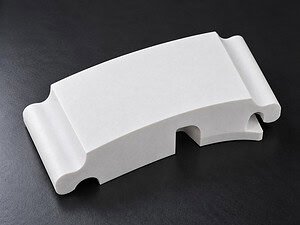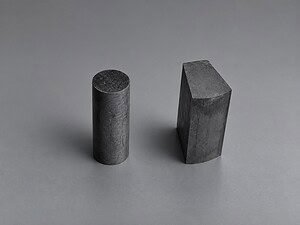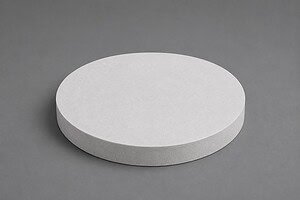
In materials science research institutes, semiconductor failure analysis (FA) laboratories, university departments, and precision pilot workshops, processing delicate, high-value hard and brittle materials—such as optical crystal boules, semiconductor wafers, sintered ceramics, and synthetic graphite—presents unique machining challenges. Heavy factory-floor gantry saws demand multi-ton floor ratings and large facility footprints, while makeshift workshop tools cause severe chipping, subsurface micro-cracks, and excessive kerf loss. A premium quality table top wire saw provides the definitive balance: delivering cleanroom-ready benchtop dimensions without sacrificing industrial-grade micro-grinding precision.
However, technical procurement inquiries frequently confuse scientific tabletop diamond wire saws with inexpensive carpentry table saws or hobby craft tools. A laboratory diamond wire saw is not a tool for cutting construction lumber or soft plastics; it is a high-precision instrument utilizing continuous high-speed diamond wire loops running at 15 to 40 m/s to perform gentle, non-impact cold abrasive slicing. In this guide, “affordable premium quality” refers to maximizing capital return on investment (ROI): acquiring scientific-grade structural rigidity, sub-micron surface finish ($Ra \le 0.2 – 0.4\ \mu ext{m}$), and ultra-narrow kerf loss ($\le 0.35 ext{ mm}$) at accessible laboratory capital expenditure. For detailed model-by-model specifications, review our companion analysis on desktop diamond wire saws, or explore our full portfolio of diamond wire saws.

1. Why Research Laboratories Require Benchtop Diamond Wire Saws
When preparing microscopic cross-sections for Scanning Electron Microscopy (SEM), Transmission Electron Microscopy (TEM), or petrographic core analysis, specimen preparation must strictly preserve pristine crystalline microstructure:
- Zero Heat-Affected Zone (HAZ) & Shallow Subsurface Damage: High-speed abrasive blades and circular cut-off saws generate localized friction temperatures exceeding $800^\circ ext{C}$, inducing phase transformations, micro-crack networks, and residual stress. Endless diamond wire micro-grinding operates under constant fluid cooling, ensuring near-ambient cutting temperatures and subsurface damage depths under $5 – 10\ \mu ext{m}$.
- Precious Material Conservation via Ultra-Narrow Kerf: Research boules—such as isotope-pure silicon, laser crystals (YAG, sapphire), and customized piezoelectric ceramics—are extraordinarily expensive. Slicing with a 0.35 mm diamond wire loop reduces kerf loss by over 70% compared to a 1.5 mm diamond wheel, yielding multiple usable analysis wafers from a single sample billet.
- Compact Cleanroom & Laboratory Integration: Requiring less than 0.5 $m^2$ of workbench footprint and operating on standard single-phase 110V/220V electrical power, benchtop wire saws feature self-contained transparent safety enclosures that eliminate fluid splashing and capture all particulate swarf.
2. Tabletop Architecture: Manual Benchtop vs. Automated Tabletop CNC
Tabletop wire saws fall into two distinct engineering classifications based on automation level and sample throughput demands:
| Operational Metric | Manual Benchtop Wire Saw (e.g., SGD 52) | Tabletop CNC Diamond Wire Saw (e.g., SG 15 / SGR 15) |
|---|---|---|
| Kinematic Feed Control | Precision micrometer screw or adjustable counterweight gravity feed | Multi-axis programmable CNC servo feed with closed-loop feedback |
| Primary Target Application | Quick metallographic sectioning, petrographic core chips, failure analysis | Automated multi-slice batching, wafering, and 2D contour profile cutting |
| Linear Wire Velocity Range | $5 – 20 ext{ m/s}$ | $15 – 40 ext{ m/s}$ (Variable frequency drive) |
| Operator Interaction | Manual sample alignment and feed weight adjustment per cut | Recipe-based unattended execution with auto-stop on completion |
| Capital Expenditure Level | Entry-level laboratory investment; minimal maintenance overhead | Moderate investment; high multi-sample production throughput |

3. Key Engineering Criteria for Benchtop Wire Saw Selection
To avoid fragile, low-grade workshop tools that suffer chronic wire vibration and guide misalignment, laboratory buyers should evaluate four core engineering specifications:
- Cast Aluminum or Stainless Steel Structural Rigidity: Never select benchtop saws constructed from bent sheet metal or plastic extrusions. True precision requires a heavy cast-metal base that dampens mechanical vibrations and maintains rock-solid parallelism across guide pulleys.
- Closed-Loop Wire Tensioning Mechanism: Sluggish spring tensioners allow wire slack when entering tough ceramic or mineral inclusions. High-grade benchtop machines incorporate calibrated pneumatic or mechanical constant-tensioning systems that dynamically compensate for wire expansion.
- Precision Specimen Goniometers & Fixturing: The machine must support versatile sample holding accessories—including multi-axis tilting goniometers for crystallographic orientation cuts, V-blocks for cylindrical ingots, and vacuum plates for thin substrates.
- Self-Contained Recirculating Coolant System: High-purity optical glass and ceramic slicing require continuous DI water or coolant delivery directly into the wire kerf. Verify that the unit includes an integrated submersible pump, stainless fluid catch basin, and multi-stage sediment filter to ensure clean operation on standard laboratory tables.
4. Vimfun Benchtop & Tabletop Diamond Wire Saw Lineup
Vimfun (Zhengzhou Shine Smart Equipment Co., Ltd.) engineers specialized laboratory-grade benchtop wire saws utilizing continuous endless diamond wire loops:
- Vimfun SGD 52 Benchtop Laboratory Saw: The industry standard for academic and industrial research labs. Featuring an intuitive micrometer positioning stage, transparent interlocking shield, and compact bench footprint, the SGD 52 delivers gentle, crack-free slicing for crystal boules, minerals, and composite test coupons.
- Vimfun SG 15 / SGR 15 Tabletop CNC Saws: Fully enclosed, high-precision automated CNC units engineered for precision optical glass slicing and small-batch crystal component profiling. Explore our specialized glass cutting wire saws and advanced precision CNC wire cutting machines.
Pilot Specimen Evaluation & Free Test Cutting Service
Determining whether a manual or CNC tabletop wire saw best fits your experimental workflow requires empirical proof. University departments and corporate R&D teams are invited to submit test specimens to Vimfun’s free diamond wire test cutting service. Our application engineers will evaluate cutting feed rates, kerf loss, and post-cut surface roughness ($Ra$) on your exact material substrate, providing a certified laboratory report prior to machine acquisition.