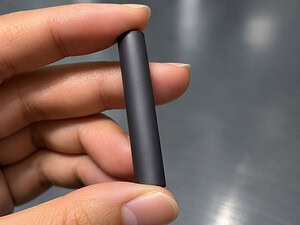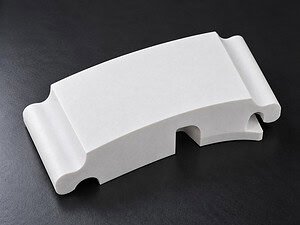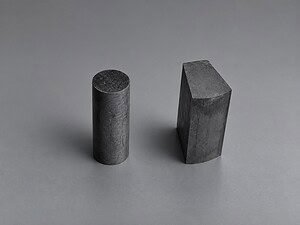
A CNC contour cutting machine is an automated manufacturing system governed by Computer Numerical Control (CNC) that guides a cutting tool along programmed multi-axis toolpaths to slice materials into intricate, custom two-dimensional (2D) or three-dimensional (3D) geometric profiles. In industrial manufacturing, “contour cutting” spans several distinct technologies, each optimized for specific material families:
- Hot-Wire and Fast-Wire Foam Cutters: Utilize electrically heated or high-speed oscillating wires to shape soft, flexible materials such as polyurethane (PU) foams, expanded polystyrene (EPS), and packaging cushioning.
- CNC Routers and Milling Cutters: Employ high-speed rotating solid carbide or diamond end mills to machine wood, aluminum plate, and rigid plastics.
- CNC Laser and Plasma Systems: Focus concentrated thermal energy to contour sheet metals and structural steel plates.
- CNC Diamond Wire Contour Saws: Utilize a high-tensile core wire coated with fixed industrial diamond micro-abrasives—typically running in a continuous endless loop—to micro-grind complex profiles in hard, brittle, non-metallic, or composite blocks where conventional milling, thermal cutting, or waterjets fail.
While foam cutters and wood routers dominate soft-material fabrication, processing ultra-hard, fragile, or thermal-sensitive materials requires a specialized approach. This guide examines how CNC diamond wire contour saws operate, the engineering challenges they solve, and their primary industrial applications.
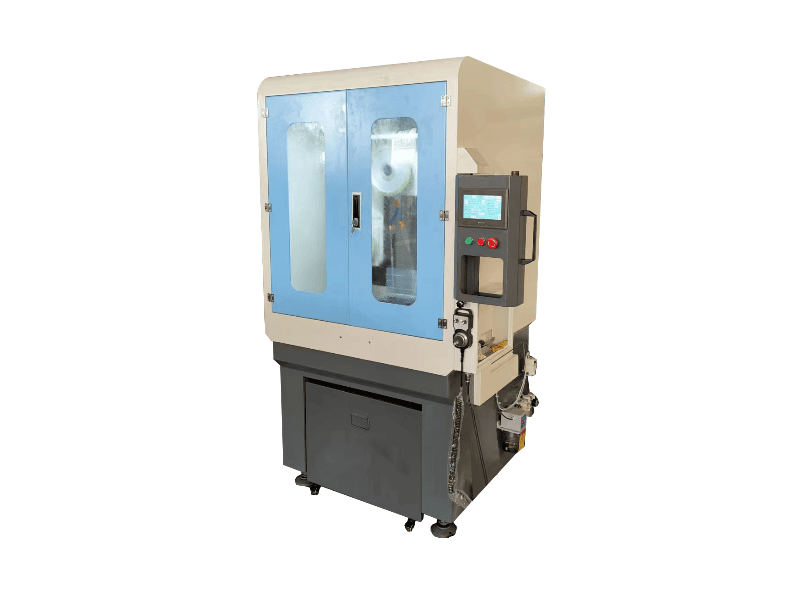
How Does a CNC Diamond Wire Contour Cutting Machine Work?
CNC diamond wire contour cutting translates digital CAD/CAM geometry into physical parts through synchronized multi-axis motion and high-speed mechanical micro-abrasion:
- Digital Toolpath Generation: Part geometry is created in standard CAD software (DXF, STEP) and processed through CAM post-processors to generate G-code motion paths governing horizontal (X), vertical (Y/Z), and optional rotary or tilt axes.
- Continuous High-Speed Wire Motion: An endless diamond wire loop is driven around high-precision guide and drive wheels, achieving continuous linear cutting velocities (typically 30–60 m/s [待确认]). Because the wire travels continuously in one direction rather than reciprocating, wire vibration is dramatically minimized.
- Omnidirectional Micro-Grinding: Unlike rotating milling cutters that exert high lateral cutting forces or single-edge blades that must orient tangential to the cut, a round diamond wire cuts uniformly in any radial direction. The CNC axes smoothly guide the workpiece or wire guide arm through complex curves, internal radii, and sharp external corners with minimal cutting pressure.
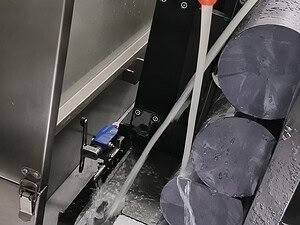
- Continuous Coolant Flushing: High-efficiency liquid coolant delivery directly targets the wire-workpiece interface to evacuate kerf swarf and eliminate frictional heat accumulation.
The Engineering Challenge: Why Conventional CNC Tools Fail on Hard & Brittle Materials
When manufacturing components from technical ceramics, optical glass, quartz, or graphite, traditional CNC machining methods present severe limitations:
- Mechanical Tool Force and Edge Chipping: Rotating milling tools induce intense shear stresses. On brittle materials like alumina or graphite, this causes edge breakout, corner spalling, and frequent tool breakage.
- Thermal Shock and Micro-Cracking: Laser cutting creates steep localized temperature gradients, resulting in micro-cracks, surface discoloration, or catastrophic fracture in thermal-shock-sensitive glasses and ceramics.
- Kerf Width and Material Loss: Thick saw blades turn large volumes of expensive raw materials into unrecoverable dust. In contrast, fine diamond wire removes minimal kerf width, dramatically increasing raw material yield.
Primary Material Applications for CNC Diamond Wire Contouring
CNC diamond wire contour saws provide essential profile-shaping capabilities across advanced technical industries:
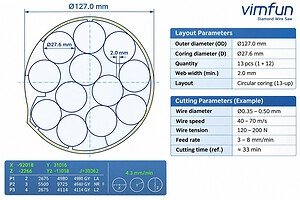
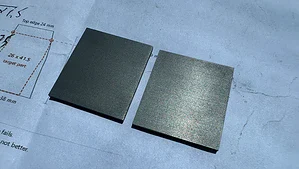
- Graphite and Carbon Composites: Machining complex graphite EDM electrodes, furnace heating elements, and crucibles. Diamond wire slices smoothly through dense isostatic graphite without chipping delicate fins or generating compacted swarf.
- Technical and Engineering Ceramics: Shaping pre-sintered or fully dense ceramics (such as zirconia, alumina, and silicon carbide) into custom wear components, insulating guides, and structural ceramic tiles.
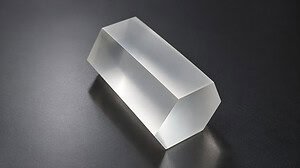
- Optical Glass and Fused Quartz: Contouring curved prisms, quartz flanges, optical windows, and telescope mirror blanks with minimal subsurface damage (SSD).
- Semiconductor Silicon and Sapphire: Extracting custom cylindrical, rectangular, or contoured shapes from monocrystalline ingots and synthetic sapphire boules for specialized sensor windows and substrates.
Key Advantages of CNC Diamond Wire Contour Saws
Integrating a CNC diamond wire contouring machine into your processing workflow delivers distinct operational benefits:
- Tight Geometric Precision: CNC multi-axis interpolation delivers smooth curves and tight dimensional tolerances across complex 2D and 3D profiles.
- Narrow Kerf and High Material Conservation: Utilizing ultra-fine diamond wires minimizes kerf loss, preserving valuable crystal and ceramic stock.
- Low Cutting Force & Superior Edge Integrity: Gentle micro-grinding eliminates macro-chipping, micro-fractures, and edge burrs, drastically reducing downstream grinding and polishing stages.
- Cold Mechanical Cutting: Fluid cooling eliminates heat-affected zones (HAZ), preserving the internal crystal lattice and physical properties of the workpiece.
Equipment Solutions: 2D Profiling and 3D Taper Cutting
Selecting the right CNC contour wire saw depends on component complexity, workpiece volume, and axis requirements:
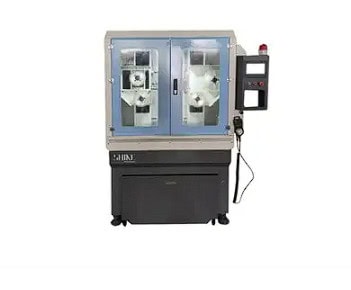
- 2D Profile Cut Wire Saws (SVI Series): Models such as the SVI 80-80 and SVI 250-80 provide robust 2-axis CNC contouring for generating complex planar cross-sections, curves, and contours in graphite, technical ceramics, and optical blanks.
- 3D Taper Cut Systems (SVT Series): Advanced multi-axis platforms, including the SVT 60-60, incorporate coordinated wire tilting or multi-axis wire guide systems to generate tapered profiles, compound angles, and complex 3D shapes.
Explore comprehensive machine specifications, envelope sizes, and automation features on our dedicated 2D Profile Cut Wire Saw solutions page. Manufactured by Vimfun (Zhengzhou Shine Smart Equipment Ltd.), our systems are built with rigid machine structures, responsive CNC controllers, and stable endless wire loops for repeatable industrial manufacturing.
Frequently Asked Questions (FAQ)
- What is the difference between a CNC foam contour cutter and a diamond wire contour saw?
A CNC foam cutter uses an electrically heated wire or oscillating fast wire to cut low-density, soft flexible foams via thermal melting or tearing. A CNC diamond wire saw uses fixed industrial diamond abrasives on a high-tensile core wire to micro-grind through dense, rigid, hard, and brittle materials such as ceramics, quartz, and graphite under continuous liquid cooling. - Can CNC diamond wire saws cut 3D tapered shapes?
Yes. Advanced CNC diamond wire systems equipped with independent 4-axis motion (X, Y, U, V) or coordinated tilting wire heads—such as the SVT series—can produce angled tapers, conical profiles, and compound 3D contours [待确认]. - Why choose a diamond wire contour saw over CNC milling for graphite?
Conventional milling of graphite causes significant tool wear and frequently induces edge chipping on thin fins or intricate ribs. Diamond wire saws cut graphite with minimal cutting pressure, producing ultra-sharp edges, smooth surface finishes, and zero edge chipping. - What coolant is typically required for CNC diamond wire contouring?
Most applications utilize water-based coolants enriched with lubricity additives and rust inhibitors to flush away kerf dust and keep the wire cool. For certain porous graphite applications, dry cutting paired with high-efficiency vacuum dust extraction may also be utilized [待确认].