Keywords: Graphite machining, Aerospace components, Innovative diamond wire cutting, Precision cutting, Material processing, Manufacturing innovation, High-performance components.
Table of Contents
The Crucial Role of Graphite in Aerospace Component Manufacturing

Graphite has long played a critical role in aerospace component manufacturing due to its outstanding thermal conductivity, mechanical properties, and chemical stability. Graphite components are widely used in key aerospace applications, from rocket engines to missile guidance systems. However, achieving precise cuts in graphite materials to create high-performance components is essential in aerospace manufacturing.
Traditional Graphite Machining Methods
In the past, traditional mechanical cutting tools such as grinding wheels, diamond blades, and diamond wire saws were commonly used for graphite machining. However, these methods had certain limitations:
- Lack of Precision: Traditional machining methods struggled to achieve the necessary high precision, often resulting in irregular cut edges and uneven surfaces.
- Material Waste: Due to the bulky and abrasive nature of the tools, traditional methods could lead to substantial material wastage, especially when working with high-cost graphite materials.
- Inefficiency: The tools’ limited speed and efficiency translated to slower production rates and increased costs.
Innovative Diamond Wire Cutting in Graphite Machining
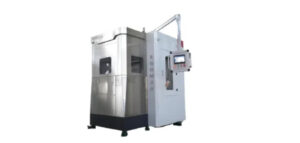
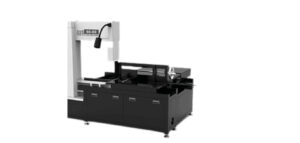
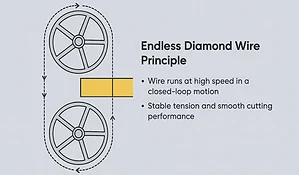
With technological advancements, innovative diamond wire cutting technology has emerged as a game-changer in graphite machining. Here are the key advantages it brings to graphite machining:
- Precise Graphite Cutting: Innovative diamond wire cutting machines deliver precise cuts in graphite, thanks to their exceptional accuracy and stability. This ensures the production of components that meet the demanding criteria of high-performance aerospace applications.
- Material Conservation: The slim wire profile of innovative diamond wire cutting minimizes material wastage. This is especially critical when working with high-cost graphite, as it directly reduces manufacturing expenditures.
- Enhanced Efficiency: Innovative diamond wire cutting machines elevate production speeds with their high-speed cutting and efficiency, reducing manufacturing lead times and costs.
- Smooth Component Surfaces: The cutting process yields exceptionally smooth surfaces, decreasing the necessity for extensive post-processing.
The Impact of Innovative Diamond Wire Cutting in Aerospace
In the aerospace industry, precision is paramount. Components must meet rigorous standards to ensure the safety and performance of aircraft and spacecraft. Innovative diamond wire cutting has a profound impact on aerospace component manufacturing:
1,Complex Shapes:
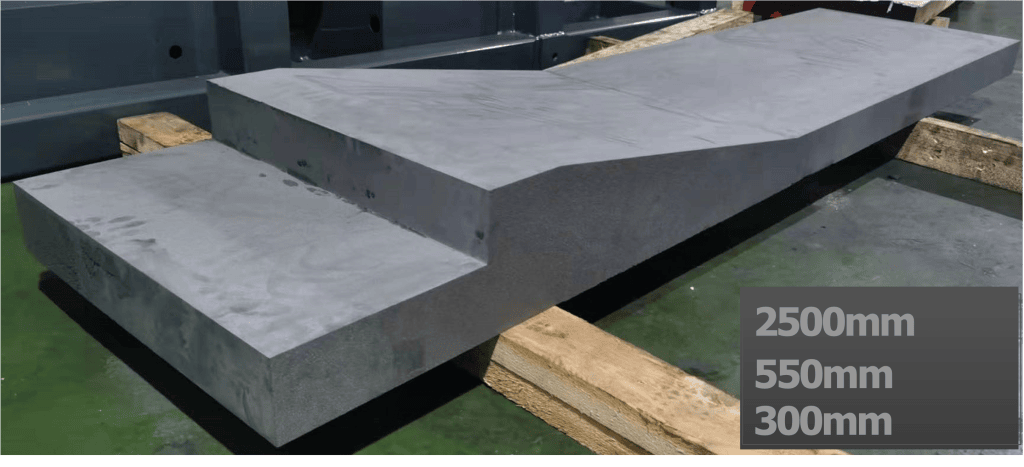
Aerospace components often require intricate and complex shapes. Innovative diamond wire cutting excels in producing these shapes with unmatched precision, eliminating the need for time-consuming manual adjustments.
2,Reduced Lead Times:
With increased cutting speeds and reduced post-processing requirements, innovative diamond wire cutting shortens lead times, enabling faster delivery of aerospace components.
3,Cost Savings:
Efficient material usage and reduced machining times translate into significant cost savings for aerospace manufacturers.
4,Consistency:
The technology’s precision ensures consistent quality across all components, critical for aerospace applications.
5,Diverse Applications:
Innovative diamond wire cutting is not limited to graphite; it can be applied to a range of high-performance materials, further expanding its utility in aerospace manufacturing.
Future Prospects and Innovation
Innovative diamond wire cutting technology has not only transformed graphite machining but also opened avenues for exploring other high-performance materials. As technology continues to advance, further refinements and adaptations of this cutting-edge technology can be anticipated, ensuring its sustained relevance in aerospace component manufacturing.
Conclusion
Innovative diamond wire cutting technology has redefined graphite machining, providing precision and efficiency in aerospace component manufacturing. Graphite, a crucial high-performance material, will continue to play a pivotal role in aerospace applications. Traditional machining methods are no longer sufficient for the demands of aerospace component manufacturing, and innovative diamond wire cutting technology paves the way for fresh opportunities and possibilities.
In summary, the integration of innovative diamond wire cutting into graphite machining is revolutionizing aerospace manufacturing by offering precision, efficiency, and cost-effectiveness that traditional methods cannot match. As we look ahead, this technology will undoubtedly continue to shape the aerospace industry, driving innovation and progress in the creation of high-performance components for the future of aviation and space exploration.