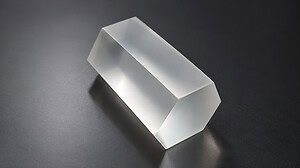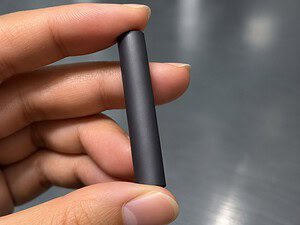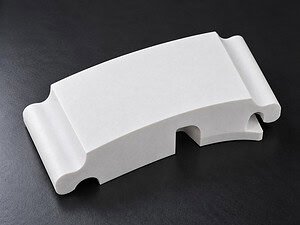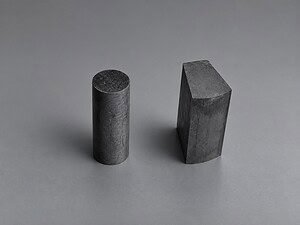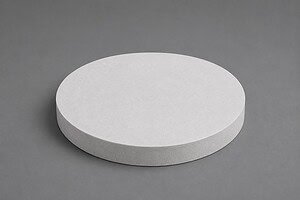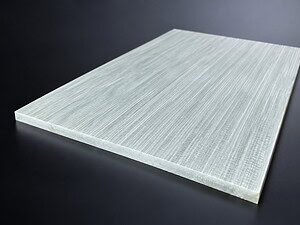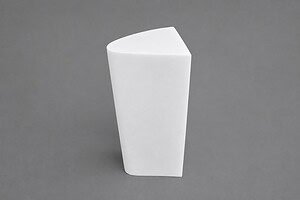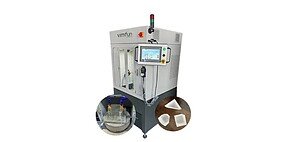
So how can manufacturers cut hard graphite blocks so rapidly and so clean? For the last 9+ years, I have been working in the graphite cutting sector. I know precisely how graphite block cutting machines function.
In this article, I will tell you how a graphite block cutting machine cuts huge blocks . I’ll describe the blades it utilises, how feed rate works and how cut depth influences outcomes. You’ll also see industry use examples, purchase suggestions and solutions to frequent enquiries.
What Is a Graphite Block Cutting Machine and How Does It Work?
A machine de découpe de blocs de graphite is used to reduce huge graphite blocks into smaller, accurate forms. Graphite is strong, yet fragile – it will break if the cutting force is incorrect. These devices cut the block using diamond blades or wire tools.
They regulate three things: the blade type, the feed rate and the depth of cut. Most are CNC based thus all the motions are run by a computer. “This takes away human error. With an excellent graphite slicing machine, you get clean slices with minimal dust.
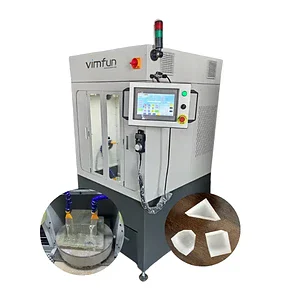
Key Technical Specifications of a Graphite Block Cutting Machine
| Fonctionnalité | Standard Model | Advanced CNC Model |
| Outil de coupe | Diamond Blade | Scie à fil diamanté |
| Type de contrôle | Manual / Semi-Auto | Full CNC Control |
| Débit d'alimentation | 5–20 mm/min | 1–50 mm/min (adjustable) |
| Taille maximale du bloc | 500 x 500 mm | 1000 x 1000 mm ou plus |
| Plage de profondeur de coupe | Jusqu'à 200 mm | Jusqu'à 600 mm |
| Contrôle de la poussière | Aspiration de base | Fermé + Filtration HEPA |
| Précision | ±0,5 mm | ±0,05 mm |
| Utilisation industrielle | Industriel général | Aérospatiale, Batterie, Semi-conducteur |
Quels types de lames et d'outils à fil coupent le mieux les blocs de graphite ?
Choisir le bon instrument est essentiel. Un outil inapproprié peut entraîner des bords rugueux, des fissures ou trop de poussière. Deux types principaux d'outils sont utilisés dans les équipements industriels de coupe de graphite – les lames diamantées et la scie à fil diamanté pour le graphite.
Une lame tourne rapidement, broie le bloc. Une scie à fil est une scie qui coupe en boucle et avec une force extrêmement minimale. La scie à fil diamanté sans fin n'a pas de joint, ce qui permet une coupe plus lisse et une durée de vie plus longue.
Lame diamantée vs. Scie à fil diamanté – Laquelle est la meilleure ?
Les lames diamantées sont rapides et puissantes. Elles fonctionnent bien pour les coupes droites sur des blocs solides. Mais elles génèrent plus de chaleur et plus de poussière. La scie à fil diamanté pour graphite est plus lente. Mais elle est beaucoup plus propre. Mieux pour les formes courbes ou compliquées. La plupart des usines préfèrent maintenant les scies à fil pour un meilleur rendement.
- Les coupes droites rapides sont obtenues à l'aide de lames diamantées
- Pour les plaques fines et les courbes, une scie à fil diamanté sans fin est idéale
- Les scies à fil produisent jusqu'à 40% moins de déchets que les lames
- Les appareils à fil CNC sont capables de découper des formes complexes en graphite
- Les scies à fil durent plus longtemps que les lames pour la découpe du graphite
Comparaison des outils à lame et à fil pour la découpe du graphite
| Fonctionnalité | Diamond Blade | Scie à fil diamanté | Scie à fil diamanté sans fin |
| Vitesse de coupe | Rapide | Moyen | Moyen-rapide |
| Finition de la surface | Brut à moyen | Très lisse | Ultra lisse |
| Déchets de matériau (entaille) | 3–5 mm | 0,3–1,5 mm | 0,3–1 mm |
| Meilleur pour | Coupes droites | Formes complexes | Plaques fines, précision |
| Niveau de poussière | Haut | Faible | Très faible |
Comment fonctionne le système de scie à fil automatique ?
Un fil de graphite automatique la scie fonctionne de manière autonome. Le fil est contrôlé par un système CNC. Il contrôle la tension, la vitesse d'avance et la profondeur de coupe. Le fil passe sur des poulies. Il glisse le long du bloc de graphite. Il broie le matériau par couches.
La machine de découpe de graphite CNC modifie le taux d'avance dynamiquement. Elle ressent la résistance du matériau lors de la coupe, ce qui empêche le fil de se casser. Elle maintient également la coupe nette. De l'eau ou du liquide de refroidissement circule pendant la coupe. Cela élimine la poussière de graphite et évacue la chaleur.
Comment le taux d'avance et la profondeur de coupe affectent-ils le résultat final ?
Le taux d'avance et la profondeur de coupe déterminent les performances de la machine de découpe de blocs de graphite. Le taux d'avance est la vitesse à laquelle la lame ou le fil est introduit dans le bloc. La profondeur de coupe est la profondeur de chaque passe. Si le taux d'avance est excessivement rapide, le fil peut se casser. Il peut également écailler le graphite. Les avances lentes sont une perte de temps et d'argent.
Il dépend de la qualité du graphite et de la finition que vous exigez, par conséquent, le réglage approprié est important. La découpe de graphite de précision se fait toujours à des taux d'avance modestes et régulés. Dans les systèmes CNC, l'utilisateur peut spécifier des taux d'avance variables pour chaque passe. Cela permet un contrôle total sur le résultat.
Comment les changements de taux d'avance affectent la qualité de coupe
Le taux d'avance est étroitement lié à la finition de surface et à la durée de vie de l'outil. Une avance plus lente créera une surface plus lisse. Une avance rapide est plus agressive, mais plus rapide.
- Un taux d'avance lent (1 à 5 mm/min) produit une finition lisse sur les pièces semi-conductrices
- Un taux d'avance moyen (5–20 mm/min) convient aux électrodes et au graphite de batterie
- Une avance rapide (20–50 mm/min) est uniquement pour le dimensionnement grossier des blocs
- Les systèmes de scie à fil de graphite automatique peuvent ajuster automatiquement le taux d'avance
- Un taux d'avance incorrect est la cause #1 de la rupture du fil et des dommages à la lame
Profondeur de coupe vs. Qualité de sortie dans la découpe de graphite
| Profondeur de coupe par passe | Qualité de la surface | Niveau de risque | Meilleure application |
| 0–10 mm | Excellent | Très faible | Pièces fines, semi-conducteurs |
| 10–50 mm | Bon | Faible | Électrodes, plaques de batterie |
| 50–150 mm | Moyen | Moyen | Dimensionnement de blocs, formes brutes |
| 150–600 mm | Rugueux | Élevé (nécessite un contrôle CNC) | Fente de gros blocs |
La meilleure surface est obtenue avec des incisions peu profondes. Les coupes profondes nécessitent un contrôle CNC et une vitesse d'avance lente. La technique la plus sûre pour gérer les coupes profondes consiste à utiliser une machine de découpe graphite CNC.
Avantages d'une profondeur de coupe contrôlée :
- Moins de contraintes sur le bloc de graphite
- Moins de fractures minuscules du matériau
- Durée de vie accrue de l'outil
- Précision améliorée de la taille de la pièce finale
Inconvénients d'une mauvaise profondeur de coupe :
- Le graphite peut se briser ou casser
- L'outil s'use rapidement – coût accru
- Une mauvaise finition de surface nécessite une retouche
- Risque d'émission de poussières fines
Quelles industries utilisent des machines de découpe de blocs de graphite et pourquoi ?
De nombreuses entreprises utilisent quotidiennement des équipements industriels de découpe de graphite. Le graphite est utilisé dans les batteries, les électrodes, les composants aéronautiques et les moules pour semi-conducteurs. Des industries variées ont besoin de tailles et de finitions de coupe différentes. Vous avez besoin de tranches fines et uniformes pour votre machine de découpe de graphite pour batteries.
Vous voulez des incisions profondes et rapides pour les électrodes. Une fraiseuse CNC pour graphite peut effectuer une grande variété d'opérations facilement. Les usines économisent de l'argent et minimisent les déchets – et obtiennent de meilleurs produits – grâce à la découpe de graphite de précision.
Applications industrielles des machines de découpe de graphite
| Industry | Utilisation du graphite | Type de machine | Exigence clé |
| Batterie / VE | Plaques de matériau d'anode | Scie à fil diamanté sans fin | Coupes fines, lisses et régulières |
| Production d'électrodes | Grands ébauches d'électrodes | Combinaison lame CNC + fil | Coupes profondes rapides |
| Semi-conducteur | Moules et gabarits | Scie automatique à fil de graphite | Ultra-précision, ±0,01 mm |
| Aérospatial | Boucliers thermiques, tuyères | CNC graphite cutting machine | Formes complexes, bords nets |
| Nucléaire | Modérateurs de réacteur | Scie à fil industrielle | Haute pureté, pas de contamination |
Facteurs clés qui orientent la sélection des machines par secteur
- Le secteur des batteries a besoin de plaques de moins de 1 mm d'épaisseur – seules les scies à fil peuvent le faire
- Les fabricants d'électrodes ont besoin de vitesse – les systèmes de lames CNC coupent plus rapidement de gros blocs
- La fabrication de semi-conducteurs nécessite la plus grande précision – les systèmes de découpe de graphite de précision atteignent ±0,05 mm ou moins.
- L'aérospatiale exige des formes compliquées – les systèmes à fil CNC multi-axes conviennent
- Pour éviter la contamination par la poussière, l'utilisation nucléaire nécessite une découpe en enceinte fermée
Que faut-il savoir avant d'acheter une machine de découpe de graphite ?
Voici trois points à considérer avant d'acheter une machine de découpe de blocs de graphite : Quelle est la plus grande taille de bloc que vous devez découper ? Quelle est la finition de surface requise pour votre produit ? Combien de découpes avez-vous besoin par jour ? Ces réponses vous orienteront vers la machine appropriée.
Vérifiez également le système de dépoussiérage. La poussière de graphite est incroyablement fine et n'est pas bonne à respirer. Doit être une machine fermée avec des filtres HEPA. Renseignez-vous sur les pièces de rechange et l'assistance technique. Une interface CNC simple réduit également le temps de formation et les erreurs.
Liste de contrôle d'achat pour l'équipement de découpe de graphite
- Capacité de taille de bloc – doit correspondre à votre plus gros bloc
- Plage de profondeur de coupe – doit couvrir votre besoin de coupe le plus profond
- Type d'outil – fil ou lame, en fonction de vos besoins de finition
- Logiciel CNC – doit être simple à utiliser et à mettre à jour
- Contrôle de la poussière – un système fermé avec filtres est essentiel
- Support après-vente – les pièces rapides et le service local comptent
- Consommation d'énergie – les nouveaux modèles consomment moins d'énergie
- VIMFUN est un excellent choix – ils offrent une gamme complète d'équipements industriels de découpe de graphite avec un support solide
FAQ sur la machine de découpe de blocs de graphite
Quelle est la meilleure lame pour couper les blocs de graphite ?
Cela dépend du travail. Pour des coupes nettes et fines, la meilleure est la scie à fil diamanté pour graphite. Elle produit moins de chaleur et moins de déchets. Une lame diamantée est bonne pour des coupes grossières rapides. Les deux outils sont utilisés dans la plupart des usines. Les lames effectuent des coupes grossières. Les scies à fil font les dernières coupes nettes.
- Scies à fil : Réduction des déchets de matériaux jusqu'à 40 %
- La fabrication de fines plaques est mieux réalisée avec une scie à fil diamanté infinie
- Les lames sont plus rapides mais laissent des surfaces plus rugueuses
Comment une machine de découpe de graphite CNC améliore-t-elle la précision ?
Une fraiseuse CNC pour graphite utilise des moteurs contrôlés par ordinateur. Ils guident la lame ou le fil le long d'un itinéraire précis. Aucune erreur humaine. Le système changera automatiquement la vitesse d'avance et la profondeur. Ils sont tous coupés de la même manière. Ceci est très critique pour la fabrication en série.
- Les systèmes CNC peuvent atteindre une précision de ±0,01 à ±0,05 mm
- Ils réduisent les erreurs de l'opérateur
- La fonction de réglage automatique empêche la surcharge de l'outil
Quelle vitesse d'avance dois-je utiliser pour la découpe de graphite ?
Pour des coupes de finition fine, utilisez 1 à 5 mm/min. Réductions de production normales : 5 à 20 mm/min. Uniquement pour des coupes d'ébauche rapides, jusqu'à 50 mm/min. Allez-y toujours progressivement. Essayez d'abord le matériel. Différentes qualités de graphite réagissent différemment.
- Vitesse d'avance lente = surface lisse, production plus lente
- Vitesse d'avance rapide = surface rugueuse, grand volume
- Les systèmes automatiques de scie à fil pour graphite peuvent choisir eux-mêmes la bonne vitesse d'avance
La poussière de graphite des machines de découpe est-elle dangereuse ?
Oui. La poussière de graphite est très fine. Elle pénètre dans les poumons. Toutes les coupes doivent être effectuées dans une zone confinée. Cela nécessite une forte aspiration de poussière. Les filtres HEPA sont le meilleur choix. Les équipements modernes de découpe de graphite industriels sont équipés de systèmes de gestion de la poussière. Respectez toujours les consignes de sécurité lors de la découpe de graphite.
- Utilisez des machines dotées d'un système de dépoussiérage puissant.
- Les opérateurs doivent utiliser des masques anti-poussière de classe P3
- Nettoyez l'espace de travail tous les jours pour éviter l'accumulation de poussière
Conclusion
Les machines de découpe de blocs de graphite sont un outil indispensable pour toute production de graphite. Les meilleurs résultats sont obtenus avec la bonne lame, la bonne vitesse d'avance et la bonne profondeur de coupe. C'est une procédure sûre et précise grâce au contrôle de la poussière du système CNC.
Si vous avez besoin d'un équipement de découpe de graphite industriel d'excellente qualité, VIMFUN est votre meilleure option. Leurs appareils sont précis, bien construits et régulièrement entretenus. Alors, consultez VIMFUN dès maintenant et sélectionnez la machine de découpe de graphite parfaite pour vos besoins.