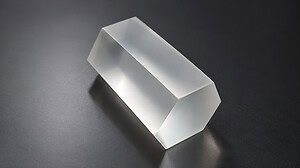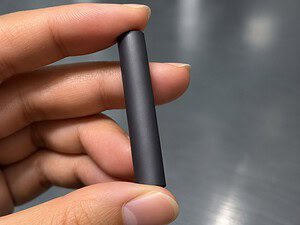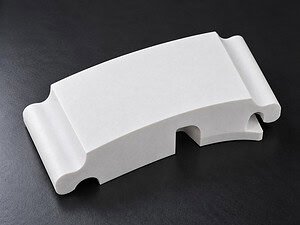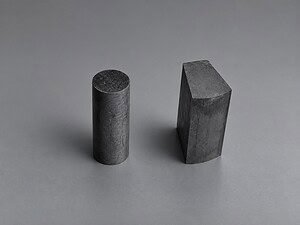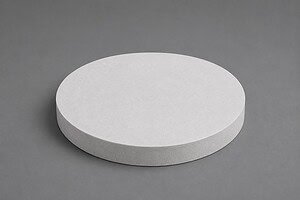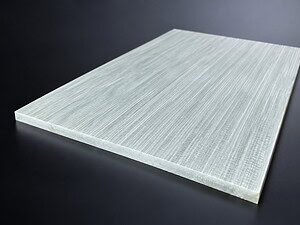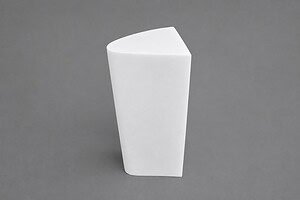
Une pièce en mousse PMI de qualité aérospatiale. Un contour courbe programmé. Une coupe continue au fil diamanté sur le SH60-60 avec une boucle de fil de 0,65 mm sous une tension de 150 N et une vitesse de fil de 30 m/s. Dans cette application, la géométrie est le défi — pas seulement le matériau.
La plupart du contenu en ligne sur la découpe de PMI parle de dalles plates et de coupes droites. Ce cas est différent : la pièce nécessite un profil personnalisé avec des sections courbes et changeantes, et la coupe doit préserver la qualité du bord sans écraser les cellules de la mousse ni dévier du chemin programmé.
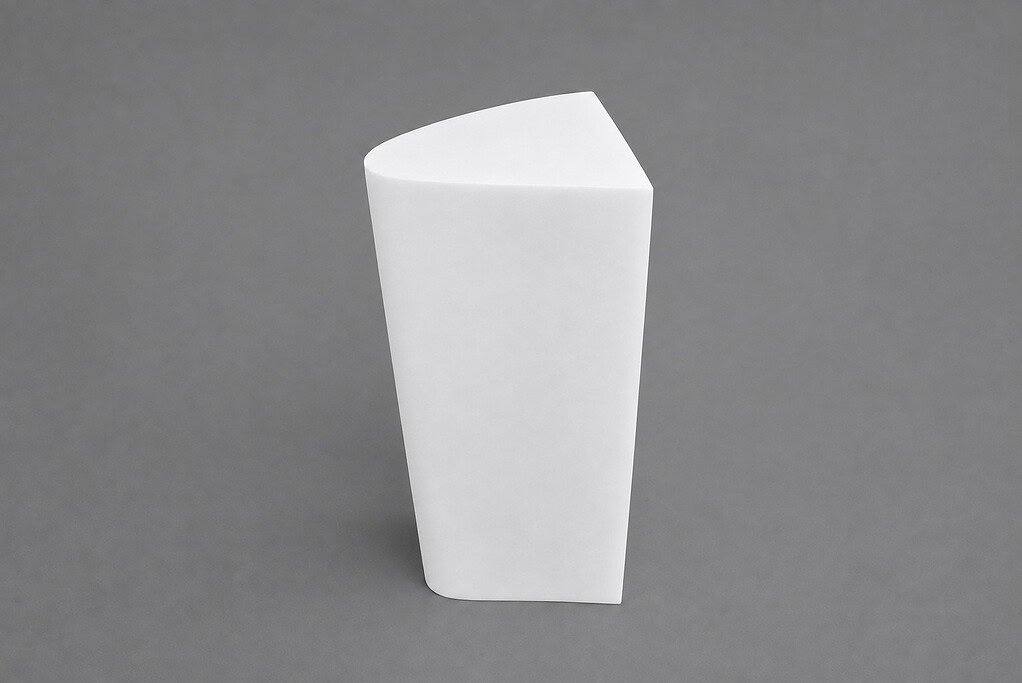
Application pour la découpe de profilés en mousse PMI
La PMI (polyméthacrylimide) est une mousse rigide à cellules fermées. Elle est utilisée comme noyau structurel dans les panneaux sandwich composites — notamment dans l'aérospatiale : structures secondaires de fuselage, panneaux de plancher, radômes, conduits, noyaux de surfaces de contrôle et composants intérieurs. Ce qui rend la PMI attrayante pour l'industrie aérospatiale, c'est une combinaison que peu de matériaux offrent : une résistance à la compression élevée pour sa densité, une stabilité dimensionnelle à température élevée (exposition à court terme jusqu'à 180 °C pour les formulations de qualité supérieure), une compatibilité avec l'autoclave et une usinabilité qui permet aux fabricants de la façonner en géométries complexes avant de laminer les peaux par-dessus.
La pièce dans ce cas n'est pas une feuille plate. C'est une section de profil — une pièce avec un contour courbe personnalisé qui doit être découpée dans un bloc PMI plus grand. La découpe de profil apparaît dans les travaux de prototypage aérospatial, la production personnalisée en petites séries et les applications où la géométrie de la peau du sandwich exige une forme de noyau correspondante (bords d'attaque, carénages courbes, remplissages coniques).
La raison commerciale de découper un profil directement, plutôt que de le fraiser dans un bloc surdimensionné, est simple : la découpe de profil n'enlève que le matériau qui sépare la bonne pièce du stock environnant. Moins de déchets, moins de temps d'usinage et un contour fini qui nécessite un minimum de travail secondaire avant la lamination — ce qui est important lorsque le matériau de noyau est cher et que la série de production est petite.
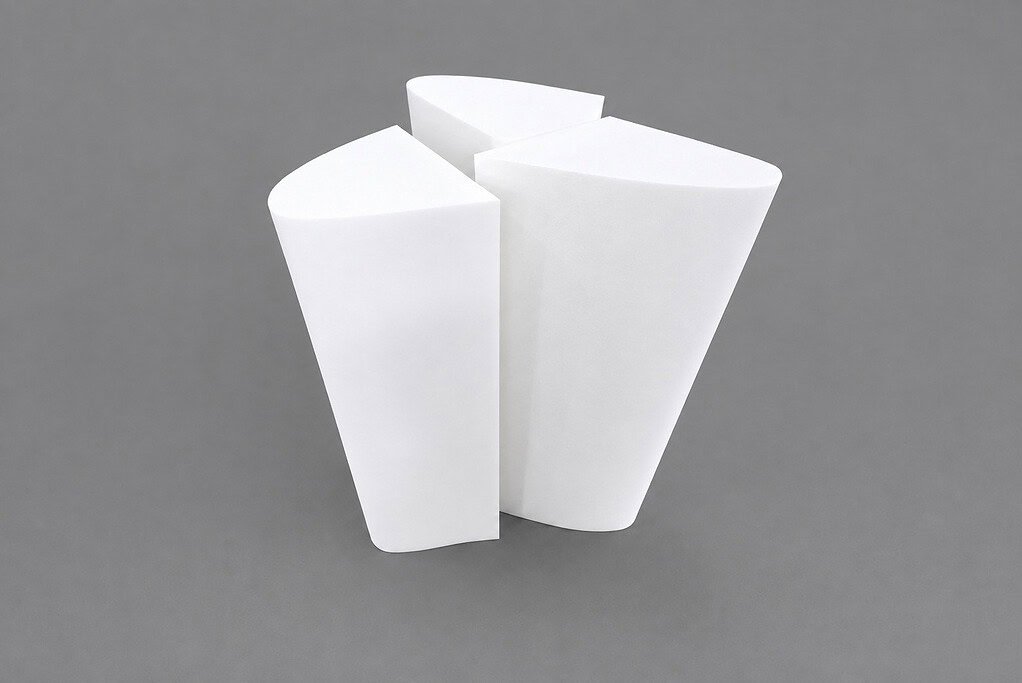
Le défi
La découpe de profilés en mousse PMI est trompeusement difficile.
Premièrement, le matériau est mou mais structuré. La mousse est maintenue par de fines parois cellulaires fermées. Sous une force de coupe latérale, ces parois s'écrasent. Une fois écrasées, la structure cellulaire au bord de la coupe est perdue — la surface semble floue, la densité près du bord diminue et la liaison en aval avec la peau composite est compromise. Toute méthode de coupe qui pousse fort contre la PMI détruit le bord.
Deuxièmement, la géométrie n'est pas droite. Un contour programmé signifie que l'outil de coupe doit suivre un chemin courbe — parfois avec des rayons serrés, parfois avec des changements de direction. Sur une scie à ruban, la lame veut aller droit ; sur une fraiseuse, l'engagement de l'outil change lorsque l'outil tourne ; sur un fil chaud, le chemin du fil n'est aussi précis que le bras CNC et aussi propre que la zone de fusion le permet.
Troisièmement, la PMI est sensible à la chaleur. Le polymère ramollit au-dessus d'environ 180 °C et se dégrade à des températures plus élevées. Les méthodes de coupe qui génèrent de la chaleur localisée — lames à friction élevée, plasma, laser — laissent un bord décoloré ou résineux qui doit être poncé avant le collage.
La combinaison — mousse souple et structurée, géométrie complexe, sensibilité à la chaleur — réduit considérquement les méthodes viables. Pour que la découpe de profilés en mousse PMI fonctionne, le processus doit générer une faible force mécanique, suivre un chemin programmé en douceur et ne pas déposer de chaleur dans la zone de coupe.
L'approche : SH60-60, fil de 0,65 mm, tension de 150 N
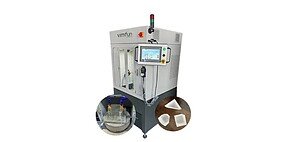
Nous avons utilisé le VIMFUN SH60-60 scie à fil diamanté sans fin avec un fil électrodéposé de 0,65 mm boucle en fil diamanté. La raison spécifique pour laquelle cette configuration convient à la découpe de profilés en mousse PMI se résume à trois points : le fil est continu, la force de coupe est faible et stable, et le fil suit un contour programmé en douceur plutôt qu'une ligne droite fixe.
| Paramètre | Valeur |
|---|---|
| Pièce à usiner | Bloc de mousse PMI de qualité aérospatiale, géométrie de profil personnalisée |
| Type de coupe | Coupe de contour / profil (pas de tranchage droit) |
| Machine | Scie à fil diamanté sans fin VIMFUN SH60-60 |
| Fil de fer | Boucle de fil diamanté sans fin électrodéposé de 0,65 mm |
| Tension du fil | 150 N |
| Vitesse du fil | 30 m/s |
| Liquide de refroidissement | Coupe à sec avec aspiration des poussières (pas de liquide de refroidissement sur la PMI) |
| Trajet du fil | Contour CNC programmé |
| Vitesse d'alimentation | Défini par la complexité et le rayon du profil ; non divulgué pour ce cas |
L'ensemble des paramètres est le résultat d'un équilibre de travail pour la découpe de profilés en mousse PMI : tension suffisamment élevée (150 N) pour maintenir le fil droit dans les sections courbes sans fléchissement, vitesse du fil modérée (30 m/s) pour enlever le matériau en continu sans générer de chaleur, et diamètre du fil (0,65 mm) choisi pour concilier le rayon de courbure minimum et la durée de vie du fil. Des vitesses de fil plus élevées permettraient un enlèvement de matière plus rapide mais risqueraient de générer de la chaleur par friction sur la face de coupe ; une tension plus faible laisserait le fil dévier dans les courbes et produire un effilement.
Comment le processus de découpe de profilés en mousse PMI se déroule
Le fil diamanté sans fin tourne en continu dans une direction. Il n'y a pas de mouvement de va-et-vient et aucun joint ne traverse la zone de coupe. Lorsque la pièce est avancée contre le fil le long du contour programmé, le fil enlève progressivement le matériau — une petite copeau par révolution sur toute la longueur de contact plutôt qu'une grosse copeau sur un seul passage.
Deux choses se produisent en raison de cela :
- La force de coupe reste faible. Avec de nombreux petits engagements par unité de temps, aucun moment unique n'exige une charge mécanique élevée. Les parois cellulaires de la PMI près du bord de coupe ne sont pas écrasées.
- Les changements de direction sont fluides. Étant donné que la flexibilité du fil provient de la boucle elle-même, les transitions dans les courbes ne nécessitent pas que l'outil se réoriente. Le fil suit simplement le chemin programmé à mesure que la pièce avance.
Une fois le profil terminé, la section finie se sépare directement du bloc environnant. L'état du bord est suffisamment constant pour que la pièce passe généralement directement au collage ou à la finition finale sans étape de correction de forme.
Le Résultat
Le résultat d'une coupe au fil diamanté sans fin bien réglée sur la PMI présente trois propriétés importantes pour l'utilisation en aval :
- Bords nets dans les courbes. Pas de bavures, pas de parois cellulaires écrasées à la transition des sections droites aux sections courbes.
- Géométrie de profil cohérente. Le contour programmé est ce qui sort de la machine, sans artefacts de déviation de l'outil.
- Usinage secondaire minimal. Ébavurage et nettoyage léger plutôt qu'une remise en forme complète.
Pour le travail de prototypes et de composants personnalisés, cette combinaison raccourcit le chemin entre le bloc brut et le noyau à coller.
Pourquoi le fil diamanté sans fin convient à la découpe de profilés PMI
Si vous croisez les contraintes — mousse souple, géométrie complexe, sensibilité à la chaleur, exigence de qualité des bords — avec les méthodes courantes de découpe PMI, le fil diamanté sans fin s'aligne avec les contraintes d'une manière que les alternatives ne font pas.
| Méthode | Adéquation de la découpe de profilés PMI | Mode de défaillance lors de l'utilisation |
|---|---|---|
| Scie à ruban | Coupes droites uniquement | Ne peut pas suivre de contours complexes ; dérive sur les courbes |
| Fil chaud | Rapide pour les lignes droites et les courbes simples | Fait fondre le bord ; dégradation du polymère sur la face de coupe ; résidu |
| Défonceuse / fraiseuse | Précis pour les contours CNC | La pression de l'outil écrase les parois cellulaires ; accumulation de chaleur |
| Jet d'eau | Capable de suivre les contours | L'eau sature la mousse à cellules fermées ; risque de délaminage |
| Laser | Capable de suivre les contours | Zone affectée par la chaleur ; décoloration ; dégradation |
| Fil diamanté sans fin | Contour + faible force + pas de chaleur | Pas le plus rapide pour les coupes droites simples |
La comparaison n'est pas une affirmation selon laquelle le fil diamanté sans fin est le meilleur pour chaque coupe PMI. Il est le meilleur lorsque la géométrie est complexe, que l'état du bord compte et que vous ne pouvez pas vous permettre d'adoucir ou d'écraser la mousse sur la face de coupe.
Limitations qui méritent d'être mentionnées
Chaque processus a ses limites. Les nommer rend l'adéquation plus claire.
- Coupes droites simples. Une scie à ruban correctement réglée est généralement plus rapide qu'un fil diamanté sans fin pour la découpe droite de dalles PMI. Le fil diamanté est choisi pour la géométrie, pas pour le débit de découpe de dalles de base.
- Coins internes très aigus. Le fil a un diamètre fini. Les rayons d'angle interne inférieurs au diamètre du fil ne sont pas réalisables en une seule passe. Les caractéristiques internes aiguës nécessitent une adaptation de la conception ou une opération secondaire.
- Parois très profondes et très fines. Le PMI est mou. Les longs parcours du fil à travers la pièce peuvent permettre un léger fléchissement du fil. Pour les coupes profondes avec des tolérances serrées, le plan de coupe peut nécessiter un re-fixation intermédiaire.
- Variantes de PMI à très haute densité. Les qualités de densité plus élevée (par exemple, 200 kg/m³ et plus) se coupent différemment des qualités légères. Les paramètres ne sont pas directement transférables entre les qualités.
Si l'une de ces contraintes s'applique à votre pièce, l'étape pragmatique est un court essai de coupe avant de vous engager dans le processus.
Où ce cas s'inscrit dans le contenu sur les fils de coupe
Le PMI est une mousse structurelle légère, ce qui place ce cas dans une catégorie différente de la majeure partie du contenu sur la découpe au fil diamanté — dont la plupart traite de matériaux durs et cassants.
| Page | La question à laquelle il répond |
|---|---|
| Ce cas | “ Comment découper proprement un profil de mousse PMI ? ” |
| Boucle de fil diamanté sans fin | “ Qu'est-ce qu'une boucle de fil diamanté sans fin et quand en utiliser une ? ” |
| Vitesse du fil, tension, vitesse d'avance | “ Comment les paramètres de coupe du noyau sont-ils liés ? ” |
| Structure de la scie à fil diamanté | “ Comment est construite une scie à fil diamanté à boucle sans fin ? ” |
| Matériaux avancés | “ Quels composites et matériaux légers peuvent être coupés avec du fil diamanté ? ” |
Si votre question concerne spécifiquement la découpe de profilés en mousse, cette page est la bonne entrée. Si votre question concerne la technologie de boucle de fil sous-jacente ou la plateforme de machine de découpe de contour, suivez les liens ci-dessus.

FAQ
Le fil diamanté sans fin peut-il couper toutes les qualités de PMI ?
Il coupe toute la gamme de qualités standard, mais les paramètres dépendent de la qualité. Un réglage de fil et de force qui fonctionne bien sur une qualité de 51 kg/m³ ne sera pas le bon réglage pour une qualité de 200 kg/m³. L'essai de coupe par qualité est la norme.
Le liquide de refroidissement est-il nécessaire pour la coupe du PMI ?
Non. La coupe à sec avec aspiration des poussières est standard. Le liquide de refroidissement à base d'eau est évité car il peut saturer la structure à cellules fermées et perturber le collage ultérieur.
Quelle est la complexité du profil possible ?
Le fil suit un chemin CNC programmé, donc la complexité est limitée par le rayon de courbure minimum (environ le diamètre du fil) et par l'accès au bridage. Les profils extérieurs de forme libre sont courants ; les coins internes aigus ont une limite de rayon inférieure.
Cela peut-il remplacer le jet d'eau sur les pièces PMI aérospatiales ?
Pour les applications où le jet d'eau a causé une saturation du bord ou un délaminage, le fil diamanté sans fin est une alternative viable. Pour des coupes droites très simples sur des dalles épaisses, le jet d'eau peut encore être plus rapide. La décision est par pièce, pas universelle.
Quelle machine est utilisée pour la découpe de profilés en mousse PMI ?
Dans ce cas aérospatial, la scie à fil diamanté sans fin VIMFUN SH60-60 avec une boucle de fil électrodéposé de 0,65 mm, une tension de 150 N et une vitesse de fil de 30 m/s. Pour les travaux de contour plus petits, une fraiseuse de contour de classe SGI convient également ; pour les blocs plus grands, une plateforme à axe vertical est utilisée. Nous adaptons la machine à la pièce plutôt que l'inverse.
Envoyez-nous votre profil PMI
Si vous avez une pièce en mousse PMI avec un profil complexe — prototype aérospatial, petite série ou production personnalisée — envoyez-nous le dessin (ou une esquisse grossière), la nuance de PMI et l'état de surface dont vous avez besoin. Nous effectuerons un essai de découpe sur la plateforme SH60-60 et vous ferons un retour avec les paramètres (diamètre du fil, tension, vitesse, avance), une estimation du temps de cycle et des photos d'échantillons.