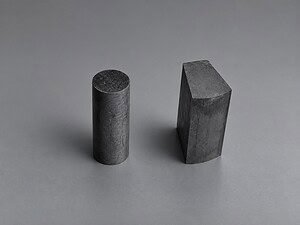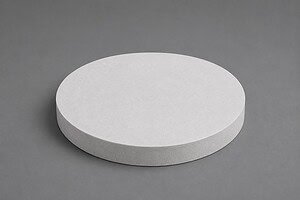
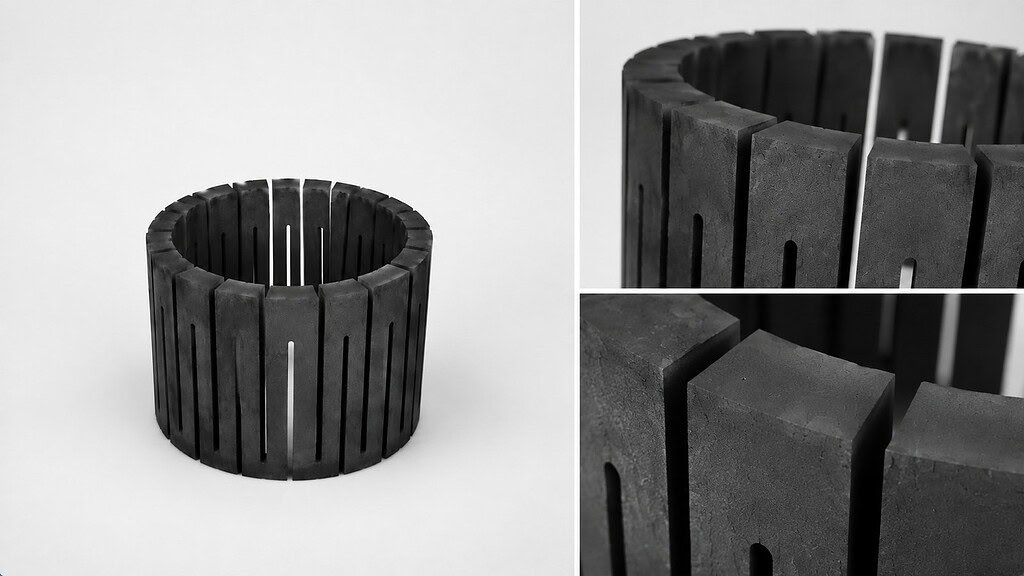
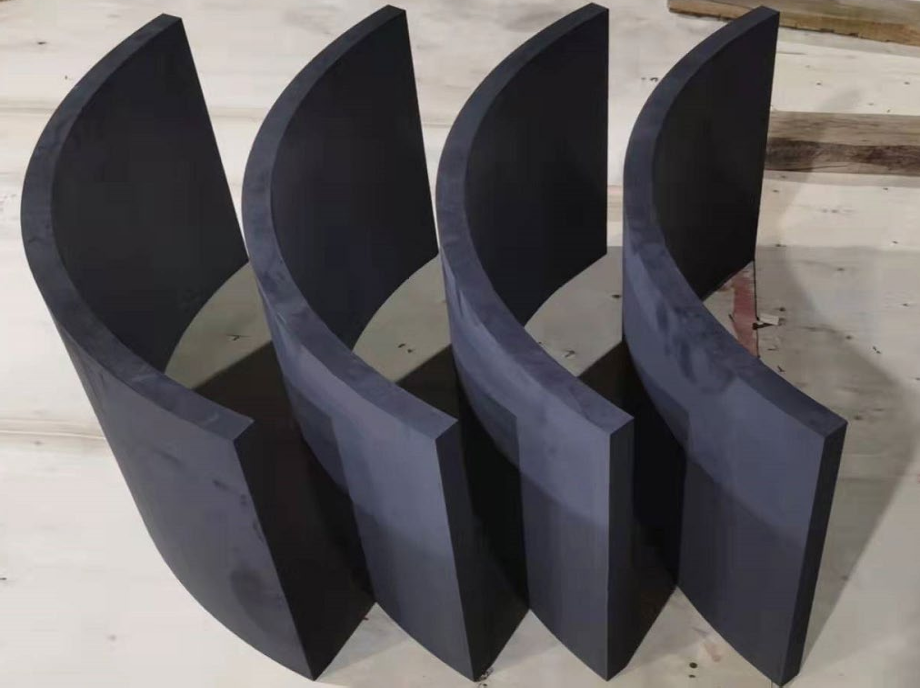
Un anillo de grafito de gran diámetro. Múltiples ranuras de precisión. Corte en seco a 40–70 m/s, y cada pared de ranura tiene que salir limpia.
El grafito se corta rápido. Ese no es el problema. El problema es que el grafito también se fractura rápido, y en un anillo cilíndrico grande con múltiples ranuras, cada pasada de corte es otra oportunidad para que una grieta se propague por el cuerpo. Una pared de ranura astillada significa que todo el componente, que puede haber tardado horas en mecanizarse hasta este punto, va a la chatarra.
Así es como lo abordamos.
El Componente: Anillos Susceptores de Grafito en Procesamiento Térmico de Semiconductores
Los anillos susceptores se colocan dentro de los reactores de crecimiento de cristales y equipos de procesamiento de obleas a alta temperatura. Su función es mantener los sustratos en posición durante el tratamiento térmico —temperaturas superiores a 1000 °C— mientras que su geometría de ranura gestiona el flujo de gas y la distribución del calor en la superficie del componente.
Alta pureza grafito es el material estándar para esta aplicación. Sobrevive a ciclos térmicos repetidos, resiste los gases de proceso reactivos y tiene suficiente maquinabilidad para mantener perfiles de ranura complejos. La especificación de pureza es estricta: la contaminación de metales traza del susceptor se transfiere directamente a la superficie de la oblea, por lo que el grafito de grado semiconductor funciona al 99.99% de carbono o superior.
Esa combinación —térmicamente estable, químicamente inerte, de alta pureza— es exactamente lo que dificulta su mecanizado sin riesgo de contaminación o daño estructural. El material que resiste la degradación en servicio también resiste el corte.
El Problema: Las Ranuras en Grafito Frágil No Perdonan el Impacto
La dureza Mohs del grafito es de alrededor de 1-2. Se corta fácilmente. Lo que no hace es absorber el impacto. Una fresadora o una hoja de sierra convencional aplica fuerza de corte en pulsos —cada enganche de diente es un microimpacto en la estructura granular del grafito.
En una pieza de grafito pequeña, esos pulsos a menudo son manejables. En un anillo susceptor grande con múltiples ranuras, tres cosas agravan el problema:
La distancia de propagación de la vibración aumenta con el tamaño del anillo. Un anillo cilíndrico grande sujeto por un extremo mientras una fresa contacta el otro actúa como una palanca. La vibración de cada impacto de diente se propaga por el cuerpo del anillo. En las paredes de las ranuras, donde la sección transversal es más delgada, esa vibración se manifiesta como astillado del borde o grietas subsuperficiales.
El recuento de ranuras multiplica el riesgo. Cada corte de ranura es otro evento de impacto en una estructura que ya ha sido tensada por los cortes anteriores. Un anillo que atraviesa la primera ranura sin daños aún puede desarrollar grietas en el cuarto o quinto paso a medida que el microdaño acumulado alcanza un umbral. Es por eso que la pérdida de rendimiento en anillos de grafito con múltiples ranuras y corte convencional se considera una certeza en lugar de una excepción.
La pérdida de material por el corte interrumpe el equilibrio térmico. La geometría de la ranura del anillo susceptible es parte del diseño térmico: el ancho y la posición de la ranura determinan cómo se distribuye el calor en la superficie del anillo durante el procesamiento. Un método de corte de ranura ancha elimina más material por ranura de lo que especifica el dibujo, lo que altera el rendimiento térmico del anillo. El control de la ranura aquí no se trata solo del desperdicio de material; es una especificación del proceso.
El Enfoque: SH60-60, Cable de 0.8 mm, Corte en Seco
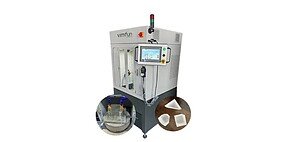
Usamos la VIMFUN SH60-60 sierra de alambre de diamante sin fin con un electroplateado de 0.8 mm bucle de hilo diamantado.
| Parámetro | Valor |
|---|---|
| Máquina | Sierra de alambre de diamante sin fin VIMFUN SH60-60 |
| Pieza de Trabajo | Anillo susceptible de grafito de alta pureza |
| Tipo de cable | Bucle de alambre de diamante sin fin electroplateado |
| Diámetro del alambre | 0,8 mm |
| pérdida de corte | ~0.9 mm por ranura |
| Tensión del cable | 200–300 N |
| Velocidad del cable | 40–70 m/s |
| Velocidad de avance | 50–100 mm/min |
| Refrigerante | Corte en seco — sin refrigerante |
| Geometría de la ranura | Múltiples ranuras radiales de precisión |
El grafito se corta en seco. Sin refrigerante. El viruta de grafito no es reactiva y sale de la ranura por el propio flujo de aire del alambre a velocidad; el refrigerante crearía una pasta de grafito que se acumularía en la ranura y aumentaría la resistencia al corte en lugar de reducirla. El corte en seco también elimina el riesgo de contaminación por residuos de refrigerante en un componente que va a un entorno térmico de semiconductores.
La velocidad del alambre funciona a 40–70 m/s, rápida en comparación con materiales más duros como la cerámica o el cuarzo que requieren un contacto más controlado. La baja dureza del grafito significa que la tasa de eliminación de material a estas velocidades es alta, y la acción abrasiva es lo suficientemente agresiva como para mantener la eliminación de virutas sin ningún tipo de lavado secundario. Para más información sobre cómo interactúan la velocidad, la tensión y la alimentación, consulte la velocidad del alambre, la tensión y la velocidad de avance.
El diámetro del alambre de 0,8 mm establece el corte en aproximadamente 0,9 mm. Esa es una elección deliberada para esta geometría de anillo. Un alambre más delgado (0,4–0,6 mm) estrecharía el corte, pero introduciría riesgo de fatiga del bucle en múltiples pasadas de ranura en un anillo grande: la ruta de corte extendida por ranura a este diámetro empujaría un alambre delgado hasta su límite de fatiga antes de que se completen todas las ranuras. El alambre de 0,8 mm cambia un corte ligeramente más ancho por una integridad de bucle consistente en todas las pasadas.
El parámetro crítico es el control de la tensión. La tensión del alambre a 200–300 N debe mantenerse constante a lo largo de toda la profundidad de cada ranura. Si la tensión cae a mitad de corte —debido a la caza del servo, la fricción de la polea o un bucle de tensión de respuesta lenta— el alambre se arquea lateralmente y la pared de la ranura sale cónica: más ancha en la entrada que en la salida. El sistema de tensión de bucle cerrado del SH60-60 corrige las desviaciones en tiempo real. Una tensión constante produce paredes de ranura paralelas en cada ranura del anillo.
El resultado: cada pared de ranura limpia, sin trabajo secundario
Después del corte, cada ranura muestra bordes limpios tanto en la entrada como en la salida: sin astillado, sin microfisuras en las paredes, sin delaminación en el lado de salida.
La geometría de la ranura es consistente en todos los cortes. Ancho uniforme, paredes paralelas, suelo de ranura plano. El tipo de consistencia que proviene de un proceso donde la variable de corte —posición del alambre, tensión, velocidad— no varía entre la primera ranura y la última.
Lo que está ausente importa tanto como lo que está presente. Con el mecanizado convencional, un paso de desbarbado suele seguir al corte de ranura para eliminar fragmentos de grafito astillados antes de que el anillo entre en servicio. Las virutas de grafito en un entorno térmico de semiconductores contaminan el proceso. Omitir ese paso no es solo una ganancia de eficiencia, sino que elimina una etapa de manipulación que en sí misma introduce riesgo de astillado. El proceso de alambre de diamante entrega paredes de ranura que no lo necesitan. Para obtener detalles sobre el control del resultado de la superficie en el corte con alambre de diamante, consulte optimización de la calidad de la superficie.
La condición de grietas subsuperficiales en las paredes de la ranura también es diferente de lo que deja el corte convencional. El astillado superficial es visible y se puede clasificar en la inspección. Las grietas subsuperficiales no son visibles, pero se propagan durante el ciclo térmico, lo que lleva a fallos del componente a mitad de proceso. El mecanismo de abrasión de bajo impacto de un alambre de diamante continuo limita el daño subsuperficial a la zona de abrasión en sí, sin la profundidad de iniciación de grietas que introduce el corte percusivo. Según la guía de SGL Carbon sobre grafito de alta pureza para aplicaciones de semiconductores, la estabilidad dimensional a través de ciclos térmicos comienza con una condición libre de grietas desde la etapa de mecanizado.
El anillo sale de la máquina listo para equipos de procesamiento térmico de semiconductores. Sin trabajo secundario en los bordes. Sin riesgo de contaminación por residuos de refrigerante. Geometría de ranura dentro de las especificaciones en todas las pasadas.
Las actas de SPIE sobre el mecanizado de grafito para aplicaciones térmicas de semiconductores documentan la brecha en la condición de la superficie entre el alambre de diamante y el mecanizado convencional en componentes de grafito frágiles, una brecha que crece con la complejidad del componente.

¿Podemos cortar su anillo de susceptor de grafito?
Manejamos anillos de susceptor de grafito, revestimientos de crisol CZ, elementos calefactores y otros componentes complejos de campo térmico de grafito.
Para darle una recomendación de proceso, envíenos:
- Diámetro exterior e interior del anillo
- Espesor de pared y número de ranuras
- Ancho objetivo de la ranura y profundidad de la ranura
- Grado de grafito si se conoce (pureza, estructura del grano)
- Requisito de calidad del borde o tolerancias del dibujo existente
Confirmaremos si el SH60-60 se ajusta a su geometría, especificaremos el diámetro del alambre y los parámetros para su perfil de ranura, y le asesoraremos sobre la fijación para el tamaño de su anillo.