Introduction:
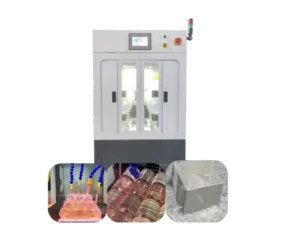
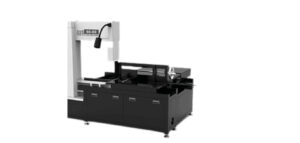
In the world of industrial quartz cut, endless diamond wire saws have emerged as shining stars, revolutionizing the cutting and shaping of various materials. One particular arena where these cutting-edge tools have proven their mettle is in the processing of quartz. Quartz, renowned for its exceptional hardness, transparency, and resistance to high temperatures, finds applications in multiple industries, including electronics, optics, and solar energy. In this article, we will delve into the unparalleled advantages of endless diamond wire saws in quartz cutting, highlighting their efficacy and promoting their superiority
1,Precision Slicing of Quartz Wafers:
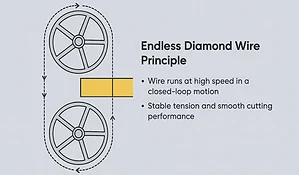
In the semiconductor industry, the production of electronic components relies heavily on precise wafer slicing. Shine Wire Cut’s endless diamond wire saws provide a significant advantage by offering enhanced cutting precision compared to conventional methods. With their continuous loop of diamond-impregnated wire, these advanced saws ensure exceptionally accurate and clean cuts through quartz wafers. The superior cutting precision translates into the production of thin, uniform wafers, thereby enhancing the efficiency and reliability of semiconductor devices.
2,Enhanced Optical Component Manufacturing:
For the fabrication of lenses, prisms, and windows used in optical applications, the processing of quartz demands top-notch precision. Shine Wire Cut’s endless diamond wire saws outshine conventional methods by offering unparalleled cutting accuracy and control over the process parameters. The seamless cutting action of the diamond wire ensures smoother surfaces and minimal chipping, resulting in high-quality optical components with precise dimensions and superior optical properties.
3,Empowering Solar Cell Production:
Quartz is an essential material in solar cell manufacturing. Shine Wire Cut’s endless diamond wire saws prove their worth in the production process by enabling efficient and precise cutting of quartz cut rods or blocks. This superior cutting capability ensures the creation of solar cell substrates with consistent dimensions and exceptional thermal properties. Compared to conventional methods, Shine Wire Cut’s endless diamond wire saws reduce material wastage and enable manufacturers to produce solar cells with enhanced efficiency and durability.
4,Precision Fabrication of Quartz Tubes and Crucibles:
Industries such as semiconductor manufacturing and chemical processing rely on quartz tubes and crucibles for high-temperature applications. Shine Wire Cut‘s endless diamond wire saws provide an edge over conventional methods in shaping these quartz components with precision and accuracy. The wire saws ensure clean and controlled cuts, resulting in quartz tubes and crucibles with tight tolerances and excellent thermal stability, contributing to superior performance in demanding industrial environments.
5,Mastering Quartz Cut:
Quartz glass, also known as fused silica, finds widespread use in optics, laboratory equipment, and semiconductor manufacturing. Shine Wire Cut’s endless diamond wire saws take center stage in this arena by offering unmatched cutting efficiency and precision. With the ability to handle complex shapes and sizes, these wire saws empower manufacturers to create intricate structures and delicate quartz glass components that shine with brilliance.
Advantages of Endless Diamond Wire Saw over Shine Wire Cut:
- Increased Cutting Speeds:
Shine Wire Cut’s endless diamond wire saws boast higher cutting speeds compared to conventional methods, leading to shorter processing times and increased productivity.
- Reduced Material Waste:
The thin diamond wire and continuous cutting motion of Shine Wire Cut’s endless diamond wire saws minimize material wastage, ensuring optimal material utilization and cost-effectiveness.
- Enhanced Cutting Precision:
The seamless diamond wire of Shine Wire Cut’s endless diamond wire saws ensures consistent cutting, resulting in higher precision and improved surface quality.
- Versatility in Handling Materials:
Shine Wire Cut’s endless diamond wire saws can process various quartz cut materials with ease, providing manufacturers with flexibility in their production processes.
- Longer Wire Lifespan:
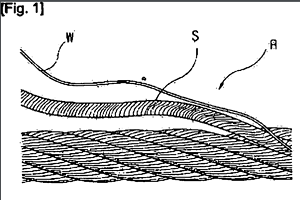
Shine Wire Cut’s endless diamond wire saws feature an endless design that reduces stress concentration points, leading to reduced wire breakage and longer wire lifespan, resulting in lower maintenance costs.
Conclusion:
Endless diamond wire saws have undoubtedly earned their place as the preferred cutting equipment in quartz cut processing. With their precision, efficiency, and versatility, they outshine conventional methods in every aspect of quartz material processing. From semiconductor manufacturing to solar cell production and optical component fabrication, Shine Wire Cut’s endless diamond wire saws exhibit unparalleled capabilities, providing industries with a cutting-edge advantage in the competitive landscape. By choosing Shine Wire Cut’s endless diamond wire saws over conventional cutting methods, manufacturers can elevate their quartz cut endeavors to new heights, crafting brilliant products that illuminate the industries they serve.