Introduction: The Intelligence Behind the Cut
In the contemporary landscape of advanced manufacturing, diamond wire cutting has established itself as the premier precision slicing method for processing non-metallic, hard, and brittle materials. From an engineering perspective, the transition from traditional bonded abrasive wheels to an abrasive wire process represents a significant leap in material utilization. However, the mechanical frame of a machine is only as capable as its governing intelligence.
PLC control (Programmable Logic Controller) serves as the “brain” of modern wire saw machine systems, bridging the gap between raw mechanical power and microscopic precision. As industries move toward larger ingot sizes and expensive substrates—such as Silicon Carbide (SiC), Gallium Nitride (GaN), and large-scale optical crystals—the technical demands on the slicing process have intensified. This guide provides a deep dive into the mechanical principles, PLC control logic, and industrial advantages of this technology.
1. Core Technical Principle: Abrasive Removal Mechanism
The efficacy of diamond wire cutting is rooted in its discrete material removal mechanism. Unlike a continuous grinding wheel, the wire acts as a high-speed carrier for millions of microscopic diamond grits. Modern diamond wire saw machines leverage advanced PLC control to ensure that the linear velocity remains constant regardless of material density fluctuations.
1.1 Micro-Grinding and Fracture Mechanics
The process operates on fixed-abrasive grain technology. Diamond crystals, typically ranging from 10 to 40 microns, act as independent indenters. When the pressure applied by the PLC control feed system exceeds the fracture toughness of the substrate, it initiates lateral and median cracks, leading to material ejection.
1.2 Cold Cutting Technology Implementation
One of the most critical aspects of the process is its thermal management. In traditional blade sawing, the large contact area leads to rapid heat accumulation. In contrast, cold cutting technology in wire sawing relies on the “point-contact” nature of the grits. Because only a fraction of the wire surface is in contact with the material at any given micro-second, the heat generated is minimal and is almost instantaneously dissipated. The PLC control is responsible for maintaining the optimal speed-to-feed ratio to ensure this thermal stability.
2. System Core: Adaptive Feed Logic
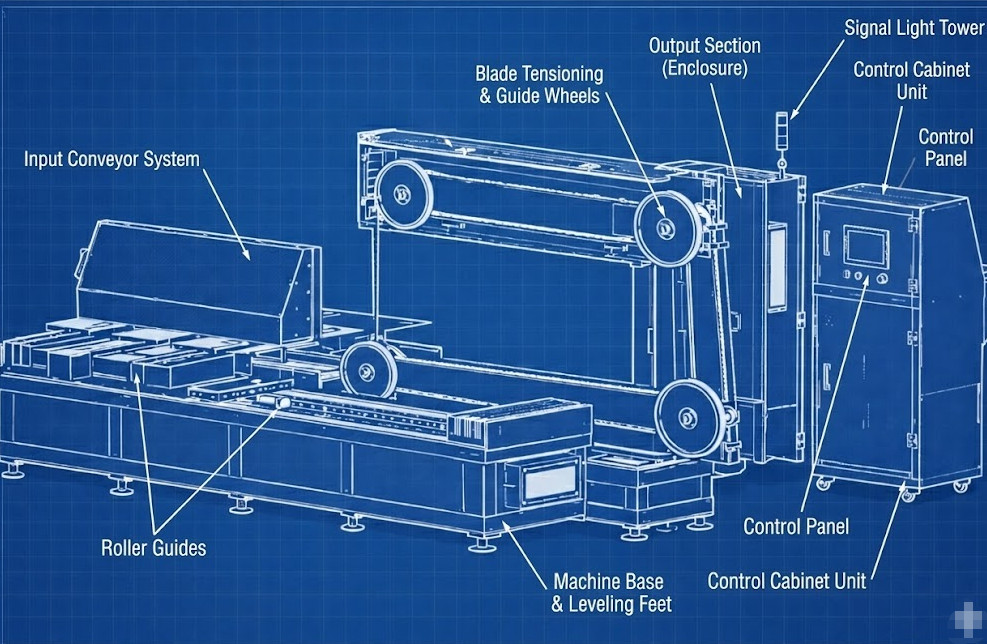
Maintaining a constant wire tension between 150 N and 250 N is the baseline for high-precision slicing. High-end systems utilize PLC control to implement sophisticated algorithms that prevent tool failure.
2.1 Managing Localized Tension Spikes
No crystal is perfectly uniform. When the diamond wire encounters a harder inclusion, the cutting resistance spikes. A system with robust PLC control monitors the drive motor’s current in real-time. If a resistance spike is detected, the machine can instantly throttle the feed rate to prevent localized tension spikes. This logic is the primary reason for our guide on Wire Tension Calibration, which ensures that physical sensors are providing accurate data to the PLC.
2.2 Vibration Suppression via FFT Analysis
At ultra-high speeds (80 m/s), harmonic vibrations can destroy the surface finish (Ra). Advanced PLC control systems perform high-speed sampling of vibration sensors. By utilizing FFT (Fast Fourier Transform) analysis within the control logic, the machine can identify resonant frequencies and shift the wire speed to “tune out” the vibration, ensuring a superior surface finish.
3. Control System Architecture: PLC vs. CNC Control
In the design of diamond wire saw machines, engineers often choose between PLC control and CNC (Computer Numerical Control). While both manage motion, their underlying architectures serve different needs.
| Feature | PLC Control | CNC Control |
| I/O Response | Microsecond (Real-time) | Millisecond (Processing lag) |
| Hardware Stability | Maximum (Industrial Grade) | High (Depends on OS) |
| Best Application | High-speed Wafering / Slicing | Complex 3D Profiling |
For industrial-scale production of wafers and optical blocks, a PLC-based dual-control system is often preferred for its robustness and lower latency in processing the safety loops required for cold cutting technology.
4. Engineering Characteristics: The Endless Wire Advantage
The diamond wire cutting process is characterized by its continuous, unidirectional motion. This provides several technical advantages over reciprocating saws:
- Uniform Wire Wear: Wear is distributed evenly across the loop, extending tool life.
- Constant Linear Velocity: Unlike reciprocating saws, the endless loop maintains a stable material removal rate (MRR) without deceleration phases.
- Minimal Vibration: The absence of directional changes significantly reduces harmonic vibrations, a key factor in achieving high-precision cold cutting.
5. Troubleshooting: Identifying Control-Related Defects
Many “mechanical” failures in diamond wire saw machines are actually rooted in PLC control tuning issues:
- Wedge-shaped Cuts: Often a result of lag in the feed compensation loop managed by the PLC.
- Surface Striations: Typically traced back to poor PID tuning within the tension control module.
- Wire Stripping: Occurs when the PLC control fails to respond to material hardness transitions.
For structural-related vibration issues, please refer to our guide on machine frame design.
6. Engineering Conclusion: Suitable Applications
Diamond wire cutting is the optimized choice for materials where material cost and surface precision are paramount. It is ideally suited for:
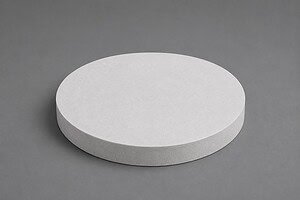
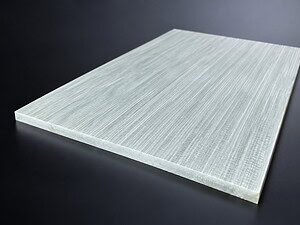
- Semiconductors: Silicon (Si) and Silicon Carbide (SiC) ingots.
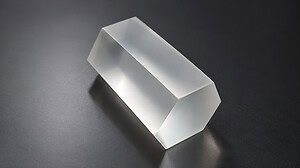
- Optics: Sapphire, quartz, and optical glass.
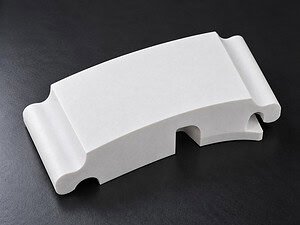
- Advanced Ceramics: Alumina and zirconia components.
- Magnetic Materials: Where low-stress separation is required.
7. FAQ (Engineering Oriented)
Q1: Why is PLC control considered a “cold” process?
A: Due to the infinitesimal contact area and high speed, frictional heat is dissipated by the wire and coolant before it can penetrate the material bulk, preventing thermal damage to the crystal lattice.
Q2: How do you prevent wire vibration at 80 m/s?
A: Through dynamic balancing of drive pulleys and maintaining a consistent tension of 200 N+ with precision ceramic guides. Advanced systems also use FFT analysis within the PLC control to avoid resonance.