Industrial multi-wire cutting is used when a production job needs several parallel slices from a workpiece, rather than one isolated cut. A multi-wire cutting machine can help with repeatable wafer or plate production, but the suitable machine depends on the material, part dimensions, slice count, thickness target and required surface condition. This article is an application and selection guide; for available equipment, see our multi-wire saw range.
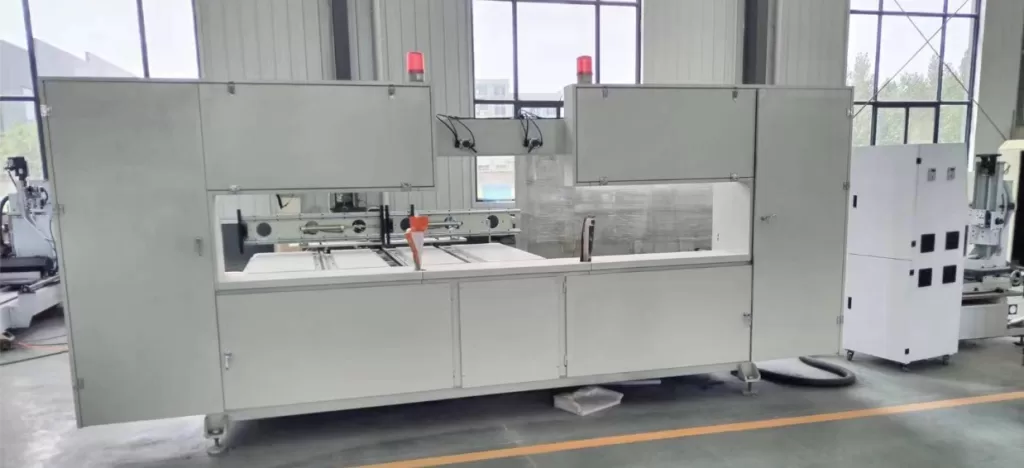
Where multi-wire slicing fits
The main reason to consider a multi-wire layout is to make several consistent slices in one production cycle. A single-wire machine may be more appropriate for one-off sections, irregular contours or frequent changes in part geometry. Material testing is still needed before claiming a throughput or surface-quality advantage for a specific job.
- Silicon and wafer production: compare slice thickness, kerf loss, breakage risk and downstream finishing requirements.
- Optical and other hard, brittle materials: assess whether repeatable parallel slices are needed and whether the workpiece can be supported throughout the cut.
- Small-batch versus volume work: include setup time, wire routing and expected batch size, not only the cutting time per pass.
What to confirm before choosing a machine
Multi-wire systems do not all have the same wire path or workholding arrangement. Some configurations guide one long wire through multiple cutting spans; others use different layouts. Confirm the machine design and process window for the actual workpiece rather than transferring settings from a different material.
| Selection item | Bereitzustellende Informationen | Warum es wichtig ist |
|---|---|---|
| Material | Grade, processing state and a sample if available | Influences wire choice, feed strategy and debris control |
| Workpiece | Length, width, height and clamping surfaces | Determines capacity and fixture approach |
| Ausgabe | Slice count, target thickness and acceptable kerf | Defines wire spacing and yield objectives |
| Qualität | Tolerance, edge condition and surface requirement | Sets inspection and trial-cut criteria |
| Produktion | Batch size, changeover frequency and downstream steps | Shows whether a multi-wire layout is worthwhile |
An industrial machine example
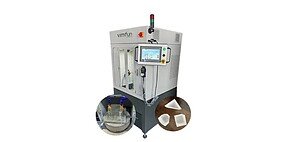
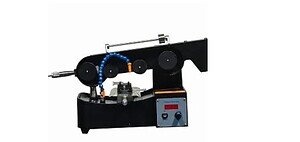
For wafer-slicing requirements, the diamond multi-wire saw product page shows one available machine configuration. Use its current product specifications as the reference for that model; do not assume the same capacity, wire arrangement or cutting result for other machines. If the job involves a different material or section size, request a configuration review before selecting a model.
Multi-wire or single-wire?
A multi-wire system is a candidate when repeated, parallel slicing and batch yield drive the process. For a single crop cut, changing profiles or research samples, another arrangement may be easier to set up. Our multi-wire versus single-wire comparison explains the configuration differences; the broader Drahtsägen-Maschinen-Leitfaden covers machine structure and selection factors.
Information for a sample-cut review
- Material name, grade and processing state.
- Drawing with part dimensions, target slice thickness and number of slices.
- Allowed kerf, edge condition, surface finish and dimensional tolerance.
- Expected batch volume and any coolant or contamination limits.
With those details, the engineering team can suggest a machine layout and trial-cut criteria without promising a universal cutting speed or finish.
Frequently asked questions
Does multi-wire cutting always produce more parts per hour?
No. The benefit depends on slice count, setup time, wire life, material behavior and downstream finishing. Compare complete production cycles on representative samples.
Can the same machine process every hard material?
No. Workpiece size, material grade, wire choice, fixtures and process environment all affect suitability. Confirm a specific configuration before making a capability claim.
What should be inspected after a trial cut?
Check slice thickness variation, edge damage, surface condition, kerf loss and any defects relevant to the downstream process.
Discuss your cutting requirement
Share the material and drawing through the form below. We will review whether a multi-wire setup is appropriate and which product information or sample test is needed next.