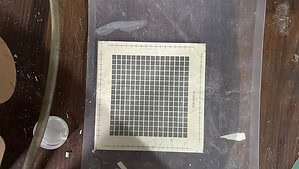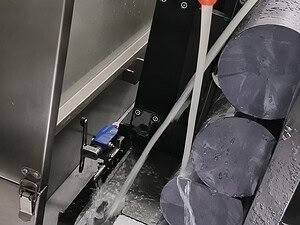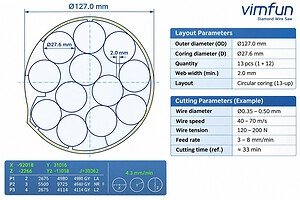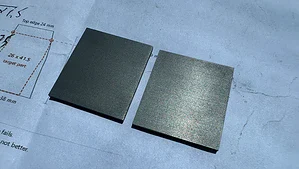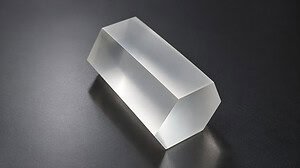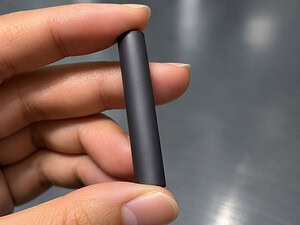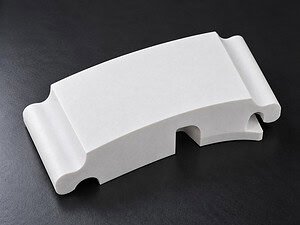
Diamond wire sawing of glass removes material through diamond-abrasive contact with the workpiece. For optical and technical glass, wire selection, feed, support and approved fluid or debris controls depend on the glass grade and cut geometry. Compare measured kerf, dimensional accuracy, surface condition and finishing allowance with the actual alternative process. Wire sawing can still generate heat, chipping and subsurface damage; achievable results require application-specific validation.
The introductory figures and performance statements above are not a qualified specification for every glass or machine. Verify them for the actual sample, supplied configuration and inspection method. For operating and safety context, see the safest way to use a glass wire saw and safety precautions when using a glass wire saw. The sections below identify the mechanics, material, support and acceptance factors to review; they are not a complete operating procedure.
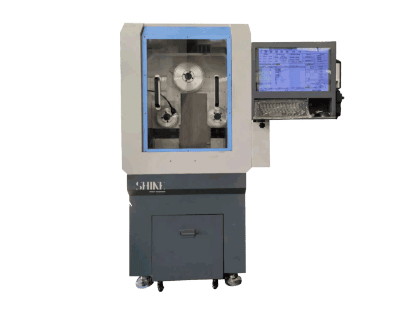
1. Comparing Wire Sawing and Blade Sawing for Glass
Compare wire and blade processes suited to the same stock, cut and final specification. Brittle glass can suffer edge and subsurface damage with either method. The useful questions concern the actual load, material loss, thermal conditions and measured outcome:
- Cutting Load: Abrasive wire can distribute removal over many grit contacts, but a thin wire or high speed alone does not establish low force or ductile-mode removal. Evaluate feed, tension, guidance and fixtures together and inspect damage for the actual glass; no universal force or wire-size threshold is stated here.
- Kerf and Material Yield: Measure actual kerf and calculate accepted slices with thickness, end allowances, finishing stock and rejects included. Thin blade options exist, so a generic thick-blade comparison cannot establish a fixed yield advantage. Wire diameter is not itself the measured kerf.
- Cooling and Thermal Damage: Where compatible and approved, fluid delivery helps manage heat and debris. Check the actual delivery, thermal gradients and resulting part condition. Neither coolant temperature nor wire motion proves a particular contact temperature or elimination of thermal shock.
2. Supported Glass Classifications & Material Behaviors
Different glass compositions exhibit distinct hardness, thermal expansion, and fracture behaviors during diamond wire sectioning:
| Material Group | Examples | What to Confirm | Cut Acceptance |
|---|---|---|---|
| Optical borosilicate glass | N-BK7; BOROFLOAT 33 | Actual grade, residual stress and specimen support | Measure edge, surface and dimensional requirements |
| Fused silica and crystalline quartz | Fused silica stock; quartz crystal | Distinguish amorphous glass from crystalline material and its orientation | Inspect damage, geometry and finishing allowance |
| Low-expansion optical materials | ZERODUR glass-ceramic; ULE glass | Use the specific material data and contamination limits | Do not assume zero residual stress or crack-free cutting |
| Display and strengthened glass | Specified aluminosilicate or chemically strengthened grades | Confirm treatment, residual stress and whether sectioning is permitted | Evaluate cut-edge strength and damage; original strength is not assured |
| Infrared optical materials | Specified chalcogenide glass; ZnSe crystalline material | Separate glass and crystal grades and assess their SDS and process compatibility | Check edge, surface, exposure and waste requirements separately |
3. Workpiece Fixturing, Sacrificial Backing & Edge Chipping Control
Glass remains sensitive to local stress and insufficient support. Evaluate the complete mounting and cutting path against the specimen geometry and acceptance criteria rather than assuming a particular fixture guarantees production yield:
- Mechanical Clamping: Select jaws, contact areas and support that restrain the workpiece without unacceptable local stress. Do not clamp a fragile blank indiscriminately between rigid faces, but do not rule out every engineered mechanical fixture. Verify clearance and restraint for the complete cut.
- Bonded or Vacuum Support: These are possible mounting methods, not universal preferences. Confirm seal or bond reliability, load support, fluid compatibility, heating and removal requirements and the effect on the specimen. Follow the actual adhesive and machine instructions.
- Exit Backing: Suitable backing or support can help manage breakout in some applications. Confirm the material, attachment, entry and exit clearance and resulting edge by trial. No fixed maximum chip size is guaranteed by adding a backing plate.
- Finishing and Inspection: Measure roughness, subsurface damage, edge condition and dimensions separately using appropriate methods. Determine grinding, lapping, polishing or other preparation from the final part specification and trial result. Wire sawing does not establish a universal Ra, damage depth, finishing-time reduction or requirement for CMP on every optical component.
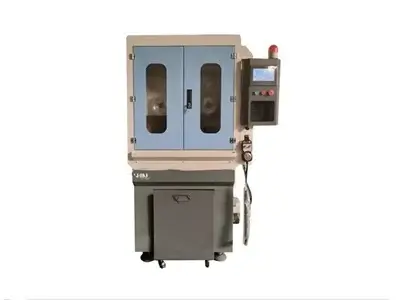
4. Vimfun Machine Portfolio for Industrial Glass Processing
Vimfun manufactures dedicated CNC diamond wire cutting systems engineered specifically for optical, scientific, and technical glass processing:
- CNC Precision Glass Slicing Saw (SG 20): Review the SG 20 CNC glass cutting wire saw for compatible straight-slicing tasks. Confirm the actual feed, control, guarding and cooling configuration and qualify the cut on the intended material. A fully enclosed wet cabinet does not by itself demonstrate mist-free operation or a finished-part tolerance.
- CNC Rotary Prism Cutting Saw: The SG40-R prism cutting wire saw reference is currently presented as SGR40 on its product page. Confirm the actual rotary mechanism, fixture, angle requirements and sequence for the part. A series name or link label does not establish every prism geometry or inspection result.
- CNC 2D Contour Profiling: The Compact 2D profile cut wire saw guide explains profile-cutting tasks. Confirm the machine and feasible wire-entry arrangement for internal features; a complete endless loop cannot simply enter a closed hole. Check achievable radius, support, edge condition and subsequent finishing rather than claiming that other tools always fracture the edge.
Validate Glass Slicing Performance on Your Substrates
Evaluate potential changes in material yield, cut-edge quality and total finishing work on comparable samples. Use the free diamond wire test cutting service to agree the trial scope, specimen requirements and available measurements. A report should state its conditions and limitations; full roughness, damage or dimensional inspection is not assumed included for every trial.