The search term “wire cut wire” can refer to EDM electrode wire or to an abrasive wire used to cut a workpiece. They are not interchangeable consumables. Before choosing a wire, identify whether the machine removes material by electrical discharge or by mechanical abrasive contact. This guide compares those two uses and explains the information needed for selection.
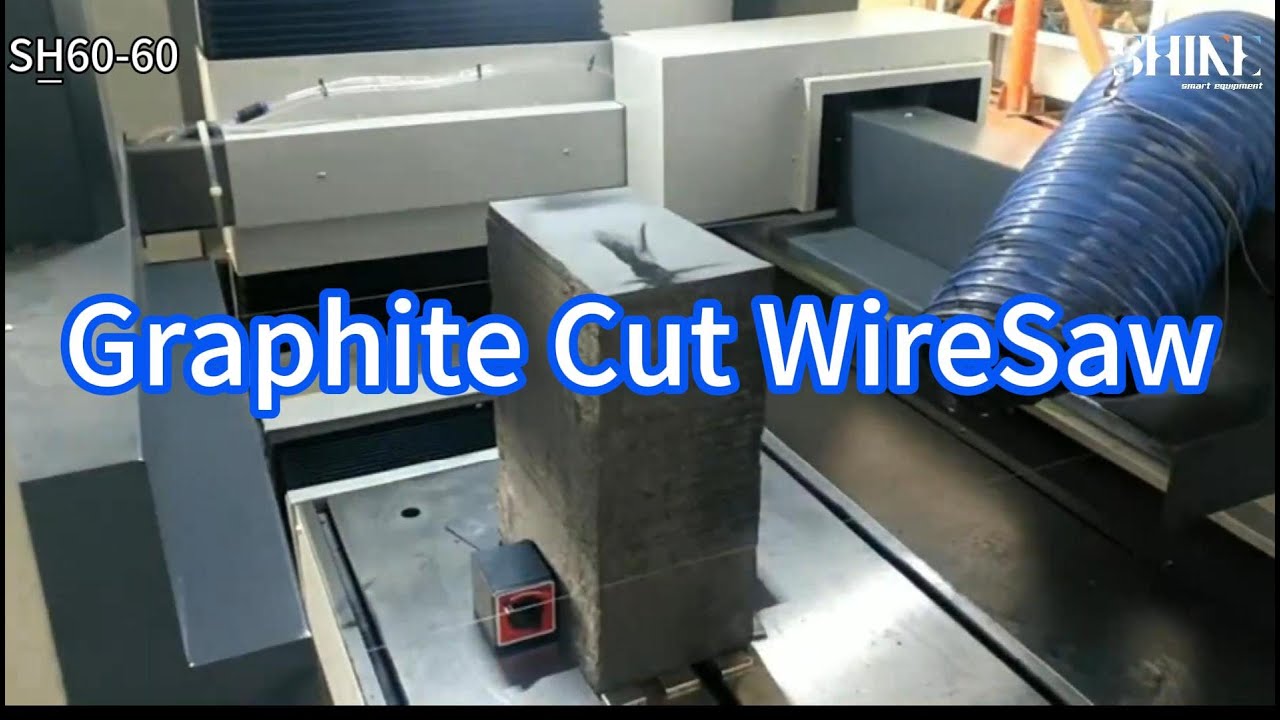
EDM Wire and Abrasive Wire: Key Differences
| Selection point | Wire EDM electrode | Diamond abrasive cutting wire |
|---|---|---|
| Material removal | Electrical discharges across a controlled gap | Diamond abrasive contact with the workpiece |
| Workpiece requirement | Conventional EDM requires electrical conductivity | Conductivity is not the removal mechanism; suitability depends on the material and setup |
| Consumable specification | Electrode composition, diameter and machine compatibility | Wire/loop dimensions, coating and compatible machine settings |
| Fluid system | Use the specified dielectric and machine procedure | Wet or dry conditions must be approved for the material and machine |
| Process evaluation | Geometry, discharge conditions, finish and any affected surface layer | Wire bow, fixture stability, kerf, chipping and finish |
| Substitution | Do not substitute an abrasive loop | Do not use EDM electrode wire as an abrasive loop |
Wire EDM belongs to electrical discharge machining; it is not the opposite of all “wire cutting”. A wire saw cuts by abrasive action. The phrase alone therefore cannot establish the cutting mechanism or the consumable to order.
Material and Wire Construction
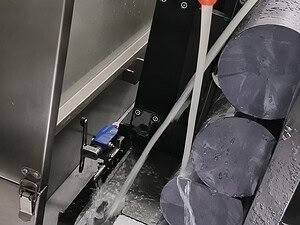
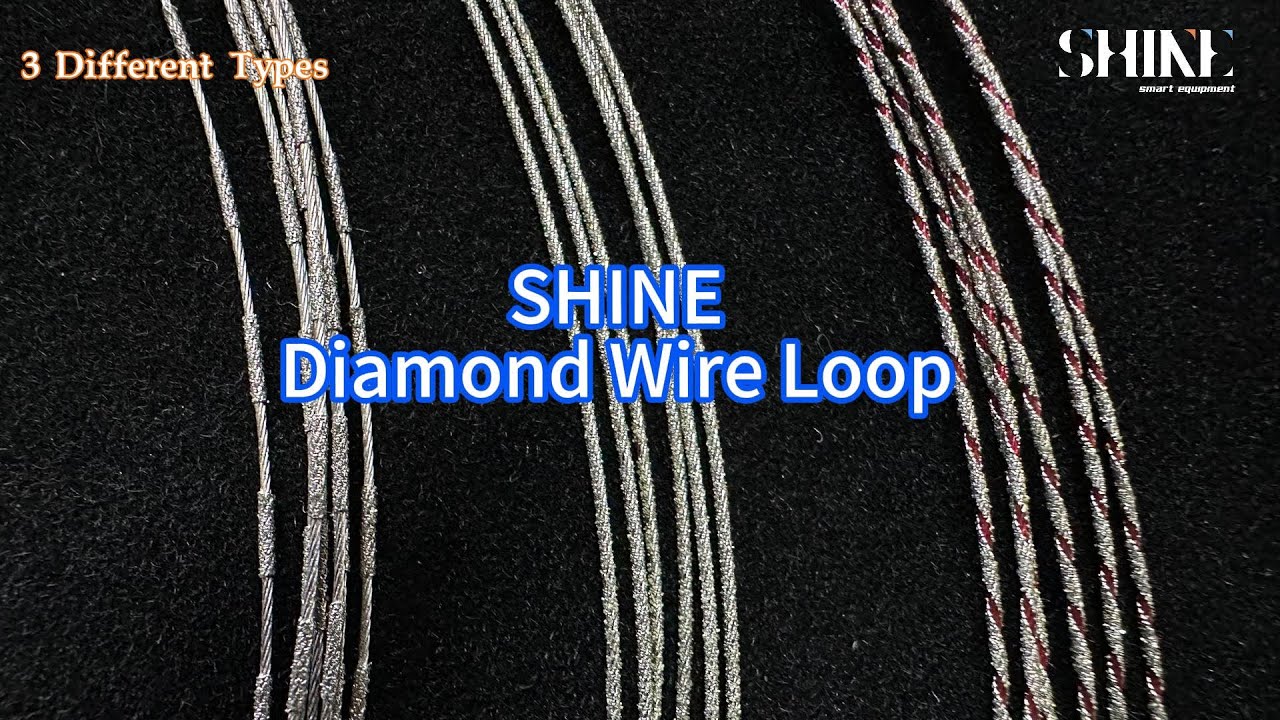
EDM electrode wires are specified for the discharge process and machine. Diamond abrasive wires carry bonded abrasive on a supporting wire; an endless loop also needs the dimensions and construction required by its machine. Neither a generic high-tensile wire description nor an appearance photograph is enough to approve a replacement.
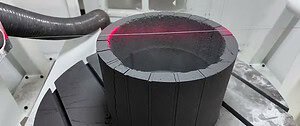
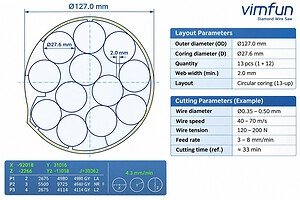
For the wire supplied for our abrasive cutting systems, review the diamond cutting wire specifications and coating options. This does not imply that EDM electrode wire or EDM machines are part of the current product range.

Which Materials and Shapes Are Suitable?
Conventional wire EDM is evaluated for electrically conductive workpieces. Abrasive diamond-wire cutting is used for appropriate hard or brittle materials, subject to their properties, dimensions, fixturing and wet/dry compatibility. Do not promise that either process cuts every metal, ceramic or composite equally well.
Define whether the task is a straight slice, cropping, an external contour or an internal profile. Access, threading requirements, motion capability and the fixture can limit the achievable geometry. A material or shape seen on another machine is not proof that the proposed system can reproduce it.

Accuracy, Kerf and Surface Quality
There is no universal micron-level accuracy for the phrase “wire cut wire”. Specify dimensional tolerance, flatness, kerf, surface roughness and edge condition separately. Results depend on the particular machine, material, section thickness, wire condition and settings.
EDM and abrasive cutting affect surfaces differently. Assess the required finishing and inspection method for the application rather than assuming either process always gives a better surface. For abrasive cutting, excessive loading, wire bow or an unstable fixture may affect the cut even when the programmed path is correct.

Selection Information to Send to the Supplier
- Process and machine: identify EDM or abrasive cutting, the model and the approved consumable specification.
- Material: state the grade, dimensions, conductivity where relevant, and any coatings or bonded layers.
- Drawing: include the starting stock, cut path, target dimensions, tolerances and inspection points.
- Environment: state coolant restrictions, contamination sensitivity and debris-handling needs.
- Production: state sample quantity, batch frequency, loading method and required downstream finishing.
Cost and Operating Conditions
Compare cost per accepted part, not just wire purchase price. Relevant inputs include consumable use, setup, cycle time, maintenance, fluid or debris handling and finishing. Claims of minimal wear, guaranteed savings or lower energy use need application-specific evidence.
For diamond-wire equipment selection, use the diamond wire saw model range. A specific model should be recommended only after checking its actual capabilities against the drawing.
Maintenance, Handling and Safety
Follow the model-specific manual for wire replacement, approved settings, fluids, cleaning and isolation before maintenance. Keep spare consumables identified and stored as specified by their manufacturer. Do not assume a continuous-feed EDM maintenance routine applies to an endless abrasive loop.
Do not improvise wire repairs, bypass guards or service an energised machine. Use the equipment-specific energy-control procedure and qualified support for faults outside the operator procedure. For abrasive operating relationships, see wire speed, tension and feed rate.
Examples for Evaluating the Process
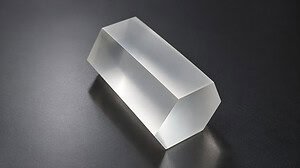
A conductive die insert and a brittle optical blank illustrate why process selection comes first. The die insert may be evaluated for EDM geometry and surface requirements; the optical blank may be evaluated for abrasive removal, clamping and edge integrity. These are selection examples, not documented customer results or promises of a particular model’s performance.
Frequently Asked Questions
- Is wire cut the same as EDM? Sometimes the term means wire EDM, but abrasive wire sawing is a separate mechanical process. Ask which mechanism is intended.
- Can EDM wire cut insulating glass? Conventional EDM requires electrical conductivity; it should not be presented as a general process for insulating glass.
- Can I use the same wire in both machines? No. The consumable and operating system must match the machine and process.
- How do I choose a diamond-wire coating? Start with the actual material and wet/dry constraints, then confirm the approved wire construction and trial conditions with the supplier.
- What accuracy should I expect? Agree a measurable acceptance requirement and validate it on a representative sample; this article is not a fixed accuracy specification.