Pourquoi les plaquettes de saphir se cassent-elles même sur des machines coûteuses ? Je travaille dans le domaine des machines de découpe de matériaux durs et fragiles depuis 6 ans. J'ai vu ce problème gaspiller du temps et de l'argent. Scie multi-axes à fil diamanté pour la découpe de matériaux durs et fragiles.
Dans cet article, je vous dirai quelle scie multi-axes à fil diamanté est excellente pour le saphir. Je parlerai de la dureté, du type de fil, de la vitesse et de la configuration. Vous trouverez également des cas d'utilisation réels et un guide d'achat pour vous aider à choisir le bon.
Qu'est-ce qu'une scie multi-axes à fil diamanté et pourquoi est-ce important ?
Les matériaux durs sont découpés à l'aide d'un fil revêtu de diamant sur une scie à fil diamanté multi-axes. Exemples typiques : saphir, carbure de silicium et verre optique. Elle déplace le fil et la pièce dans plus d'une direction. Cela vous donne plus de contrôle sur l'angle et la profondeur.
Le fil a une forme de boucle et enlève de la matière par abrasion. C'est pourquoi on l'appelle une scie à fil diamanté sans fin. Elle est utilisée pour la découpe de matériaux optiques, la découpe de matériaux semi-conducteurs et la fabrication de LED. Elle est également appelée machine de découpe de cristal.
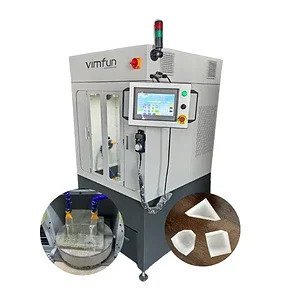
Scie multi-axes à fil diamanté – Aperçu rapide des spécifications
| Fonctionnalité | Détails techniques |
| Type de fil | Fil d'acier ou composite revêtu de diamant |
| Nombre d'axes | 2 axes, 4 axes ou 5 axes |
| 15. Niveau de précision | Saphir, SiC, quartz, verre optique |
| Type de coupe | Profils droits, angulaires, courbes, personnalisés |
| Vitesse du fil | 5 à 40 m/s |
| Système de refroidissement | Boue à base d'eau ou jet d'eau DI |
| Finition de la surface | Ra < 1 µm sur saphir |
Qu'est-ce qui rend le saphir si difficile à couper sur une scie à fil ?
Le saphir est un 9 sur l'échelle de Mohs. Seul le diamant est plus dur. Cela le rend très délicat sur toute machine de découpe de saphir. Il n'a pas la même structure cristalline dans toutes les orientations. Coupez-le de cette façon, et il fait une chose. Coupez-le de cette façon, et il fait une autre.
Si votre machine ne peut pas incliner ou faire pivoter, vous obtiendrez des éclats et des fissures. Un débit d'avance, une tension ou un liquide de refroidissement incorrects peuvent endommager tout un lot. La solution idéale est une scie à fil diamantée de précision avec contrôle de tension et réglages personnalisables.
Pourquoi l'orientation cristalline change-t-elle tout ?
Le saphir doit être coupé à l'angle approprié. Il existe deux directions principales. L'axe C et l'axe A. La pièce peut être inclinée et tournée à l'aide d'une machine de scie à fil multi-axes. C'est ce qu'on appelle l'usinage à axe rotatif. Il préserve la coupe conformément à la structure cristalline.
- Les coupes sur l'axe C nécessitent un angle de fil dans ±0,5 degrés
- Les coupes sur l'axe A sont plus simples mais nécessitent toujours un contrôle de l'axe
- Un mauvais alignement produit des micro-fissures et des dommages de surface
- Le contrôle multi-axes peut réduire les taux de rebut jusqu'à 40 %
Sable de fil de saphir vs. Vitesse de coupe : Qu'est-ce qui fonctionne le mieux ?
| Sable de fil (µm) | Vitesse de coupe (m/s) | Rugosité de la surface (Ra) | Meilleure utilisation |
| 8–10 µm | 15–20 m/s | 0,8–1,2 µm | Plaques minces, substrats de LED |
| 15–20 µm | 20–30 m/s | 1,5–2,5 µm | Pièces épaisses, dalles structurelles |
| 30+ µm | 25–40 m/s | 3,0–5,0 µm | Blocs bruts, pré-façonnage |
| Électrodéposé | 10–25 m/s | 0,5–1,0 µm | Plaques de saphir ultra-précises |
Facteurs clés affectant la qualité de coupe sur le saphir
- La tension sur le fil doit être uniforme. Si elle change, le fil se courbera et la coupe déviera de sa trajectoire
- Autour des joints de grains durs dans le cristal, le taux d'avance doit être réduit
- Le flux de liquide de refroidissement élimine la chaleur et les copeaux pendant la coupe
- Maintenez le fil sur le trajet approprié en utilisant la synchronisation des axes dans une machine de découpe à fil multi-axes
Comment une machine de découpe à fil diamanté gère-t-elle le SiC par rapport au saphir ?
Le carbure de silicium (SiC) et le saphir sont tous deux durs et cassants. Mais ils ne sont pas identiques. Le SiC est plus dur. Il use également le fil plus rapidement. Le saphir est un peu plus tendre. Mais il est plus vulnérable à la chaleur et aux traumatismes.
Les réglages qui conviennent à une machine de découpe au carbure de silicium ne conviendront pas au saphir. Comprendre la différence peut vous aider à tirer le meilleur parti d'une seule machine de découpe de matériaux durs et cassants.
SiC vs Saphir : Comparaison côte à côte
| Propriété | Saphir (Al₂O₃) | Carbure de silicium (SiC) |
| Dureté Mohs | 9.0 | 9,0–9,5 |
| Ténacité à la fracture | Faible | Moyen-Bas |
| Sensibilité thermique | Haut | Moyen |
| Taux d'usure du fil | Modéré | Haut |
| Vitesse de fil idéale | 15–25 m/s | 20–35 m/s |
| Débit d'alimentation | 0,1–0,3 mm/min | 0,2–0,5 mm/min |
| Besoin de liquide de refroidissement | Haut | Moyen-élevé |
Le saphir nécessite une vitesse d'avance plus lente et plus de liquide de refroidissement que le SiC. Le SiC use le fil plus rapidement. Une scie à fil diamanté multi-axes décente devrait pouvoir faire les deux sans aucun réglage.
Avantages et inconvénients par matériau
Coupe de saphir – Avantages :
- Moins de perte de matière avec un fil fin
- Le poli de surface peut être assez lisse.
- Multi-axes pour des coupes de forme complexe dans les composants optiques
Coupe de saphir – Inconvénients :
- Fragile contre les vibrations ou les chocs
- Nécessite un contrôle thermique prudent pendant la coupe
- Les fils s'usent plus rapidement que sur des matériaux plus tendres
Coupe de SiC – Avantages :
- Coupes plus rapides grâce à une vitesse de fil accrue
- Peut trancher plusieurs plaquettes en une seule passe
- Fonctionne avec les systèmes de boues standard
Découpe SiC – Inconvénients :
- L'abrasion accrue entraîne une usure plus rapide du fil.
- Le fil doit être remplacé plus souvent
Quels secteurs utilisent ces machines ?
- LED et Photonique – plaquettes de saphir pour substrats LED
- Usine de semi-conducteurs – plaquettes SiC pour pièces de puissance VE
- Défense et Optique – fenêtres et dômes en saphir
- Laboratoires de recherche – découpe de matériaux optiques et tests de cristaux
Quelles sont les principales utilisations réelles des scies à fil diamanté multi-axes ?
Le Scie à fil diamanté multi-axes est une véritable machine de fabrication. Ce n'est pas seulement pour les laboratoires. Elle découpe du saphir pour les écrans de téléphone et des plaquettes SiC pour les éléments de puissance des véhicules électriques. De plus en plus d'organisations commencent à utiliser des systèmes de machines de découpe de précision pour les matériaux durs.
Ils obtiennent de meilleurs rendements, des coupes plus nettes. La qualité s'améliore. Les déchets sont minimisés. Voici quelques exemples concrets de quatre secteurs principaux qui montrent ce que cette machine peut accomplir.
Cas d'utilisation réels et résultats
| Industry | Matériau coupé | Machine utilisée | Résultat clé |
| Fabrication de LED | Saphir (tranches de 2 à 6 pouces) | Scie à fil diamanté multi-axes | 35% moins de perte de matière par rapport à la coupe à la lame |
| Électronique de puissance | SiC (4H-SiC) | Machine de découpe de carbure de silicium | Rendement de tranche augmenté de 28% |
| Optique de défense | Ébauches de dômes en saphir | Scie à fil diamanté de précision | Finition de surface Ra < 0,6 µm atteinte |
| Recherche / Optique | Quartz, LiNbO₃ | Machine de découpe de matériaux optiques | Coupes d'angle dans ±0,2° |
Pourquoi VIMFUN est un choix judicieux pour vos besoins de découpe
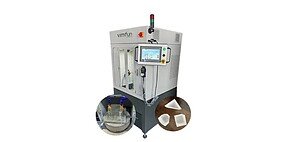
VIMFUN produit des machines de découpe au fil multi-axes de haute qualité. Ils construisent des machines pour les matériaux durs comme le saphir et le SiC. Voici ce qu'ils proposent :
- Usinage d'axe rotatif : coupes de saphir sur axe C et axe A
- Scie à fil diamanté sans fin avec conception de contrôle automatique de la tension
- Réglages simples de la vitesse et du taux d'avance pour chaque matériau
- Éprouvé dans la découpe de matériaux semi-conducteurs et la fabrication de LED
VIMFUN est l'endroit idéal pour obtenir une machine de découpe au fil diamanté
Que faut-il vérifier avant d'acheter ?
- Nombre d'axes – 4 ou 5 axes pour les profils complexes de saphir
- Plage de vitesse du fil – doit être de 5 à 40 m/s
- Moniteur de tension – le retour d'information en temps réel évite la rupture du fil
- Système de refroidissement – alimentation interne en eau désionisée ou en boue
Comment configurer une scie à fil diamanté multi-axes pour le saphir ?
Une configuration correcte vous fera gagner du temps et des matériaux. De nombreux opérateurs négligent des étapes et perdent des lots entiers. Le saphir est une pierre délicate. Une erreur de configuration peut entraîner des fissures sur les bords ou des dommages de surface.
La première étape pour configurer correctement une machine de découpe de précision est l'alignement des axes. Vérifiez ensuite la tension du fil, testez le débit du liquide de refroidissement et effectuez toujours une coupe d'essai avant de passer à la production complète. Suivez les procédures suivantes pour un résultat correct.
Guide de configuration étape par étape
- Étape 1 : Fixez la pièce de saphir au support d'axe. Toute vibration endommagera la surface
- Étape 2 : Réglez la tension du fil au montant approprié pour le saphir. Trop tendu. Il casse. Trop lâche et la coupe dérive
- Étape 3 : Trajectoire de l'axe du programme dans la direction du cristal. Utilisez les données d'axe C ou d'axe A de votre fournisseur
- Étape 4 : Mettez le liquide de refroidissement en marche avant que le fil ne bouge. Le saphir chauffe rapidement sous le fil
- Étape 5 : Commencez à 50% vitesse pour les 2 premiers mm. Ensuite, exécutez à pleine vitesse une fois que le fil suit correctement.
- Étape 6 : Inspectez la surface après la première coupe. Changez de grain ou de vitesse si la finition n'est pas bonne
FAQ
Qu'est-ce qu'une scie à fil diamanté multi-axes ?
Le fil diamanté est utilisé dans une scie à fil diamanté multi-axes pour couper des matériaux résistants. Il possède plus d'un axe de mouvement. Cela vous permet de couper sous de nombreux angles avec une seule configuration.
- Fonctionne sur 2 à 5 axes
- Coupe saphir, SiC, quartz et verres optiques
- Moins de perte de matière qu'une coupe à la lame
Pourquoi le saphir est-il difficile à couper ?
Le saphir est un 9 sur l'échelle de dureté de Mohs. Il réagit différemment aux coupes dans diverses directions. Fissures et dommages de surface dus à un angle d'axe incorrect.
- nécessite une coupe d'axe précise pour la protection des plaquettes
- La chaleur s'accumule rapidement, le liquide de refroidissement est donc essentiel
- Le fil électrodéposé offre le meilleur poli sur le saphir
Une machine peut-elle couper à la fois le saphir et le SiC ?
Oui. Une scie à fil diamanté multi-axes décente peut faire les deux. Vous modifiez le fil, la tension, la vitesse d'avance et la vitesse pour chaque matériau.
- Le SiC nécessite une tension plus élevée et plus de vitesse
- Le saphir nécessite une vitesse d'avance plus lente et un refroidissement plus important
- Les machines VIMFUN disposent de préréglages pour les deux matériaux
Qu'est-ce que l'usinage à axe rotatif ?
L'usinage à axe rotatif consiste à faire tourner la pièce sur un axe contrôlé pendant qu'elle est coupée. Cela permet des coupes courbes et inclinées qu'une machine simple ne peut pas réaliser.
- Nécessaire pour la coupe de saphir sur axe C et axe A
- Utilisé dans les dômes optiques, les prismes et les plaquettes façonnées
- Précision de coupe dans ±0,2 degrés
Conclusion
L'instrument de coupe du saphir est une scie à fil diamanté multi-axes. Les scies à lame endommagent le saphir et gaspillent de la matière. C'est là qu'interviennent les systèmes multi-axes. Ils gèrent l'angle de l'axe, la tension du fil et la chaleur, le tout avec une seule machine. Les résultats parlent d'eux-mêmes en termes de découpe de LED, d'optique et de matériaux semi-conducteurs.
VIMFUN est le nom fiable dans la technologie de précision des scies à fil diamanté. Ils développent des équipements pour l'usinage de matériaux durs. Visitez VIMFUN maintenant et obtenez votre solution de coupe idéale.