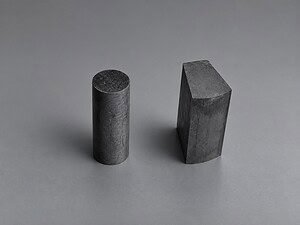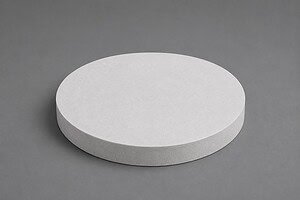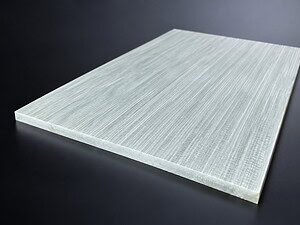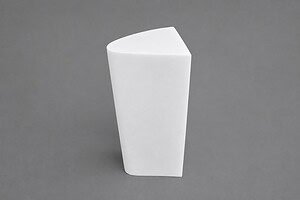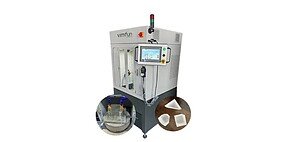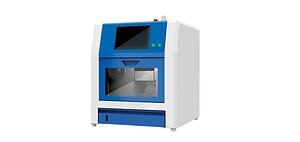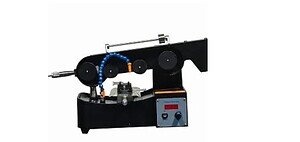
Bei jeder Anwendung von Diamantdrahtsägen kommt es auf vier Zahlen an: Drahtgeschwindigkeit, Drahtspannung, Vorschubgeschwindigkeit und Drahtdurchmesser. Wenn diese stimmen, läuft der Prozess von selbst – saubere Schnitte, gleichbleibende Genauigkeit, vorhersehbare Drahtlebensdauer. Wenn sie falsch sind, verbrauchen Sie Draht, reißen Werkstücke oder verbringen Stunden damit, Oberflächenqualitätsprobleme zu beheben, die bei der Einrichtung hätten vermieden werden können.
Dieser Artikel beschreibt die Parameter für Diamantdrahtsägen für die Materialien, die Vimfun-Maschinen am häufigsten bearbeiten, erklärt, wie die vier Variablen interagieren, und bietet Ihnen einen praktischen Rahmen für deren Abstimmung bei neuen Anwendungen.
Die vier Parameter
Bevor wir uns material-spezifischen Werten zuwenden, ist es hilfreich zu verstehen, was jeder Parameter tatsächlich steuert. Sie sind alle miteinander verbunden, weshalb die Änderung eines Parameters ohne Berücksichtigung der anderen normalerweise mehr Probleme verursacht, als sie löst.
Drahtgeschwindigkeit (m/s)
Die lineare Geschwindigkeit des Drahtes durch die Schnittzone. Höhere Geschwindigkeit bedeutet, dass mehr Diamantkörner pro Sekunde in das Material eingreifen, was die Last pro Korn reduziert und im Allgemeinen die Oberflächengüte verbessert. Höhere Geschwindigkeit erhöht jedoch auch die thermische Belastung der Bindungsschicht, was die Drahtlebensdauer.
Der Betriebsbereich auf Vimfun-Maschinen reicht bis zu 80 m/s. Die meisten Präzisionsschnitte erfolgen zwischen 30 und 60 m/s. Graphit kann auf 70 m/s beschleunigt werden, da es drahtschonend ist. Poröse Metalle bleiben niedrig – 15 bis 40 m/s –, um die Beschädigung fragiler Porenstrukturen nahe der Schnittfläche zu vermeiden.
Eine detaillierte Diskussion darüber, wie sich die Geschwindigkeit auf die Leistung auswirkt, finden Sie in unserem Leitfaden zu Schneiden von Diamantdrahtgeschwindigkeit.
Drahtspannung (N)
Die Kraft, die auf den Draht entlang seines Schleifenwegs ausgeübt wird. Höhere Spannung zieht den Draht gerader, reduziert das Durchbiegen und verbessert die Schnittgenauigkeit – insbesondere bei tiefen Schnitten, bei denen die freie Drahtspanne lang ist. Höhere Spannung belastet jedoch auch den Drahtkern, beschleunigt die Ermüdung und verkürzt die Drahtlebensdauer.
Die typische Arbeitsspannung reicht von 100 N bei empfindlichen Anwendungen bis zu 200 N bei harten Keramiken und Quarz. Die richtige Spannung ist die minimale Spannung, die Ihre Genauigkeitsanforderung erfüllt – nicht die maximale Spannung, die der Draht aushält.
Eine ordnungsgemäße Kalibrierung ist wichtiger als die Zahl selbst. Ein gut kalibriertes Spannungssystem liefert eine konstante Kraft ohne Überschwingen. Ein schlecht kalibriertes System schwankt beim Start oder beim Einrücken des Vorschubs und übt Spitzenlasten auf den Draht aus, die die Ermüdung beschleunigen, obwohl die durchschnittliche Spannung in Ordnung zu sein scheint.
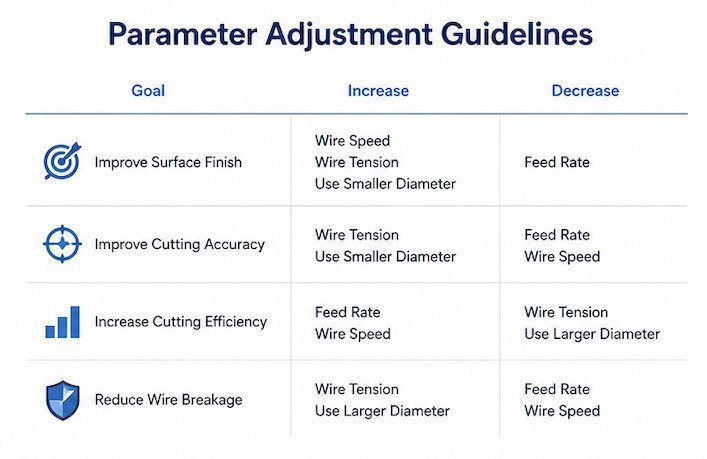
Vorschubgeschwindigkeit (mm/min)
Wie schnell sich das Werkstück in den Draht bewegt. Die Vorschubgeschwindigkeit bestimmt direkt den Durchsatz – schnellerer Vorschub bedeutet mehr Materialentfernung pro Minute. Sie bestimmt aber auch die Schnittkraft auf den Draht, die den Bogen (und damit die Genauigkeit), die Oberflächenqualität und den Drahtverschleiß beeinflusst.
Die Vorschubgeschwindigkeit hat den größten Bereich aller Parameter. Graphit kann bei 50–100 mm/min laufen, da es weich und selbstschmierend ist. Magnetische Materialien wie NdFeB und Ferrit laufen bei 1,5–3 mm/min, da sie hart und spröde sind und enge Maßanforderungen haben. Das ist ein 30-facher Unterschied bei der Vorschubgeschwindigkeit zwischen Materialien auf derselben Maschinenplattform.
Der Zusammenhang zwischen Vorschubgeschwindigkeit und Oberflächenqualität ist nicht immer intuitiv. Eine Reduzierung der Vorschubgeschwindigkeit verbessert die Oberflächengüte bis zu einem gewissen Punkt, aber zu langsames Fahren kann tatsächlich Probleme verursachen – der Draht verweilt länger in der Schnittzone und erzeugt Reibung ohne produktive Materialentfernung, was das Werkstück erwärmt und bei empfindlichen Materialien zu thermischen Schäden führen kann.
Drahtdurchmesser (mm)
Die Dicke des Diamantdrahtschlaufe. Diese wird vor Beginn des Schnitts eingestellt – sie kann während des Auftrags nicht geändert werden. Der Drahtdurchmesser bestimmt die Schnittfugenbreite (und damit den Materialverlust), die Drahtsteifigkeit (die den Bogen und die Genauigkeit beeinflusst) und die Drahthaltbarkeit (ein dickerer Draht hält unter gleichen Bedingungen länger).
Der Bereich über alle Vimfun-Anwendungen reicht von 0,35 mm für das Schneiden von Präzisionssilizium und magnetischen Materialien bis zu 1,0 mm für das Schneiden von schwerem Graphit. Die allgemeine Regel: Verwenden Sie den dünnsten Draht, der für Ihre Anwendung eine akzeptable Genauigkeit und Haltbarkeit gewährleistet. Dünnerer Draht spart Material (besonders wichtig bei teuren Substraten wie Germanium und Saphir), erfordert aber eine sorgfältigere Parameterkontrolle.
Parameter nach Material
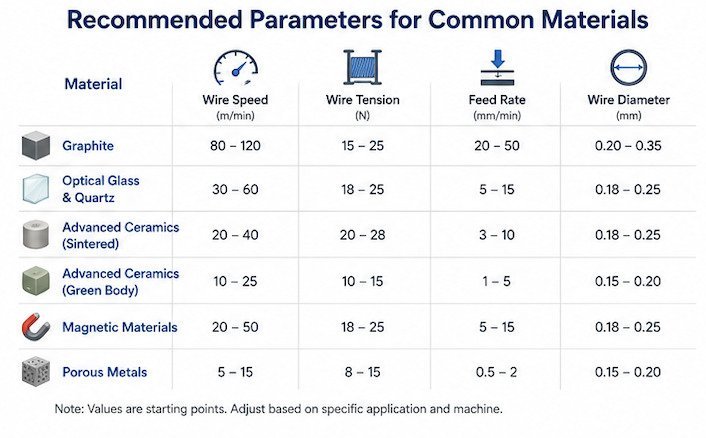
Dies sind die empfohlenen Startparameter aus den Anwendungsingenieurdaten von Vimfun. Es handelt sich um bewährte Bereiche – keine theoretischen Werte –, die durch Produktions- und F&E-Schnitte auf Vimfun-Endlosdrahtsägen entwickelt wurden.
Verwenden Sie sie als Ausgangspunkte und optimieren Sie sie dann basierend auf Ihrer spezifischen Werkstückgeometrie, Ihren Toleranzanforderungen und Ihren Oberflächenqualitätszielen.
Graphit (isostatisch / feinkörnig)
| Parameter | Bereich |
|---|---|
| Drahtdurchmesser | 0,6 – 1,0 mm |
| Drahtspannung | 150 – 200 N |
| Drahtgeschwindigkeit | 40 – 70 m/s |
| Vorschubgeschwindigkeit | 50 – 100 mm/min |
| Kühlmittel | Trockenschneiden |
| Erwartete Drahtlebensdauer | ~7 Tage (8 Std./Tag) |
| Oberflächenqualität | Flach, gleichmäßig, keine Kantenabsplitterung |
| Empfohlene Maschinen | SV60-60, SH60-60 |
Graphit ist das am einfachsten zu schneidende Material mit Diamantdraht. Es ist weich im Vergleich zu Diamant, erzeugt geringe Schnittkräfte, und der Graphit selbst wirkt als Festschmierstoff – keine Kühlflüssigkeit erforderlich oder erwünscht. Flüssige Kühlmittel würden sich mit dem feinen Graphitstaub zu einer Paste vermischen, die den Draht verstopft.
Die hohen Vorschubgeschwindigkeiten sind möglich, da Graphit sauber mit minimaler Schnittkraft bricht. Sie können den Vorschub aggressiv erhöhen, ohne sich Sorgen über Drahtdurchbiegung oder Oberflächenverschlechterung machen zu müssen. Der Drahtdurchmesser ist eher groß (0,6–1,0 mm), da Graphitblöcke tendenziell groß sind und der Schnittverlust bei Graphit selten ein Kostenfaktor ist.
Das Wichtigste zu beachten: Staubabsaugung. Ohne flüssiges Kühlmittel zur Spülung von Ablagerungen sammelt sich Graphitstaub an und kann sich zwischen den Diamantkörnern festsetzen. Stellen Sie sicher, dass Ihr Staubabsaugsystem ordnungsgemäß funktioniert, insbesondere bei Schnitten mit hohem Vorschub, die viel Abfall erzeugen.
Für großformatige Graphitanwendungen bietet Vimfun auch spezielle Hochleistungsmaschinen wie die SVI80-80.
Optisches Glas (BK7 / K9)
| Parameter | Bereich |
|---|---|
| Drahtdurchmesser | 0,35 – 0,6 mm |
| Drahtspannung | 100 – 140 N |
| Drahtgeschwindigkeit | 30 – 60 m/s |
| Vorschubgeschwindigkeit | 2 – 10 mm/min |
| Kühlmittel | Weißes Mineralöl |
| Erwartete Drahtlebensdauer | ~5 Tage (8 Std./Tag) |
| Oberflächenqualität | Keine Drahtspuren, keine sichtbaren Risse |
| Empfohlene Maschinen | SG20, SG20-R, SGI20 |
Optisches Glas erfordert ein Gleichgewicht zwischen Oberflächenqualität und Kantenerhalt. Die Priorität liegt hier normalerweise bei einer rissfreien Oberfläche ohne Absplitterungen – nachfolgendes Polieren kann die Rauheit verbessern, aber es kann keine Risse unter der Oberfläche beheben, die beim Schneiden entstehen.
Die Spannung wird moderat gehalten (100–140 N), da Glas spröde ist und übermäßige Kraft Risse am Schnittanfang verursachen kann. Die Vorschubgeschwindigkeit bleibt konservativ – ein Überschreiten von 10 mm/min bei den meisten optischen Glasdicken birgt das Risiko von Mikroabsplitterungen an der Austrittskante.
Weißes Mineralöl als Kühlmittel ist Standard. Es bietet hervorragende Schmierfähigkeit, ohne mit Glasoberflächen zu reagieren, und Rückstände lassen sich bei der Nachbearbeitung leicht entfernen.
Ein Detail aus unserer Erfahrung: Bei dicken optischen Glasrohlingen (über 30 mm) beginnen Sie am unteren Ende des Vorschubgeschwindigkeitsbereichs und erhöhen Sie ihn allmählich. Die längere Drahtspannweite bei tiefen Schnitten ist anfälliger für Durchbiegung, und eine durch Durchbiegung verursachte Verjüngung bei einem $200 Glasrohling ist ein teurer Fehler.
Quarz (geschmolzen / Kristall)
| Parameter | Bereich |
|---|---|
| Drahtdurchmesser | 0.55 – 0.8 mm |
| Drahtspannung | 150 – 200 N |
| Drahtgeschwindigkeit | 30 – 60 m/s |
| Vorschubgeschwindigkeit | 2 – 10 mm/min |
| Kühlmittel | Weißes Mineralöl |
| Oberflächenqualität | Schleifartiges Finish, keine Drahtspuren, keine Brüche |
| Empfohlene Maschinen | SH60-R, SH100-R, SH150-R, SH300-R |
Quarz ist härter als die meisten optischen Gläser und erfordert eine höhere Spannung, um den Draht gerade zu halten. Der Vorschubgeschwindigkeitsbereich ist ähnlich wie bei Glas, aber die Schneidkräfte pro Korn sind aufgrund der Härte von Quarz höher. Der Drahtverschleiß ist schneller als bei Glas.
Die größeren Drahtdurchmesser (0,55–0,8 mm) spiegeln die Realität wider, dass Quarzwerkstücke tendenziell groß sind – Rohre, Zylinder, Blöcke – und die längeren Schnittspannweiten einen steiferen Draht benötigen, um die Geradheit zu erhalten. Für Quarzrohre und zylindrische Formen sind die Drehmaschinen der SH-R-Serie speziell für diese Geometrie ausgelegt.
Kristallquarz (im Gegensatz zu Schmelzquarz) hat gerichtete Eigenschaften – die Schneideigenschaften ändern sich je nach kristallographischer Richtung, in der Sie schneiden. Dies zeigt sich normalerweise in leichten Schwankungen der Vorschubkraft und der Oberflächentextur. Für die meisten Anwendungen müssen Sie sich darüber keine Sorgen machen, aber für präzise optische Quarzkomponenten lohnt es sich zu beachten, welche Ausrichtung die beste Oberfläche ergibt.
Hochleistungskeramik (Aluminiumoxid, Zirkonoxid, SiN, AlN)
| Parameter | Bereich |
|---|---|
| Drahtdurchmesser | 0.55 – 0.8 mm |
| Drahtspannung | 150 – 200 N |
| Drahtgeschwindigkeit | 30 – 60 m/s |
| Vorschubgeschwindigkeit | 2 – 10 mm/min (gesintert) |
| Kühlmittel | Wasserbasiertes Kühlmittel oder weißes Mineralöl |
| Oberflächenqualität | Flach, keine Makro-Absplitterungen, reduzierte Schäden unter der Oberfläche |
| Empfohlene Maschinen | SH60-R (gesintert), SVI60-60 (grüne Körper) |
Keramik erfordern die größte Aufmerksamkeit bei den Parametern für Diamantdrahtschneiden, da sich die Materialeigenschaften je nach Verarbeitungszustand dramatisch ändern.
Gesinterte Keramiken sind vollständig dicht, hart und abrasiv. Wie in der Forschung zur Präzisionsbearbeitung von Hochleistungskeramiken, dokumentiert, gehören diese Materialien zu den am schwierigsten zu schneidenden – die Schnittkräfte sind hoch, der Drahtverschleiß ist schnell und Oberflächenschäden sind eine ständige Sorge. Konservative Vorschubgeschwindigkeit und moderate Drahtgeschwindigkeit sind die Prioritäten. Wenn Sie zu stark drücken, erhalten Sie Makro-Abplatzungen an den Kanten. Der Vorschubbereich von 2–10 mm/min ist breit, da Aluminiumoxid mit einer Dichte von 96% sich sehr anders schneidet als vollständig dichtes Zirkonoxid.
Grüne und halbgesinterte Keramiken sind viel weicher und nachgiebiger. Die Vorschubgeschwindigkeit kann erheblich erhöht werden – diese Materialien haben die Bruchzähigkeit von Kreide. Das Risiko hier ist nicht der Schnittschaden, sondern der Handhabungsschaden – grüne Keramiken sind zerbrechlich, und grobe Handhabung nach dem Schneiden kann die Teile abplatzen oder reißen lassen. Eine niedrigere Spannung hilft, die Kräfte zu reduzieren, die den grünen Körper während des Schneidens brechen könnten.
Sowohl wasserbasierte als auch ölbasiere Kühlmittel eignen sich für Keramiken. Wasserbasierte werden manchmal bevorzugt, da Ölrückstände bei der anschließenden Sinterung Probleme verursachen können – sie müssen vollständig entfernt werden, und poröse grüne Keramiken können Öl in ihre Porenstruktur aufnehmen.
Magnetische Materialien (Ferrit, NdFeB, SmCo)
| Parameter | Bereich |
|---|---|
| Drahtdurchmesser | 0,35 – 0,5 mm |
| Drahtspannung | 100 – 150 N |
| Drahtgeschwindigkeit | 30 – 60 m/s |
| Vorschubgeschwindigkeit | 1,5 – 3 mm/min |
| Kühlmittel | Wasserbasiertes Kühlmittel oder weißes Mineralöl |
| Oberflächenqualität | Flach, minimale Kantenabplatzungen, stabile Maßhaltigkeit |
| Empfohlene Maschinen | SG20, SG20-R |
Magnetische Materialien haben zwei spezifische Herausforderungen. Erstens sind sie spröde – NdFeB ist besonders anfällig für Kantenabplatzungen, wenn die Vorschubgeschwindigkeit zu aggressiv ist. Der schmale Vorschubbereich (1,5–3 mm/min) spiegelt diese Empfindlichkeit wider. Zweitens haftet magnetischer Abfall an allem – dem Draht, dem Werkstück, der Maschine. Dies kann stören Schnittgenauigkeit wenn sich Abfall auf Referenzflächen ansammelt.
Dünnerer Draht (0,35–0,5 mm) ist Standard, da Komponenten aus magnetischem Material oft klein sind und Materialverschwendung eine Rolle spielt. Der Kompromiss bei der Steifigkeit ist beherrschbar, da die Werkstücke typischerweise klein genug sind, dass die Schnitttiefen kurz bleiben.
Vimfun bietet optional magnetische Abschirmungen für Maschinen, die für die Verarbeitung magnetischer Materialien bestimmt sind – dies hilft, den magnetischen Abfall einzudämmen und die Reinigungszeit zwischen den Schnitten zu verkürzen.
Poröses Metall (poröses Nickel)
| Parameter | Bereich |
|---|---|
| Drahtdurchmesser | 0,35 – 0,5 mm |
| Drahtspannung | 100 – 150 N |
| Drahtgeschwindigkeit | 15 – 40 m/s |
| Vorschubgeschwindigkeit | 0,5 – 5 mm/min |
| Kühlmittel | Trockenschnitt oder leichte Ölkühlung |
| Oberflächenqualität | Porenstruktur erhalten, stabile Dicke |
Poröse Metalle sind ein Sonderfall. Die Priorität liegt nicht auf Geschwindigkeit oder Oberflächengüte – es geht darum, die innere Porenstruktur zu erhalten. Wenn die Schnittparameter zu aggressiv sind, kollabieren die Poren nahe der Schnittfläche, wodurch sich die funktionellen Eigenschaften des Materials (Porosität, Permeabilität, Fließeigenschaften) ändern.
Deshalb ist der Drahtgeschwindigkeitsbereich ungewöhnlich niedrig (15–40 m/s) und die Vorschubgeschwindigkeit beginnt bei nur 0,5 mm/min. Das Prinzip ist Schnittstabilität über Schnittleistung – sanfte, kontrollierte Materialabtragung, die das Porennetz intakt lässt.
Trockenschnitt oder minimale Schmierung wird verwendet, da Kühlflüssigkeit aus dem vernetzten Porennetz schwer zu entfernen sein kann und eingeschlossene Kühlmittelrückstände die vorgesehene Anwendung des Materials beeinträchtigen können.
Saphir und Silizium
Saphir und Silizium sind ausgereifte Anwendungen für Vimfun-Maschinen, haben aber spezialisiertere Parametersätze, die stark von der Kristallorientierung, der Werkstückgröße und den Endanforderungen abhängen.
Saphir verwendet typischerweise einen Drahtdurchmesser von 0,5–0,65 mm. Silizium verwendet 0,42–0,5 mm. Beide erfordern eine sorgfältige Parameterentwicklung für jede spezifische Anwendung – kontaktieren Sie die Vimfun-Anwendungsingenieure für Empfehlungen, die auf Ihre Werkstückgeometrie und Toleranzanforderungen zugeschnitten sind.
Wie die Parameter interagieren
Die vier Parameter für Diamantdrahtschneiden arbeiten nicht unabhängig voneinander. Die Änderung eines Parameters verschiebt die optimale Einstellung für die anderen. Hier sind die wichtigsten Wechselwirkungen:
Drahtgeschwindigkeit ↔ Vorschubgeschwindigkeit. Dies ist die wichtigste Beziehung. Was die Oberflächenqualität und die Kornbelastung bestimmt, ist das Verhältnis von Drahtgeschwindigkeit zu Vorschubgeschwindigkeit, nicht jeder Wert allein. Eine Verdoppelung der Drahtgeschwindigkeit bei gleichzeitiger Verdoppelung der Vorschubgeschwindigkeit ändert den Durchsatz, aber nicht die Oberflächenqualität. Sehen Sie sich unseren Geschwindigkeitsleitfaden für eine detaillierte Erklärung.
Spannung ↔ Vorschubgeschwindigkeit. Eine höhere Vorschubgeschwindigkeit drückt den Draht stärker, was zu einem größeren Bogen führt. Höhere Spannung wirkt dem Bogen entgegen. Wenn Sie die Vorschubgeschwindigkeit für einen schnelleren Durchsatz erhöhen, müssen Sie normalerweise die Spannung erhöhen, um die Geradheit des Schnitts aufrechtzuerhalten. Aber mehr Spannung verkürzt die Lebensdauer des Drahtes – es gibt also einen dreiseitigen Kompromiss zwischen Geschwindigkeit, Genauigkeit und Drahtkosten.
Drahtdurchmesser ↔ Spannung. Dünnerer Draht hat eine geringere Querschnittsfläche und eine geringere Bruchfestigkeit. Er kann nicht die gleiche Spannung wie dickerer Draht aushalten. Wenn Sie von 0,8 mm auf 0,5 mm Draht wechseln, um Schnittverluste zu reduzieren, müssen Sie auch die Spannung reduzieren – was möglicherweise eine Reduzierung der Vorschubgeschwindigkeit erfordert, um die Genauigkeit aufrechtzuerhalten. Die Parameter kaskadieren.
Drahtdurchmesser ↔ Vorschubgeschwindigkeit. Dünnerer Draht biegt sich unter der gleichen Vorschubkraft stärker. Bei tiefen Schnitten kann dies zu einer erheblichen Verjüngung führen, wenn die Vorschubgeschwindigkeit nicht kompensiert wird. Die praktische Regel: Wenn Sie den Drahtdurchmesser reduzieren, reduzieren Sie auch die Vorschubgeschwindigkeit, zumindest bis Sie überprüft haben, ob das Schnittprofil Ihre Toleranz erfüllt.
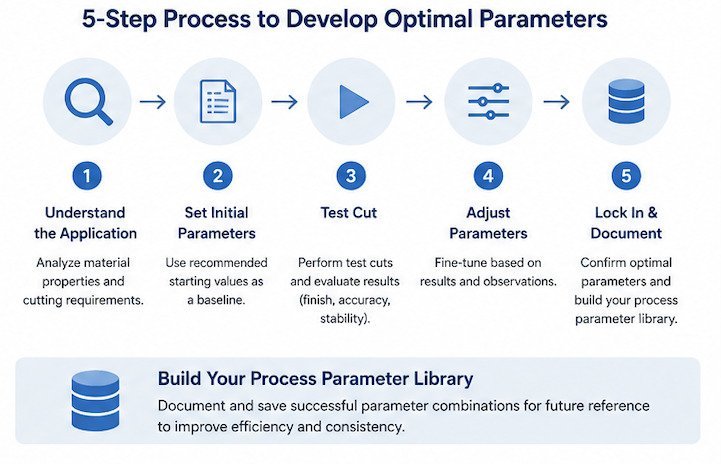
Parameterentwicklungsprozess
Für ein neues Material oder eine neue Anwendung funktioniert diese Sequenz zuverlässig für alle oben genannten Materialien:
Schritt 1: Drahtdurchmesser wählen basierend auf der Toleranz für Schnittverluste und dem Wert des Werkstücks. Teures Substrat = dünnerer Draht. Massenmaterial = dickerer Draht für Haltbarkeit.
Schritt 2: Spannung einstellen auf den Mittelpunkt des empfohlenen Bereichs für Ihr Material. Beginnen Sie nicht mit dem Maximum – lassen Sie Spielraum für Erhöhungen, falls für die Genauigkeit erforderlich.
Schritt 3: Drahtgeschwindigkeit auf 40 m/s einstellen. Dies ist ein sicherer Ausgangspunkt für fast alle Materialien außer porösen Metallen (beginnen Sie mit 20 m/s).
Schritt 4: Vorschubgeschwindigkeit am unteren Ende einstellen des empfohlenen Bereichs. Führen Sie einen Probeschnitt durch. Überprüfen Sie die Oberflächenqualität, Kantenabsplitterungen und Verjüngung.
Schritt 5: Passen Sie jeweils eine Variable an. Wenn die Oberfläche gut ist, Sie aber mehr Durchsatz wünschen, erhöhen Sie die Vorschubgeschwindigkeit in kleinen Schritten. Wenn die Oberfläche rau ist, erhöhen Sie die Drahtgeschwindigkeit oder verringern Sie die Vorschubgeschwindigkeit. Wenn der Schnitt sich verjüngt, erhöhen Sie die Spannung oder verringern Sie die Vorschubgeschwindigkeit.
Schritt 6: Protokollieren Sie alles. Drahtgeschwindigkeit, Spannung, Vorschubgeschwindigkeit, Drahtdurchmesser, Material, Werkstückabmessungen, Ergebnis der Oberflächenqualität, Drahtlebensdauer. Diese Parameterbibliothek wird im Laufe der Zeit zu Ihrem wertvollsten Prozess-Asset.
Der gesamte Prozess erfordert 3–5 Probeschnitte für ein neues Material. Danach sind die Parameter wiederholbar und produktionsreif.
Für einen breiteren Kontext, wie diese Parameter mit dem Diamantdraht schneiden Prozess zusammenhängen, bietet unsere Pillar Page einen vollständigen Überblick.
Verwandte Ressourcen für Schneidediamantdraht
Diese Parameter verbinden sich direkt mit dem Haupt- Diamantdraht schneiden Prozess.