Eine Schneidediamantdrahtschleife versagt nicht auf einmal. Sie verschlechtert sich allmählich – Korn für Korn, Durchgang für Durchgang –, bis die Schneidleistung unter das für die Aufgabe erforderliche Maß sinkt. Die Herausforderung besteht nicht darin, genau vorherzusagen, wann der Draht bricht (obwohl das auch wichtig ist). Die eigentliche Herausforderung besteht darin, zu wissen, wann er ersetzt werden muss, bevor er Teile außerhalb der Spezifikation produziert.
Auf Graphit kann eine Schleife 7 Tage lang 8 Stunden am Tag laufen und auch in der letzten Schicht noch sauber schneiden. Auf gesintertem Siliziumkarbid kann die gleiche Schleife in 3 Tagen fertig sein. Das Material, die Parameter, das Kühlmittel, sogar wie gut die Maschine ausgerichtet ist – all das beeinflusst die Lebensdauer von Schneidediamantdraht. Dieser Artikel beschreibt, was einen Draht tatsächlich verschleißt, was Sie kontrollieren können und wie Sie den maximalen Wert aus jeder Schleife herausholen.
Wie eine Diamantdrahtschleife verschleißt
Der Draht wird nicht einfach “stumpf” wie eine Metallklinge. Es gibt drei verschiedene Verschleißmechanismen, die gleichzeitig auftreten, und welcher dominiert, hängt von der Anwendung ab.
Kornverlust
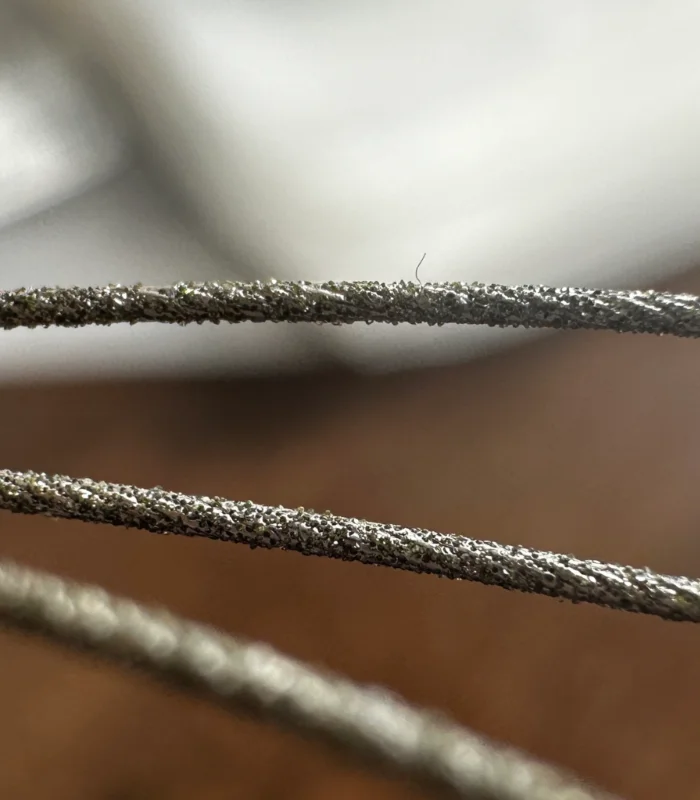
Dies ist der häufigste End-of-Life-Mechanismus für galvanisch beschichtete Diamantdrahtschleifen. Die Nickelschicht hält jedes Diamantkorn durch mechanischen Halt an seinem Platz – das Nickel umschließt die Basis des Korns und verriegelt es. Mit der Zeit lockern die wiederholten Stoß- und Reibungskräfte an jedem Korn diesen Halt. Schließlich löst sich das Korn und fällt ab.
Sobald der Kornverlust beginnt, beschleunigt er sich. Weniger verbleibende Körner bedeuten, dass jedes überlebende Korn einen höheren Anteil der Schneidelast trägt. Höhere Last pro Korn bedeutet schnellere Ermüdung der Bindung an den verbleibenden Körnern. Der Draht wird schneller von “leicht abgenutzt” zu “blank” als Sie erwarten würden, wenn Sie ihn nicht überwachen.
Die Rate des Kornverlusts hängt stark davon ab, was Sie schneiden. Materialien mit hoher Härte und Bruchzähigkeit – gesintertes Aluminiumoxid, SiC, Saphir – erzeugen hohe Stoßkräfte bei jedem Kornkontakt. Körner fallen schneller aus. Weichere Materialien wie Graphit und grüne Keramiken erzeugen viel geringere Kräfte, sodass die Körner länger verankert bleiben.
Kornabflachung
Nicht alle Körner fallen aus. Einige bleiben gebunden, verlieren aber ihre Schneidkanten. Diamant ist das härteste bekannte Material, aber er verschleißt immer noch – insbesondere die scharfen Spitzen und Kanten, die den größten Teil der Schneidarbeit leisten. Forschung zur Verschleiß von Schleifkörnern in Diamantwerkzeugen bestätigt, dass selbst synthetische Diamantkörner unter wiederholter Kontaktbelastung ihre Mikrogeometrie fortschreitend verlieren. Nach Tausenden von Durchgängen durch die Schnittzone runden sich diese Mikrofeatures ab.
Ein abgeflachtes Korn schneidet nicht – es reibt. Es erzeugt Reibung und Wärme, ohne effizient Material zu entfernen. Die praktische Auswirkung ist, dass die Vorschubkraft steigt (der Motor arbeitet härter, um die gleiche Vorschubrate aufrechtzuerhalten) und die Oberflächengüte schlechter wird, obwohl der Draht noch intakt aussieht und noch viele Körner vorhanden sind.
Dieser Verschleißmodus ist graduell und vorhersehbar. Er ist der Hauptgrund dafür, dass die Lebensdauer von Diamantdraht in Betriebsstunden und Tagen und nicht in der Anzahl der Schnitte gemessen wird – der Verschleiß akkumuliert sich mit der Laufzeit, nicht nur mit der Anzahl der produzierten Teile.
Kern-Draht-Ermüdung
Der Stahlkern-Draht trägt die Arbeitsspannung und biegt sich wiederholt um Führungsräder. Jede Umdrehung der Schleife durchläuft der Draht einen vollständigen Biegezyklus an jedem Führungsrad. Bei 60 m/s auf einer typischen Schleifenlänge sind das Tausende von Biegezyklen pro Minute.
Stahl mag das nicht. Ermüdungsrisse entstehen an Spannungskonzentratoren – der Verbindungsstelle, Oberflächenfehlern im Kern-Draht oder Stellen, an denen die Bindungsschicht ungleichmäßige Spannungen erzeugt. Sobald ein Riss beginnt, breitet er sich mit jedem Zyklus aus, bis der Draht bricht.
Bei der Kern-Draht-Ermüdung geht es weniger um den Schneidprozess als vielmehr um die mechanische Einrichtung. Höhere Spannung beschleunigt die Ermüdung. Kleinere Durchmesser der Führungsräder erzeugen engere Biegeradien, was die Spannung pro Zyklus erhöht. Schlechte Maschinenausrichtung kann dazu führen, dass der Draht ungleichmäßig auf den Führungsrädern läuft und die Biegespannung auf einer Seite des Drahtes konzentriert wird.
Die Verbindung ist immer die Schwachstelle für Ermüdung. Selbst eine gut gefertigte Verbindung unterscheidet sich in Bezug auf Mikrostruktur und Steifigkeit geringfügig vom Basismaterial des Drahtes. Diese Diskontinuität wirkt als Spannungskonzentrator. Eine gute Konstruktion der Verbindung minimiert dies, eliminiert es aber nie vollständig.
Was bestimmt die Lebensdauer von Diamantdraht?
Zu schneidendes Material
Dies ist der größte einzelne Faktor. Je härter und abrasiver das Werkstückmaterial ist, desto kürzer ist die Drahtlebensdauer.
Basierend auf Vimfuns Betriebsdaten:
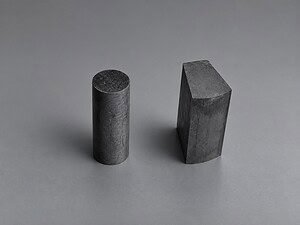
- Graphit (isostatisch/feinkörnig): ca. 7 Tage bei 8 Stunden/Tag. Graphit ist im Vergleich zu Diamant weich, erzeugt geringe Schnittkräfte und seine selbstschmierenden Eigenschaften reduzieren die Reibung. Dies ist das Best-Case-Szenario für die Drahtlebensdauer.
- Optisches Glas (BK7, K9): ca. 5 Tage bei 8 Stunden/Tag. Glas ist hart, bricht aber sauber und erzeugt relativ geringe Verschleißkräfte pro Korn.
- Gesinterte Keramiken und Saphir: 3–5 Tage, abhängig vom spezifischen Material und den Parametern. Dies sind die härtesten Materialien für Draht – hohe Härte, hohe Bruchzähigkeit, hoher Kornverschleiß.
Die tatsächliche Anzahl der Schnitte, die Sie innerhalb dieser Zeiträume erzielen, hängt von den Schnittabmessungen, der Vorschubgeschwindigkeit und der Zykluszeit ab. Ein Betrieb, der kleine optische Glasrohlinge mit 10 mm/min schneidet, erzielt möglicherweise 40–60 Schnitte pro Tag. Ein Betrieb, der große Quarzglaszylinder mit 3 mm/min schneidet, erzielt möglicherweise 5–8 Schnitte pro Tag. Gleiche Drahtlebensdauer in Tagen, sehr unterschiedliche Schnittanzahlen.
Drahtgeschwindigkeit
Höher Drahtgeschwindigkeit bedeutet mehr Kornkontakte pro Sekunde – mehr Reibungsereignisse, mehr thermische Zyklen der Bindungsschicht. Bei moderaten Geschwindigkeiten (30–50 m/s) ist der Einfluss auf die Drahtlebensdauer gering. Bei hohen Geschwindigkeiten (60–80 m/s) wird der Einfluss signifikant, insbesondere bei abrasiven Materialien.
Der Kompromiss besteht darin, dass eine höhere Drahtgeschwindigkeit auch die Oberflächengüte verbessert und den Schneiddurchsatz erhöhen kann. Die Frage ist also nicht, ob die Geschwindigkeit die Drahtlebensdauer verkürzt – das tut sie –, sondern ob der Leistungsgewinn die Kosten rechtfertigt.
Für Materialien, bei denen die Oberflächengüte Priorität hat (optische Komponenten, elektronische Substrate), ist das Laufen mit höherer Geschwindigkeit und die Akzeptanz einer kürzeren Drahtlebensdauer oft die richtige wirtschaftliche Wahl. Für Materialien, bei denen die Oberflächengüte weniger kritisch ist (Graphitblöcke, Strukturkeramiken), verlängert eine moderate Geschwindigkeit die Drahtlebensdauer, ohne viel zu opfern.
Drahtspannung
Spannung beeinflusst die Drahtlebensdauer durch zwei Mechanismen. Erstens bedeutet höhere Spannung eine höhere statische Belastung des Kerns, was das Ermüdungsrisswachstum beschleunigt. Zweitens zieht höhere Spannung den Draht fester gegen das Werkstück, was die Normalkraft auf jedes Diamantkorn erhöht und sowohl das Herausziehen als auch das Abflachen beschleunigt.
Die für eine gute Schnittgenauigkeit – gerade Schnitte, minimale Verjüngung – erforderliche Spannung steht oft im Widerspruch zu dem, was für die Drahtlebensdauer am besten ist. Dies ist ein echter Kompromiss ohne kostenlose Vorteile: Enge Toleranzen bei tiefen Schnitten erfordern hohe Spannung, was die Drahtlebensdauer verkürzt. Die Frage ist, ob Sie diesen Kompromiss explizit managen oder ihn als unerwartete Drahtbrüche entdecken.
Praktischer Rat: Stellen Sie die Spannung hoch genug ein, um Ihre Genauigkeitsanforderungen zu erfüllen, aber kalibrieren Sie sie richtig, anstatt sie einfach hochzudrehen. Ein richtig kalibriertes Spannungssystem liefert eine konstante Kraft ohne Überschwingen, was die Lebensdauer im Vergleich zu einem schlecht kalibrierten System, das schwankt, verlängert.
Vorschubgeschwindigkeit
Eine höhere Vorschubgeschwindigkeit bedeutet mehr Schnittkraft pro Zeiteinheit. Jedes Diamantkorn muss pro Durchgang mehr Material entfernen, was die mechanische Belastung der Bindung erhöht. Das Herausziehen der Körner beschleunigt sich.
Die Vorschubgeschwindigkeit bestimmt aber auch den Durchsatz – wie viele Teile pro Stunde. Ein konservatives Vorschubverhalten verlängert die Drahtlebensdauer, reduziert aber die Leistung. Das wirtschaftliche Optimum ist nicht immer die längste Drahtlebensdauer; manchmal ist es profitabler, Draht schneller zu verbrauchen, aber mehr Teile pro Tag zu produzieren.
Dies ist eine Berechnung, kein Prinzip. Sie hängt von den Drahtkosten, dem Maschinenstundensatz, dem Materialwert und der Losgröße ab. Wir können Ihnen helfen, die Zahlen für Ihre spezifische Situation zu ermitteln.
Kühlmittelzustand
Dieser wird mehr übersehen, als er sollte. Kühlmittel erledigt drei Dinge, die die Lebensdauer von Diamantdraht direkt beeinflussen:
Schmierung. Reduziert die Reibung zwischen dem Draht und den Schnittflächen. Weniger Reibung bedeutet weniger Wärme, was weniger thermische Belastung für die Bindungsschicht bedeutet. Frisches, sauberes Kühlmittel schmiert besser als Kühlmittel, das wochenlang ohne Filterung rezirkuliert wurde.
Spülung von Ablagerungen. Transportiert Abfall aus der Schnittzone. Wenn Abfall im Schnitt verbleibt, mahlt der Draht ihn erneut, anstatt frisches Material zu schneiden. Erneutes Mahlen erzeugt Wärme und mechanische Belastung ohne nützliche Materialabfuhr – reine Verschwendung, die die Drahtlebensdauer verkürzt.
Temperaturkontrolle. Hält Draht und Werkstück auf stabilen Temperaturen. Temperaturschwankungen schwächen die Nickelbindung und können bei spröden Werkstückmaterialien einen thermischen Schock verursachen.
Vernachlässigtes Kühlmittel – schmutzige, verstopfte Filter, geringer Durchfluss, abgebautes Fluid – kann die Drahtlebensdauer um 30 % oder mehr im Vergleich zu einem gut gewarteten Kühlsystem verkürzen. Es ist die billigste Variable, die kontrolliert werden kann, und die am häufigsten ignorierte.
Ausnahme: Graphit wird trocken geschnitten. Der Graphit wirkt als eigenes Schmiermittel, und flüssiges Kühlmittel würde mit den Schnittresten eine Paste bilden. Beim Trockenschneiden ersetzt die Staubabsaugung das Kühlmittelmanagement – und die Sauberkeit des Staubabsaugsystems ist genauso wichtig.
Zustand des Führungsrades
Führungsräder biegen den Draht auf dem Schleifweg. Abgenutzte oder beschädigte Rillen der Führungsräder verändern die Kontaktgeometrie zwischen Draht und Rad. Dies kann lokale Spannungsspitzen am Draht erzeugen und die Ermüdung beschleunigen.
Zusätzlich führt Verschleiß an den Lagern der Führungsräder zu Vibrationen im Drahtweg. Vibrationen lassen den Draht seitlich oszillieren, was die Schnittlast intermittierend erhöht und verringert. Diese ungleichmäßige Belastung beschleunigt sowohl den Kornabrieb als auch die Ermüdung des Kerndrahts.
Führungsräder sind ebenfalls Verbrauchsmaterialien – Vimfun-Führungsräder haben eine Lieferzeit von ca. 10 Tagen. Halten Sie Ersatzteile auf Lager und ersetzen Sie sie nach einem festgelegten Intervall, anstatt auf sichtbare Abnutzung zu warten, die Probleme verursacht.
Anzeichen, dass die Drahtlebensdauer endet
Zu wissen, wann ein Diamantdrahtschleifband ersetzt werden muss, ist genauso wichtig wie zu wissen, wie man seine Lebensdauer verlängert. Dies sind die zuverlässigen Indikatoren:
Steigender Strom des Vorschubmotors. Wenn Ihre Maschine die Motorlast oder den Strom anzeigt, achten Sie auf einen allmählichen Aufwärtstrend bei konstanten Vorschubparametern. Dies bedeutet, dass der Draht weniger effizient schneidet und das Vorschubsystem härter arbeitet, um die programmierte Rate aufrechtzuerhalten. Dies ist in der Regel das früheste erkennbare Anzeichen.
Steigende Oberflächenrauheit. Wenn Sie die Oberflächenqualität Ihrer Teile messen (auch mit einer einfachen Sichtprüfung oder einem Tastvergleich), deutet ein stetiger Trend zu raueren Oberflächen auf Verschleiß des Korns hin.
Hörbare Veränderungen. Ein neuer Draht, der Glas oder Keramik schneidet, erzeugt ein gleichmäßiges, konsistentes Geräusch. Ein abgenutzter Draht beginnt, intermittierende Klopf- oder Tickgeräusche zu erzeugen – das Geräusch einzelner Körner, die sich unter Last lösen. Wenn Sie dies hören, befindet sich der Draht in seiner Endphase.
Sichtbare kahle Stellen. Wenn Sie Bereiche am Draht sehen können, an denen die Diamantbeschichtung fehlt oder offensichtlich ausgedünnt ist, ist der Draht über seine Nutzungsdauer hinaus. Warten Sie nicht auf einen Bruch.
Erhöhung der Schnittzeit. Wenn derselbe Schnitt, der früher 10 Minuten dauerte, jetzt bei denselben Parametern 14 Minuten dauert, ist der Draht abgenutzt. Einige Bediener kompensieren dies durch Erhöhung der Vorschubgeschwindigkeit, aber dies beschleunigt nur den verbleibenden Verschleiß – es ist Zeit für eine neue Schleife.
Die goldene Regel: Ersetzen Sie den Draht, wenn die Leistung nachlässt, nicht wenn er reißt. Ein Bruch mitten im Schnitt kann das Werkstück beschädigen, Führungsräder verkratzen und erfordert zeitaufwändige Reinigungsarbeiten. Bei teuren Substraten wie Saphir oder Germanium, kann ein einziges beschädigtes Teil mehr kosten als ein Dutzend Ersatzdrähte.
So verlängern Sie die Lebensdauer des Drahtes, ohne die Qualität zu beeinträchtigen
Es gibt keinen Trick, um Diamantdraht ewig haltbar zu machen – er ist ein Verbrauchsmaterial, das konstruktionsbedingt verschleißt. Aber es gibt praktische Möglichkeiten, unnötigen Verschleiß der Drahtlebensdauer zu vermeiden:
Passen Sie den Schleifentyp an das Material an. Eine galvanisch beschichtete Schleife auf gesintertem SiC verschleißt schneller als nötig, wenn eine segmentbeschichtete Schleife mit besserer Spanabfuhr würde genauso gut funktionieren. Die Wahl des richtigen Schleifkörpertyps ist die wirkungsvollste Entscheidung.
Nicht übermäßig spannen. Verwenden Sie die minimale Spannung, die Ihre Genauigkeitsanforderung erfüllt. Übermäßige Spannung verkürzt die Drahtlebensdauer, ohne den Schnitt zu verbessern.
Kühlen Sie Ihr Kühlmittel. Regelmäßig filtern. Überprüfen Sie den Durchfluss zur Schnittzone. Ersetzen Sie die Flüssigkeit nach einem Zeitplan, nicht erst, wenn sie schlecht riecht. Halten Sie bei Trockenschnittanwendungen das Staubabsaugsystem sauber und funktionsfähig.
Beachten Sie die Einfahrzeit. Ein brandneuer Draht ist am aggressivsten – frisch freigelegte Diamantkörner mit scharfen, stark exponierten Kanten. Einige Bediener fahren die ersten paar Schnitte mit leicht reduzierter Vorschubgeschwindigkeit, damit die empfindlichsten Kornspitzen natürlich abnutzen, anstatt unter voller Last abzubrechen. Dies erzeugt ein gleichmäßigeres Verschleißmuster auf der Drahtoberfläche und kann die Gesamtlebensdauer verlängern.
Halten Sie die Maschine ausgerichtet. Nicht ausgerichtete Führungsräder erzeugen eine ungleichmäßige Drahtbelastung, die die Ermüdung beschleunigt. Regelmäßige Ausrichtungsprüfungen – insbesondere nach Lagerwechseln oder Maschinenbewegungen – schützen gleichzeitig die Drahtlebensdauer und die Schnittqualität. Beziehen Sie sich auf die Ausrichtungs- und Installationsanleitung für die Verfahren.
Verfolgen Sie die Drahtlebensdauerdaten. Protokollieren Sie Betriebsstunden, geschnittene Materialien und den Grund für jeden Drahtwechsel (Leistungsverschlechterung vs. Bruch vs. geplante Ersetzung). Mit der Zeit sagen Ihnen diese Daten genau, wann Sie den Draht für jedes Material ersetzen müssen – und vermeiden sowohl eine vorzeitige Ersetzung (Verschwendung von nutzbarem Draht) als auch eine späte Ersetzung (Risiko von Werkstückbeschädigungen).
Drahtkosten im Kontext
Draht ist ein Verbrauchsmaterial, aber selten die dominierende Kostenposition in einem Diamantdraht schneiden Betrieb. Maschinenzeit, Bedienerzeit, Materialwert und nachgelagerte Verarbeitung überwiegen normalerweise die Drahtkosten pro Schnitt.
Der richtige Weg, um über Drahtökonomie nachzudenken, ist nicht “Wie mache ich jede Schleife so lange wie möglich haltbar?” – sondern “Was sind meine Gesamtkosten pro gutem Teil?” Manchmal reduziert die Ausgabe von mehr für Draht (höhere Geschwindigkeit, Verwendung von Premium-Schleifen) die Gesamtkosten, da Sie mehr Teile pro Schicht mit weniger Ausschuss produzieren.
Für Produktionsumgebungen, die täglich laufen, ist Draht ein regelmäßiger Beschaffungsartikel. Die Lieferzeit für Vimfun-Drahtproduktion beträgt ungefähr 7 Tage. Daher vermeidet die Aufrechterhaltung eines Pufferbestands von 2–3 Schleifen, die für Ihre gängigsten Aufträge dimensioniert sind, Produktionsunterbrechungen. Für Anlagen, die mehrere Materialien schneiden, verhindert die Bevorratung materialspezifischer Schleifen die Versuchung, eine nicht passende Schleife “nur für einen Auftrag” zu verwenden – was typischerweise zu schlechter Leistung und vorzeitigem Drahtverschleiß führt.
Für Fragen, wie die Drahtauswahl mit Schnittparameter und der gesamten Schnittqualität, interagiert, behandeln diese Anleitungen das Thema detaillierter.
Verwandte Ressourcen für Schneidediamantdraht
Für verwandte Prozesseinstellungen siehe unsere Diamantdraht schneiden Anleitung.