Introduction
Wire cutting applications have become essential across high-tech industries, where manufacturers must process materials that are extremely hard, brittle, and highly valuable. Silicon wafers, sapphire substrates, optical glass, ceramics, and carbon composites all require slicing methods that deliver tight dimensional control while minimizing micro-cracks, thermal impact, and overall material waste. As device architectures become thinner and more advanced, the need for stable, low-damage cutting technologies has intensified. Wire cutting provides a controlled and uniform cutting interface, allowing engineers to achieve consistent slice thickness, improved structural integrity, and better downstream processing performance across a wide range of advanced materials.
Material Removal Mechanics in Wire Cutting
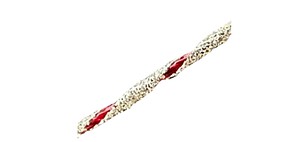
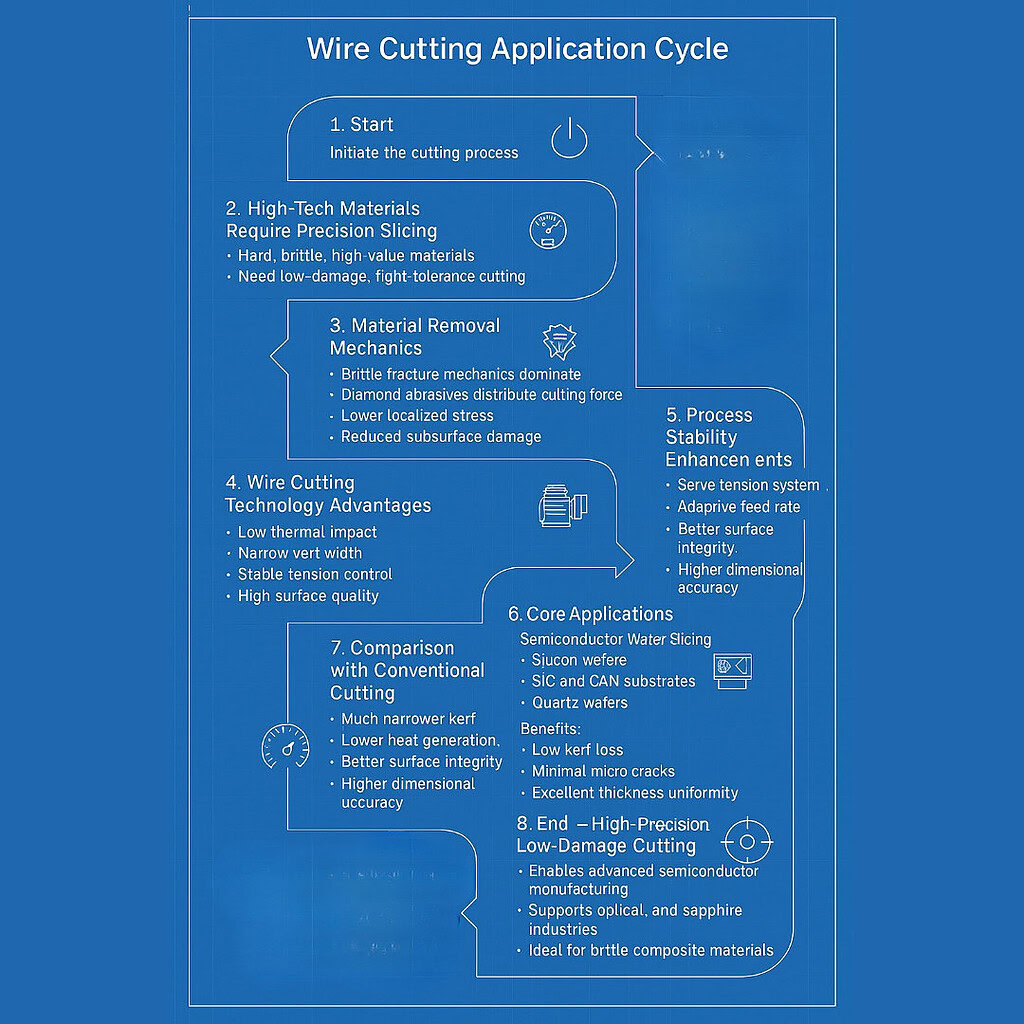
The advantages of wire cutting applications can be better understood from the perspective of material removal mechanics. Hard and brittle materials typically fail through micro-fracture rather than plastic deformation, meaning that excessive mechanical load or thermal accumulation can easily lead to chipping, edge breakage, or subsurface cracks. Diamond wire cutting minimizes these risks by distributing cutting forces across thousands of abrasive particles in continuous motion. This results in lower contact stress, a more uniform cutting path, and significantly reduced damage depth when compared with conventional sawing or abrasive wheels. The ability to maintain low cutting pressure while still achieving high throughput is one of the primary reasons why wire cutting has become the preferred method for advanced material slicing. For more details on how different brittlematerials respond to cutting, see our cutting materials guide.
Traditional sawing or abrasive tooling often generates excessive heat and produces a wider kerf, making it unsuitable for today’s advanced materials. Wire cutting technology—especially closed-loop diamond wire systems—solves these challenges with precise tension control, minimal heat generation, and excellent surface integrity.
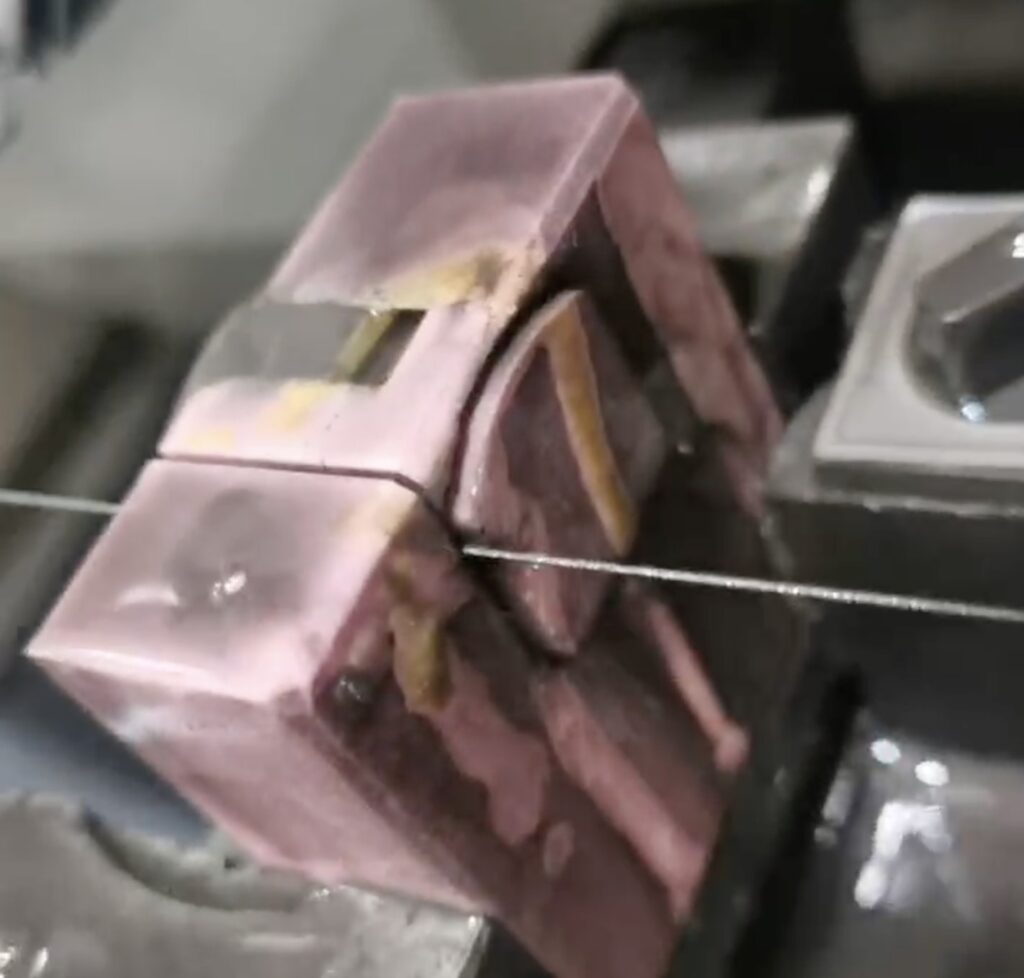
Wire cutting applications continue to expand across semiconductor manufacturing, optical engineering, aerospace materials, and composite fabrication, enabling both high-volume production and specialized R&D environments.
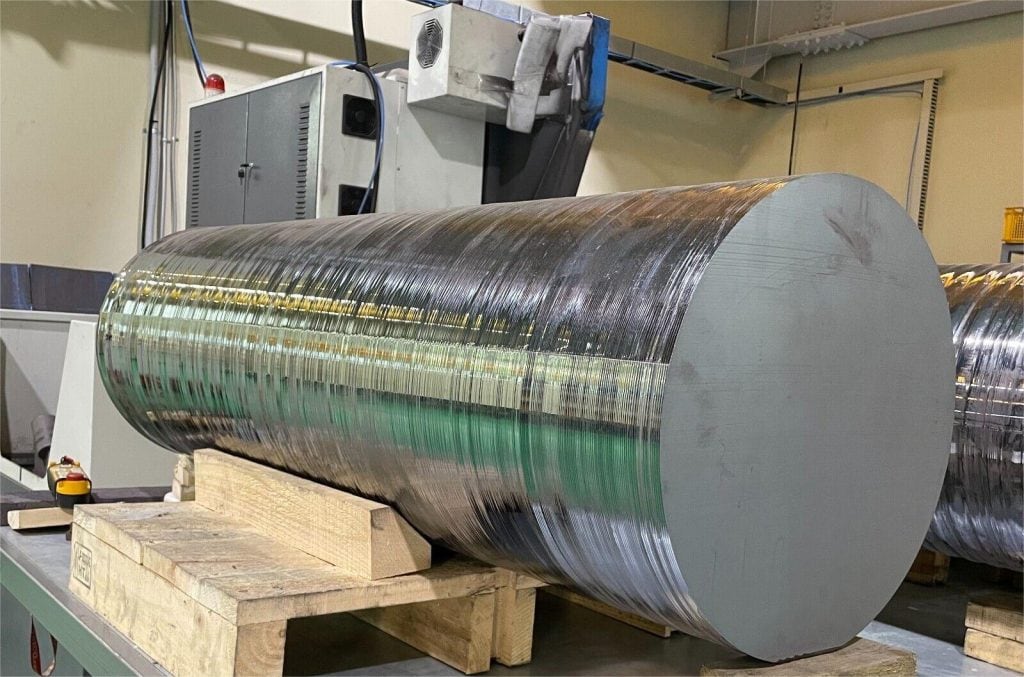
Semiconductor Wafer Slicing
Semiconductor production uses materials with exceptional hardness and strict dimensional requirements. Wire cutting applications in this sector focus on slicing:
- Monocrystalline silicon
- Silicon carbide (SiC)
- Gallium nitride (GaN)
- Fused quartz wafers
Why wire cutting is ideal for semiconductor materials
- Minimal kerf loss reduces raw material cost
- Low thermal load prevents micro-cracks in brittle substrates
- Stable tension maintains consistent wafer thickness
- Suitable for ultra-hard materials such as SiC
Wire cutting is now widely adopted for SiC wafer slicing, a critical material for power electronics and electric vehicle (EV) applications.
Optical Glass and Sapphire
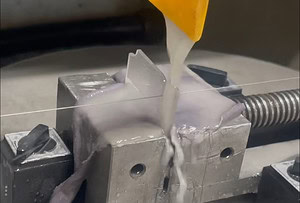
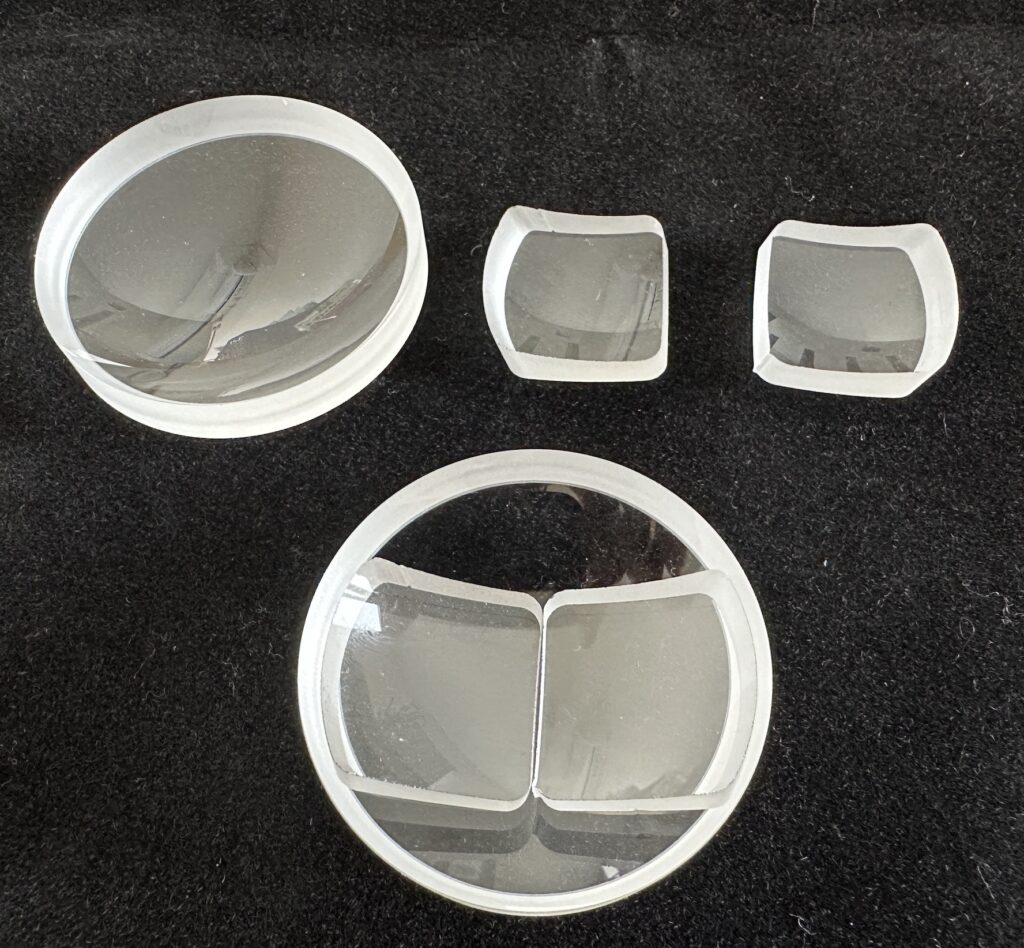
Optical materials require extremely smooth surfaces and precise thickness control due to their roles in imaging devices, sensors, and scientific instruments. Sapphire, in particular, is one of the hardest optical materials and is heavily used in:
- Mobile device lenses
- Protective windows
- LED substrates
- Optical components for aerospace and defense
Benefits in optical and sapphire cutting
- Smooth surfaces with minimal wire marks
- Straight cut paths for both rectangular and circular optics
- Low mechanical stress reduces polishing time
- Compatible with large and small substrates
Wire cutting ensures stability and uniformity even when handling sapphire thicknesses beyond the capability of traditional blades.
Graphite and Carbon Composites
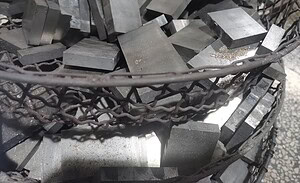
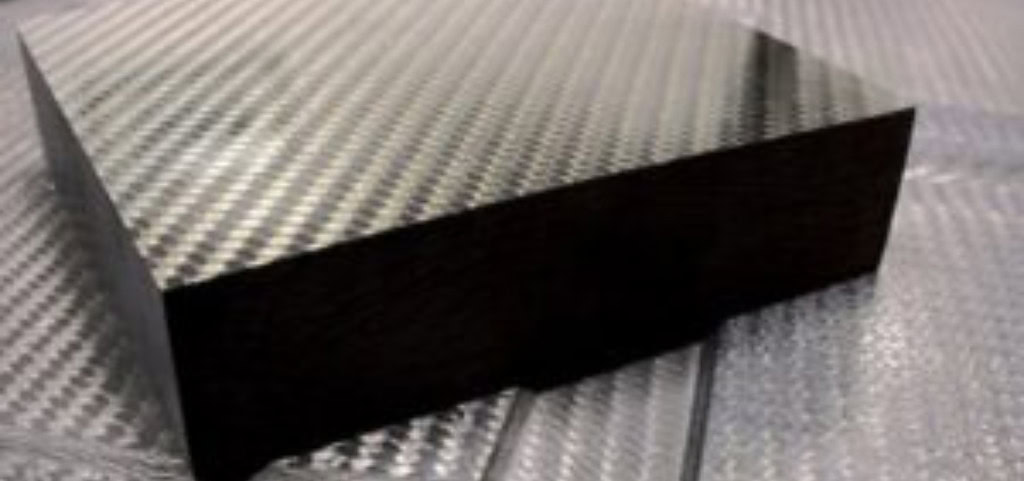
Graphite and carbon composites are widely used in semiconductor fixtures, high-temperature furnace components, aerospace structures, and precision tooling.
Why wire cutting is preferred
- Excellent performance on brittle and porous structures
- Clean edges without delamination
- Capable of handling large graphite blocks
- Supports both wet and dry cutting depending on the material
In many manufacturing environments, diamond wire cutting provides better dimensional repeatability compared with CNC milling or abrasive saws.

Comparison: Wire Cutting vs. Conventional Cutting
| Feature | Wire Cutting Technology | Conventional Sawing |
|---|---|---|
| Kerf Width | Very narrow | Wide, high waste |
| Heat Generation | Low | High |
| Suitable Materials | Ultra-hard, brittle | Limited |
| Surface Quality | Smooth, minimal marks | Requires heavy polishing |
| Thickness Precision | ±0.03 mm | Lower |
| Material Loss | Minimal | High |
FAQ — Wire Cutting Applications in Semiconductor, Optics, and Advanced Materials
1. Why is diamond wire cutting ideal for hard-brittle materials such as SiC, sapphire, and quartz?
Hard-brittle materials fracture through micro-crack propagation rather than plastic deformation. Diamond wire cutting applies distributed abrasive force with low heat generation, which minimizes chipping, subsurface damage, and thermal distortion—making it superior to traditional saw blades for these materials.
2. How does wire tension influence cutting accuracy and wafer thickness?
Wire tension determines whether the cut path remains straight.
- Low tension may cause wire deviation and uneven thickness.
- Excessive tension increases wire breakage and surface scratches. Closed-loop tension systems maintain real-time stability to achieve consistent kerf geometry.
3. What advantages does wire cutting offer for optical glass and sapphire processing?
Optical materials require defect-free surfaces and tight thickness control. Wire cutting produces:
- Smooth, uniform surfaces
- Very low mechanical stress
- Reduced polishing requirements This improves yield for lenses, LED substrates, and aerospace-grade optical components.
4. Why is wire cutting preferred over CNC milling for graphite and carbon composites?
Graphite and carbon composites are porous and brittle. CNC tools can cause delamination and edge collapse. Diamond wire cutting creates clean, burr-free edges and maintains dimensional repeatability, even for large blocks or complex shapes.
5. Can diamond wire cutting support both high-volume production and R&D applications?
Yes. The process offers predictable kerf width, low thermal load, and consistent cut quality, making it suitable for both mass production—such as SiC wafer slicing—and precision prototype development in semiconductor or optics laboratories.
Conclusion
Wire cutting applications play an essential role in high-tech industries where precision, material integrity, and cost efficiency are critical. From semiconductor wafer slicing to sapphire substrates and advanced composite processing, wire cutting provides:
- Low-damage material removal
- Narrow kerf width
- High dimensional accuracy
- Excellent surface finish
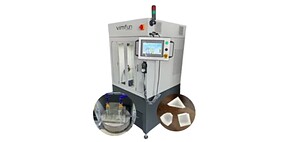
As high-performance materials become increasingly central to electronics, optics, and aerospace engineering, wire cutting technology will continue to serve as a foundational process for both industrial production and advanced material R&D. For an overview of different machine configurations, explore our complete range of industrial wire saws.