Waterjet cutting and diamond wire cutting can both process materials without the concentrated heat source used by laser or plasma systems. That similarity does not make them interchangeable. A waterjet accelerates water, sometimes with added abrasive, through a small nozzle. A diamond wire saw moves a diamond-coated wire through the workpiece under controlled tension and feed. The choice depends on material, thickness, geometry, water restrictions, contamination risk, edge condition, kerf and total process cost.
This article compares the two methods for industrial material processing. In coupe au fil diamanté, diamond is the abrasive carried by the wire; the phrase does not mean that the workpiece is a diamond gemstone. For equipment options used with hard and brittle materials, review our systèmes de scies à fil diamanté.
How Waterjet Cutting Works
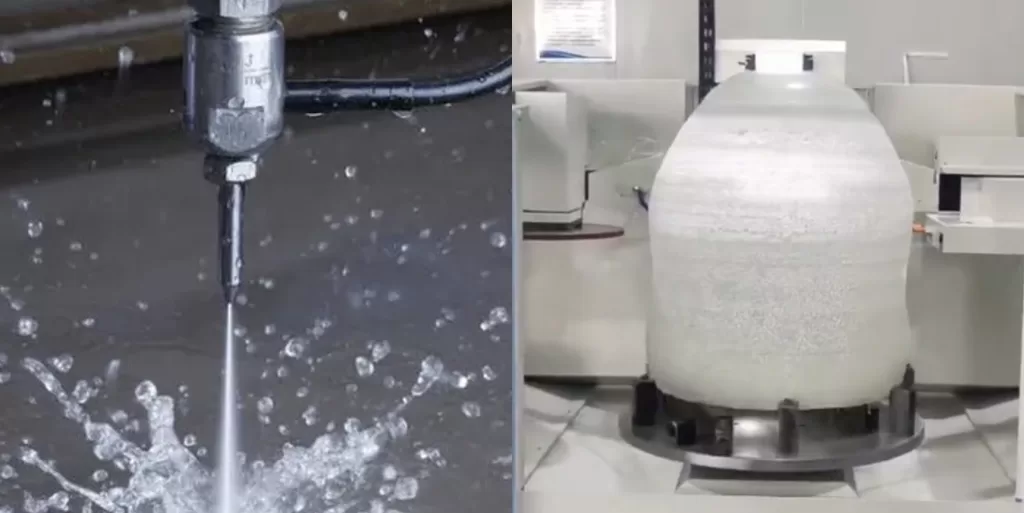
Waterjet systems convert pressurized water into a high-velocity stream. Pure-water systems are commonly used for softer materials. Abrasive waterjet systems introduce mineral abrasive into the stream to cut harder materials such as metals, stone, glass and selected composites. Pump pressure, nozzle condition, abrasive flow, stand-off distance, traverse speed and workpiece support all influence cut quality.
- Points forts typiques : programmable profiles, broad material capability and little or no conventional heat-affected zone.
- Contraintes importantes : water exposure, abrasive sludge, splash control, taper, nozzle wear and wastewater management.
- À évaluer au mieux avec : material thickness, edge tolerance, permissible wet processing and disposal requirements.
Comment fonctionne la découpe par fil diamanté
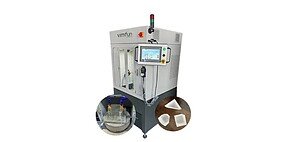
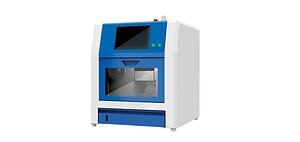
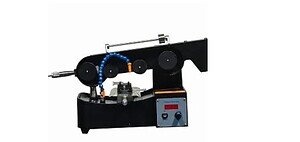
Diamond wire cutting removes material through many small abrasive contacts along a moving wire. In an endless-loop system, the wire travels continuously around the drive and guide wheels while the machine controls tension, speed, workpiece position and feed. The process can be configured for wet or dry operation depending on the material and dust-control requirements. See the guide du processus de découpe au fil diamanté for the underlying motion and control principles.
- Points forts typiques : deep straight cuts, cropping and slicing of hard or brittle workpieces with low thermal influence.
- Contraintes importantes : wire wear, guide alignment, tension, feed stability, fixture access and coolant or dust extraction.
- À évaluer au mieux avec : actual kerf, edge chipping, flatness, surface, wire consumption and cutting time.
Waterjet vs Diamond Wire Cutting
| Facteur de sélection | Découpe au jet d'eau | Coupe au fil diamanté |
|---|---|---|
| Méthode de retrait | High-velocity water stream; abrasive may be added | Mechanical abrasion from diamond fixed to a moving wire |
| Water requirement | Water is fundamental to the process | Wet or dry configurations may be possible, depending on material |
| Heat influence | Little conventional heat-affected zone, although energy is still present at the cut | Low-heat abrasive removal; friction is controlled through process settings |
| Waste stream | Water, removed material and possibly spent abrasive form a mixed waste stream | Coolant slurry for wet cutting or captured dust for dry cutting |
| Contrôle de la largeur de coupe | Depends on nozzle, abrasive, pressure, stand-off, speed and thickness | Dépend du diamètre du fil, du revêtement, du faux-rond, de la tension et de l'avance |
| Edge condition | Taper, striation or delamination may require control | Chipping, wire marks and flatness depend on support and machine stability |
| Geometry | Strong for programmable 2D contours and through-cuts | Strong for deep straight cuts, slicing, cropping and selected contours |
| Thickness behavior | Cut speed and taper can change as thickness increases | Deep cuts are practical when wire path, travel and chip removal are controlled |
| Décision finale | Compare sample-cut quality, consumables, waste handling and secondary finishing | |
Water, Abrasive and Contamination
Process compatibility is often decided by what may contact the workpiece. Waterjet cutting always introduces water, and abrasive waterjet adds a second material to the cut zone. This can be acceptable for plate, stone and many fabricated parts, but it may be unsuitable when the workpiece is porous, moisture-sensitive, difficult to dry or subject to strict contamination limits.
Diamond wire cutting provides more flexibility in this area. Wet cutting can help carry debris and stabilize temperature, while selected materials such as graphite may use dry cutting with suitable dust collection. Neither route is automatically clean or environmentally neutral: the manufacturer must plan filtration, sludge or dust collection, worker protection and disposal according to the actual material.
Edge Quality, Kerf and Thickness
Qualité du bord
A waterjet can create complex outlines without conventional thermal distortion, but cut taper and striation increase when process settings, nozzle condition or traverse speed do not match the thickness. Diamond wire cutting can produce a controlled sawn surface on brittle materials, but poor support or aggressive feed can increase chipping and wire marks.
Kerf and yield
Nominal nozzle diameter or wire diameter alone does not define material loss. Waterjet kerf changes with jet divergence and thickness. Wire-saw kerf includes the abrasive envelope plus machine and process variation. For expensive workpieces, measure the real cut width and usable yield on a representative sample.
Thick workpieces
Both processes can make deep cuts, but performance changes with thickness. Waterjet cutting may lose speed or develop taper. A wire saw needs sufficient machine travel, a stable guide path and effective debris removal. The correct comparison uses the actual section depth, not a broad claim that either process has no size limit.
Adéquation matériau et application
| Condition d'application | Processus à évaluer d'abord | Reason |
|---|---|---|
| Sheet or plate requiring complex 2D profiles | Découpe au jet d'eau | Programmable nozzle paths can create varied through-cut geometry |
| Bloc épais de quartz, de verre ou de céramique | Coupe au fil diamanté | Deep abrasive sawing supports cropping or slicing with low thermal influence |
| Porous or moisture-sensitive workpiece | Dry-capable wire process | Avoiding water ingress may be more important than contour speed |
| Metal plate with no heat-affected zone allowed | Découpe au jet d'eau | Cold-profile cutting is a common screening choice |
| Graphite where abrasive contamination must be controlled | Coupe au fil diamanté | Dry cutting and dedicated dust extraction may be evaluated |
| High-value brittle part with strict yield target | Comparer les coupes d'échantillons | Measured kerf, edge loss and secondary finishing determine total value |
These recommendations are starting points. Material grade, internal stress, part support and acceptance criteria can change the result. The guide de sélection des machines de sciage à fil explains how workpiece size and cut path affect equipment structure.
Liste de sélection des processus
- Define the material: grade, porosity, brittleness, moisture sensitivity and contamination limits.
- Define the geometry: workpiece dimensions, thickness, straight cut, profile, crop or slice.
- Définir les critères d'acceptation : kerf, taper, chipping, flatness, edge and surface finish.
- Confirm wet-process limits: water contact, drying, corrosion, abrasive carryover and wastewater treatment.
- Compare operating inputs: water, abrasive, wire, nozzles, guides, filtration and dust control.
- Run a representative sample: record cutting time, material loss, edge quality and secondary finishing.
Questions fréquemment posées
Is waterjet cutting completely free of heat?
It is generally classified as a cold cutting process because it does not create the conventional heat-affected zone associated with thermal cutting. It is still better to verify edge and material behavior on the actual part.
Does every waterjet use abrasive?
No. Pure-water cutting is used for many softer materials. Harder materials generally require abrasive waterjet, which adds abrasive consumption and a mixed waste stream.
Can diamond wire cutting operate without water?
Some materials and machines can use dry cutting with appropriate dust extraction. Others benefit from coolant. The choice depends on the workpiece, wire specification and debris-control requirements.
Which process is better for thick brittle blocks?
Diamond wire cutting is often evaluated first for cropping or slicing thick quartz, glass, ceramic, silicon and similar workpieces. A sample cut should confirm chipping, flatness, kerf and processing time.
What does diamond mean in diamond wire cutting?
It refers to diamond abrasive fixed to the wire. The workpiece can be silicon, quartz, glass, ceramic, graphite, sapphire, composite or another compatible industrial material.
Conclusion
Waterjet cutting is a flexible choice for programmable profiles where water exposure and abrasive waste are acceptable. Diamond wire cutting is often more suitable for deep straight cuts, cropping and slicing of hard, brittle or moisture-sensitive workpieces. The final decision should compare real cut quality, material yield, consumables, waste handling and secondary finishing rather than relying on a general claim about either technology.
Discutez de votre application de coupe
Send the material, dimensions, cut path, water restrictions and required edge condition. We can help determine whether a diamond wire process should be included in the comparison.