Internal structure of diamond wire saw machines
Guide wheel layout, tension module, drive pulley, and main motor configuration explained.

Vimfun Precision Cutting
Endless-loop cold cutting technology for silicon, sapphire, ceramics, graphite, and optical glass — with sub-30 µm cutting precision.
What is it
A diamond wire saw is a precision cutting machine that uses a closed-loop diamond-abrasive wire — known as an endless wire — as its cutting medium. Unlike conventional blade saws, it removes material through high-speed micro-grinding rather than impact or shearing.
As part of our complete range of industrial wire saws, the diamond wire saw is purpose-built for hard and brittle materials that cannot be processed reliably by laser, EDM, or band saws without thermal damage or micro-cracking.
The key distinction from a reciprocating diamond wire saw is the endless-loop design: the wire travels continuously in one direction, eliminating the reversal-motion vibration that affects surface quality and tool life. Learn more about how this translates to process outcomes in our guide to diamond wire cutting technology.
Working principle
Four interdependent systems combine to deliver consistent, high-precision cuts across every material type.
A diamond-coated wire loop — typically 1–10 m in circumference — is threaded through precision guide wheels and driven by a servo motor. The wire travels in a single continuous direction at speeds up to 80 m/s, engaging the workpiece surface with uniform abrasive pressure. Explore the full internal structure of our diamond wire saw machines, including guide wheel layout and drive pulley configuration.
Servo-regulated pneumatic tensioners maintain wire tension between 150–250 N throughout the cut. Consistent tension prevents wire deflection, reduces surface waviness, and eliminates micro-cracks in brittle substrates. The wire saw machine's tension control system provides real-time feedback and auto-corrects within milliseconds.
A servo-driven Z-axis advances the workpiece into the wire at rates from 0.1 to 5 mm/min, depending on material hardness and required surface quality. The PLC-controlled feed system and control logic allows programmable cutting profiles — constant-speed, variable-speed, or adaptive-load modes.
Continuous coolant flow — water-based or cutting oil — flushes swarf from the cutting zone and maintains near-ambient temperatures. This cold-cutting principle avoids thermal stress, optical coating delamination, and surface discoloration. See our detailed guide to cooling fluid selection and flow optimization.
Specifications
Core parameters for Vimfun endless diamond wire saw machines. All values are configurable based on material and application requirements.
| Parameter | Standard Range | High-Precision Mode | Notes |
|---|---|---|---|
| Wire speed | 20–80 m/s | 60–80 m/s | Servo-controlled, adjustable per material |
| Wire diameter | 0.3–0.8 mm | 0.3–0.4 mm | Thinner wire = smaller kerf; see diamond wire specifications |
| Wire tension | 30–250 N | 150–250 N | Pneumatic + servo dual-regulation |
| Feed rate | 0.1–20 mm/min | 0.1–5 mm/min | Consult parameter optimization guide |
| Kerf width | 0.35–1.0 mm | 0.35–0.5 mm | Depends on wire diameter |
| Cutting precision | ±0.05 mm | ±0.03 mm | Measured on silicon & optical glass |
| Surface roughness (Ra) | 1–5 µm | 1–1.5 µm | After optimized parameter tuning |
| Max workpiece size | Up to 3,000 mm | Model-dependent | Tabletop to gantry-scale systems |
| Wire loop length | 1–10 m | 1–3 m | Custom loop lengths available |
| Control system | PLC | PLC + CNC | Programmable cutting profiles |
| Cutting mode | Dry or wet | Wet (fully enclosed) | Material-dependent recommendation |
| Wire vibration amplitude | <5 µm | <3 µm | Critical for sapphire & optical glass |
All specifications represent typical values from our production fleet. For application-specific configurations, consult our engineering team or refer to the wire speed, tension, and feed rate optimization guide.
Applications
Every material has distinct hardness, brittleness, and thermal sensitivity characteristics. Here is how Vimfun diamond wire saws are configured per substrate.
Low-damage slicing for research-grade and production silicon ingots. Ideal for thick boules and brittle MEMS structures requiring minimal subsurface damage.
Preferred for LED substrates, infrared optics, and precision windows. Cold cutting prevents crystal plane damage and eliminates edge chipping on sub-2 mm slices.
For multilayer coated optics, filters, AR-coated glass, and fused silica. Zero thermal load means zero coating delamination — a critical advantage over laser cutting.
High material removal rate with stable surface quality. Supports complex profile cuts for EDM electrodes, thermal field components, and battery material blocks.
Compatible with alumina, zirconia, SiC, and boron carbide. Reduces micro-crack depth vs blade cutting. Supports tight-tolerance slicing for seals, substrates, and wear parts.
Precise slicing of rare-earth magnets with stable wire engagement. Minimizes edge chipping and magnet cracking across multi-block arrays for motor and speaker production.
Technology comparison
Understanding where each technology excels helps you make the right decision for your material and output quality requirements. Our diamond wire cutting process guide covers these tradeoffs in depth.
| Criteria | Diamond Wire Saw (Endless Loop) | Reciprocating Wire Saw | Laser Cutting | Band Saw |
|---|---|---|---|---|
| Thermal damage risk | Minimal | Minimal | High (HAZ) | Medium |
| Surface roughness (Ra) | 1–3 µm | 1–3 µm | 2–10 µm | 5–25 µm |
| Kerf width | 0.35–0.5 mm | 0.06–0.2 mm | 0.05–0.3 mm | 1.5–4 mm |
| Vibration during cut | Very low (<3 µm) | Low–medium | None | High |
| Contour & profile cuts | ✓ Yes | Straight only | ✓ Yes | Limited |
| Brittle material suitability | ✓ Excellent | ✓ Good | Medium | Poor |
| Coated optic compatibility | ✓ Yes | Caution | No | No |
| Wire/tool life (hours) | 60–120 h | 200–2000 h | Optic: 500–5000 h | 10–40 h |
| Typical throughput | Single / small batch | High volume | Single / batch | Medium volume |
Product range
From tabletop laboratory systems to large-format gantry machines. View our full diamond wire saw product range for all configurations.
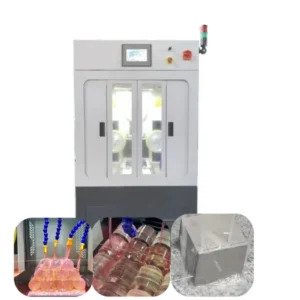
Gantry · CNC
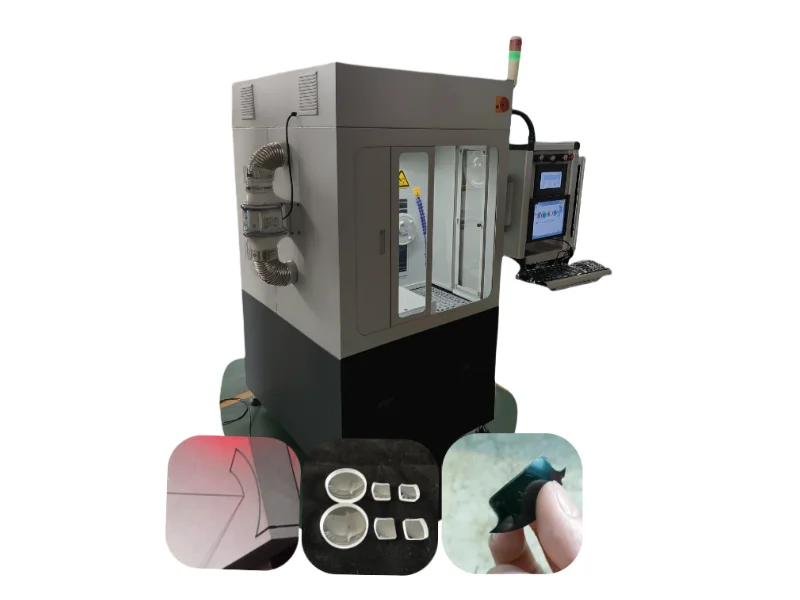
Multi-axis · Tilt + Rotate
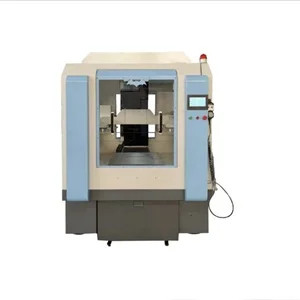
Horizontal · Large format
Need a different size or configuration? See all diamond wire saw models or contact us for a custom cutting solution.
Deep-dive guides
Seven detailed guides covering every aspect of setup, operation, optimization, and maintenance.
Guide wheel layout, tension module, drive pulley, and main motor configuration explained.
From workpiece loading to final cut: full process flow with parameter checkpoints.
Water-based vs oil-based coolants, flow rate control, and material-specific recommendations.
Servo feed mechanisms, closed-loop control, and adaptive feed programming explained.
How to balance the three core parameters for surface quality and wire longevity.
Magnetic, vacuum, and adhesive fixture methods for sapphire, ceramics, and glass.
Wire breakage, tension drift, vibration issues — causes, diagnostics, and solutions.
Explore the full topic cluster
This page is part of Vimfun's interconnected knowledge network on diamond wire cutting technology. Explore adjacent topics below.
FAQ
Send us your material and geometry — our engineers will recommend the right machine and run a free test cut to validate the parameters.