
Vimfun Cutting Architecture Guide
Wire Saw Model Comparison —
Vertical, Horizontal & Gantry
Choosing the right diamond wire saw begins with cutting architecture, not workpiece size alone. This guide explains how Vimfun's three machine configurations differ in structural logic, chip evacuation, geometry capability, and material fit — with representative models and maximum capacities for each series.
Cutting architecture
Understanding the Three Cutting Configurations
Every Vimfun endless diamond wire saw belongs to one of three mechanical architectures. The configuration determines how the wire engages the workpiece — which defines achievable geometries, chip evacuation efficiency, loading method, and material fit. For machine internals, see our wire saw machine structure guide.
Vertical Cutting — SV Series
In a vertical configuration the diamond wire runs in a vertical plane and advances downward through the workpiece, which is mounted on a horizontal table and fed upward into the cutting zone. The SV series is Vimfun's heavy-duty, large-scale platform — machines in this series are substantially larger and more expensive than gantry equivalents, reflecting the heavy-frame construction needed to maintain precision at workpiece scales up to 2,500 mm.
Chip evacuation is the primary structural advantage of vertical cutting. Swarf falls away from the cutting zone under gravity, keeping the interface clean and sustaining high material removal rates without re-cutting debris. This makes vertical machines the preferred architecture for complex profile work — both external contour cutting and internal hole machining — because the wire maintains precision across an unobstructed cutting face.
SV series machines are purpose-built for large, heavy workpieces in demanding industrial environments: large graphite blocks for EDM and thermal applications, oversized ceramic billets, industrial silicon ingots, and carbon-carbon composite structures. All SV machines support both straight slicing and profile cutting via dual control systems, switchable from the same platform. The SVM 60-60 extends this line with a 4-wire simultaneous cutting capability — producing 5 finished slices per pass — making it Vimfun's highest-throughput vertical platform for batch production within the 600 × 600 × 600 mm envelope.
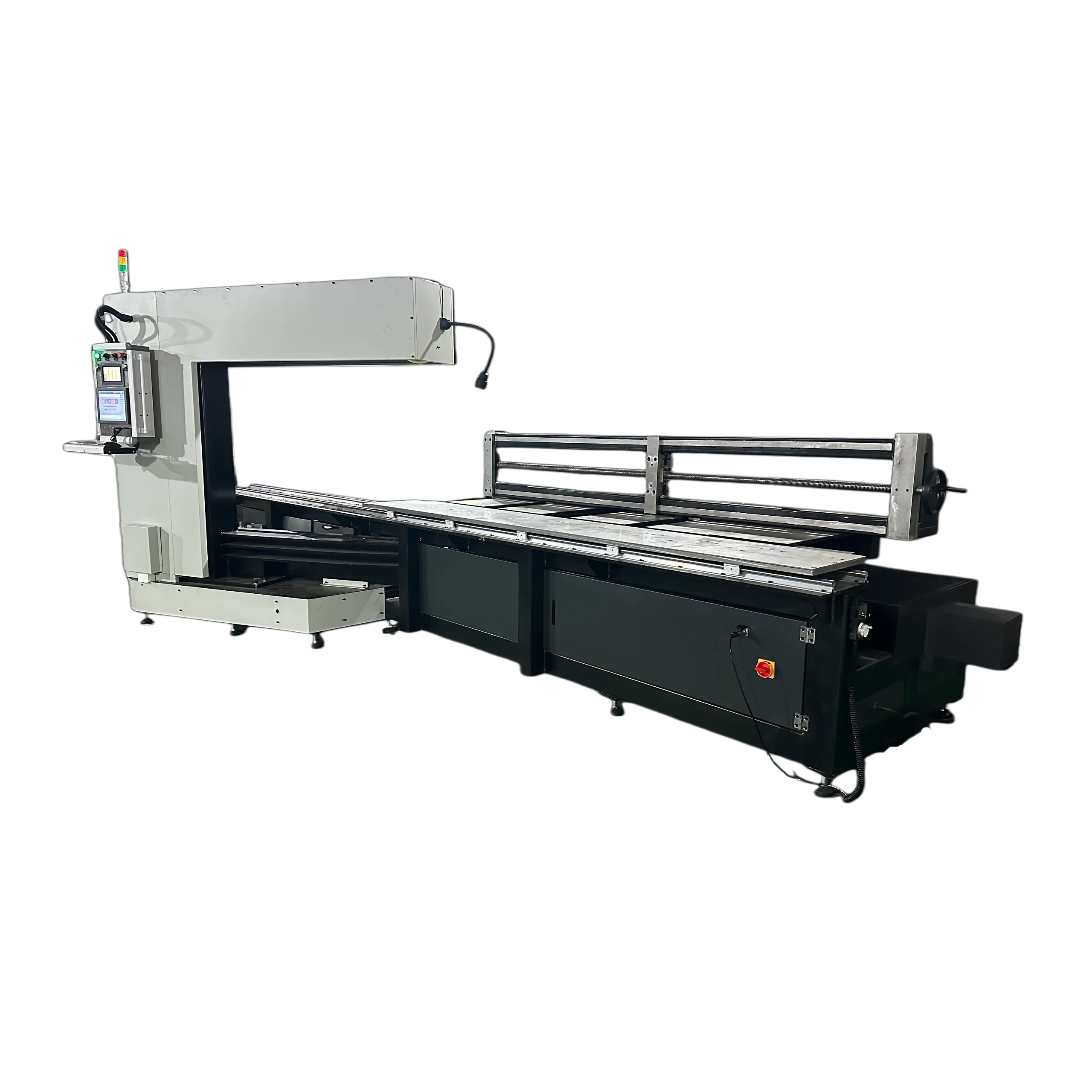
Vertical · Ultra-Large · Dual System
SVI 250-80 — Ultra-Huge Diamond Wire Saw
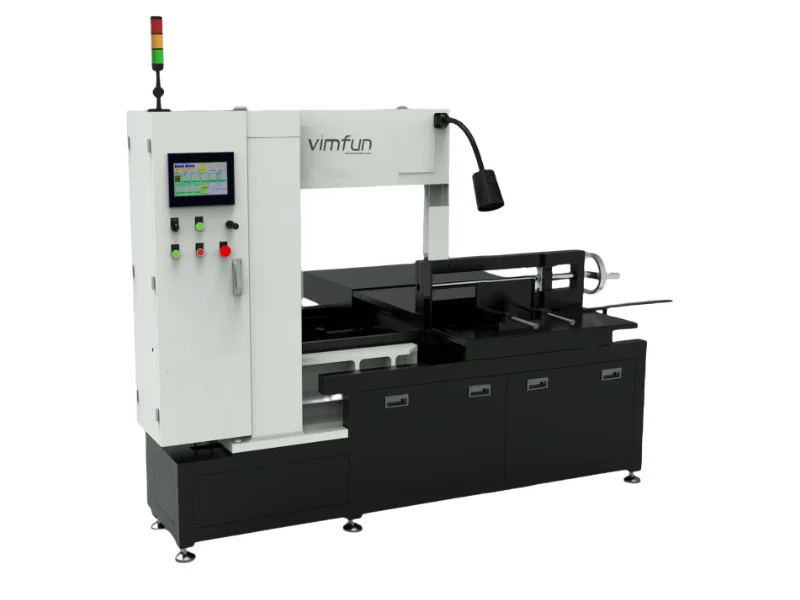
Vertical · Mid-Large · Dual System
SVI 80-80 — Graphite & Profile Cut Wire Saw
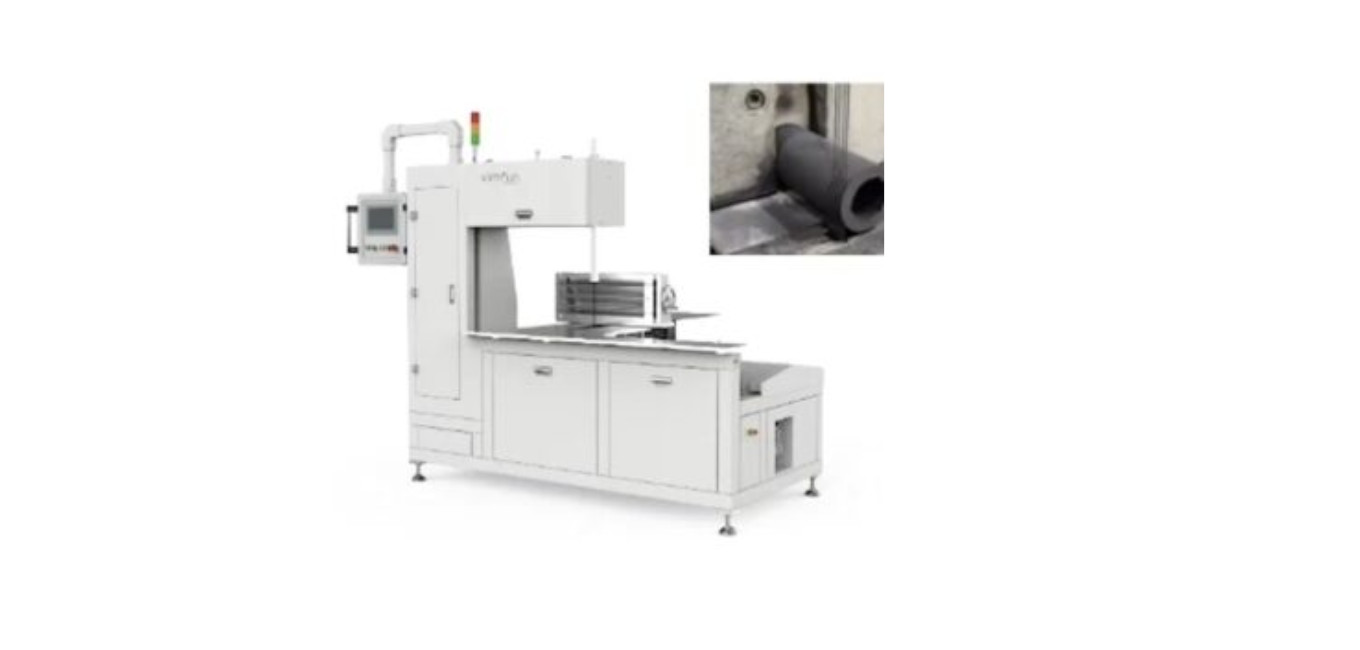 SVM Series · Vertical Multi-Wire
Vertical · 4-Wire · High Throughput
SVM 60-60 — Vertical Multi-Wire Cutting Machine
Horizontal Cutting — SH Series
In a horizontal configuration the diamond wire runs in a horizontal plane and cuts laterally into the workpiece, which is loaded from the side. This side-loading approach is the defining operational advantage: large, heavy workpieces — graphite blocks weighing hundreds of kilograms, or oversized quartz cylinders — can be loaded by forklift or crane to work height without the vertical lifting that a vertical or gantry machine requires.
The SH series holds the largest diameter capacity in the Vimfun range. The SH300-R handles cylindrical workpieces up to 3,000 mm in diameter — the absolute maximum in the product line — making it the definitive choice for oversized quartz tubes, large stone blocks, and industrial-scale graphite processing where no other configuration is physically practical.
The primary engineering trade-off of horizontal cutting is chip evacuation: because the wire is horizontal, swarf does not fall freely from the cutting zone under gravity as it does in a vertical machine. Coolant flow must compensate. This makes horizontal machines most efficient for straight crosscutting and batch slicing — the dominant use cases — rather than complex contour profiles. Profile cutting is technically achievable on horizontal platforms, but vertical machines execute contour work with faster chip clearing and cleaner cut surfaces.
 SH Series · Horizontal
Horizontal · Large Block · Standard
SH 60-60 — Horizontal Large Block Wire Saw
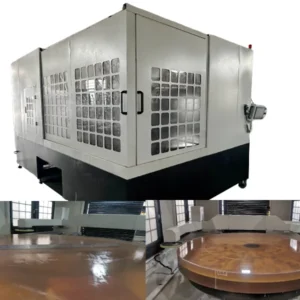
Horizontal · Rotary · Large Diameter
SH200-R — Large Diameter Rotary Wire Saw
Horizontal · Rotary · Maximum Capacity
SH 300-R — 3,000 mm Diameter Wire Saw
Gantry Cutting — SG Series
The gantry configuration places the wire bridge on a rigid overhead frame that spans across the workpiece. This highly integrated, compact architecture delivers exceptional dimensional precision — making it the dominant choice for optical materials, precision ceramics, and magnetic materials where surface finish and cut accuracy are the primary requirements.
The SG series is Vimfun's widest and most feature-rich product line. Because the gantry frame can accommodate different motion axes — swing, rotation, tilt, oscillation, internal contour — a single platform can be configured for a very broad range of cutting profiles within a compact footprint. This high integration makes SG machines easy to install, operate, and adapt to changing production needs without the large-scale infrastructure that vertical and horizontal machines require.
The SGI 20 extends the series with internal contour cutting capability — threading the wire through a pre-drilled pilot hole to machine inner shapes and apertures that no external-approach machine can reach. The SGRT20 adds simultaneous slice, rotate, and tilt axes, enabling full 3D profile geometry — angled prisms, tapered elements, and non-perpendicular cut planes — in a single clamping setup. Together with the standard SG 20, these three models cover the full capability range of precision cutting from straight slicing to complex 3D geometry.
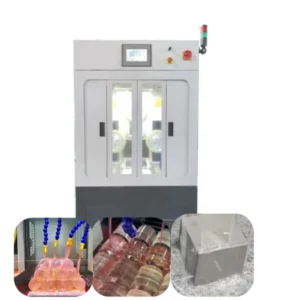
Gantry · CNC · Precision Slice
SG 20 — CNC Gantry Glass Cutting Wire Saw
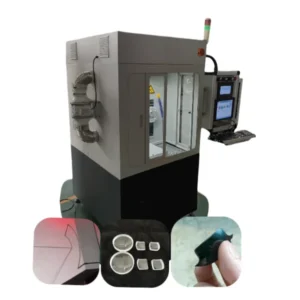
Gantry · Internal Contour · CNC
SGI 20 — CNC Internal Contour Cutting
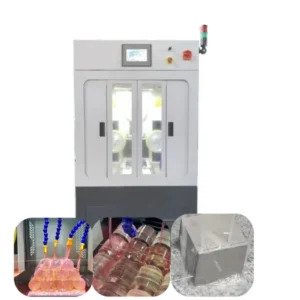 SGRT Series · Gantry Multi-Axis
Gantry · Multi-Axis · Slice + Rotate + Tilt
SGRT20 — 3D Multi-Axis Diamond Wire Saw
Multi-Wire Cutting — SOM Series
Multi-wire machines use multiple parallel wires to slice a workpiece into many thin sections simultaneously. This architecture exists for one purpose: high-volume batch production of identical straight slices. A full silicon ingot can be converted into dozens of wafers in a single pass; NdFeB magnet blocks can be sliced into arrays at production rates no single-wire machine can match.
Multi-wire machines do not support contour cutting, rotation, tilt, internal machining, or geometry variation between cuts. For applications requiring flexibility, varied geometries, or the combination of slicing and profile work on the same platform, a single-wire machine from the SV, SH, or SG series is the correct choice.
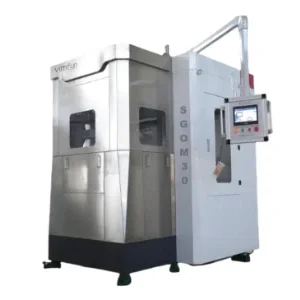
Multi-Wire · Silicon · High Volume
SOMI4-300 — Multi-Wire Saw for Silicon & Sapphire
SBM Series
Specialist models in the multi-wire range
Side-by-side
Architecture Comparison — Key Differences
The three single-wire cutting architectures compared across the parameters most relevant to machine selection. For full machine specifications see the wire saw machine structure guide.
| Parameter | Vertical — SV Series | Horizontal — SH Series | Gantry — SG Series |
|---|---|---|---|
| Machine scale | Large — heavy frame construction | Large — industrial footprint | Compact — highly integrated |
| Workpiece loading | Vertical — onto horizontal table | Horizontal — side-loaded (crane/forklift) | Table mount — compact envelope |
| Max workpiece capacity | 2,500 mm length (SVI250-80) | ⌀ 3,000 mm (SH300-R) | 400 × 400 mm (SG 40) |
| Chip evacuation | Excellent — gravity-assisted | Moderate — horizontal accumulation | Good — gravity-assisted |
| Straight slice / crosscut | ✓ Yes | ✓ Yes — optimal use case | ✓ Yes |
| External profile cut | ✓ Yes — optimal (fast chip clear) | ✓ Possible — reduced efficiency | ✓ With rotation / swing axis |
| Internal contour / hole | ✓ Yes — SVI series (standard) | Yes-SHI 60-60 | ✓ Yes — SGI 20 |
| 3D taper / angled cut | ✓ Yes — multi-axis available | Can be Customized | ✓ Yes — SGRT20 |
| Multi-wire batch slicing | ✓ Yes — SVM 60-60 (4 wires) | Can be Customized | Can be Customized |
| Typical materials | Graphite, ceramics, large silicon ingots, carbon composites | Quartz, graphite, stone, large cylinders | Optical glass, sapphire, magnets, ceramics |
| Cutting precision | ±0.03–0.05 mm | ±0.05 mm | ±0.03 mm |
| Investment level | High — heavy industrial spec | High — large frame + loading system | Moderate — compact, integrated |
| Key models | SVI250-80, SVI80-80, SVM60-60 | SH60-60, SH200-R, SH300-R | SG20, SGI20, SGRT20, SG40, SGR40 |
Wire speed (up to 80 m/s), tension range, and coolant systems are consistent across all architectures. See diamond wire specifications for material-to-wire matching.
Selection guide
Which Architecture Fits Your Application?
Three questions drive architecture selection: How large is the workpiece and how will it be loaded? What geometry must be cut? What is the throughput requirement? See also our diamond wire cutting process guide for parameter optimisation.
Choose Vertical (SV Series) SV / SVM
The vertical configuration is the right choice when both scale and geometric complexity must be addressed simultaneously — large material that also requires profile, contour, or high-throughput multi-wire slicing.
- Workpiece exceeds 600 mm in any dimension
- Complex external profiles or internal contour cuts required
- High-throughput batch slicing of identical pieces (SVM 60-60)
- Large graphite electrodes, ceramic billets, oversized silicon ingots
- Budget accommodates heavy-industry equipment investment
Choose Horizontal (SH Series) SH
The horizontal configuration is the right choice when workpiece weight and loading logistics are the primary constraint, and the task is straight slicing or crosscutting at large diameter scale.
- Cylindrical or very heavy workpieces — vertical lifting is impractical
- Diameter exceeds 600 mm (up to 3,000 mm)
- Batch crosscutting or straight slicing — no complex geometry needed
- Large quartz cylinders, massive graphite blocks, industrial stone
- Crane or forklift loading access available on site
Choose Gantry (SG Series) SG / SGI / SGRT
The gantry configuration is the right choice when precision, surface finish, and machine integration are the primary requirements — mainly for optical, magnetic, and precision ceramic materials at scales up to 400 mm.
- Optical glass, sapphire, AR-coated optics, fused silica
- NdFeB magnets, ferrite, precision ceramic components
- Workpiece under 400 mm — lab or small-batch industrial
- Internal contour / aperture machining needed (SGI 20)
- 3D taper or multi-axis cuts required (SGRT20)
High Customisation — Combine Functions in a Single Machine
All three cutting architectures can be engineered with additional axes, integrated functions, and custom configurations. Vimfun specialises in machines that combine capabilities — for example, a vertical machine with automatic loading and 4-axis CNC control, or a gantry machine with both standard slicing and internal contour capability integrated.
If your application requires a capability not covered by a standard configuration, contact our engineering team to discuss a custom machine design built to your specification.
Explore custom solutions →Explore the topic cluster
Related Knowledge Areas
This page is part of Vimfun's interconnected product knowledge network. Explore the technical layers below.
FAQ