Cutting graphite with diamond wire can provide a controlled separation or profile cut with relatively low cutting force. The result depends on more than the word graphite: grade, density, grain size, porosity, forming direction, part geometry and contamination limits all affect wire selection, dust control, feed and edge quality.
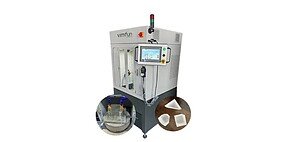
This article is a graphite cutting process guide, not an equipment product page. For application planning across graphite parts, use the main graphite cutting solutions page. For available equipment, see the graphite wire saw page.
Why Graphite Grade Matters
Industrial graphite is manufactured in different ways and for different end uses. Two workpieces with similar dimensions may cut differently because their grain structure, density and orientation are not the same. The grade certificate and forming direction should be reviewed before transferring a parameter set.
| Graphite category | Typical process concern | Information to confirm | Cutting approach to evaluate |
|---|---|---|---|
| Fine-grain isostatic graphite | Dimensional control, thin features and surface consistency | Grade, density, grain size, porosity and final tolerance | Stable fixture, conservative entry/exit and measured kerf compensation |
| Extruded graphite | Direction-dependent behavior and possible variation through the section | Extrusion direction, grade and cut orientation | Compare cut directions before locking the production path |
| Molded graphite | Grade-specific density and edge behavior | Forming route, block condition and critical surfaces | Use representative material from the intended production batch |
| Coarse or porous graphite | Edge breakout, particle release and unstable local contact | Porosity, grain size, weak edges and acceptance limit | Improve support and dust removal; avoid abrupt loading |
| Coated or treated graphite | Coating damage, contamination and different layer behavior | Coating type/thickness, permissible cut location and cleaning rules | Validate entry side, support and post-cut inspection on a sample |
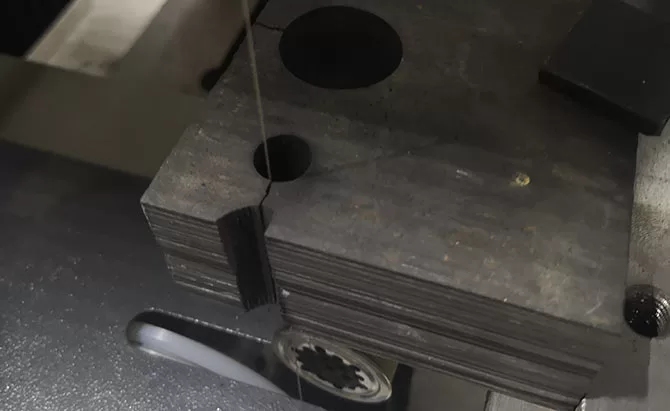
Dry Cutting vs Wet Cutting
Graphite is often cut dry when liquid contamination or subsequent cleaning is undesirable. Dry cutting requires effective extraction close to the cutting zone and a wire structure that can release debris. Wet cutting may help carry particles and control temperature, but the fluid can enter porous material and create cleaning or contamination work.
| Decision area | Dry process | Wet process | Question to resolve |
|---|---|---|---|
| Debris control | Capture airborne and deposited particles at the source | Carry particles in the fluid and manage filtration | Which method prevents debris from returning to the kerf? |
| Part condition | Avoids liquid uptake but leaves loose dust | May wet porous graphite and require drying/cleaning | What contamination and cleaning limits apply downstream? |
| Wire selection | Open coating paths may support chip space and dust release | Coolant-compatible structures can be evaluated | Which coating remains stable with the actual grade and process? |
| Facility control | Extraction, housekeeping and approved dust-management procedures | Fluid delivery, filtration, collection and disposal | What controls are available at the installation site? |
Half-coated wire is commonly evaluated for graphite because partial coverage can leave additional debris space. Thread-coated structures may also be considered for dusty materials that cannot use water. These are starting directions, not universal selections. Review the available structures on the diamond wire specification page and confirm the final option by test.
Fixture and Edge Control
Graphite can be rigid yet vulnerable at thin walls, corners and unsupported exits. Clamping force should be distributed across stable surfaces without placing a concentrated load near the cut. The fixture should also leave a clear path for the wire and for dust or coolant removal.
- Support the exit edge: local backing can reduce breakout when the wire completes the cut.
- Protect thin sections: plan the feature order so remaining walls are not left unsupported too early.
- Choose a stable datum: porous or rough surfaces may not provide repeatable location without suitable pads or stops.
- Keep debris paths open: fixtures should not trap particles at the wire entry, exit or bottom of the kerf.
Wire Speed, Tension and Feed
The operating window should be developed with the real grade and cut depth. Increasing feed without checking abrasive condition and debris removal can produce wire bow, edge breakout or a changing surface. Tension should stabilize the path without overloading the loop, wheel system or workpiece.
Change one variable at a time, record the cut and repeat the best condition. The supporting wire speed, tension and feed rate guide explains this relationship in more detail.
Graphite Cutting Troubleshooting
| Observed result | Possible causes to check | Adjustment direction |
|---|---|---|
| Edge breakout or corner damage | Unsupported exit, aggressive feed, weak local structure or fixture stress | Improve backing, reduce abrupt engagement and inspect the graphite grade/edge |
| Cutting rate falls | Loaded or worn abrasive, blocked debris path, low effective speed or deep engagement | Inspect the wire and extraction/flushing before increasing feed |
| Wire wanders or bows | Excess feed, low tension, alignment error, worn wire or unstable support | Return to the last stable feed and verify mechanics and fixture |
| Periodic surface marks | Loop runout, vibration, wheel condition or trapped debris | Inspect the complete wire path and remove debris consistently |
| Heavy dust accumulation | Extraction point too far away, insufficient airflow or blocked collection path | Review source capture and housekeeping under approved site procedures |
| Wet part is difficult to clean | Fluid uptake, suspended fines or incompatible cleaning route | Confirm whether dry cutting or a different approved fluid is more suitable |
Applications and Process Boundaries
Diamond wire can support separation and selected profile operations for graphite blocks, rings, susceptors, furnace components, electrode blanks, mold blanks and thermal-management parts. It should not automatically be presented as a replacement for milling, grinding or EDM. Pockets, threaded features, very small internal details and final datum surfaces may still require another process.
The value of wire cutting is strongest when low cutting force, a controlled kerf, a long section or a fragile high-value workpiece matters. Final suitability should be judged using the complete route to an accepted part, including cleaning and finishing.
Graphite Cutting Application Video
The retained video demonstrates one graphite cutting setup. It shows an application, not a universal parameter recommendation. Compare the grade, dimensions, fixture, wire and dust-control arrangement with the intended production part.

Information Required Before a Graphite Test Cut
| Input | Details to provide | Why it matters |
|---|---|---|
| Graphite grade | Manufacturer/grade, forming route, density, grain size, porosity and orientation | Defines the material behavior that settings must match |
| Workpiece | Dimensions, weight, shape, thin walls and available clamping surfaces | Guides machine capacity, support and fixture design |
| Cut | Straight/profile path, depth, length, quantity and entry/exit locations | Determines engagement, access and vulnerable edges |
| Quality target | Kerf allowance, straightness/flatness, chipping and surface requirement | Creates measurable acceptance criteria |
| Process restriction | Dry/wet requirement, contamination, cleaning and dust-control rules | Guides wire coating and debris management |
| Production goal | Batch size, cycle expectation, downstream finishing and inspection | Balances quality, wire use and throughput |
Frequently Asked Questions
Can the same settings cut every graphite grade?
No. Density, grain size, porosity, orientation and part geometry can change debris behavior, edge strength and the stable feed range.
Should graphite be cut dry or with coolant?
Either may be possible. Dry cutting avoids liquid uptake but needs effective dust capture. Wet cutting can carry particles but may add contamination, drying and filtration requirements.
Which diamond wire coating is suitable for graphite?
Half-coated wire is commonly evaluated for graphite, while thread-coated structures may suit dusty dry processes that cannot use water. The grade, machine and sample result must confirm the choice.
Does diamond wire leave a finished graphite surface?
Not automatically. Surface condition depends on the wire, settings, grade, debris removal and acceptance requirement. Critical datum or sealing surfaces may still need finishing.
What should be measured in a sample cut?
Record cut time, actual kerf, straightness or flatness, edge breakout, surface condition, wire behavior, dust or coolant performance and fixture stability.
Conclusion
Reliable graphite cutting with diamond wire begins with the exact grade and production restriction. Density, grain structure, orientation, fixture support, wire coating, feed and dust control determine whether the process meets the required edge and surface quality. Establish a conservative baseline, change one variable at a time and approve the process from repeated sample results rather than broad material claims.