Electrical discharge wire cutting (wire EDM) and endless diamond wire cutting use different material-removal mechanisms. Wire EDM uses electrical discharges to erode a conductive workpiece; diamond wire removes material by abrasive contact. Choosing between them starts with material conductivity, geometry and the required surface condition, then considers cutting time and total cost.
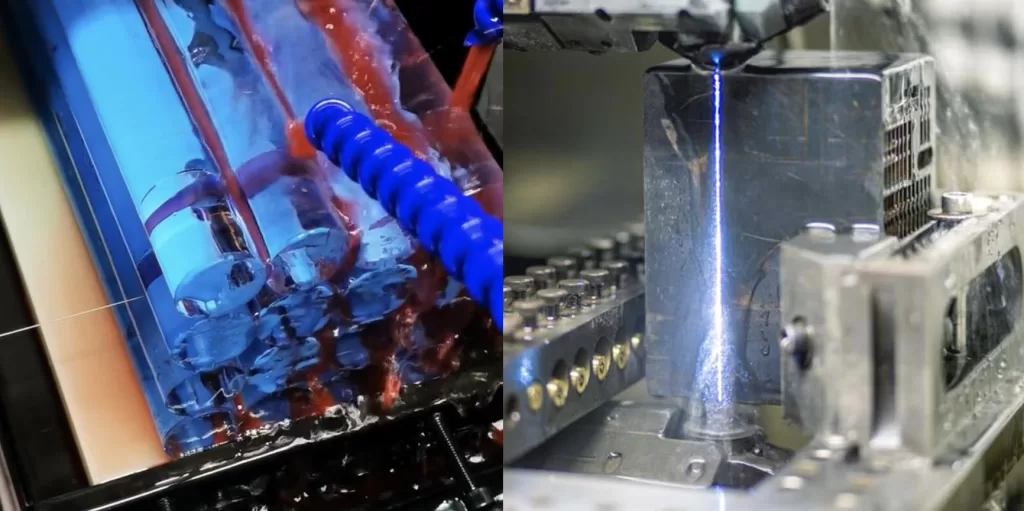
Electrical Discharge Wire Cutting: Precision Spark Erosion
In wire EDM, a wire electrode and a conductive workpiece are separated by a controlled discharge gap. Electrical pulses remove material, while dielectric fluid supports the process and removes debris. The wire does not act as a toothed blade or abrasive saw.
Where Wire EDM Is Useful
- Precision conductive parts: dies, tooling and detailed profiles are common applications. Achievable tolerance depends on the machine, workpiece, thermal stability and finishing passes.
- Complex through-profiles: programmed wire paths can produce detailed contours; enclosed profiles require suitable threading access or a start hole.
- Low mechanical cutting force: spark erosion avoids the blade forces of conventional sawing, although workholding and residual material stresses still matter.
Conductivity and Surface Integrity Limits
Conventional wire EDM requires adequate electrical conductivity. Ordinary glass and electrically insulating ceramics are unsuitable for standard wire EDM; conductive ceramic grades need individual evaluation. Material hardness alone does not determine suitability.
EDM is a thermal removal process and can leave a recast layer or heat-affected material. Discharge settings, finishing passes and post-processing influence the final surface. It is inaccurate to describe every EDM surface as rough: finishing capability should be assessed against the specified roughness and surface-integrity limits.
How Endless Diamond Wire Cutting Differs
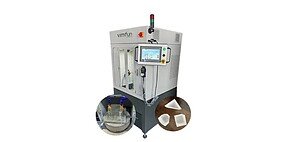
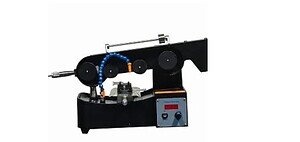
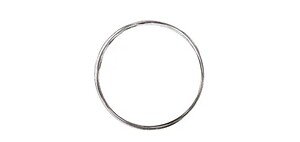
An endless loop carries bonded diamond abrasive through the workpiece. Electrical conductivity is not required. Selected glass, graphite, silicon and ceramic applications are candidates, subject to material grade, geometry, abrasive compatibility and testing. For equipment options, see our industrial diamond wire saws.
Benefits and Limits of Abrasive Cutting
Abrasive wire cutting can support separation and rough profiling of hard, brittle materials without an EDM discharge-generated recast layer. It still generates frictional heat and cutting forces. Wire deflection, chipping, subsurface damage and visible cutting marks must be checked, particularly at unsupported edges. Optical or precision surfaces may need grinding, lapping or polishing afterward.
Diamond wire is not a universal replacement for EDM. Small internal features, tight corner radii, metal compatibility, wire access and finishing allowances may limit its use. Neither process is automatically faster or more accurate for every part.
Wire EDM vs Diamond Wire Cutting
| Selection factor | Wire EDM | Endless diamond wire |
|---|---|---|
| Material | Requires adequate conductivity | No conductivity requirement; abrasive compatibility still matters |
| Heat and force | Thermal spark erosion with low mechanical cutting force | Abrasive contact; frictional heat and wire force require control |
| Surface | Assess roughness, recast layer and finishing-pass requirements | Assess wire marks, edge chips and subsurface damage |
| Kerf | Depends on electrode diameter and discharge gap | Depends on coated wire diameter, wear and wire motion |
| Geometry and precision | Suitable for detailed conductive profiles; verify threading access and tolerance | Evaluate sectioning and profile cuts against wire access, deflection and finishing allowance |
| Process fluid | Dielectric management and flushing are part of the process | Confirm coolant or dry-cut suitability and debris collection |
| Cycle and cost | Include roughing, skim passes, wire, filters and fluid maintenance | Include cutting, wire life, cleaning, finishing and rejected parts |
Select a Process from the Drawing
For a conductive tool-steel profile with tight dimensional requirements, evaluate wire EDM first. For an insulating glass or ceramic blank requiring separation, evaluate abrasive cutting and the subsequent finishing route. For materials compatible with both processes, compare representative samples using the same drawing and acceptance criteria.
- Confirm the exact grade, conductivity, dimensions and quantity.
- Identify internal contours, minimum radii, cut thickness and fixture access.
- Specify dimensional tolerance, edge quality, surface roughness and permitted thermal or subsurface damage.
- Record total cycle time, actual kerf, consumables, finishing work and accepted yield.
Compare cost per accepted part rather than nominal cutting speed. Include setup, machine time, consumables, cleaning, inspection, finishing and scrap. Our diamond wire selection page covers the consumable side of an abrasive-wire trial.
Frequently Asked Questions
Can wire EDM cut glass?
Conventional wire EDM cannot process ordinary electrically insulating glass. Evaluate abrasive cutting or another process compatible with the glass and its required finish.
Is diamond wire cutting heat-free?
No. It avoids spark erosion but generates frictional heat. Cooling, feed and debris removal must match the application.
Which process gives a better finish?
Neither wins universally. Compare measured results on the same material, including any finishing passes or polishing needed to meet the drawing.
Conclusion
Wire EDM and endless diamond wire cutting serve different manufacturing requirements. Conductivity and geometry establish the initial options; measured surface quality, tolerance and accepted-part cost determine the final choice. To evaluate the abrasive route, request a representative test cut with your material and drawing.