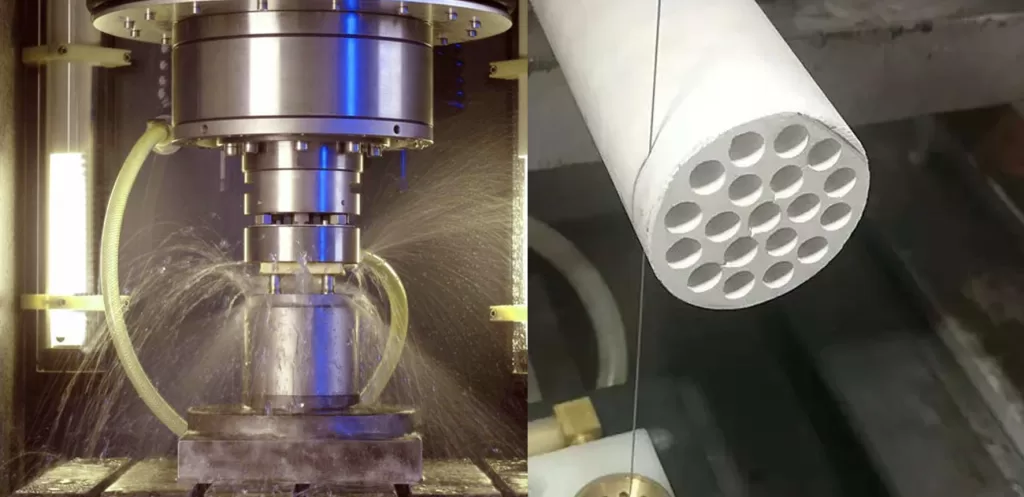
ECM cutting and closed diamond wire cutting solve different manufacturing problems. Electrochemical machining removes conductive material by controlled anodic dissolution, making it useful for complex metal geometries without tool-workpiece contact. Closed diamond wire cutting is a mechanical abrasive process used mainly for separating, cropping and shaping hard or brittle workpieces. The right choice depends on electrical conductivity, geometry, cut direction, contamination controls and the required surface condition.
This guide explains the working principles, practical limits and selection criteria for both methods. It is intended as a process comparison, not a substitute for a sample-cut evaluation or an application-specific machine recommendation.
What Is ECM Cutting?
Electrochemical machining (ECM) is a non-contact subtractive process. The workpiece acts as the anode, a shaped tool acts as the cathode, and an electrolyte carries current through the machining gap. Under controlled electrical and fluid conditions, metal is removed from the workpiece without conventional cutting forces.
Because the tool does not mechanically cut the workpiece, ECM can avoid burrs, tool-pressure distortion and a conventional heat-affected zone. Final accuracy is not determined by current alone: tool geometry, inter-electrode gap, electrolyte flow, temperature, current density and process stability all affect the result.
Where ECM Cutting Is Used
- Aerospace metal components: complex passages, profiles and features in conductive alloys.
- Medical and precision components: burr-free features where mechanical cutting force is undesirable.
- Tooling and production parts: repeated conductive-metal geometries supported by a dedicated tool and controlled electrolyte system.
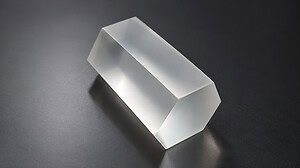
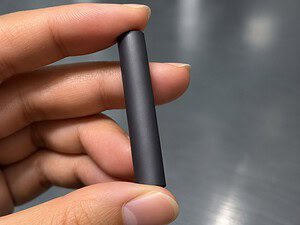
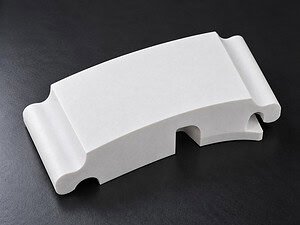
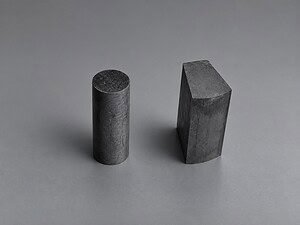
The first screening question is material conductivity. Standard ECM is intended for electrically conductive workpieces. Glass, quartz, ceramics, sapphire, graphite and many semiconductor materials require a different cutting approach.
ECM Advantages and Practical Limitations
Potential advantages
- No direct tool-workpiece contact
- Burr-free metal removal under a stable process
- Suitable for difficult-to-machine conductive alloys
- Can form complex or internal geometry
Practical limitations
- Requires an electrically conductive workpiece
- Needs electrolyte circulation and waste treatment
- Tooling and process control add setup complexity
- Accuracy depends on gap and flow stability
What Is Closed Diamond Wire Cutting?

Closed diamond wire cutting uses a continuous loop carrying fixed diamond abrasive. The loop moves in one direction while the machine controls wire tension, feed and workpiece position. Material is removed along an external cutting path, which makes the process suitable for straight cuts, cropping and selected contour-cutting applications.
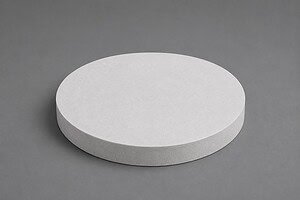
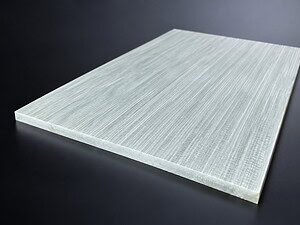
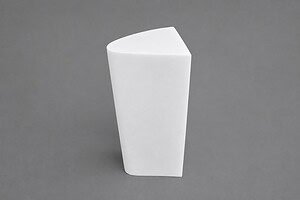
Unlike ECM, the process does not depend on electrical conductivity. It can cut hard and brittle materials such as optical glass, quartz, ceramics, silicon, sapphire, graphite and some metals or composites. Learn more about the broader ダイヤモンドワイヤー切断プロセス and available diamond wire structures and coatings.
ECM Cutting vs Closed Diamond Wire Cutting
| Selection factor | ECM cutting | クローズドダイヤモンドワイヤーカット |
|---|---|---|
| Removal principle | Electrochemical dissolution | Mechanical abrasion with fixed diamond |
| Material requirement | Electrically conductive materials | Conductive and non-conductive materials |
| Typical geometry | Complex profiles, cavities and shaped metal features | Separation, cropping, straight cuts and selected contours |
| Mechanical cutting force | No direct tool contact | Low but present; controlled by tension and feed |
| Thermal effect | No conventional heat-affected zone | Generally low when wire condition, feed and cooling are controlled |
| Process media | Electrolyte and controlled electrical system | May run wet or dry depending on material, wire and dust controls |
| Waste management | Electrolyte filtration and treatment | Kerf debris, coolant or dust collection |
| SGコンパクトフォーマット | Complex conductive-metal features | Hard or brittle workpiece separation with narrow material loss |
Neither process is universally more precise. ECM precision is controlled by tool shape, electrical conditions and gap stability. Diamond wire cut quality depends on the machine structure, wire specification, tension, wire speed, feed rate, support and coolant or dust control. Compare the actual workpiece and tolerance requirement rather than selecting a process from a headline accuracy claim.
Does Wire ECM Mean the Same Thing as Wire Sawing?
No. The term wire ECM may describe an electrochemical process that uses a wire-shaped electrode. Material removal still depends on electrochemistry and therefore requires a conductive workpiece and electrolyte control. A diamond wire saw uses an abrasive wire as the cutting tool. The similar use of the word “wire” does not make the processes interchangeable.
Process Selection Checklist
| Question | なぜ重要なのか |
|---|---|
| Is the workpiece electrically conductive? | If not, standard ECM is not suitable. |
| Is the feature internal or an external cut? | Complex internal metal features can favor ECM; cropping and separation can favor wire cutting. |
| What are the workpiece dimensions and support points? | They determine machine travel, fixture design and cut stability. |
| What edge, flatness and surface requirements apply? | These define acceptance criteria for a sample cut. |
| Are electrolyte, coolant or dry-dust controls permitted? | Facility and material restrictions can rule out a process. |
| What material loss is acceptable? | Kerf and downstream finishing affect total yield and cost. |
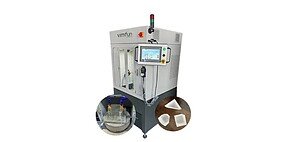
For hard or brittle materials, provide material type, dimensions, required cut geometry, tolerance, target surface condition and whether water is allowed. These details help determine whether a standard or custom ワイヤーソーマシン should be evaluated.
よくある質問
Can ECM cut ceramics, quartz or glass?
Standard ECM requires an electrically conductive workpiece, so it is generally not the appropriate process for insulating ceramics, quartz or glass. Diamond wire cutting is often evaluated for these hard and brittle materials.
Does ECM create a heat-affected zone?
ECM removes material through electrochemical dissolution rather than conventional thermal cutting. It does not create a conventional heat-affected zone, although process temperature and electrolyte conditions still require control.
Which process is better for a straight cut through a brittle block?
Closed diamond wire cutting is usually the more relevant starting point because it can separate non-conductive hard and brittle workpieces. Final suitability should be confirmed from dimensions, support, tolerance and a sample cut.
Which process produces less material waste?
The answer depends on the feature. Diamond wire cutting can reduce material loss in separation operations through a controlled kerf. ECM does not create a saw kerf in the same way, but it requires allowance for the electrochemical gap and produces electrolyte waste that must be treated.
What information is needed before a process review?
Share the material grade, conductivity, workpiece size, cut path, tolerance, required edge or surface condition, production quantity and restrictions on water, electrolyte or dust. Photos or drawings are useful when available.
Request a Cutting Process Review
If your application involves hard or brittle material separation, send the workpiece details below. Vimfun can review the material, geometry and acceptance requirements and recommend an appropriate sample-cut or machine-selection path.