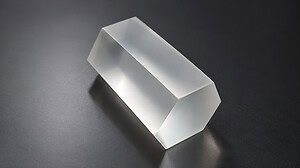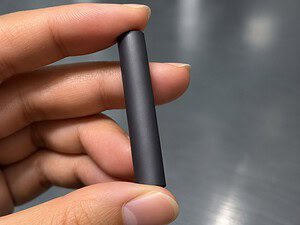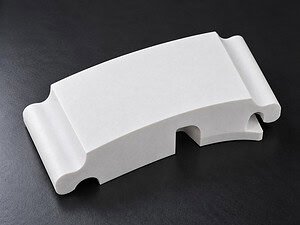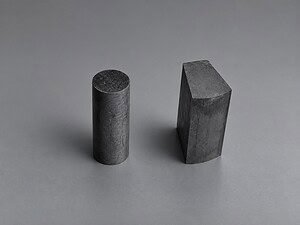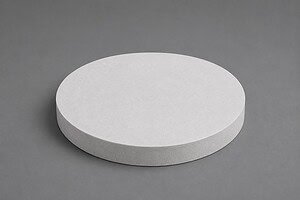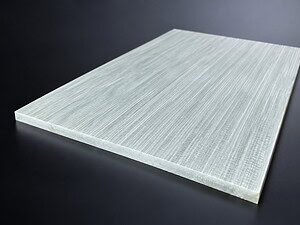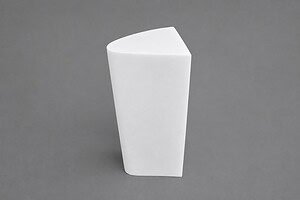
Deux blocs sont arrivés pour l'enquête : l'un est un disque de 737 mm de diamètre pesant 137 kg, l'autre un cylindre de 355 mm × 610 mm pesant 147 kg. Tous deux à l'état brut de pressage. Le client avait besoin d'un profilage extérieur, de coupes de face, de découpes de disque, de coupes transversales en carreaux de 150 mm et de barres fines rétractables — le tout à partir du même matériau, avec des temps de cycle enregistrés sur le cylindre. Leur équipement actuel ne gérait que la découpe. Tout le reste était un problème.
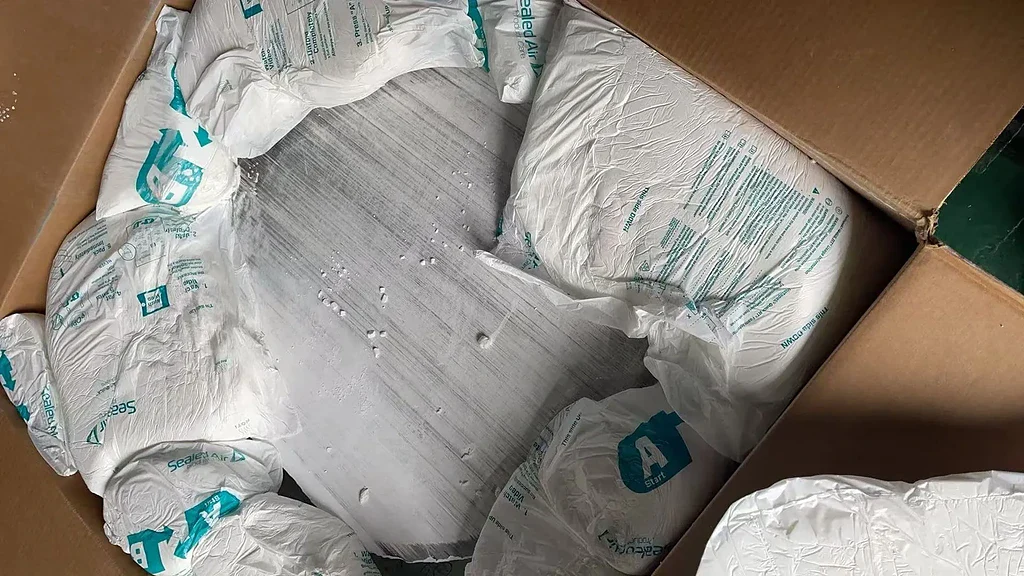
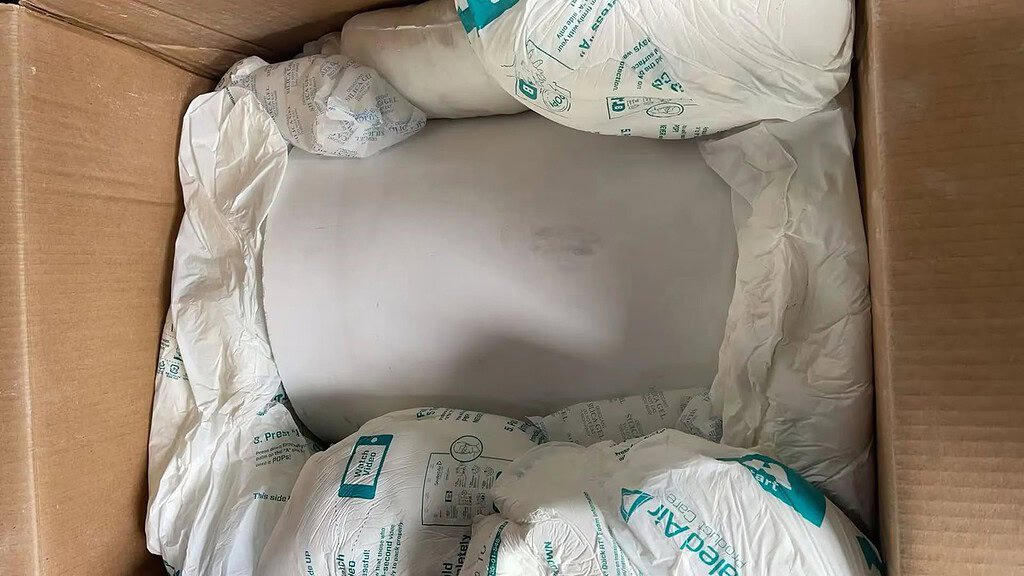
Voici une explication détaillée de la manière dont nous avons abordé ce travail de découpe de céramique brute de pressage : ce que signifie l'état du matériau pour la planification du processus, comment nous avons sélectionné une seule machine pour les cinq types d'opérations, quels paramètres nous avons recommandés et où l'approche présente encore des limites réelles.
Qu'est-ce que la découpe de céramique brute de pressage — et pourquoi est-elle différente de la céramique frittée
“ Brut de pressage ” signifie que le bloc a été pressé à partir de poudre pour obtenir une forme proche de la forme finale et qu'il est encore dans son état de corps vert — liant intact, pas encore passé par le frittage final. La densité est plus faible que celle de la pièce cuite, la dureté est plus faible, et la structure interne tolère une force de coupe plus importante avant de se fissurer.
Pour la découpe au fil diamanté, cette combinaison est favorable. Les vitesses d'avance sur les travaux de découpe de céramique brute de pressage sont généralement 3 à 5 fois plus rapides que sur le même matériau après frittage. Le risque d'écaillage des bords diminue considérablement. La consommation de fil par unité de volume de matériau retiré est plus faible car l'abrasif n'a pas à travailler aussi dur.
Cela ne signifie pas que les blocs bruts de pressage sont faciles à découper. Le défi n'est pas la dureté — c'est l'échelle et la géométrie. Un cylindre de 147 kg nécessitant un profilage extérieur, une bissection et une découpe fine de 20 mm est un problème d'ingénierie différent d'un échantillon de verre optique de 50 mm. Le matériau coopère ; la machine doit être choisie avec soin.
Une chose à signaler dès le début : les blocs bruts de pressage varient. Toutes les céramiques ou composites pressés ne se comportent pas de manière identique à ce stade. La densité du matériau, le type de liant et la porosité du corps vert affectent tous la manière dont le fil interagit avec la surface. Les paramètres de cet article sont un point de départ — les valeurs finales doivent être confirmées sur le matériau réel lors d'une coupe d'essai.
Le cahier des charges de découpe : deux blocs, douze opérations
Le client a spécifié une séquence de découpe complète pour les deux blocs. Il ne s'agissait pas d'un travail de découpe en une seule passe — c'était un processus en plusieurs étapes qui nécessitait cinq types de mouvements distincts sur deux pièces.
Bloc 1 — Disque : 29″ de diamètre extérieur × 5,5″ d'épaisseur (≈ 737 mm × 140 mm, 137 kg)
La séquence :
- Ajustement du contour extérieur: Réduire le diamètre extérieur de 737 mm à 686 mm, en retirant 50 mm radialement pour créer un cylindre à paroi droite
- Coupe de face d'essai: Retirer une tranche de 20 mm d'une face — cela expose une surface de référence propre et laisse 120 mm d'épaisseur utilisable
- disque de 15 mm × 2: Deux tranches à alimentation droite de 686 mm de diamètre
- disque de 20 mm × 1: Une tranche de 686 mm de diamètre
- disque de 25 mm × 1: Une tranche de 686 mm de diamètre
- Coupe transversale secondaire: Prendre le disque de 25 mm et le découper en carreaux carrés de 150 mm × 150 mm
- Coupe en barres tertiaire: Prendre un carreau de 150 mm × 150 mm et le trancher en fines barres rétractables
Sept opérations, trois géométries différentes, le tout sur un bloc de 137 kg. Toute machine qui ne fait que des tranches à alimentation droite échoue à la première étape.
Bloc 2 — Cylindre : OD de 14″ × 24″ de long (≈ 355 mm × 610 mm, 147 kg)
Ce bloc a également servi de référence d'efficacité. La séquence :
- Coupe de face d'essai: Retirer une tranche de rebut de 20 mm d'une extrémité — la longueur utilisable devient 590 mm
- Ajustement du contour extérieur: Réduire le diamètre de 355 mm à 305 mm
- Bisection: Diviser le cylindre dans le sens de la longueur en deux demi-ronds, chacun de 150 mm de haut × 590 mm de long
- Test de coupe fine chronométrée: Prenez une demi-pièce et coupez-la en sections de 20 mm d'épaisseur — enregistrez le temps écoulé pour chaque passe
Cette dernière exigence est ce qui rend cela plus qu'une simple coupe d'échantillon. Le client construit un modèle de débit. Chaque passe chronométrée à travers une géométrie cohérente lui donne un point de données fiable pour projeter le temps de cycle à volume de production. S'il ne peut pas atteindre ses heures machine cibles par lot avec ces données, il redéfinira le processus avant d'acheter l'équipement.
Pourquoi la coupe de céramique "as-pressed" nécessite une machine multifonction
L'approche évidente pour un travail comme celui-ci consiste à affecter différentes opérations à différentes machines : une pour le profilage extérieur, une pour la découpe, une pour les coupes transversales secondaires. Nous avons vu cela fait, et les résultats sont prévisibles — les erreurs d'alignement s'accumulent à chaque transfert, la manipulation d'un bloc de 147 kg entre trois stations introduit des risques pour la sécurité et la répétabilité, et le temps de configuration se multiplie.
Pour la coupe de céramique "as-pressed" à cette échelle, une seule machine multifonction n'est pas une commodité — c'est une décision de qualité de processus.
Les types d'opérations requis ici couvrent quatre catégories de mouvement distinctes :
- Découpe de contour (profilage extérieur de cylindre et de disque)
- Découpe par avance linéaire (coupes de disque, coupes de face, tranches fines de 20 mm)
- Coupe transversale indexée (coupes en grille en carreaux de 150 mm × 150 mm)
- Coupe indexée rotative (coupes de barre nécessitant une rotation de la pièce entre les passes)
Une machine capable de faire les quatre maintient la pièce sur une seule référence tout au long du processus. Chaque opération fait référence à la même origine de bridage. L'erreur dimensionnelle ne s'accumule pas lors des transferts.
Le SHI 100-R : Une table, cinq types d'opérations
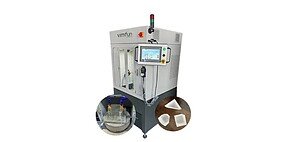
Nous avons recommandé le SHI 100-R pour ce travail de découpe de céramique pressée. Voici la correspondance spécifique des capacités :
Découpe de contour jusqu'à Ø650 mm. La fonction de contour du SHI 100-R programme le fil pour qu'il suive un trajet d'outil défini autour du périmètre de la pièce. Pour le cylindre de 355 mm nécessitant une réduction de 50 mm du diamètre extérieur, il s'agit d'une seule passe de contour programmée — pas de tour, pas de configuration séparée. Le fil retire de la matière le long du profil et laisse une surface extérieure géométriquement cohérente.
Avertissement : la découpe de contour sur un gros bloc cylindrique exige un bridage solide. La pièce doit être centrée avec précision avant le début de la passe de contour. Nous avons eu des travaux où un décalage de centre de 2 mm sur un cylindre de 300 mm produisait un diamètre extérieur final excentré de 2 mm — pas assez pour être visible à l'œil lors de la configuration, mais suffisant pour causer des problèmes lors de l'opération suivante. Vérification à l'aide d'un comparateur avant chaque passe de contour, à chaque fois.
Découpe par avance linéaire. Après le profilage, la machine passe en mode d'avance standard sur l'axe Y. Les coupes de face, les quatre tranches de disque et les tranches fines de 20 mm sur le demi-cylindre sont toutes effectuées comme des opérations d'avance linéaire. Pas de transfert de pièce, pas de re-bridage. Même table, même origine.
Découpe transversale indexée pour la production de carreaux. La découpe transversale du disque de 25 mm en carreaux de 150 mm × 150 mm est une opération en deux passes perpendiculaires. Le SHI 100-R gère cela directement sur la table de travail. Indexez la pièce de 90°, effectuez le second jeu de passes. Le résultat est des dimensions de carreaux cohérentes car l'erreur de position ne s'accumule pas entre les opérations.
Axe rotatif pour les coupes de barres. L'axe rotatif intégré permet les coupes de barres rétractables sans déplacer la pièce de la table. Faites pivoter le carreau vers la position angulaire suivante, effectuez la passe, répétez. Le tout référencé à partir du même point de fixation.
Le résultat total : profil du diamètre extérieur → coupe de face → découpes de disques → découpes transversales → coupes de barres — un opérateur, une machine, une configuration continue. Pour un bloc de 147 kg, ne pas le déplacer entre les machines signifie également ne pas le faire tomber, ne pas le re-serrer incorrectement, et ne pas passer 45 minutes à le ré-indiquer à chaque fois.
Sur la bissection du cylindre : Cette opération — fendre le cylindre de 355 mm dans le sens de la longueur en deux demi-cylindres — est une passe de contour le long de l'axe central. Le cylindre repose sur son extrémité, le fil suit un trajet rectiligne à travers la ligne médiane. La configuration est simple en principe, mais le cylindre doit être parfaitement de niveau avant d'être bloqué. Toute inclinaison le long de l'axe et le plan de bissection dérive — vos deux demi-cylindres auront des hauteurs différentes à une extrémité. Nous avons vu une inclinaison de 1,5° produire une différence de hauteur de 16 mm sur une longueur de cylindre de 600 mm. Vérifiez le niveau axial avec un niveau de précision ou un comparateur avant de serrer, pas après.
Quels paramètres fonctionnent pour la découpe de céramique telle que pressée ?
Comme ce matériau est à l'état de corps vert, son comportement de coupe se situe entre un composite céramique pressé et une pièce semi-frittée. Une dureté plus faible signifie plus de flexibilité dans la vitesse d'avance, mais “flexible” ne signifie pas “tout est permis” — surtout sur une passe de contour de 686 mm de diamètre extérieur où la déformation du fil est plus importante que sur une petite tranche plate.
Plages de paramètres de départ pour la découpe de céramique telle que pressée à cette échelle de bloc :
| Paramètre | Plage de départ recommandée |
|---|---|
| Diamètre du fil | 0,55 – 0,80 mm |
| Tension du fil | 130 – 170 N |
| Vitesse du fil | 35 – 55 m/s |
| Vitesse d'avance — Contour / Bissection | 5 – 8 mm/min |
| Vitesse d'avance — Tranches droites | 10 – 20 mm/min |
| Refroidissement | huile minérale blanche |
Quelques notes spécifiques issues du travail avec des matériaux similaires :
Séparez vos objectifs de vitesse d'avance par type d'opération. Les passes de contour et les coupes par bissection impliquent une géométrie de contact du fil en changement continu — la profondeur de coupe effective par unité de déplacement d'avance change à mesure que le fil se déplace autour de la courbe. Commencez prudemment à 5 mm/min et surveillez la déformation du fil côté sortie du contour. Les tranches de disque droites sont prévisibles et répétables ; une fois que vous avez confirmé la qualité de surface lors de la première passe, 15–18 mm/min est réalisable sur des tranches de 15–25 mm d'épaisseur.
La tension est plus importante que la vitesse du fil sur les coupes longues. Un fil fonctionnant à 130 N dans une demi-ronde de 305 mm développera une déformation visible à mi-chemin d'une coupe lente. Cette déformation se traduit par une face de coupe courbée — un écart mesurable par rapport à la planéité, ce qui affecte l'utilisation ultérieure des carreaux par le client. Faire fonctionner à 160–170 N maintient le fil plus droit sur toute la longueur de coupe. Vous sacrifiez une partie de la durée de vie du fil pour la cohérence dimensionnelle. Sur le matériau tel que pressé, ce compromis en vaut la peine.
L'huile minérale blanche surpasse le liquide de refroidissement à base d'eau ici. Le matériau tel qu'il est pressé génère des débris fins semblables à de la poudre — similaires à ce que vous voyez lors de la coupe de graphite isostatique, et non les plus gros copeaux que vous obtenez des céramiques denses frittées. Les liquides de refroidissement à base d'eau ont tendance à suspendre cette poudre et à la recirculer dans la zone de coupe. L'huile minérale l'évacue plus efficacement et laisse une surface de coupe plus sèche et plus propre. Filtrez le réservoir d'huile après chaque changement d'opération majeur.
Que vous dit réellement le test de coupe chronométrée ?
L'exigence du client d'enregistrer le temps de coupe sur chaque passe de 20 mm à travers le cylindre semi-circulaire est la donnée la plus utile que ce test produira.
Voici comment l'utiliser : mesurez le temps écoulé par passe, confirmez le taux d'avance à partir du contrôleur de la machine et calculez le taux d'enlèvement de matière effectif comme (épaisseur de passe × aire de la section transversale) ÷ temps. Faites cela sur 5 à 8 passes consécutives. Si le taux est constant, le fil fonctionne de manière stable. S'il se dégrade sensiblement à la 6ème ou 7ème passe, vous observez l'usure du fil en temps réel — utile pour estimer la fréquence de remplacement du fil en volume de production.
Pour coupe de céramique telle qu'elle est pressée par rapport aux équivalents entièrement frittés, l'avantage de débit est réel et significatif. D'après notre expérience avec des matériaux de corps verts similaires, le taux d'enlèvement effectif est environ 3 à 4 fois plus élevé qu'après frittage. Sur un lot de cylindres de 147 kg, cette différence de temps de cycle affecte directement l'utilisation de la machine et le coût par pièce.
Le test chronométré vous renseigne également sur la gestion du liquide de refroidissement. Si le temps de coupe par passe augmente plus rapidement que prévu à mesure que le réservoir se remplit de débris, votre filtration est sous-dimensionnée par rapport au taux d'enlèvement de matière. Traitez-le avant la production — ne supposez pas qu'il se corrigera de lui-même.
Là où cette approche a des limites
La coupe de céramique telle qu'elle est pressée avec une scie à fil diamanté sans fin gère bien cette tâche, mais il existe des conditions limites qu'il convient de préciser directement.
La coupe de contour sur le grand disque a une contrainte dimensionnelle. La capacité de coupe de contour du SHI 100-R est évaluée jusqu'à Ø650 mm. Le grand disque dans cette demande commence à 737 mm et doit atteindre 686 mm — ce qui est supérieur à l'enveloppe de contour nominale. Le cylindre à 355 mm est bien dans la plage. Pour le disque, l'étape de coupe extérieure doit être évaluée comme une approche de coupe indexée droite plutôt qu'une passe de contour complète, ou le travail doit être acheminé vers une machine plus grande. C'est quelque chose que nous examinons avec le client au cas par cas. Il est utile de s'en informer avant de finaliser votre plan de coupe.
Les pièces du corps vert sont fragiles sous serrage. Les blocs tels qu'ils sont pressés n'ont pas subi de densification par frittage. Une force de serrage élevée sur une zone de contact localisée peut provoquer une indentation de surface ou des dommages aux bords avant même que le fil ne touche la pièce. Utilisez des fixations à contact large — plaques de support pleine surface, pinces à surface souple — et maintenez la force de serrage au minimum nécessaire pour la stabilité. Nous avons vu des blocs tels qu'ils sont pressés marqués par un serrage standard à mâchoires dures avant même la première coupe.
La qualité de surface des pièces telles qu'elles sont pressées est bonne mais pas de qualité optique. La finition de surface obtenue sur les céramiques du corps vert convient à un meulage ultérieur ou à une utilisation pour assemblage fonctionnel. Elle ne convient pas aux applications de scellement optique ou de précision directes sans préparation de surface supplémentaire. Si l'utilisation finale du client nécessite un Ra < 0,4 μm directement à partir du fil, une étape de recoupe à l'état fritté ou de rodage sera nécessaire.
L'estimation de la durée de vie du fil nécessite des données de test réelles. L'avantage de débit 3 à 5 fois supérieur au matériau fritté signifie une consommation de fil par bloc plus faible — mais nous n'avons pas de données publiées sur la durée de vie du fil spécifiquement pour cette formulation de matériau. Estimez la durée de vie du fil de manière conservatrice jusqu'à ce que vous ayez 10 à 15 passages de données réelles provenant du test chronométré. Ne planifiez pas les commandes de fil de production en vous basant uniquement sur des matériaux comparables.
Prochaines étapes pratiques
Si votre processus implique la découpe de céramique telle que pressée à une échelle de bloc similaire, voici ce qu'il faut faire en séquence :
Confirmez d'abord l'enveloppe de contour. Avant toute chose, vérifiez que le diamètre extérieur de votre pièce la plus grande après ébavurage se situe dans le diamètre de coupe de contour nominal de la machine. Pour la SHI 100-R, c'est Ø650 mm. Les blocs plus grands que cela nécessitent une stratégie de bridage différente pour l'étape d'ébavurage du diamètre extérieur.
Intégrez le test chronométré dans votre série d'échantillons. Ne considérez pas le point de référence d'efficacité comme facultatif. Les données de 5 à 8 passages chronométrés consécutifs sur le demi-cercle vous en diront plus sur le débit réel que n'importe quelle fiche technique. Enregistrez le taux d'avance, le temps écoulé et la qualité de surface ensemble — vous avez besoin des trois pour faire une projection du volume de production.
Commencez les paramètres de manière conservatrice et augmentez progressivement. Contournez et bissectez à 5 mm/min, tranches droites à 10 mm/min. Confirmez la qualité de surface et la vérification dimensionnelle lors des deux premiers passages avant d'augmenter l'avance. Le matériau tel que pressé tolère une coupe plus agressive que le matériau fritté, mais il est plus rapide d'augmenter progressivement à partir d'une base de travail que de diagnostiquer des problèmes après avoir trop forcé lors du premier passage.
Utilisez de l'huile minérale blanche et vérifiez le réservoir du filtre après chaque changement d'opération. Le caractère des débris change entre les passages de contour et les tranches droites. L'état du filtre affecte les performances du liquide de refroidissement et, à terme, la qualité de coupe. Une vérification du réservoir de 10 minutes entre les opérations majeures est nettement moins coûteuse qu'une surface de coupe dégradée sur la cinquième tranche de disque.
Pour plus de données d'application réelles sur découpe au fil de céramiques industrielles et le traitement de grands blocs, la galerie de cas clients Vimfun contient des exemples supplémentaires sur les matériaux céramiques, graphites et composites.
Vous voulez les résultats réels de ce travail ? Nous avons effectué les découpes. Contactez-nous au levy@endlesswiresaw.com et demandez les données de test de découpe "as-pressed" — temps de cycle, mesures de qualité de surface et consommation de fil par bloc. Si vous avez un matériau similaire et que vous souhaitez effectuer votre propre test, nous pouvons également organiser cela.
Références techniques : ASTM C1161 — essai de résistance à la flexion des céramiques avancées à température ambiante ; ISO 14704 — céramiques fines, méthodologie d'essai des propriétés mécaniques.