Un client coupant des plaquettes de saphir nous a contactés deux mois après le début de la production pour une assistance technique : la durée de vie de son fil était passée de 150 heures, comme nous l'avions spécifié, à environ 80 heures. Nous avons demandé ses paramètres de coupe et ses registres de maintenance de la machine. Les paramètres étaient corrects. Les registres de la machine montraient qu'il avait sauté l'inspection programmée des roulements de poulie pendant 6 mois. Un roulement usé avait introduit une variation de tension dynamique de 8%, plus que suffisante pour réduire la durée de vie de la boucle de moitié. Le fil ne tombait pas en panne prématurément ; il était détruit prématurément par un problème de machine que personne n'avait détecté. Nous l'avons guidé à travers le processus de diagnostic, il a entretenu les roulements et la durée de vie de son fil est revenue aux spécifications.
C'est la raison pour laquelle les tests de fatigue des boucles sont importants. Sans courbes de durée de vie de service caractérisées dans des conditions contrôlées, il n'y a pas de référence pour diagnostiquer les défaillances sur le terrain. “Le fil a échoué à 80 heures” ne signifie rien si vous ne savez pas à quelle durée il aurait dû échouer dans des conditions de fonctionnement normales. Cet article explique comment nous testons les boucles de fil diamanté pour la fatigue et la durée de vie de service, ce que les données de test vous disent réellement, et comment utiliser l'évaluation de la durée de vie pour diagnostiquer les problèmes de performance dans le monde réel.
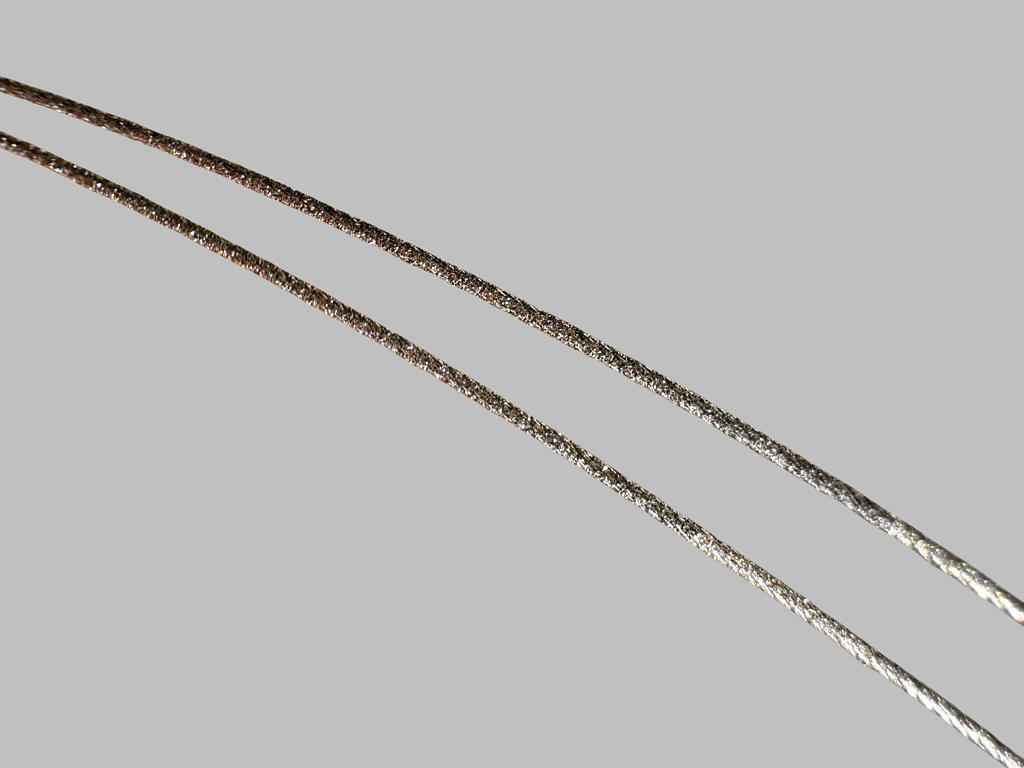
Pourquoi les tests de fatigue des boucles sont non négociables
Chaque boucle de fil diamanté fonctionne dans des conditions de fatigue à haute fréquence. À 50 m/s sur une machine avec une circonférence de boucle de 1 mètre, chaque section de fil passe sur chaque poulie de guidage environ 50 fois par seconde, soit 180 000 cycles de flexion par heure, par poulie. Sur une durée de vie de service de 150 heures, une seule section de fil subit des dizaines de millions de cycles de fatigue.
L'acier soumis à une flexion cyclique suit un comportement prévisible de courbe S-N : en dessous d'une certaine amplitude de contrainte (la limite de fatigue), le fil fonctionne théoriquement indéfiniment ; au-dessus, la durée de vie de service chute brutalement avec l'augmentation de la contrainte. Les procédures de test de fatigue des boucles caractérisent où votre fil spécifique se situe sur cette courbe, et comment les défauts de fabrication, la qualité des joints et les conditions de fonctionnement la déplacent vers le haut ou vers le bas.
Sans ces données, tout est une supposition. Un fournisseur affirmant “200 heures de vie” sur une fiche technique est dénué de sens sans :
- Les conditions de fonctionnement utilisées pour générer ce nombre
- La taille de l'échantillon et la variance des données de test
- La distribution des modes de défaillance (les défaillances étaient-elles regroupées, indiquant un défaut systématique ?)
- Le rayon de courbure utilisé dans les tests
Nous avons vu des fournisseurs annoncer des boucles “premium” basées sur des résultats optimaux d'un seul échantillon. Ce ne sont pas des données d'ingénierie, c'est du marketing. Une évaluation appropriée de la durée de vie nécessite une rigueur statistique.
À quoi ressemble un test de fatigue de boucle approprié ?
Les tests de fatigue pour boucles en fil diamanté empruntent leur méthodologie aux tests standard de matériaux métalliques, avec des adaptations pour la géométrie spécifique et les conditions de service. L'approche principale suit les principes établis dans ASTM E466 pour les essais de fatigue axiaux à amplitude constante contrôlée en force et ISO 1099 pour les essais de fatigue de matériaux métalliques à force axiale contrôlée.
Configuration du banc d'essai
Un banc d'essai de fatigue en boucle approprié reproduit les conditions de service réelles :
- Géométrie en boucle entièrement fermée (pas un échantillon de fil redressé)
- Poulies de guidage correspondant au rayon de courbure minimum de la machine du client cible
- Vitesse de fonctionnement à la vitesse de coupe réelle ou proche de celle-ci (40-85 m/s selon l'application)
- Tension représentative appliquée via un tendeur servo ou pneumatique
- Simulation optionnelle de charge de coupe via une force latérale contrôlée
Tester un échantillon de fil redressé dans une machine d'essai de fatigue par traction standard manque le mode de défaillance dominant — la fatigue par flexion au niveau des poulies de guidage. Une boucle qui réussit un test de fatigue par traction axiale peut toujours échouer prématurément en service si la contrainte de flexion au niveau des roues de guidage est sous-estimée.
Paramètres de mesure
Lors d'un test de fatigue en boucle, nous suivons :
| Paramètre | Ce que cela vous dit |
|---|---|
| Cycles jusqu'à la rupture | Métrique principale de la durée de vie en fatigue |
| Emplacement de la rupture | Détachement de joint, de fil central ou de placage |
| Variance de tension dynamique | Indique l'uniformité de la distribution de masse |
| Température au niveau des poulies de guidage | Détecte les anomalies de friction |
| Émission acoustique | Peut détecter les micro-fissures avant une défaillance visible |
L'emplacement de la défaillance est diagnostique. Les défaillances regroupées au niveau de la jonction indiquent des problèmes du côté de la jonction ; les défaillances réparties autour de la boucle indiquent des problèmes de fil central ou de placage ; les défaillances à des positions répétitives spécifiques indiquent des concentrations de contraintes dues à des défauts de fabrication.
Tailles d'échantillons statistiques
Les données de fatigue sur un seul échantillon sont inutiles. La durée de vie en fatigue du fil d'acier présente une dispersion inhérente — même des boucles de production parfaites montrent une distribution, pas un nombre unique. Une évaluation significative de la durée de vie nécessite :
- Minimum 6 échantillons par condition de test (idéalement 10-20)
- Moyenne, médiane et écart type rapportés
- Ajustement de la distribution de Weibull pour l'analyse du temps de défaillance
- Durée de vie caractéristique (valeurs B10 et B50) dans les conditions de fonctionnement cibles
La durée de vie B10 est le nombre de cycles auquel 10 % de la population a échoué. La B50 est la médiane. Un lot de boucles avec une B50 de 200 heures et une B10 de 180 heures est beaucoup plus prévisible qu'un lot avec une B50 de 200 heures et une B10 de 100 heures, même si la moyenne est la même. Les clients qui gèrent des lignes de production ont besoin du chiffre B10 pour la planification, pas du B50.
Comment la distribution de la tension affecte la durée de vie
La variable la plus importante affectant la durée de vie mesurée est la distribution de la tension autour de la boucle. Nous avons abordé ce sujet en détail dans notre analyse de la répartition des tensions et de la fatigue, mais les implications sur la durée de vie méritent d'être réitérées ici.
Une tension uniforme maintient chaque section du fil en fonctionnement en dessous de la limite de fatigue pour sa circonférence. Une tension non uniforme pousse des sections localisées au-dessus de la limite, et ces sections échouent en premier. Les données de test de fatigue de boucle avec une variance de tension dynamique de 21 % semblent radicalement différentes de la même boucle avec une variance de 81 % — nous constatons des différences de 2 à 3 fois dans le nombre moyen de cycles avant défaillance pour la même conception de fil.
C'est pourquoi nous testons chaque boucle sur un banc d'essai de tension dynamique avant son expédition. Une boucle avec un placage parfait, un joint parfait et un fil de noyau parfait peut toujours sous-performer en service si elle présente des problèmes de répartition de masse qui créent des impulsions de tension à chaque révolution. L'inspection statique les manque complètement.
L'implication pratique : si votre durée de vie réelle est plus courte que la durée de vie nominale du fournisseur, vérifiez d'abord la distribution de la tension. Des roulements de tendeur usés, un désalignement de poulie ou une dérive du système de tension peuvent introduire des variations qui raccourcissent systématiquement la durée de vie de la boucle sur chaque lot que vous installez. (Pour les diagnostics côté machine, voir notre guide de dépannage.)
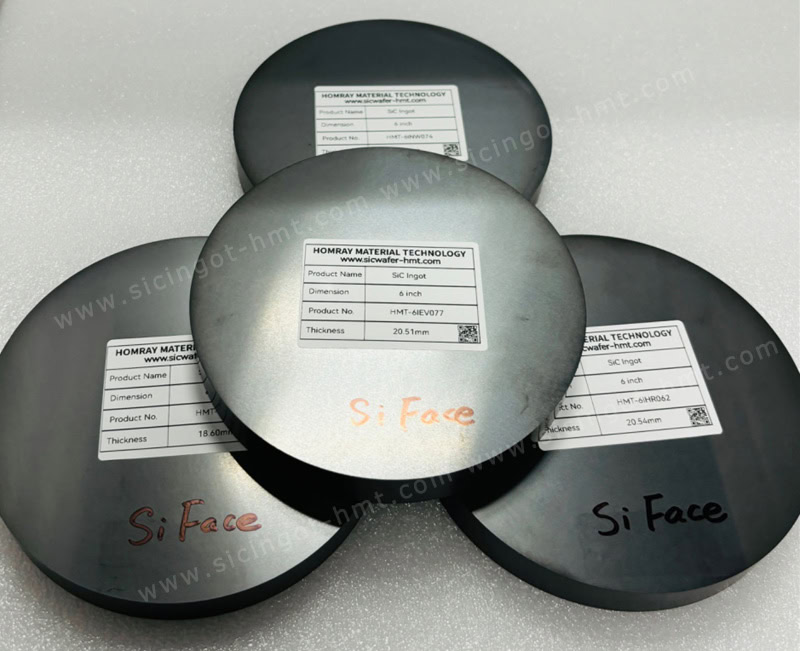
Ce à quoi ressemble la durée de vie par matériau
La durée de vie en fatigue n'est pas un nombre fixe — elle dépend de ce que vous coupez. La charge de coupe, la charge de copeaux et les conditions thermiques varient suffisamment entre les matériaux pour qu'une seule conception de boucle produise des durées de vie différentes selon les applications.
| Matériau | Durée de vie typique | Diamètre du fil | Notes |
|---|---|---|---|
| Graphite | ~7 jours (56 heures) | 0,6-1,0 mm | Matériau tolérant ; la coupe à sec réduit la fatigue thermique |
| Verre optique (BK7/K9) | ~5 jours (40 heures) | 0,35-0,6 mm | Le liquide de refroidissement à l'huile est essentiel ; priorité à la qualité de surface |
| Quartz | ~5 jours (40 heures) | 0,55-0,8 mm | Similaire au verre ; charge thermique modérée |
| Céramique avancée | 40-80 heures | 0,55-0,8 mm | Fritté plus dur sur le fil que l'état vert |
| Silicium plaquettes | 80-150 heures | 0,42-0,5 mm | Application mature ; courbes d'usure bien caractérisées |
| Saphir | 60-120 heures | 0,5-0,65 mm | Charge de coupe élevée par grain ; fil de première qualité requis |
Ces chiffres supposent des quarts de travail de 8 heures, un entretien adéquat de la machine et un fonctionnement dans les fenêtres de paramètres recommandées. Poussez n'importe quel paramètre au-delà de sa fenêtre et les chiffres diminuent en conséquence.
Pourquoi la durée de vie du fil varie autant entre des installations apparemment similaires
Deux clients coupant le même matériau sur le même modèle de machine peuvent constater des différences de 2x dans la durée de vie du fil. Les causes profondes, par ordre approximatif de fréquence :
Calendrier de maintenance des poulies. Les roues de guidage usées modifient la géométrie de flexion du fil et introduisent des variations de friction. Remplacez-les toutes les 1 500 à 2 000 heures.
Débit et concentration du liquide de refroidissement. Un débit insuffisant provoque des dommages thermiques. Une lubrification excessive provoque un glaçage (le fil glisse au lieu de couper, l'usure s'accélère).
Discipline du taux d'avance. Les opérateurs qui poussent les taux d'avance au-dessus de la fenêtre nominale réduisent la durée de vie du fil. Nous avons vu la durée de vie du fil chuter de 40 % pour un dépassement de taux d'avance de 10 %.
Dérive de calibration du tendeur. Les tendeurs non recalibrés dérivent de 5 à 15 N par an de fonctionnement. Une boucle fonctionnant 15 N en dessous de la tension optimale montre une durée de vie plus courte et un TTV pire.
Conditions de stockage. Les boucles stockées dans des environnements humides pendant plus de 6 mois présentent une dégradation mesurable du placage avant même leur installation. Stocker dans un emballage scellé à moins de 60 % d'humidité relative.
Comment nous effectuons l'évaluation de la durée de vie en production
Chaque lot de boucles subit des tests de fatigue abrégés avant l'expédition. Il ne s'agit pas d'un test de durée de vie complète (cela prendrait des semaines) — il s'agit d'un protocole accéléré conçu pour détecter les défauts systématiques avant que les boucles n'atteignent les clients.
Contrôle de tension dynamique (100 % des boucles)
Chaque boucle expédiée passe par un banc d'essai rotatif à vitesse de fonctionnement avec surveillance numérique de la tension. Toute boucle présentant une variance dynamique supérieure à 2 % est rejetée. Ce test unique détecte la plupart des problèmes de distribution de masse et d'uniformité des joints qui raccourciraient la durée de vie en service sur le terrain.
Échantillonnage accéléré de fatigue (par lot)
Pour chaque lot de production, nous prélevons 5 à 10 boucles pour des tests de fatigue accélérés à une charge de coupe élevée. Le test comprime ce qui représenterait normalement plus de 150 heures de service en environ 20 à 30 heures de fonctionnement continu. Les défaillances sont caractérisées par leur emplacement et leur mode ; si la distribution des défaillances s'écarte des données de référence, le lot est signalé pour une enquête approfondie.
C'est ainsi que nous avons détecté une dérive de processus il y a deux ans — les défaillances de fatigue accélérées se sont soudainement concentrées au niveau du joint au lieu de se répartir autour de la boucle. Le signal est apparu avant qu'un client ne se soit plaint. Nous l'avons attribué à un changement de fournisseur dans une matière première et l'avons corrigé avant d'expédier une seule boucle affectée.
Documentation et traçabilité des lots
Chaque boucle expédiée possède un identifiant de lot traçable vers :
- Les résultats des tests de fatigue accélérés pour son lot (cycles moyens avant défaillance, écart type)
- Les données de vérification de tension dynamique pour cette boucle spécifique
- Les lots de matières premières utilisés dans la fabrication
- Les données de test de traction des joints pour le lot
Lorsqu'un client signale une défaillance inattendue sur le terrain, nous récupérons les enregistrements en quelques minutes. Environ la moitié du temps, les données de test de fatigue montrent que le lot de boucles était dans les spécifications normales — ce qui oriente immédiatement l'enquête vers des problèmes côté machine. L'autre moitié du temps, nous trouvons quelque chose dans les données (variance de tension proche de la limite de 2 %, dispersion de fatigue supérieure à la moyenne) qui corrèle avec le schéma de défaillance sur le terrain. Dans un cas comme dans l'autre, nous disposons de données réelles sur lesquelles travailler au lieu de nous disputer pour savoir qui est responsable. (Pour l'approche complète de contrôle qualité de fabrication, voir notre processus de fabrication de boucles diamantées sans fin article.)

Interprétations courantes erronées des données de test de fatigue de boucle
Comprendre correctement les données de test, c'est la moitié du chemin. Voici quelques schémas que nos clients interprètent mal :
“La ” durée de vie moyenne » n'est pas ce sur quoi vous devriez baser votre production
La durée de vie moyenne vous indique ce qui est typique, mais la planification de la production nécessite la durée de vie B10 — le 10e centile. Si votre lot a une moyenne de 150 heures mais que le B10 est de 90 heures, vous devez planifier les changements de fil autour de 90 heures, pas de 150. Se fier à la moyenne entraîne des temps d'arrêt imprévus lorsque la queue des défaillances précoces frappe la production.
Le mode de défaillance est plus important que le temps de défaillance
Un lot qui échoue à 180 heures avec toutes les défaillances au niveau de la jonction est un problème de qualité différent de celui qui échoue à 180 heures avec des défaillances réparties autour de la boucle. Le premier cas suggère des problèmes systématiques de production de la jonction ; le second suggère une usure normale. Les traiter de manière identique conduit à des actions correctives erronées.
Les tests accélérés ne prédisent pas la durée de vie absolue sur le terrain
Les protocoles de fatigue accélérée compressent le temps en augmentant la charge. Ils sont excellents pour comparer les lots et détecter les dérives de processus, mais ils ne donnent pas de chiffres absolus de durée de vie pour les conditions sur le terrain. La durée de vie réelle sur le terrain nécessite soit des tests de durée complète (lents), soit une corrélation minutieuse entre les données de test accéléré et l'historique de service sur le terrain.
Les points de données uniques ne prouvent rien
“ Une de nos boucles de test a fonctionné 400 heures ” ne vous dit rien. La fatigue de l'acier présente suffisamment de dispersion intrinsèque pour que les enregistrements d'échantillons uniques soient dans la variance normale. Seules les distributions comptent.
Foire aux questions sur les tests de fatigue de boucle et la durée de vie
Combien de temps une boucle de fil diamanté devrait-elle durer en production ?
Cela dépend entièrement de ce que vous coupez, de vos paramètres de fonctionnement et de l'état de votre machine. Le tableau ci-dessus donne des plages typiques pour nos boucles fonctionnant sur des machines bien entretenues dans les fenêtres de paramètres recommandées. Si vous obtenez significativement moins, vérifiez les problèmes côté machine (usure de la poulie, calibration du tendeur, débit de liquide de refroidissement) avant de suspecter le fil. Si vous obtenez plus, vous utilisez probablement des paramètres conservateurs — peut-être trop conservateurs pour une productivité optimale.
Pourquoi ma durée de vie du fil varie-t-elle autant entre les lots du même fournisseur ?
La durée de vie en fatigue de l'acier présente une variance intrinsèque, même pour un fil parfaitement fabriqué. Un écart de 15 à 20 % en cycles avant défaillance est normal. Une variance au-delà suggère soit une dérive du processus de fabrication, soit un changement de vos conditions d'installation (pensez à la dérive du tendeur, à l'accumulation de l'usure de la poulie). Demandez les données de test de fatigue du lot à votre fournisseur — s'il ne peut pas les fournir, vous n'avez aucun moyen de savoir si la variance provient du fil ou de votre opération.
Puis-je prolonger la durée de vie du fil en le faisant fonctionner plus doucement ?
Dans certaines limites, oui. La durée de vie du fil suit une relation approximative de loi de puissance avec la charge de coupe : de petites réductions du débit d'alimentation ou de la tension produisent des gains disproportionnés en durée de vie. Mais il y a un seuil — en dessous de certains paramètres, la qualité de coupe se dégrade (le fil se polit au lieu de couper productivement), ce qui accélère en fait la perte de grains. Le point optimal se situe au milieu de la fenêtre de paramètres recommandée, pas à l'extrémité basse.
Quelle est la différence entre “ durée de vie du fil ” et “ durée de vie utile ” ?
La durée de vie du fil est le moment où le fil se casse physiquement. La durée de vie utile se termine plus tôt — lorsque la qualité de surface, le taux de coupe ou le TTV commencent à dériver hors des spécifications en raison de l'usure des grains, même si le fil ne s'est pas encore cassé. Pour les applications de précision, la durée de vie utile représente généralement 80 à 90 % de la durée de vie du fil. Pousser un fil jusqu'à la rupture physique plutôt que de le retirer à la fin de sa durée de vie utile entraîne des problèmes de qualité sur vos dernières coupes et risque d'endommager catastrophiquement la pièce si le fil casse en cours de coupe.
Consultez les résultats de nos tests de durabilité de boucle.
Boucle de fil diamanté connexe
Pour un aperçu général des produits et de l'ingénierie, consultez notre boucles en fil diamanté page de ressources.