
Diamond Wire Loop
Diamond Wire Loop for Industrial Cutting Processes
What Is Diamond Wire Loop?
A diamond wire loop refers to an endless diamond-coated wire formed into a continuous closed loop. Unlike open diamond wire, which requires clamping or anchoring at both ends, the loop configuration circulates continuously through a defined cutting path.
The closed-loop design eliminates start-stop transitions associated with wire reversal or re-threading. As a result, diamond wire loop systems are commonly used in cutting processes that demand stable feed rates, consistent kerf width, and predictable surface quality over extended operation cycles.
From a system perspective, the diamond wire loop functions as part of an integrated loop system that includes tension control units, guiding rollers, and cooling fluid delivery components.
Structural Design of Diamond Wire Loop
Closed-Loop Construction
The defining feature of a diamond wire loop is its endless structure. The wire is joined into a continuous loop using controlled joining techniques that maintain mechanical integrity and uniform diameter along the entire length. The absence of free ends reduces stress concentration points and improves overall operational stability.
In continuous cutting applications, this closed-loop construction supports consistent tension distribution, which is essential for minimizing wire vibration and maintaining straight cutting trajectories.
Wire Diameter and Diamond Configuration
Diamond wire loop systems are available in various wire diameter ranges to match different material hardness levels and cutting requirements. Wire diameter selection directly influences stiffness, cutting force tolerance, and achievable kerf width.
Diamond configuration, including spacing and distribution, plays a key role in cutting efficiency and debris removal. Proper bead spacing helps balance material removal rate and surface finish while reducing excessive kerf loss during prolonged cutting operations.
Diamond Wire Loops Models and Specifications
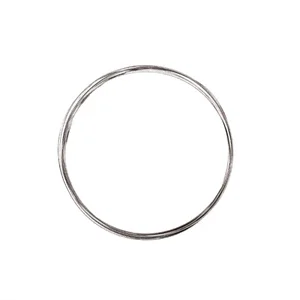
Electroplated Diamond Wire Loop
- Wire Diameter (mm): 0.3 – 3.5
- Wire Length (mm): 700 – 10000
THIN WIRE SAW
- Wire Diameter (mm): 0.65
- Wire Length (mm): 700 – 10000
Loop type Diamond Wire- 0.3 mm
- Wire Diameter (mm): 0.3
- Wire Length (mm): 700 – 10000
Looped Diamond Wire Saw
- Wire Diameter (mm): 0.3
- Wire Length (mm): 700 – 10000
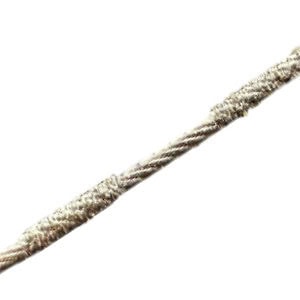
Segment Coated Cutting Wire Saw
- Wire Diameter (mm): 0.65-3.5 mm
- Wire Length (m): 1-10
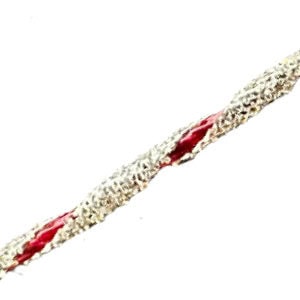
Thread Coated Cutting Wire Saw
- Wire Diameter (mm): 0.55-1.0 mm
- Wire Length (m): 1-10
How Diamond Wire Loop Works in Cutting Systems
Applications of Diamond Wire Loop
In a typical loop system, the diamond wire loop travels continuously around a series of guide wheels and drive pulleys. The workpiece is fed into the moving wire under controlled conditions, allowing diamond abrasives embedded on the wire surface to progressively remove material.
Tension Control and Stability
Tension control is one of the most critical parameters in diamond wire loop operation. Stable tension ensures that the wire maintains a consistent cutting path and prevents lateral deflection. Insufficient tension can lead to wire vibration, while excessive tension increases the risk of premature wire wear.
Advanced loop systems integrate active tension regulation mechanisms to compensate for thermal expansion, wear, and load variation during cutting.
Wire Vibration and Surface Quality
Wire vibration directly affects surface quality and dimensional accuracy. The continuous loop motion, combined with proper tension control and feed rate management, helps minimize vibration amplitude. This contributes to smoother cut surfaces and reduced subsurface damage, which is particularly important when processing brittle materials.
Hard and Brittle Materials
Diamond wire loop systems are widely used in the cutting of hard and brittle materials, including:
Silicon
Sapphire
Quartz
Advanced ceramics
These materials exhibit high hardness and low fracture toughness, requiring cutting tools that provide controlled material removal with minimal mechanical shock.
Typical Cutting Scenarios
Common industrial applications include:
Wafer slicing for semiconductor and optical components
Squaring and shaping of material blocks
Precision profiling of engineered ceramics
In these scenarios, the continuous operation of the diamond wire loop supports stable process conditions and repeatable cutting outcomes.
Performance Characteristics and Advantages
Diamond wire loop systems are selected based on their operational characteristics rather than promotional advantages. Key performance-related attributes include:
Continuous operation
The endless loop enables uninterrupted cutting cycles without frequent wire replacement or re-threading.Consistent kerf width
Stable wire motion and uniform abrasive distribution contribute to predictable kerf geometry.Reduced downtime
Loop-based systems minimize non-cutting time associated with wire handling.Compatibility with cooling fluid systems
Diamond wire loop cutting typically operates with integrated cooling fluid delivery to manage heat and flush debris from the cutting zone.
These characteristics make diamond wire loop suitable for production environments where process stability and repeatability are prioritized.
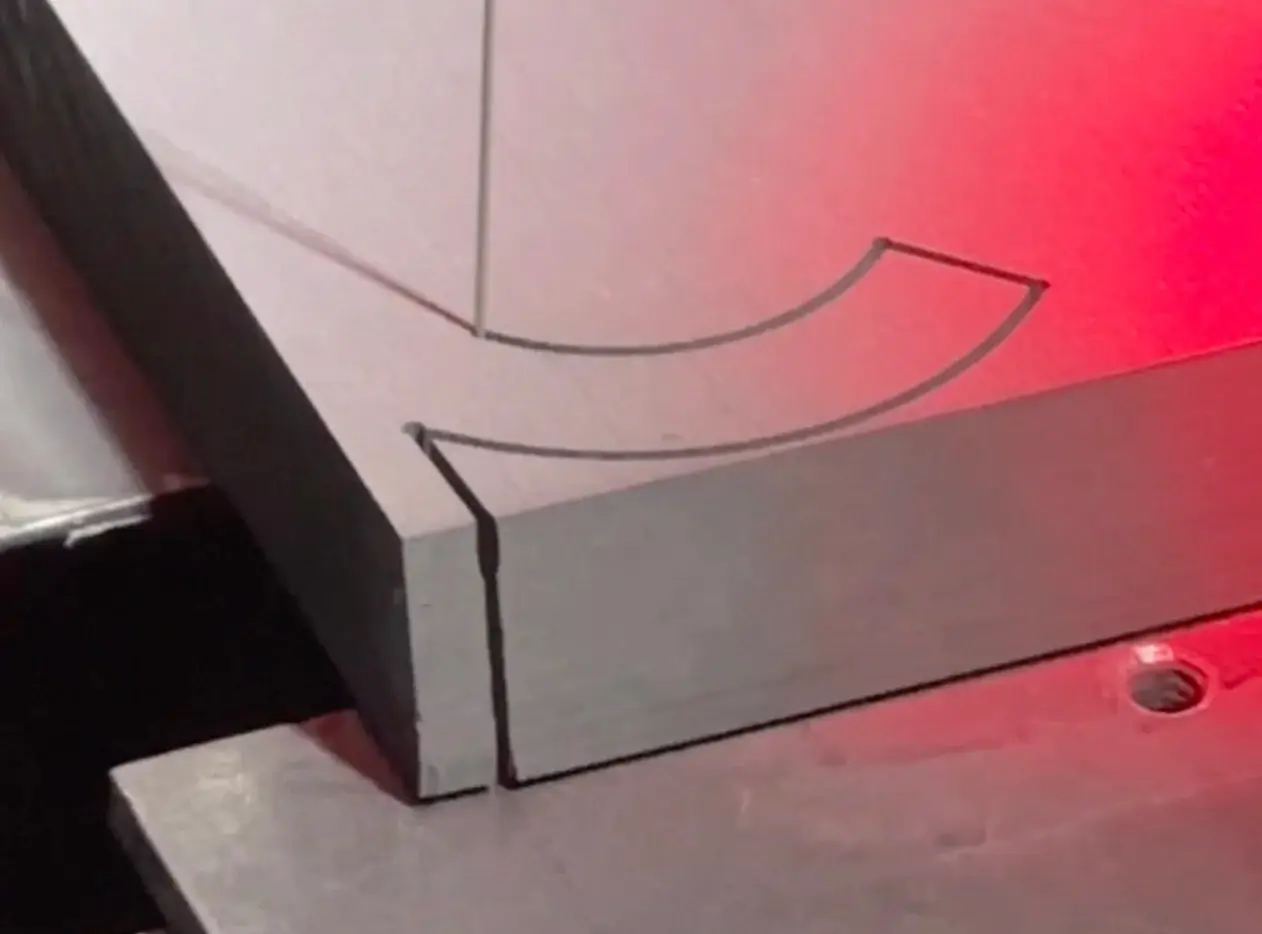
Videos of Different Types of Diamond Wire Loop
Playlist
0:16
0:16
0:16
Diamond Wire Loop vs Open Diamond Wire
| Comparison Aspect | Diamond Wire Loop | Open Diamond Wire |
|---|---|---|
| Structural form | Closed-loop (endless ring) | Open-ended, long continuous wire |
| Typical wire length | Usually less than 10 meters | Typically 200–3000 meters |
| Wire diameter range | Minimum around 0.25 mm | Can be as fine as 0.028 mm |
| Typical operating tension | Approximately 200–300 N | Approximately 30–50 N |
| Cutting system type | Loop wire saw systems | Multi-wire saw systems |
| Equipment structure | Relatively simple mechanical structure | Complex multi-wire arrangement |
| Equipment cost | Lower system cost | Higher system cost |
| Application flexibility | Suitable for complex cutting tasks, profiling, shaping | Mainly used for silicon wafer slicing |
| Primary industry usage | General hard and brittle material processing | Photovoltaic industry |
| Feed rate adaptability | Wide process window | Narrow, highly controlled process window |
Technical Interpretation
Diamond wire loop and open diamond wire differ fundamentally in structure, operating parameters, and application scope. The short, closed-loop configuration of diamond wire loop allows high operating tension and stable cutting behavior, making it suitable for complex geometries and diverse materials. Its relatively simple machine structure also contributes to lower system cost and easier maintenance.
Open diamond wire, by contrast, relies on extremely long wire lengths operated at low tension within multi-wire systems. This configuration enables ultra-thin wire diameters and high-throughput wafer slicing but limits its application primarily to photovoltaic silicon processing.
Selection Considerations for Diamond Wire Loop
Selecting a diamond wire loop requires evaluating system-level compatibility rather than focusing solely on the wire itself.
Key considerations include:
Machine compatibility
The loop length, diameter, and routing must match the cutting system design.Material properties
Hardness, brittleness, and thermal sensitivity of the material influence wire specification and operating parameters.Cooling and lubrication
Adequate cooling fluid delivery is essential for heat control and debris removal.Feed rate and process goals
Balancing feed rate with surface quality and tool life is critical for achieving stable cutting performance.
Proper matching of these factors helps ensure reliable operation and predictable cutting results.
You can contact us for a professional suggestion!
FAQs —Diamond Wires
What is the difference between diamond wire loop and diamond wire saw?
Diamond wire loop refers to the closed-loop cutting wire itself, while a diamond wire saw is the machine system that drives and controls the wire during cutting.
Is diamond wire loop suitable for brittle materials?
Yes. Diamond wire loop systems are commonly used for brittle materials due to their controlled cutting action and stable tension characteristics.
How does tension control affect diamond wire loop performance?
Tension control directly influences wire stability, vibration behavior, and surface quality. Proper tension reduces cutting deviation and improves consistency.
Can diamond wire loop be customized for different machines?
Diamond wire loop specifications can be adapted to match different machine configurations, provided system compatibility requirements are met.