
All You Need To Know
Diamond Wire Cutting
Cold and Precise Processing for Brittle Materials
What Is Diamond Wire Cutting?
Diamond wire cutting is an advanced, non-thermal process that uses a thin, diamond-coated wire to slice through hard and brittle materials with precision. It’s an abrasive cutting method, where the diamond grains on the wire remove material by grinding, rather than traditional cutting or shearing methods.
Unlike EDM (Electrical Discharge Machining), which relies on thermal energy to cut materials, diamond wire cutting avoids heat generation, making it ideal for materials that are sensitive to temperature changes, such as silicon, sapphire, and optical glass.
Diamond wire cutting solutions
Diamond wire cutting can be classified into two types of systems:
Spool Wire Cutting (Reel-type)
2, Single-wire systems can be used for specific or precision cuts but require more time to slice through materials.
Endless Wire Cutting (Loop-type)
2, Single-wire systems in loop-type saws are more compact and simpler to operate but are limited by the radius size of the cutting parts. They can handle inner cutouts with a radius greater than 1.5 mm but cannot cut tight curves or internal holes as easily as reel-type systems.
Key Differences: Reel vs Loop Wire Systems
| Feature | Reel (Spool) | Loop (Endless) |
|---|---|---|
| Wire Quantity | 50–200 wires running simultaneously | 3–5 wires for faster cutting speeds |
| Cutting Speed | Slower, suitable for bulk processing | Faster, ideal for precision and speed |
| Cutting Range | Can cut inner holes (small radius cuts) | Single-wire systems cut larger radius only |
| Equipment Cost | Generally more expensive and complex | Less expensive, easier to operate |
| Applications | High-volume material slicing (e.g., silicon wafers) | High-precision slicing (e.g., sapphire, optics) |
Process Principles of Diamond Wire Cutting
Diamond wire cutting works on the abrasive grinding principle, where the wire, coated with synthetic diamonds, moves at high speeds to remove material by grinding instead of shearing. This process results in high precision with minimal material deformation.
Key Mechanism of Diamond Wire Cutting
The process utilizes diamond abrasives on the wire to cut materials at high speed. The tension system maintains a consistent force on the wire, ensuring stable and precise cutting. The wire’s high linear speed (up to 80 m/s) is maintained for consistent material removal, allowing for ultra-fine surface finishes and narrow kerf widths (down to 0.35 mm).
Endless Loop System vs. Spool Wire System
Endless Loop System (Ring-type)
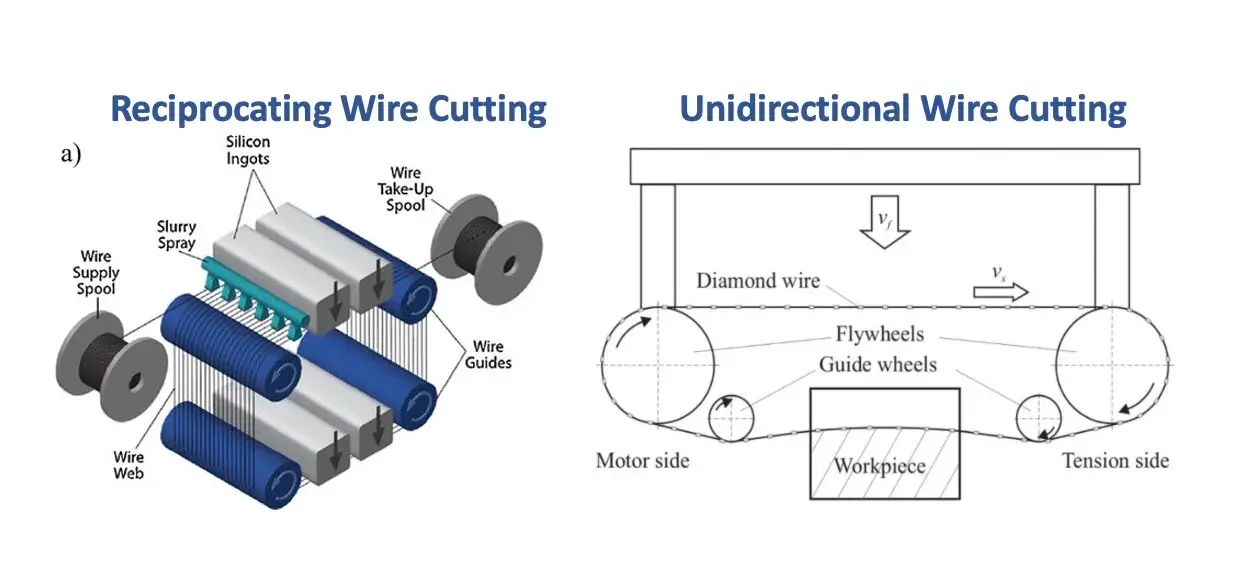
The endless (loop-type) wire saw system uses a closed loop of wire that continuously rotates in one direction. This system allows for higher linear speeds, which results in faster cutting and improved surface finish.
The key advantage of the loop system is that there is no reversal motion of the wire, unlike spool systems. This results in smoother cuts with less vibration, leading to higher cutting precision.
Because of the high linear speed and stable tension within the loop, cutting performance improves, making it ideal for high-value and precision materials like sapphire, optical glass, and advanced ceramics.
Spool Wire System (Reel-type)
Spool wire cutting systems involve wire wound on a spool that is uncoiled and moved back and forthacross the material (reciprocating motion). This results in lower wire speeds compared to loop-type systems.
The need for directional switching causes the cutting process to be slower, and the material is subject to more vibration, often resulting in cutting defects and visible direction marks on the surface.
Multiple wire systems (up to 200 wires at once) in spool wire saws allow for high-volume cutting but with less precision compared to loop systems.
Cutting Speed & Surface Finish: A Comparison
Loop-type (Endless Wire): Faster cutting speeds, smoother surface finishes, less material distortion, and reduced kerf loss. Ideal for precision and high-value materials where the surface finish is critical.
Reel-type (Spool Wire): Lower cutting speed due to the back-and-forth motion, which results in direction marks on the material. Though suitable for bulk cutting, it is less efficient in terms of cutting speed and surface quality.
Heat Generation in Diamond Wire Cutting
While diamond wire cutting is often referred to as a “cold cutting” process due to its low thermal impact, it’s important to note that some heat is still generated during the process. The small contact area between the wire and material minimizes frictional heat generation, but heat is still produced due to the high-speed interaction of the wire and material, especially under high feed rates or with tougher materials.
The key difference is that this heat is localized and minimized compared to traditional cutting methods like laser cuttingor band saws, which can generate more substantial thermal effects. In diamond wire cutting, this reduced heat prevents thermal damage, cracking, or delamination in sensitive materials such as sapphire and silicon.
Visualizing the Process of How Diamond Wire Cutting Work
Vimfun
Materials Compatible with Diamond Wire Cutting
Crystalline & Semiconductor Materials
Diamond wire cutting is the preferred method for slicing brittle crystalline materials due to its low thermal impact and extremely fine kerf.
Typical materials include:
Monocrystalline silicon (Si) — Semiconductor wafers, solar wafers
Germanium (Ge) — Infrared optics & sensors
Gallium arsenide (GaAs) — RF components, infrared lasers
Gallium nitride (GaN) — Power electronics, LED devices
Sapphire (Al₂O₃ single crystal) — LED substrates, optical windows
Quartz & fused silica — High-precision optics
Carbon-Based and Powder Metallurgy Materials
Diamond wire cutting is also widely used in carbon materials, graphite composites, and sintered metals, where precise geometry and smooth surfaces are required.
Typical materials:
High-density graphite blocks — Evaporation boats, EDM electrodes, vacuum furnace parts
Carbon-fiber reinforced materials (CFRP) — Aerospace components
Powder metallurgy parts — Hard sintered materials requiring post-processing
Tungsten carbide composites (WC-based PM) — Requires thin kerf and low residual stress
Industrial Technical Ceramics
Diamond wire cutting is commonly used to slice advanced engineering ceramics, which traditional saws cannot process without cracking.
Typical ceramic materials:
Alumina ceramics (Al₂O₃) — Wear-resistant and electrical-insulation parts
Zirconia ceramics (ZrO₂) — High-strength structural components
Silicon carbide (SiC) — Semiconductor process equipment, heat sinks
Silicon nitride (Si₃N₄) — Aerospace and ball bearing components
Lithium tantalate / niobate (LiTaO₃ / LiNbO₃) — Electro-optic crystals
Precious & High-Value Metals and Alloys
Although metals are not the primary focus, diamond wire cutting is used effectively for expensive or difficult-to-machine metals, especially when a narrow kerf or minimal material waste is required.
Examples include:
Nickel-based superalloys (e.g., Inconel)
Titanium and titanium alloys
Molybdenum plates
Precious metals (gold alloys, platinum alloys)
Rare-earth magnetic materials
Demonstration Videos of Diamond Wire Cutting
All Diamond Wire Saw Products
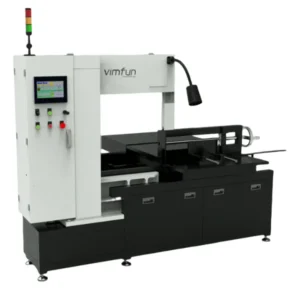
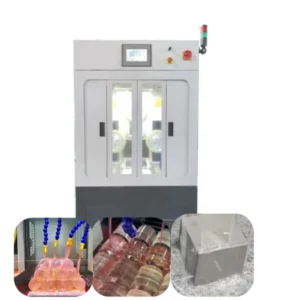
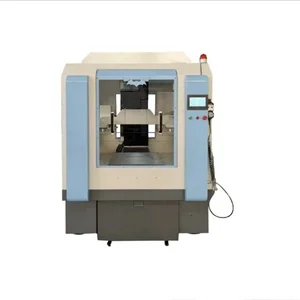
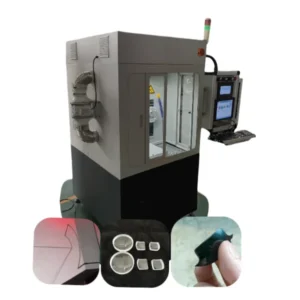
Endless diamond wire cutting machinery you can choose from

FAQ For Diamond Wire Cutting
Vimfun Diamond Wire Saw
ask us
anything
How do wire speed and tension affect surface quality?
*Higher wire speed improves grinding efficiency and reduces surface scratches, while stable tension (150–250 N) minimizes vibration. Low tension causes waviness and chatter marks; excessive tension increases risk of wire breakage.
Why is diamond wire cutting considered a low-stress and low-temperature process?
*The wire contacts the material along a narrow line, reducing frictional heat and limiting thermal expansion. Although some heat is generated, the temperature rise is minimal, preventing cracks or deformation in brittle materials such as sapphire or alumina.
what is your opening hours?
*Initial one-to-one consultation, Health & Fitness Assasments Bespoke training program planing, Custom Nutrition plan & recipes. Weekly Progress Reviews
What is the optimal wire speed for high-quality cutting?
*For most brittle crystalline materials, the optimal wire speed is 50–80 m/s. Higher speeds improve material removal efficiency but require stable tension and precise alignment of guide wheels.
What causes wire vibration, and how can it be avoided?
*Wire vibration is usually caused by incorrect tension, worn grooves, or improper wheel alignment. Maintaining stable tension, using intact guide grooves, and ensuring clean coolant flow significantly reduces vibration.
Why is diamond wire cutting preferred for high-value materials such as sapphire and semiconductor crystals?
*It offers:
Minimal subsurface damage
Low kerf loss (cost saving)
Smooth cutting surfaces
Consistent thickness across the entire cut
Cold and low-stress processing
This combination makes it ideal for expensive materials where yield and quality are critical.