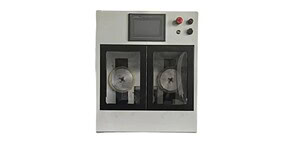
Wire tension calibration in diamond wire saw machines ensures that the actual mechanical load applied to the cutting wire matches the value set in the control system. If calibration is neglected, even small tension errors can cause wire bowing, thickness variation (TTV), surface waviness, or premature wire fatigue.
In high-precision cutting of silicon carbide (SiC), quartz, sapphire, and advanced ceramics, stable tension is not optional. It directly determines cutting stiffness and geometric consistency. This guide explains how to properly calibrate and monitor wire tension to maintain long-term process stability.
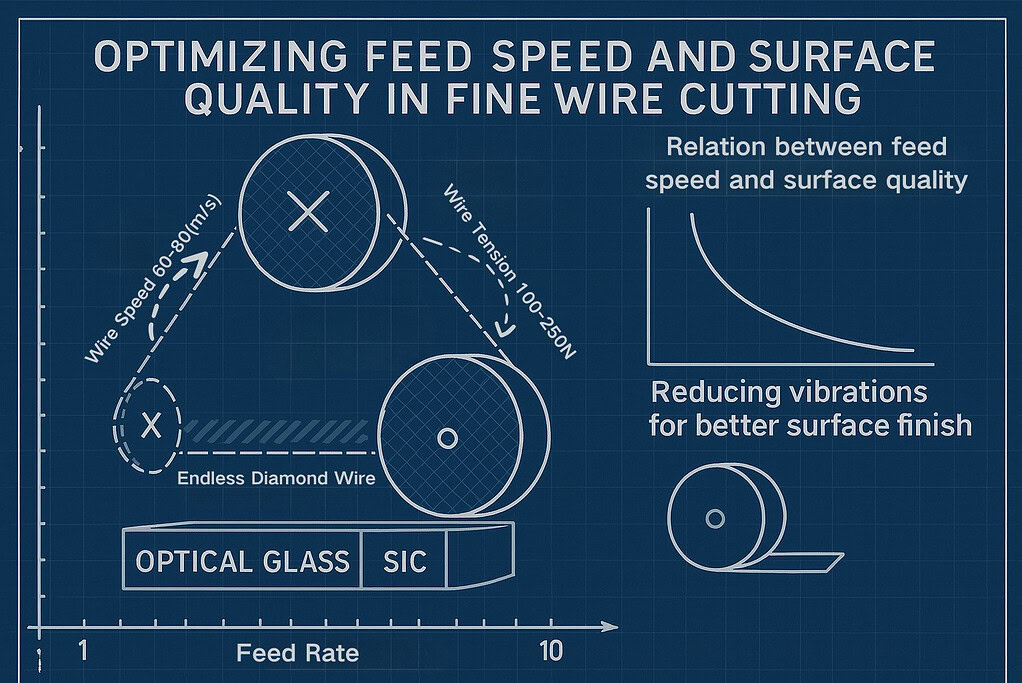
1. Why Wire Tension Calibration Is Necessary
A tension control system is not a “set once and forget” component. Over time, mechanical and electronic drift occurs.
Sensor Drift
Both pneumatic systems and electronic load cells experience zero-point shift after extended operation. High-speed endless systems and reciprocating systems both introduce mechanical fatigue into sensors and linkages.
If the sensor displays 25 N but the actual load is 22 N, the wire stiffness is already compromised.
Mechanical Hysteresis
Friction inside:
- Dancer arm pivot joints
- Pulley bearings
- Pneumatic cylinder seals
changes gradually with usage. These effects create discrepancies between measured and actual tension.
Without periodic wire tension calibration, displayed values may deviate several Newtons from reality.
Error Amplification During Cutting
A small tension deficit causes initial wire deflection when entering the workpiece. As cutting depth increases, this bowing effect amplifies. The result can be:
- Exit chipping
- Wedge-shaped cuts
- Excessive TTV
Stable tension is the foundation of the entire cutting process. (See also: Understanding the Tension Control System in Wire Saw Machines.)
2. Types of Tension Detection Systems
Before performing wire tension calibration, identify the measurement principle used by your machine.
Indirect Pneumatic Estimation
Tension is calculated from air pressure in the cylinder.
Advantages:
- Simple
- Cost-effective
Limitations:
- Ignores friction losses
- Accuracy typically ±2 N
Load Cell (Direct Measurement)
A load cell mounted under a tension pulley directly measures force using strain gauges.
Advantages:
- High accuracy (±0.1 N)
- Stable and repeatable
- Ideal for thin wire (≤0.20 mm)
This is the preferred system for high-value material slicing.
Displacement-Based Systems
Some systems monitor dancer arm position instead of direct force.
These are useful for dynamic compensation but rely heavily on stable pneumatic or spring preload. Absolute force accuracy depends on calibration quality.
3. Standard Wire Tension Calibration Procedure
Wire tension calibration should always follow a physical verification method.
Step 1: Static Zeroing
Remove the diamond wire. Ensure all pulleys rotate freely. Clean slurry and debris from grooves to eliminate extra mass that could affect readings.
Reset the tension display to zero.
Step 2: Apply Certified Standard Weights
Use calibrated weights suspended through the pulley system.
Example:
If target tension is 25 N:
T ≈ m × g
g = 9.81 m/s²
Required mass:
m ≈ 2.55 kg
Compare the displayed tension with the theoretical value.
Step 3: Adjust Calibration Parameters
Modify:
- Offset (zero correction)
- Gain (slope correction)
Ensure linear consistency across the full working range (e.g., 0–50 N).
After static calibration, verify tension stability at low rotational speed to confirm that bearing resistance does not introduce dynamic deviation.
4. Dynamic Monitoring During Production
Calibration is static. Cutting is dynamic.
Effective monitoring prevents wire failure before it occurs.
Tension Stability Window
During operation, tension fluctuation should remain within:
±5% of setpoint
Periodic sinusoidal oscillations often indicate:
- Main drive wheel eccentricity
- Guide pulley imbalance
These issues should be addressed before recalibrating.
High and Low Alarm Thresholds
The control system must include:
- Upper limit protection
- Lower limit protection
If tension drops more than 10 N instantaneously, emergency stop should trigger immediately to protect the workpiece.
Pre-Breakage Indicators
Before wire breakage, systems often show:
- Irregular tension spikes
- Increased fluctuation variance
- Short-duration drops followed by recovery
Monitoring standard deviation of tension data helps detect fatigue elongation or strand failure early.
5. Common Calibration Mistakes
Avoid these frequent errors during wire tension calibration:
Ignoring Thermal Equilibrium
Calibration should be performed after the machine reaches operating temperature. Both sensors and wire expand with heat.
Cold calibration may produce inaccurate results.
Overlooking Wire Diameter Differences
Different wire diameters sit differently in pulley grooves. Even slight changes in effective radius alter torque arm length, influencing measurement accuracy.
Recalibration is recommended when switching wire sizes.
Over-Smoothing Sensor Data
High-frequency vibration during cutting is normal. Excessive digital filtering reduces control responsiveness and may delay critical alarm triggers.
Engineering Conclusion
Wire tension calibration is essential for maintaining process stability in diamond wire saw machines. It ensures that the control system reflects the true mechanical state of the cutting wire.
For high-value materials such as SiC, sapphire, and quartz:
- Calibration intervals should not exceed 200 operational hours
- Operating tension stability should remain within ±5%
- Closed-loop monitoring is strongly recommended
When tension is properly calibrated, wire stiffness remains stable, bowing is minimized, and surface flatness improves. For more on the cutting process, see our guide on diamond wire cutting. Neglecting calibration increases fatigue stress and reduces wire life
For long-term reliability, wire tension calibration must be part of the routine maintenance program.
FAQ
1. Does static calibration account for pulley inertia?
No. Static calibration verifies force accuracy. Dynamic verification at low speed helps assess bearing resistance effects.
2. What if tension readings fluctuate excessively during calibration?
First inspect cable shielding and grounding to eliminate EMI. If hardware is stable, adjust digital filter constants carefully without compromising response time.
3. How can I confirm calibration improved cutting accuracy?
Cut a standardized test block using identical parameters. If surface flatness improves and bowing decreases, calibration was successful.