Introduction
Fine cutting wires are critical functional components in precision slicing systems used for hard and brittle materials such as sapphire, silicon carbide, advanced ceramics, optical glass, and high-purity quartz. Unlike conventional cutting tools, the performance of a fine cutting wire is not defined solely by its diameter or tensile strength, but by the uniformity, adhesion, and spatial distribution of abrasive particles along the wire surface.
In modern wire-based cutting processes, electroplating is the dominant method used to bond diamond abrasives onto a metallic core wire. The manufacturing and electroplating process directly determines cutting stability, kerf consistency, surface integrity, and long-term process repeatability. Understanding how fine cutting wires are manufactured—and how electroplated coatings are formed and controlled—is therefore essential for evaluating cutting performance at an engineering level.
This article examines the complete manufacturing and electroplating process of fine cutting wires, focusing on material selection, coating formation mechanisms, and process uniformity rather than operational usage.
Role of Electroplated Fine Cutting Wires in Precision Cutting
Fine cutting wires function as the primary cutting medium in wire-based slicing systems. Material removal occurs through controlled micro-fracture generated by diamond abrasives embedded in a metallic bonding layer. Unlike loose abrasive or slurry-based processes, electroplated wires provide a fixed abrasive geometry that remains stable throughout cutting.
From an engineering perspective, the advantages of electroplated fine cutting wires arise from:
- Stable abrasive protrusion height
- Strong mechanical anchoring of diamond particles
- Predictable abrasive spacing along the wire surface
- Minimal variation in cutting force along the cutting path
These characteristics depend almost entirely on how the wire is manufactured and how the electroplated coating is formed.The material composition and bonding behavior of these electroplated coatings are discussed in detail in our abrasive coating materials analysis.
Core Wire Selection and Preparation
The manufacturing process begins with the selection of the core wire. The core wire acts as the structural backbone of the cutting wire and must satisfy multiple mechanical and chemical requirements simultaneously.
Core Wire Material Considerations
Commonly used core materials include high-strength steel alloys and specialized stainless steels. Key properties considered during selection include:
- Tensile strength and fatigue resistance
- Elastic modulus and dimensional stability
- Surface compatibility with electroplated bonding layers
- Corrosion resistance during plating and operation
The surface condition of the core wire is particularly important. Even minor surface contamination or roughness inconsistencies can lead to non-uniform coating thickness and unstable abrasive distribution.
Surface Conditioning Before Plating
Before electroplating, the core wire undergoes a series of surface preparation steps, which typically include:
- Degreasing to remove oils and residues
- Chemical activation to promote bonding
- Controlled surface roughening to enhance mechanical anchoring
These steps ensure consistent electrochemical behavior during plating and improve coating adhesion along the entire wire length.
Electroplating Mechanism for Abrasive Bonding
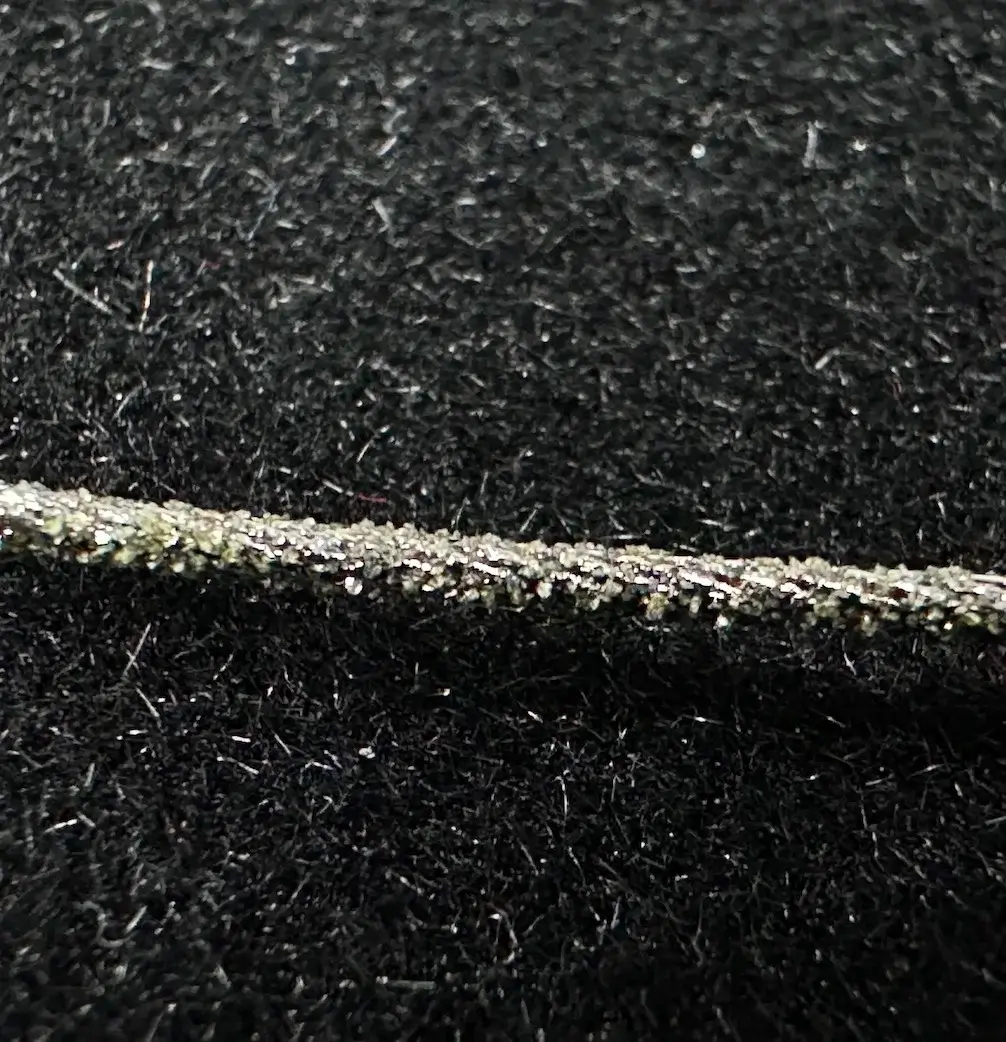
Electroplating is the defining step in the manufacturing of fine cutting wires. During this process, diamond abrasives are mechanically and metallurgically bonded to the wire surface through a deposited metal layer, most commonly nickel-based.
Electrochemical Deposition Principles
Electroplating relies on controlled metal ion reduction at the wire surface. As current passes through the plating bath:
- Metal ions are reduced and deposited onto the core wire
- Diamond particles are embedded within the growing metal layer
- The bonding layer encapsulates part of each abrasive particle
The resulting structure fixes the abrasive particles in place while allowing sufficient protrusion for effective cutting.
Control of Abrasive Distribution
Uniform abrasive distribution is a primary engineering objective. Distribution is influenced by:
- Plating current density
- Bath composition and agitation
- Relative motion between wire and plating solution
- Deposition rate and time control
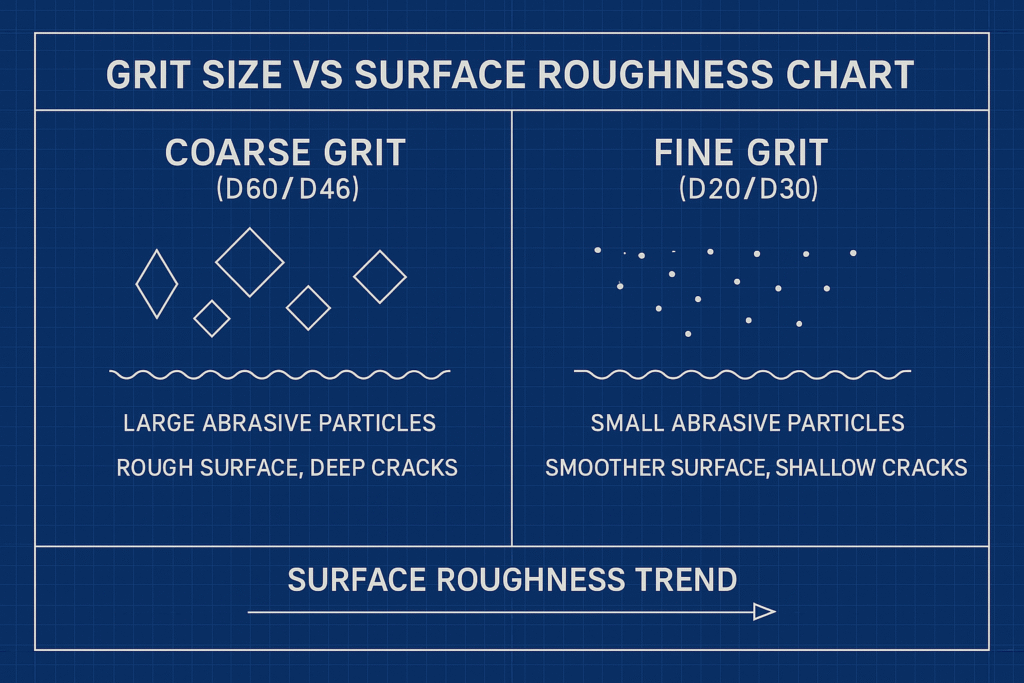
Careful control of these parameters ensures that abrasive particles are neither clustered nor sparsely distributed, both of which would negatively affect cutting stability.Beyond distribution uniformity, abrasive particle size plays a key role in determining cutting precision and surface integrity.
Coating Uniformity and Consistency Control
Uniform coating formation is essential for predictable cutting behavior. Variations in coating thickness or abrasive embedding depth lead to fluctuating cutting forces and uneven material removal.
Axial and Circumferential Uniformity
Engineering control focuses on achieving:
- Uniform coating thickness along the wire length
- Consistent abrasive exposure around the wire circumference
This is typically achieved through continuous wire motion, controlled electrical fields, and precise bath chemistry management.
Bonding Layer Integrity
The electroplated bonding layer must maintain sufficient hardness and adhesion without becoming brittle. A properly formed layer provides:
- Resistance to abrasive pull-out
- Stable abrasive support under cyclic cutting loads
- Controlled wear behavior during operation
These characteristics directly affect wire life and cutting repeatability.
Post-Plating Stabilization and Inspection
After electroplating, fine cutting wires undergo stabilization and inspection processes to verify structural and functional consistency.
Stabilization Treatments
Post-plating treatments may include:
- Controlled drying and stress relaxation
- Thermal stabilization to reduce internal stresses
- Surface cleaning to remove residual plating compounds
These steps improve coating durability and reduce the risk of early failure.
Quality Inspection Criteria
Engineering inspection typically focuses on:
- Visual and microscopic examination of abrasive distribution
- Verification of coating continuity
- Detection of surface defects or bonding inconsistencies
Rather than relying on nominal specifications alone, inspection emphasizes consistency across the entire wire length.
Comparison with Traditional Cutting Tool Manufacturing
Traditional cutting tools such as blades or abrasive wheels rely on bulk abrasive bonding within a solid matrix. In contrast, fine cutting wires use a surface-based abrasive architecture.
Key differences include:
| Aspect | Fine Cutting Wires | Traditional Cutting Tools |
|---|---|---|
| Abrasive location | Surface-embedded | Bulk-distributed |
| Bonding method | Electroplated metal | Resin or sintered matrix |
| Cutting force | Low and distributed | Higher localized force |
| Heat generation | Minimal | Higher |
| Kerf control | Highly consistent | Less predictable |
These structural differences are key factors engineers consider when selecting the appropriate cutting wire for specific materials and precision requirements.
Conclusion
The manufacturing and electroplating process of fine cutting wires defines their performance far more than external operating parameters alone. From core wire preparation to electrochemical abrasive bonding and coating uniformity control, each step contributes to cutting stability, surface quality, and process repeatability.
By engineering the electroplated structure rather than relying on bulk abrasive bonding, fine cutting wires provide a controlled and predictable cutting interface suitable for advanced materials and high-precision slicing environments. Understanding this manufacturing process allows engineers to evaluate wire quality based on structural principles rather than nominal specifications, leading to more reliable cutting outcomes in precision applications.For a complete overview of how these manufacturing principles are applied in industrial precision cutting systems, refer to our diamond wire technology page.
FAQ
Q1. Why is electroplating preferred for manufacturing fine cutting wires?
Electroplating allows abrasive particles to be mechanically and metallurgically anchored to the wire surface with high positional stability. Unlike resin or sintered bonding methods, electroplating forms a fixed abrasive structure where diamond particles maintain consistent protrusion height and spacing. This structure enables predictable cutting behavior, reduced vibration, and stable material removal, which are essential for precision cutting of brittle and hard materials.
Q2. How does coating uniformity influence cutting stability?
Uniform coating ensures that cutting forces are evenly distributed along the wire length and around its circumference. If coating thickness or abrasive embedding depth varies, localized stress concentrations may occur during cutting. These variations can lead to force fluctuation, vibration, and uneven surface quality. Maintaining coating uniformity is therefore a key factor in achieving stable and repeatable cutting performance.
Q3. What role does core wire preparation play in the electroplating process?
Core wire preparation directly affects coating adhesion and consistency. Surface contamination, oxide layers, or roughness variations can disrupt electrochemical deposition during plating. Proper degreasing, activation, and surface conditioning ensure uniform current distribution and stable bonding between the core wire and the electroplated layer, reducing the risk of coating defects or premature abrasive loss.
Q4. How does the electroplated bonding layer affect wire durability?
The bonding layer determines how effectively abrasive particles are retained under cyclic cutting loads. A well-controlled electroplated layer balances hardness and toughness, providing resistance to abrasive pull-out while avoiding excessive brittleness. This balance improves fatigue resistance and extends wire service life during continuous cutting operations.
Q5. Why is manufacturing consistency more important than nominal specifications?
Nominal specifications such as wire diameter or abrasive size describe average values but do not capture structural consistency along the entire wire length. Manufacturing consistency ensures that mechanical properties, abrasive distribution, and coating integrity remain stable throughout production. This consistency is critical for achieving repeatable cutting results, especially in high-precision and high-value material processing.