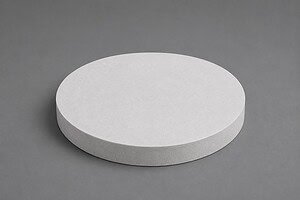
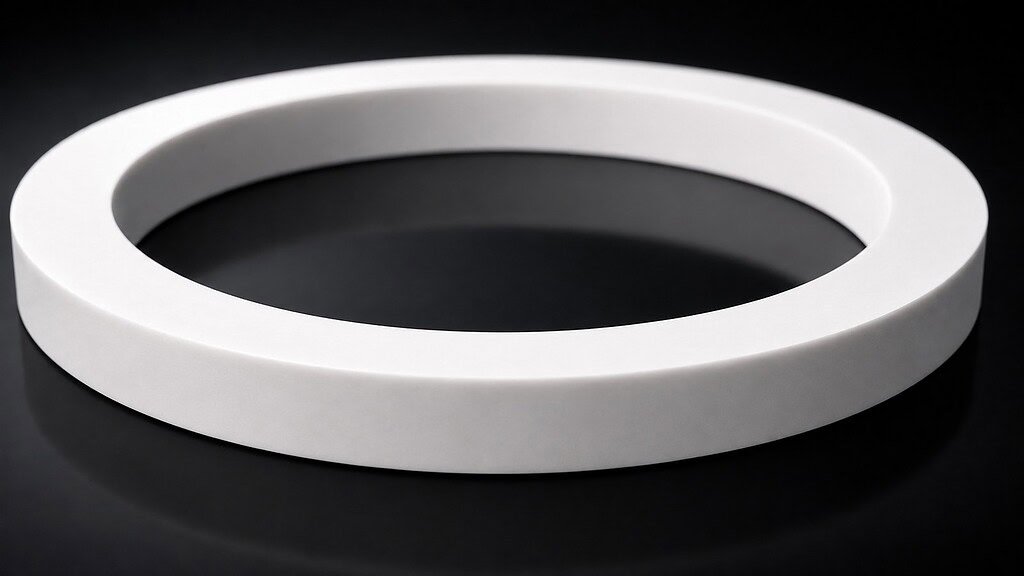
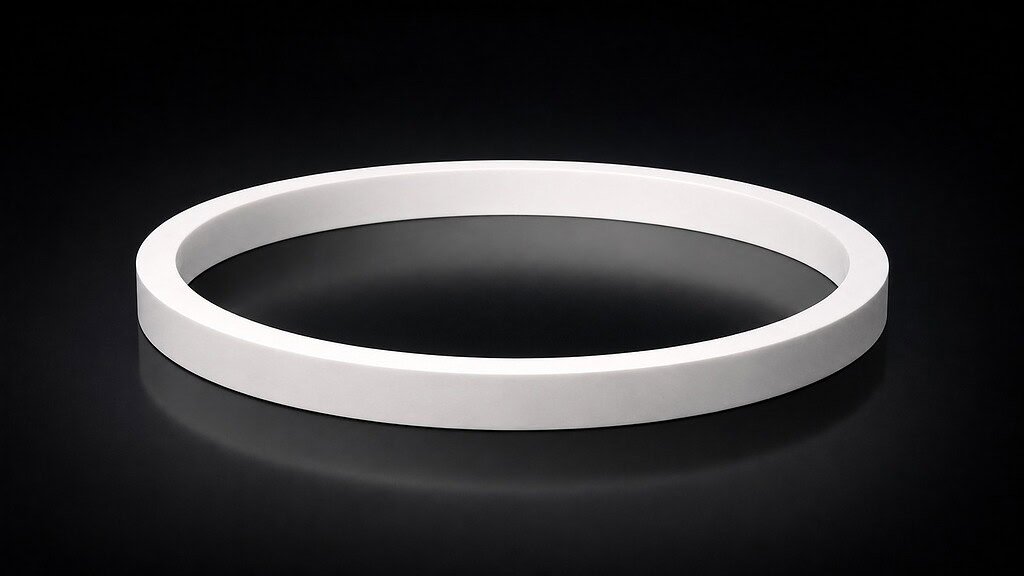
Алюминиево-керамическое кольцо диаметром 300 мм. Высокая чистота. Пробная резка для заказчика из Германии.
В таком масштабе задача заключается не только в соблюдении допуска — это предотвращение сколов по краям и микротрещин на большой, хрупкой заготовке, где последствия неудачной резки необратимы.
Применение: пробная резка, которая должна была получиться
Заказчику требовалось разрезать алюминиево-керамическое кольцо высокой чистоты для получения прецизионной заготовки для последующей механической обработки — шлифовки или прецизионной полировки до окончательных размеров и качества поверхности.
Размеры заготовки: наружный диаметр 300 мм, высота 10 мм. Материал: высокочистый Al₂O₃, марка, выбранная за ее стабильность размеров, термостойкость и химическую инертность. При такой чистоте и плотности спекания оксид алюминия является распространенным выбором для оборудования для производства полупроводников, прецизионных измерительных приспособлений и высокотемпературных промышленных компонентов — применений, где материал должен оставаться стабильным по размерам под нагрузкой и при термических циклах.
Это была пробная резка, а не производственный прогон. Различие имеет значение. Пробная резка — это способ, которым заказчик подтверждает, что его геометрия и материал могут быть обработаны с необходимой точностью, прежде чем приступать к серийному производству. Успешная пробная резка — чистые края, стабильные размеры, поверхности, не требующие доработки — приводит к заказу на производство. Деталь со сколами, микротрещинами или разбросом размеров — нет.
Для резка керамики при диаметре 300 мм выбор станка, спецификация проволоки и настройка процесса определяют результат еще до начала первой резки.
Задача: почему резка крупноформатных алюминиево-керамических колец — это другая проблема
Оксид алюминия занимает сложное положение в пространстве свойств материалов. Высокочистый Al₂O₃ обычно показывает твердость по Виккерсу 1500–1800 HV — сопоставимо с твердым сплавом, значительно превосходя большинство инструментальных сталей — в сочетании с вязкостью разрушения (K₁c) всего лишь 3–5 МПа·м⁰·⁵. Он чрезвычайно твердый, что означает, что он сопротивляется резке. Он также хрупкий, что означает, что когда напряжение концентрируется на краю или поверхностном разрыве, он разрушается, а не деформируется.
При небольших размерах заготовки эти свойства управляемы. Площадь контакта мала, силы ниже, а локальное скалывание обычно незначительно. При диаметре 300 мм, та же лежащая в основе физика масштабируется таким образом, что требует иного подхода к процессу.
Дуга контакта проволоки. Когда проволока проходит через кольцо диаметром 300 мм, она контактирует с материалом по значительно более длинной дуге, чем на заготовке диаметром 50 мм или 100 мм. Боковые силы резания накапливаются вдоль этого более длинного участка контакта. Проволока, которая удерживает свое положение на небольшой заготовке, будет изгибаться под действием суммарной боковой нагрузки на большой. На оксиде алюминия боковое отклонение проволоки на границе поверхности вызывает локальный всплеск силы — а всплески силы на хрупкой керамике являются причиной скалывания кромок.
Зоны входа и выхода. Точки, где проволока впервые контактирует с керамикой и последний раз выходит из нее, являются наиболее рискованными местами при любом разрезе. Геометрия контакта асимметрична в этих переходах, прикладывая концентрированную боковую силу к небольшой площади материала на краю. На кольце диаметром 300 мм площадь открытого края на входе и выходе больше в абсолютном выражении, и скалывание здесь может полностью дисквалифицировать деталь, если этот край должен быть чисто обработан на следующей операции.
Накопление тепла. Больше материала означает больше общего тепла, выделяемого во время резки. Теплопроводность оксида алюминия низкая — примерно 20–35 Вт/м·К для стандартных марок, что намного ниже 100+ Вт/м·К, типичных для металлов — поэтому тепло не рассеивается быстро из зоны резки. Тепловые градиенты по керамическому телу во время резки создают растягивающее напряжение в более холодных областях вдали от проволоки. В материале с низкой вязкостью растягивающее напряжение является причиной образования подповерхностных микротрещин. Они могут быть не видны на поверхности реза, но могут вызвать неожиданное разрушение во время последующего шлифования или отделки.
Вибрация на большей поверхности. Любая вибрация проволоки или конструкции станка, которая передается на заготовку, влияет на качество поверхности. На небольшой заготовке эффект ограничен. На кольце диаметром 300 мм периодическое изменение малой амплитуды — от резонанса проволоки, охоты сервопривода или неравномерности подшипников — может привести к несоответствию текстуры поверхности на большой площади. Последующие последствия зависят от конечной спецификации поверхности, но достичь равномерного качества поверхности на кольце диаметром 300 мм труднее, чем на кольце диаметром 50 мм.
Ни один из этих факторов не делает резку больших керамических колец из оксида алюминия непрактичной. Они делают настройку процесса более значимой, чем при работе в меньшем масштабе.
Подход: алмазно-проволочная пила SH60-R и проволока диаметром 0,65 мм
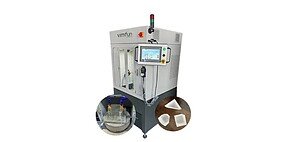
Для этого испытания VIMFUN выбрала алмазно-проволочную пилу SH60-R с гальванической алмазной проволокой диаметром 0,65 мм.
| Параметр | Значение |
|---|---|
| Материал заготовки | Высокочистый оксид алюминия (Al₂O₃) |
| Геометрия заготовки | Кольцо, Ø300 мм × высота 10 мм |
| Машина | Алмазно-проволочная пила VIMFUN SH60-R |
| Тип провода | Гальваническая алмазная проволока |
| Диаметр проволоки | 0,65 мм |
| Примерная ширина реза | ~0,75–0,80 мм |
| Параметры резки | Оптимизированы для Al₂O₃, крупноформатной геометрии |
| Охлаждающая жидкость | Water-based diamond wire cutting fluid |
| Результат | Smooth surfaces, clean edges, dimensional accuracy confirmed |
Wire diameter selection. This is where large-format cutting diverges from precision small-part cutting. A 0.25–0.35 mm wire produces a narrow kerf and minimal material loss — essential when working within a tight tolerance window on a small workpiece. On a 300 mm workpiece, a thin wire accumulates lateral deflection across the long contact arc. Wire bending stiffness scales with the fourth power of diameter: a 0.65 mm wire is approximately 28 times stiffer in bending than a 0.25 mm wire of the same material. Over a 300 mm contact arc, that rigidity difference is what keeps the wire on path — and staying on path is what keeps the ceramic edge intact.
The 0.65 mm wire produces a kerf of approximately 0.75–0.80 mm, wider than what a thinner wire would leave. In an application where material yield is the primary concern, that difference matters. Here, the priority was edge quality and microcrack prevention across the full 300 mm ring — and the 0.65 mm wire was the right specification for that requirement.
Why an endless loop format. Сайт бесконечная петля из алмазной проволоки presents the same diamond abrasive surface continuously throughout the cut. There is no degradation gradient from start to finish — the cutting force and surface condition stay stable from the moment the wire enters the ceramic to the moment it exits. On a large workpiece where the cut takes longer, consistency of wire condition matters more than on a quick small-part cut.
Parameter logic. The balance between скорость проволоки, натяжение и скорость подачи determines how forces distribute at the cutting interface. For large alumina, the objective is surface quality and edge integrity rather than throughput speed. Parameters were set conservatively, keeping lateral force at the contact zone below the threshold at which Al₂O₃ initiates edge chipping under the wire.
Entry and exit management. Feed rate was reduced at the entry and exit points of each pass — standard practice for brittle ceramics, but more critical at 300 mm diameter where the at-risk edge area is larger. Consistent wire tension through these transitions is maintained by the machine’s closed-loop tension control. A momentary tension drop at entry or exit — if the control system is slow to compensate — is when chipping typically occurs on large brittle ceramics.
Coolant coverage. At 300 mm diameter, the wire’s contact arc with the material is long. Coolant delivery has to track the wire into the full cut zone, not just reach the entry point. Insufficient coverage at mid-arc depth creates the thermal gradients that initiate subsurface microcracks in alumina.
The Result
The 300 mm alumina ceramic ring was successfully cut on the SH60-R.
Поверхности реза были гладкими, без видимых сколов в зонах входа или выхода. Края были чистыми. Точность размеров была подтверждена в пределах диапазона, требуемого для последующих операций механической обработки заказчика — заготовка была прямой отправной точкой для последующей шлифовки, а не деталью, требующей доработки перед следующим этапом процесса.
Для этого немецкого заказчика результат испытания был убедительным: процесс работает для данной геометрии и материала. Параметры, установленные во время испытания, становятся базовыми для масштабирования производства. Дополнительного цикла разработки нет — испытание и было циклом разработки.
Вот что должно дать испытание резки. Не просто разрезанная деталь, а подтвержденный процесс.
Большая и малая керамика из оксида алюминия: один и тот же материал, разные инженерные задачи
Более раннее исследование случая охватывает резку кольца из керамики на основе оксида алюминия с общим допуском на резку всего 0,4 мм — небольшая заготовка, где основной проблемой была точность размеров: управление бюджетом погрешностей при отклонении проволоки, тепловом расширении и колебаниях натяжения, все это конкурировало за чрезвычайно узкое окно допуска с проволокой диаметром 0,25 мм.
В случае с 300-миллиметровым изделием основной проблемой являются масштаб и хрупкость. Проволока диаметром 0,65 мм жертвует шириной реза ради боковой жесткости. Набор параметров оптимизирован для целостности края, а не для сжатия окна допуска. Та же категория материала. Другая геометрия, другой масштаб, другое решение.
Резка крупного кольца из керамики на основе оксида алюминия — это не просто увеличенная версия резки мелкой керамики. Режимы отказа отличаются, логика выбора проволоки отличается, и приоритеты управления процессом отличаются. Американское керамическое общество документирует, как свойства оксида алюминия — особенно ударная вязкость — варьируются в зависимости от марок и применений, поэтому подход к процессу должен соответствовать конкретному материалу и геометрии, а не общему шаблону резки керамики.
Что остается неизменным: основополагающий принцип, согласно которому процесс должен быть настроен для конкретной заготовки, а не адаптирован из другого применения постфактум.

Можем ли мы разрезать ваш керамический компонент?
SH60-R обрабатывает крупноформатные керамические заготовки, и наша разработка процесса начинается с фактической геометрии и материала заготовки — а не с шаблона, адаптированного из другого применения.
Если у вас есть компонент из оксида алюминия или передовой керамики, требующий прецизионной резки, свяжитесь с нами, указав:
- Материал и степень чистоты (Al₂O₃, Si₃N₄, ZrO₂, SiC или другой)
- Размеры заготовки (наружный диаметр, высота, толщина стенки или геометрия резки)
- Требования к качеству поверхности (целевое значение Ra или последующий процесс)
- Назначение производства (пробное, мелкосерийное или серийное)
Мы оценим, соответствует ли геометрия нашим возможностям резки, и определим соответствующую настройку процесса. Если пробная резка является правильным первым шагом, мы можем выполнить ее на SH60-R и вернуть деталь с данными размерной инспекции.
Подробнее о передовых применениях резки керамики: керамические режущие решения.