Introduction: The Physics of “Stop-and-Go” vs. Continuous Flow
In the precision cutting industry, the definition of “efficiency” is context-dependent. For the mass production of silicon wafers, efficiency is defined by volume—cutting 500 wafers simultaneously. This is the undisputed territory of Multi-wire Reciprocating Saws. However, as the industry pivots toward harder materials like Silicon Carbide (SiC) and demands faster R&D cycles, a new definition of efficiency has emerged: Single-Cut Velocity and Process Agility.
For applications such as Ingot Cropping, Laboratory Sampling, and Quality Control (QC), traditional reciprocating saws suffer from a fundamental mechanical limitation: Inertia. The physical necessity to constantly accelerate, decelerate, stop, and reverse direction creates a “duty cycle” filled with dead time and mechanical shock.
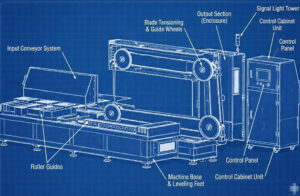
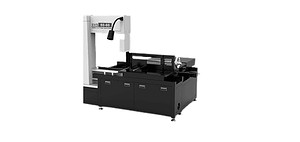
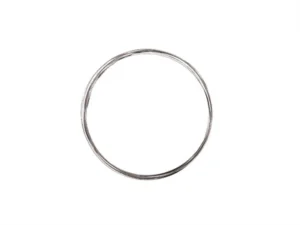
Vimfun’s Endless Loop Cutting technology represents a paradigm shift to “continuous manufacturing physics.” By utilizing a joint-less diamond wire loop running in a single direction, we unlock linear speeds of 60–80 m/s—velocities physically impossible for reciprocating systems. This comprehensive guide explores the tribology, mechanics, and thermodynamics behind why continuous motion is the superior engineering choice for high-speed precision material removal.

1. The Tribology of Speed: Why 80 m/s Changes the Cutting Regime
The primary engineering distinction between reciprocating and endless technologies is Linear Velocity. But why does speed matter so much for materials like SiC? We must look at the Tribology of Machining (the science of wear and friction).
The Archard Equation and Removal Rates
According to the fundamental principles of abrasive machining (often modeled by the Archard wear equation), the Material Removal Rate (MRR) is proportional to the sliding velocity (V) and the normal load (P):
MRR = k · P · V
Copy & paste:If you’re comparing slicing outcomes across materials and thickness ranges, see our overview of fine wire slicing applications.
- Reciprocating Limit (~25 m/s): In a multi-wire system, the heavy wire drum serves as a massive flywheel. To reverse this mass without snapping the fine wire web, acceleration must be limited. This caps the effective cutting speed at roughly 25 m/s.
- Endless Loop Advantage (60–80 m/s): Because the wire travels in a continuous loop, there is zero reversal inertia. The system can safely accelerate to speeds 3x to 4x higher than reciprocating saws. Mathematically, tripling the $V$ (Velocity) triples the theoretical material removal rate.
The Brittle-Ductile Transition
For ultra-hard ceramics like SiC or Sapphire, the cutting mechanism changes with speed.
- At Low Speeds: Diamond grits often “plough” through the material. This generates high friction and heat but removes little material, often leading to wire bowing.
- At High Speeds (High Kinetic Energy): The diamond particles impact the material with high kinetic energy. This promotes efficient brittle fracture at the microscopic level, clearing material cleanly rather than rubbing against it. This is why an endless wire can slice through a 6-inch SiC ingot in under 3 hours, a task that might take a single reciprocating wire over 10 hours.
2. Eliminating Reversal Inertia: Reducing Subsurface Damage (SSD)
Efficiency is not just about how fast you cut; it is about how much material you save. In semiconductor manufacturing, Subsurface Damage (SSD) is a critical metric. It refers to the depth of micro-cracks beneath the cut surface that must be ground away (lapped) in subsequent steps.
The Mechanics of Reversal Shock
In reciprocating sawing, the process involves a violent directional change hundreds of times per minute.
- The “Hammering” Effect: When the wire stops and reverses, the tension fluctuates dynamically. This causes the diamond wire to vibrate laterally, effectively “hammering” the crystal lattice.
- Dwell Marks: At the exact moment of reversal (zero velocity), the abrasive grits dwell on the workpiece surface under load. This creates a visible step or “dwell mark” and deepens micro-cracks.
The Continuous Motion Solution
Vimfun’s endless loop wire moves like a high-speed precision conveyor. The cutting force vector is constant and unidirectional.
- Minimizing SSD: Without the “stop-start” vibration, the wire cuts smoothly. Studies show that unidirectional cutting can reduce the Subsurface Damage layer depth by 30% to 50% compared to reciprocating processes.
- Economic Impact: A shallower SSD layer means less material needs to be removed during lapping. For expensive substrates like SiC, saving 50 microns of material per cut can translate to yielding extra wafers per ingot—a massive efficiency gain in total yield.
3. Thermodynamics: The Cooling Advantage
Heat is the enemy of diamond tools. Excessive heat causes diamond graphitization (wear) and induces thermal stress in the workpiece.
Boundary Layer Dynamics
The cooling efficiency of a wire saw depends on getting coolant into the narrow cut channel (kerf).
- Reciprocating Issue: When the wire reverses, it momentarily stops the flow of coolant drag. Furthermore, the reversing action can push hot swarf (debris) back into the cut zone, leading to “re-grinding” and heat buildup.
- Endless Loop Aerodynamics: At 80 m/s, the endless wire creates a powerful aerodynamic boundary layer. This layer acts as a pump, dragging coolant fluid deep into the cut slot. Additionally, the unidirectional motion continuously evacuates chips out of the cut zone, preventing heat accumulation. This allows for aggressive feed rates without burning the material.
4. Operational Agility: The “Setup Time” Factor
True factory efficiency is calculated by OEE (Overall Equipment Effectiveness), which includes setup and changeover time. This is where Endless Loop Cutting dominates in High-Mix, Low-Volume scenarios (such as R&D labs, QC sampling, or job shops).
The Multi-Wire Bottleneck
Replacing a wire web on a reciprocating multi-wire saw is a monumental engineering task.
- Time Cost: It involves threading kilometers of wire through hundreds of grooves. A wire change can take 4 to 8 hours.
- Material Waste: You cannot easily change wire types. If you are cutting soft Graphite today and need to cut hard SiC tomorrow, purging the machine is cost-prohibitive.
The Endless Loop Agility
- Instant Changeover: Replacing a Vimfun endless loop takes less than 5 minutes.
- Start-up: No complex warm-up or tension calibration is required.
- Scenario: An R&D engineer needs to inspect a crystal growth defect immediately. With an endless wire saw, they can mount the ingot, cut a slice in 20 minutes, and have data within the hour. On a multi-wire machine, they would have to wait for a full production batch to finish, potentially delaying feedback by days.
5. Tension Stability: Precision without Deviation
Unidirectional motion allows for a simplified, yet more precise tensioning system.
- Dynamic vs. Static Tension: Reciprocating saws rely on “dancer arms” to absorb the slack during reversal. However, due to mechanical hysteresis, tension often drops at the reversal point. A loose wire leads to “Wire Bow” and “Kerf Drift” (cutting crookedly).
- Pneumatic Precision: Vimfun endless saws utilize a Pneumatic Tensioning System. Because the wire velocity is constant, the tension load is static (e.g., locked at 25N). This rigidity prevents the wire from wandering, ensuring that the cropped face of an ingot is perfectly perpendicular to the axis ($\pm 0.05^{\circ}$), which significantly reduces material waste in subsequent wafering steps.
Summary: Matching Engineering to Application
To maximize efficiency, engineers must select the right tool for the specific process step. The table below outlines why Endless Loop technology is the “Special Forces” of the cutting world, compared to the “Infantry Army” of multi-wire saws.
| Engineering Parameter | Reciprocating Multi-Wire | Endless Loop Single Wire |
| Motion Physics | Bidirectional (Inertial Limits) | Unidirectional (High Kinetic Energy) |
| Max Linear Speed | ~ 25 m/s | 60 – 80 m/s |
| Tribology Mechanism | Low speed abrasion (Ploughing) | High speed fracture (Cutting) |
| Subsurface Damage (SSD) | Deeper (due to Reversal Shock) | Shallower (Smooth Motion) |
| Setup Agility | Low (Hours to change wire) | High (Minutes to change loop) |
| Best Application | Mass Production Wafering | Ingot Cropping, R&D, QC Sampling |
Conclusion
Endless Loop Cutting improves efficiency not by attempting to replace mass-production wafering systems, but by dominating the process steps where speed, surface integrity, and agility are paramount.
By leveraging the engineering principles of continuous motion, high tribological speeds, and stable thermodynamics, Vimfun provides a solution that cuts faster, cleaner, and more flexibly than traditional methods. For ingot cropping, material analysis, and precision sampling, the physics of the endless loop offers an undeniable advantage.
Ready to integrate agile cutting into your workflow? Explore our range of Industrial Diamond Wire Saws designed for high-velocity processing.