Optical Glass Cutting Solutions – 5 Cut Modes for Crack-Free BK7, K9 & Precision Optics
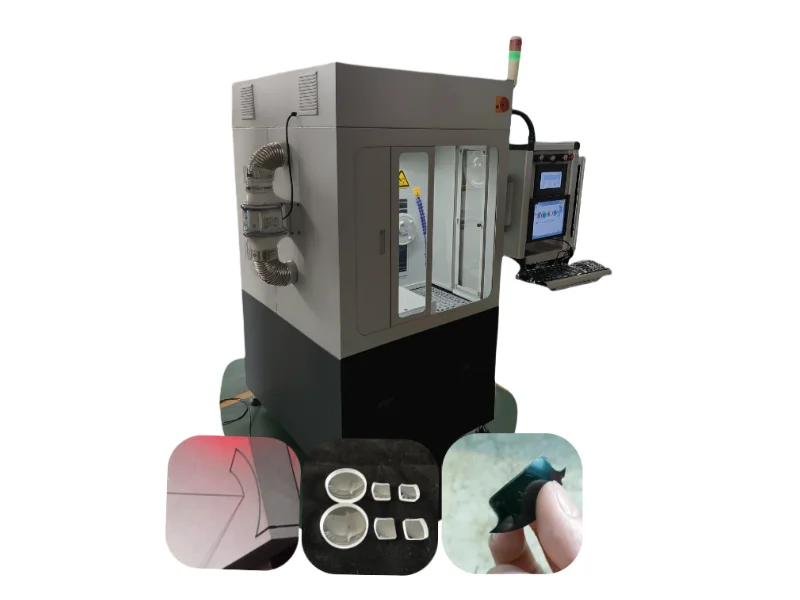
Our optical glass cutting solutions use a gantry-type endless diamond wire saw with white mineral oil cooling — delivering crack-free surfaces with no wire marks, stable edge quality, and multi-mode cutting for slices, prisms, cylinders, and complex optical geometries.
Why Optical Glass Cutting Solutions Require Precision Over Speed
Optical glass — including BK7, K9, N-BK7, and equivalent borosilicate crown glasses — is one of the most demanding materials in precision manufacturing. While its hardness is moderate (Mohs 5.5–6), its brittleness and zero tolerance for subsurface damage make it uniquely sensitive to any cutting method that introduces mechanical shock, vibration, or thermal gradients.
In optical applications, a single micro-crack or subsurface damage zone that extends below the surface becomes a defect that survives fine grinding and appears at the polished surface — failing the component outright. Effective optical glass cutting solutions must eliminate these failure modes from the first cut, reducing rework and scrap in high-value optical production.
- ✕Micro-cracks from blade impact — Diamond blade saws generate impact forces that create subsurface crack networks in optical glass, requiring extra grinding stock to remove before polishing
- ✕Edge chipping at higher feed rates — Optical glass is especially sensitive to chipping at cut edges; conventional saws at production-optimized speeds consistently produce chipped edges that must be chamfered
- ✕Limited geometry capability — Blade saws only cut straight lines; prisms, angled components, cylinders, and complex polygonal optical elements cannot be cut to final or near-final shape
- ✕Wire marks from reciprocating saws — Reversing wire saws leave characteristic directional marks from direction changes, increasing polishing time and surface inconsistency
Endless diamond wire saw technology eliminates all four failure modes — making it the most versatile and reliable optical glass cutting solutions for high-value optical production.
Optical Glass Cutting Solutions: Recommended Wire Saw Parameters
Optical glass requires fine wire diameter and conservative feed speed to maintain crack-free surfaces and stable edge quality. The parameters below are reference values validated across BK7, K9, fused silica, and optical ceramic applications at Vimfun.
Optical Glass (BK7 / K9 / Fused Silica / Equivalent) — Cutting Parameter Range
| メートル | Diamond Blade Saw | 往復ワイヤーソー | ★ エンドレスワイヤーソー(Vimfun) |
|---|---|---|---|
| 表面仕上げ | Blade arc marks | Wire reversal marks | ✔ No wire marks — uniform finish |
| Subsurface damage | Moderate — impact cracks | 中程度 | ✔ Minimal — low-force abrasion |
| Edge chipping | Common at feed speed | 中程度 | ✔ Chip-free with proper params |
| Prism / angled cuts | ✕ Not possible | ✕ ストレートのみ | ✔ 5 cut modes including prism |
| Thin slice capability | Limited by disc flex | 中程度 | ✔ Down to 0.1mm slices |
| 切り込み幅 | 1.5 – 3.0 mm | 0.6 – 1.5 mm | ✔ 0.4 – 0.65 mm |
| 電線の寿命 | 該当なし | Short — reversal wear | ✔ 3–5 days (8h/day) for K9 |
5 Cutting Modes — One Machine Handles Every Optical Glass Geometry
The biggest advantage of Vimfun's optical glass cutting solutions over conventional methods is geometry flexibility. The same machine that slices standard rectangular blanks can also cut prisms, cylinders, and custom polygonal shapes — eliminating the need for multiple cutting tools in an optical workshop.
スライス
Straight cross-sections from blanks, rods, or blocks to specified thickness.
Rotary Cut
The workpiece rotates to a specific angle between cuts, enabling multi-sided polygon prisms and faceted optical components in a single setup.
Taper Cut
A dedicated tilt axis tilts the workpiece to a set angle, allowing the wire to cut tapered or wedge-shaped optical components with precise taper angles.
スイングカット
Controlled wire oscillation for specific surface texture requirements.
Contour Cut
Polygons, octagons, and irregular shapes cut from optical glass blanks.
Crack-Free Surface
Unidirectional wire motion eliminates reversal marks. Cut surfaces show no wire marks and no visible micro-cracks — directly reducing grinding allowance before polishing.
Fine Wire for Thin Slices
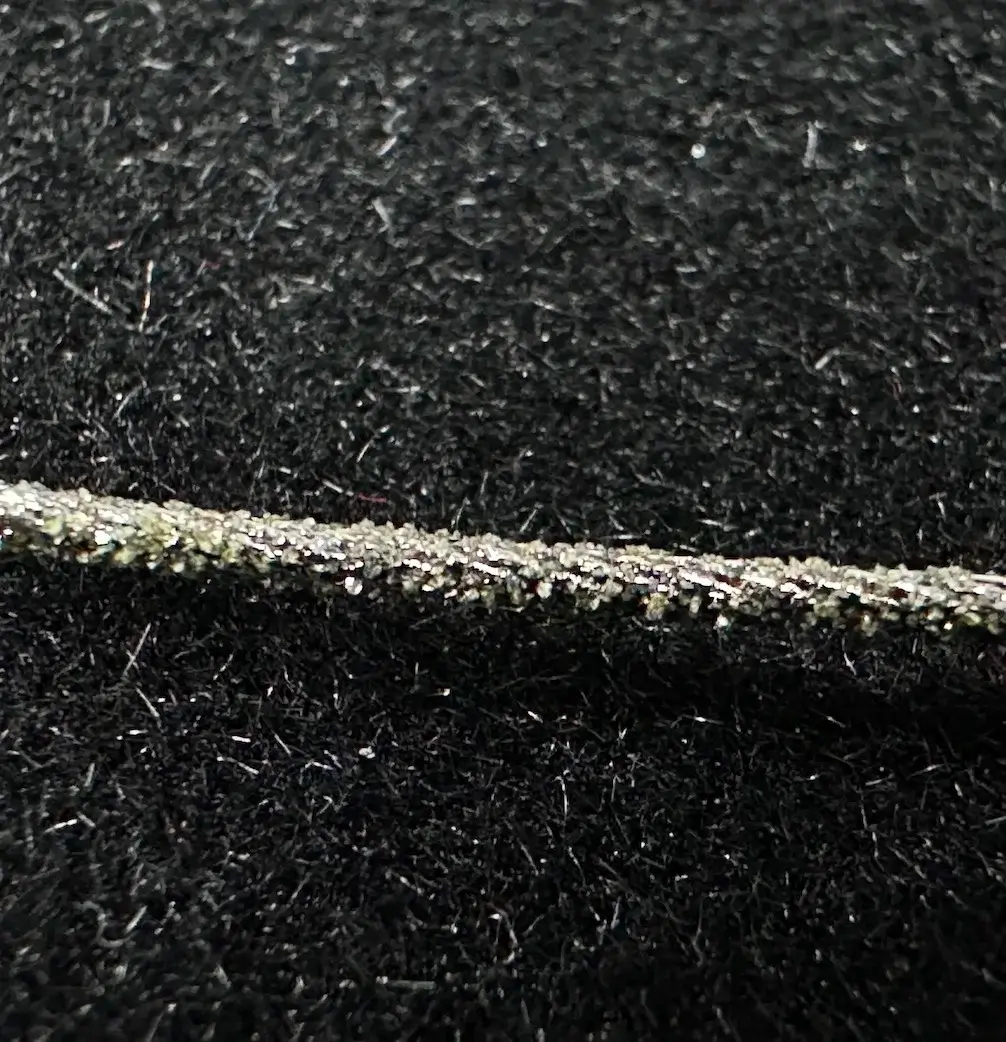
0.35mm wire diameter minimizes lateral force on thin optical slices, enabling clean cuts at 0.1mm slice thickness without fracture. Thinner wire also preserves more material from expensive glass blanks.
Long Wire Lifespan
One diamond wire loop typically lasts 3–5 days at 8 hours/day cutting K9 glass. For less demanding glass grades, wire life extends further — lowering consumable cost per part.
Consistent Accuracy
Servo-controlled Y axis with automatic tension control maintains ±0.03mm accuracy across long batch runs. Mechanical origin reset restores accuracy after extended operation.
Batch Slicing
Set slice thickness, total count, and start the machine — automatic feed and repeat until the batch is complete. No repositioning required between slices.
Post-Processing
White mineral oil cooling prevents thermal stress fractures that add grinding work. The crack-free cut surface directly reduces grinding stock before polishing, improving yield and throughput.

Watch: Optical Glass Cutting with Endless Diamond Wire
This video demonstrates Vimfun's optical glass cutting solution in production. The gantry-type wire saw's unidirectional motion — combined with white mineral oil cooling — produces crack-free surfaces with no wire marks. Automatic batch slicing runs unattended once parameters are set.
- Gantry structure provides rigid support for precise optical glass slicing
- White mineral oil cooling prevents micro-cracks from thermal gradients
- No reversal marks — unidirectional wire produces consistent crack-free finish
- Prism and contour cut modes eliminate need for secondary shaping operations
- Automatic tensioning and servo feed maintain accuracy through entire batch
3 Application Areas Where Our Optical Glass Cutting Solutions Deliver Results
Optical glass is the foundation material for lenses, prisms, windows, and filters across industries from defense and aerospace to consumer optics and medical imaging. Vimfun's optical glass cutting solutions serve each segment with machine configurations matched to the geometry and surface quality requirements of each application.
Lens Blanks, Windows & Filter Substrates
BK7 and N-BK7 are the standard materials for precision optical lenses, windows, and filter substrates in scientific instruments, industrial machine vision, and defense systems. Blanks must be sliced to precise thickness with minimal subsurface damage to reduce grinding and polishing time.
Vimfun's SGI-20 and SG-20 produce crack-free slices from BK7 blocks with no wire marks — directly reducing grinding allowance before polishing. The fine 0.35–0.42mm wire diameter minimizes lateral cutting force, preserving surface and subsurface integrity in high-cost optical glass blanks.
View optical glass cutting machines →
Prism Bars, Polygons & Angled Optical Components
Prisms, beam splitters, and polygon mirrors require precise angular cuts from optical glass blanks. Conventional blade saws cannot produce these angled geometries directly, requiring additional lapping and grinding stages that introduce risk of fracture and add cost.
Vimfun's SGR series machines coordinate the Z and Y axes to cut prism profiles, quadrilaterals, octagons, and other irregular polygons directly from the glass blank in a single setup. The same machine handles prism cutting, tilt cutting, and contour cutting — eliminating secondary shaping operations entirely for many optical glass cutting applications.
View SGR prism cutting machines →
Medical Imaging Optics, Microscope Components & Lab Instruments
Medical imaging systems, microscope objectives, and scientific instruments demand optical glass components with tight dimensional tolerances and zero surface defects. Subsurface cracks that survive into polished surfaces scatter light and degrade image quality in these demanding applications.
The low cutting force and oil-cooled approach of Vimfun's optical glass cutting solutions minimizes subsurface damage depth — preserving the optical homogeneity of the glass throughout the component. Batch slicing with automatic feed produces consistent slice thickness across entire production runs, reducing inspection and rework costs for medical-grade optical components.
Explore medical optics cutting →3 Gantry Wire Saw Models for Every Optical Glass Cutting Application
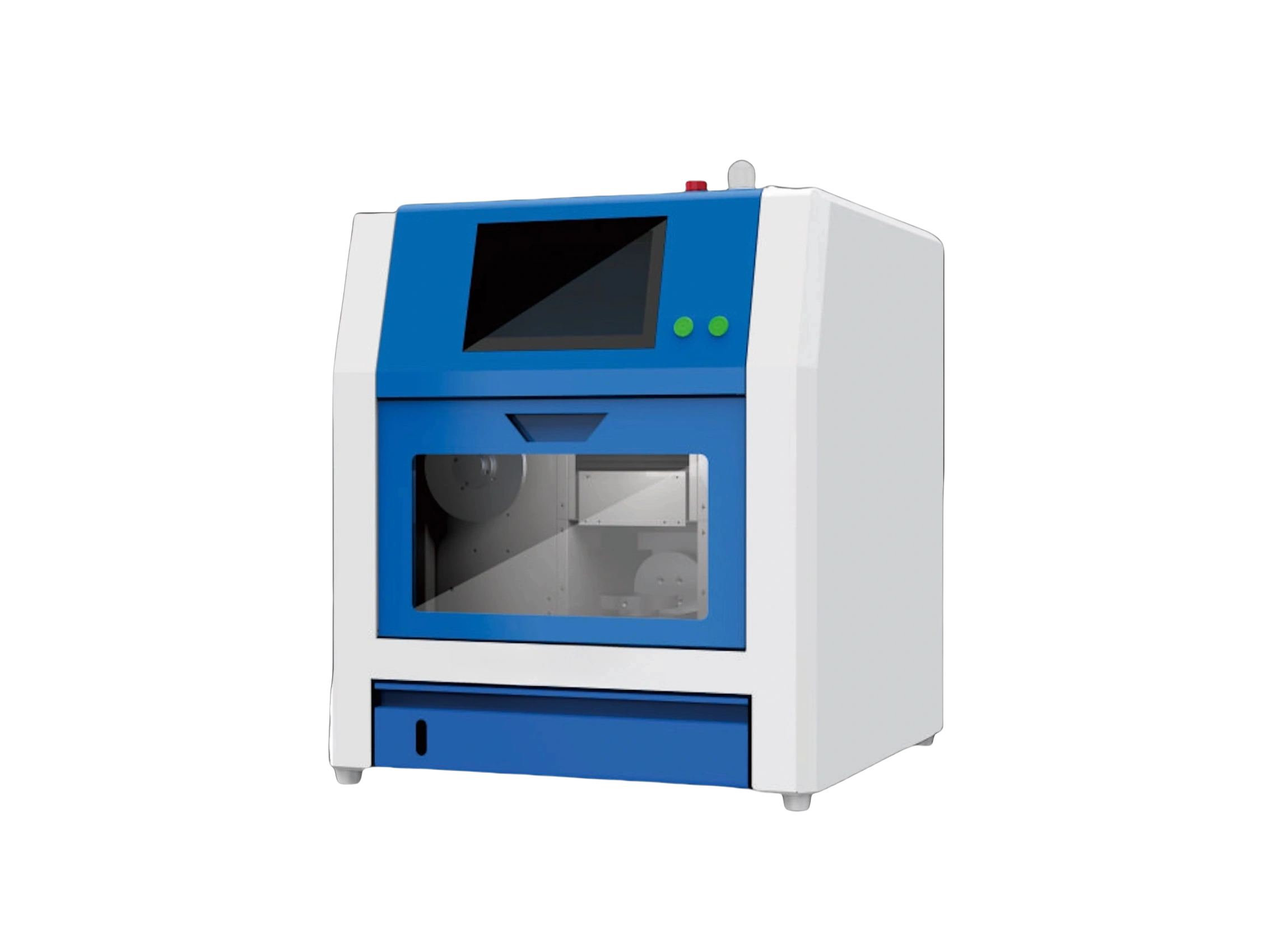
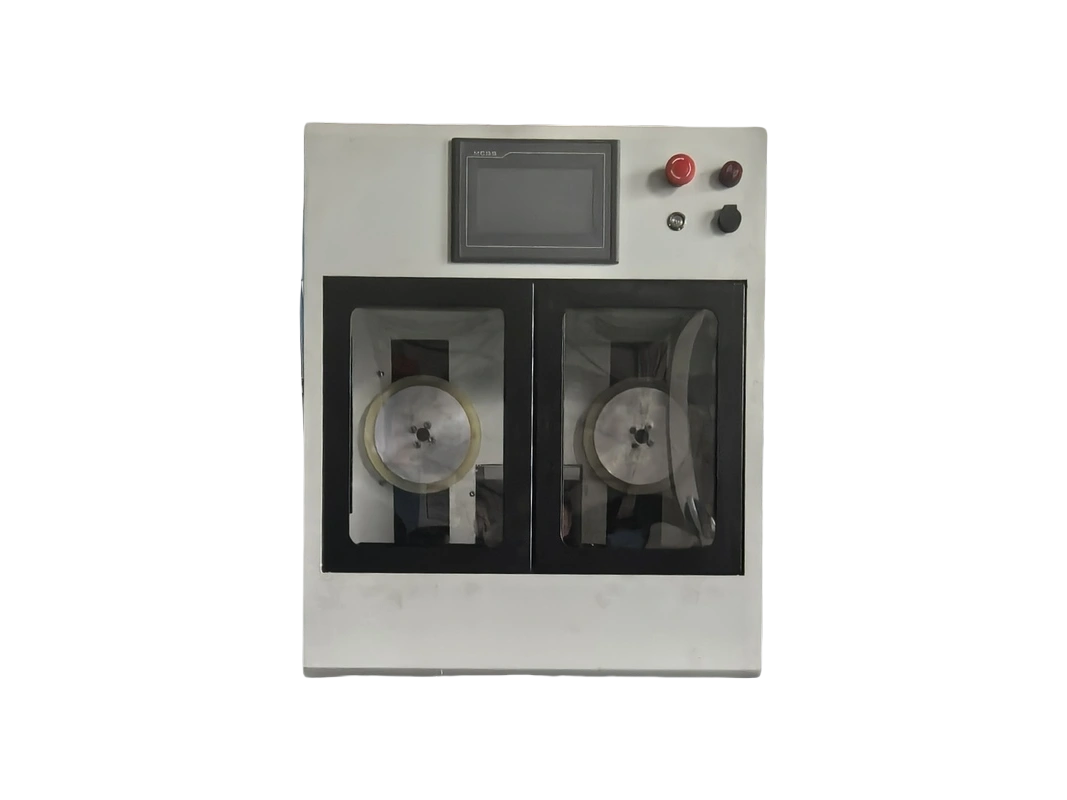
All Vimfun optical glass cutting machines use a gantry structure with fine wire diameter and servo tension control — matched to optical glass's surface quality requirements. Machine selection is determined by required cut functions: standard slicing (SG-20), prism and polygon cutting (SGR-20), or integrated oil mist recovery for clean-room adjacent environments (SGI-20). All three machines are part of Vimfun's complete optical glass cutting solutions lineup.
- 軸設定2-axis (Y + Z)
- Cut modesSlicing, rotary cut
- ワイヤーの直径0.35 – 0.6 mm
- ワイヤースピード最大80m/s
- 最適Standard optical glass slicing
- 軸設定3-axis (Y + Z + R)
- Cut modesSlicing, rotary, prism, contour, tilt
- ワイヤーの直径0.35 – 0.6 mm
- ワイヤースピード最大80m/s
- 最適Prisms, polygons, complex shapes
- 軸設定2 or 3-axis
- Cut modesSlicing, rotary, prism, contour, tilt
- ワイヤーの直径0.35 – 0.6 mm
- Special featureIntegrated oil mist recovery
- 最適Clean environments, full enclosure
Need a custom optical glass cutting solution for non-standard geometries or larger blanks? カスタムエンジニアリングコンサルティングを依頼する →
Optical Glass Cutting Samples from Vimfun's Free Test Cut Service
The best proof of any optical glass cutting solutions is the cut surface itself. Send your BK7, K9, or fused silica sample to Vimfun and receive cut samples with a full surface quality and dimensional accuracy report — at no cost.
No wire marks — ready for polishing
Angular precision from SGR-20
Free Optical Glass Test Cut Service
Send your optical glass sample — BK7 blanks, K9 rods, fused silica windows, or any optical glass component — to Vimfun. Our engineers perform a test cut and provide a full report on surface finish, edge quality, kerf width, and dimensional accuracy, with a machine recommendation for your application.
Common Questions About Optical Glass Cutting Solutions
Endless diamond wire saw is the most effective optical glass cutting solution for BK7, K9, and equivalent optical glass materials. The gantry-type SG and SGR series machines deliver crack-free surfaces with no wire marks, stable edge quality, and multi-mode cutting including slicing, prism cutting, rotary cutting, and contour cutting. The combination of fine wire diameter (0.35–0.6mm) and white mineral oil cooling minimizes subsurface damage and eliminates the micro-cracks that add grinding time before polishing.
Feed speed for optical glass cutting is 2–10 mm/min. High-value optical glass such as BK7 and K9 benefits from the lower end of the range (2–4 mm/min) to maintain crack-free surfaces. For standard-grade optical glass with less stringent surface quality requirements, higher feed speeds within the range can be used. White mineral oil is the standard coolant — it prevents thermal stress cracking while maintaining a clean cutting environment. Our engineers optimize feed speed during the free test cut service for your specific glass grade and geometry.
Yes — this is one of the key advantages of Vimfun's optical glass cutting solutions. The SGR-20 machine coordinates the Z and Y axes to produce prism profiles, tilt cuts, and custom polygon shapes directly from optical glass blanks. The machine can cut prism bars, quadrilaterals, octagons, and irregular polygons in a single setup. This capability eliminates secondary lapping and shaping operations for many prism and polygon optical components, reducing total manufacturing time and fracture risk.
Optical glass cut with an endless diamond wire saw shows no wire marks and no visible micro-cracks. Edge quality is stable and post-processing workload is significantly reduced compared to conventional blade cutting. The cut surface shows a uniform abrasive texture — free of the directional marks left by reciprocating wire saws. This consistent, mark-free result is one of the defining advantages of Vimfun's optical glass cutting solutions over conventional methods. For precision optical applications, the surface is ready for fine grinding or direct polishing depending on tolerance requirements.
For thin optical glass slices (≤0.1mm), a finer wire diameter of 0.35–0.42mm is recommended to minimize lateral cutting force and reduce kerf width. Thinner wire reduces the risk of fracture in thin slices and preserves more material from expensive optical glass blanks. For standard-thickness optical glass cutting, a 0.5–0.6mm wire provides better durability and longer service life. If you are uncertain, our free test cut service will identify the optimal wire diameter for your specific glass type and slice thickness.
For K9 glass cutting at standard operating parameters, a single diamond wire loop typically lasts 3–5 days under an 8-hour daily schedule. Wire lifespan varies based on glass hardness, workpiece cross-section, wire tension, and cutting speed. Some customers choose to replace the wire once sharpness begins to decline rather than waiting for wire break — this ensures consistent surface quality throughout the batch. Each guide wheel contains multiple grooves; when one groove wears, you switch to the next groove, giving guide wheels a lifespan of 3–6 months under typical optical glass cutting conditions.
Ready to Improve Your Optical Glass Cutting Process?
Talk to a Vimfun cutting engineer about your optical glass processing requirements — glass grade, workpiece geometry, slice thickness, surface quality targets, and production volume. Get a free test cut or a custom machine recommendation.