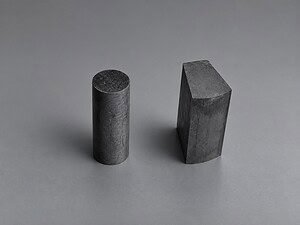
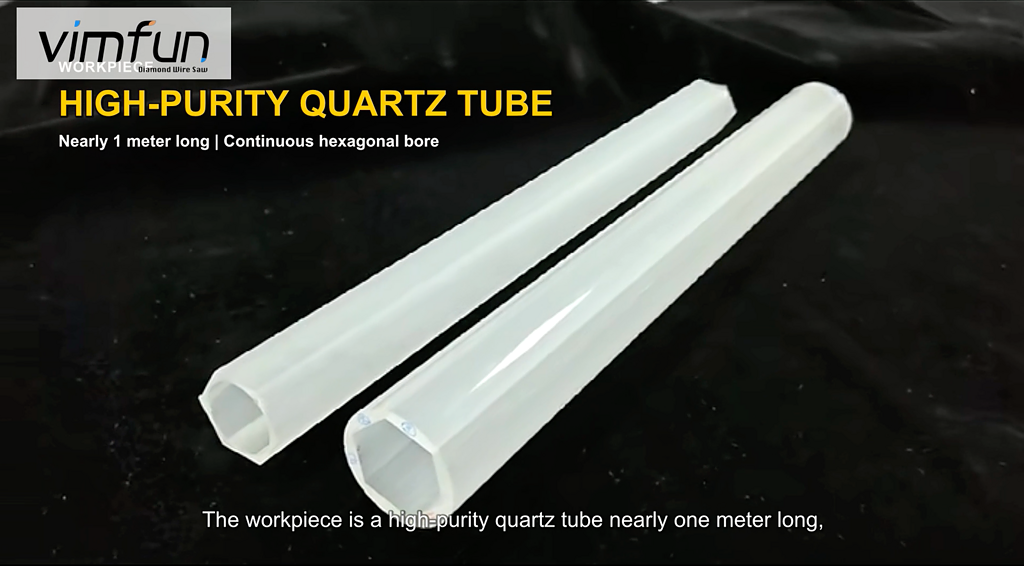
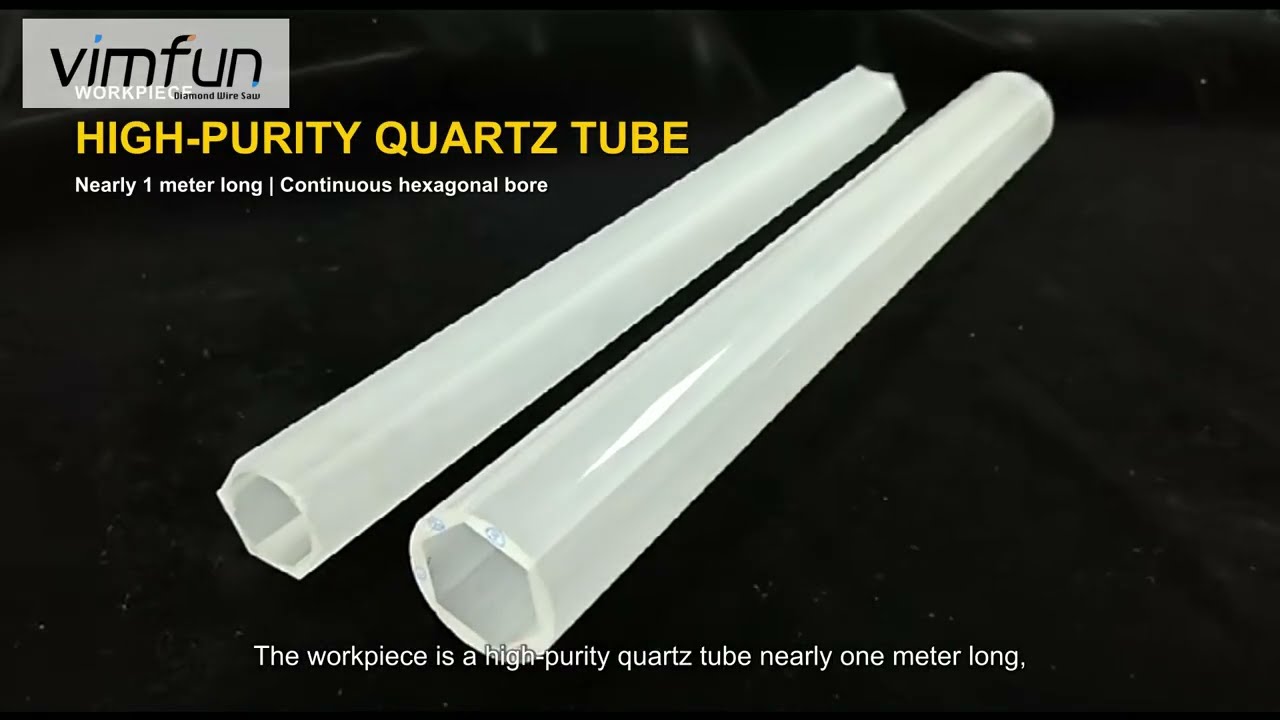
Un tubo de cuarzo de alta pureza, de casi un metro de largo. Un orificio hexagonal continuo que debe recorrer recto toda la longitud. Un material que se astilla y se microfractura ante el más mínimo esfuerzo mecánico.
A primera vista, esto parece un simple tubo de cuarzo. El orificio hexagonal lo cambia todo. El rectificado interno convencional no puede llegar al fondo de un tubo de cuarzo largo y quebradizo sin dejar bordes astillados y microfisuras, por lo que esta preforma se entregó al corte con hilo de diamante en su lugar.
La Aplicación: Orificios Hexagonales para Preformas de Fibra de Cristal Fotónico
La pieza de trabajo es un tubo de cuarzo largo y de alta pureza destinado a su uso en fibras ópticas especiales, fibras de núcleo hueco y fibras de cristal fotónico (PCF). Estas fibras avanzadas dependen de una geometría interna extremadamente precisa: matrices de orificios de aire y patrones de revestimiento estructurados que rigen cómo se propaga la luz a través de la fibra.
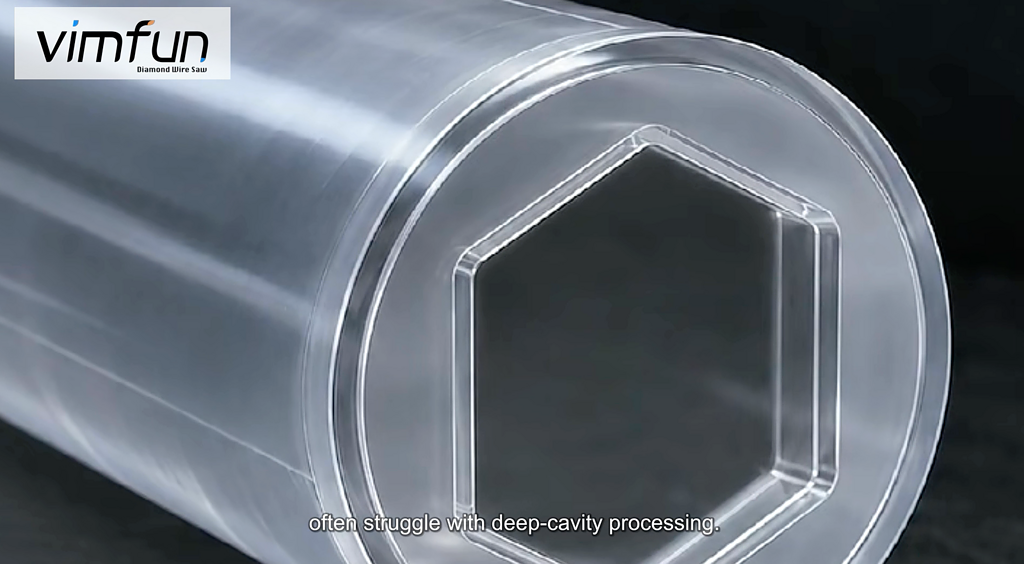
Un perfil interno hexagonal limpio, recto y continuo permite que la preforma se apile de manera predecible durante el posterior estirado de la fibra. La geometría hexagonal no es decorativa, está ahí porque la simetría de seis pliegues es la estructura de empaquetamiento natural para las matrices de orificios de aire utilizadas en muchos diseños de PCF. Cualquier variación en el perfil hexagonal a lo largo de la longitud del tubo se traduce en una variación en el rendimiento óptico de la fibra estirada.
El proceso de corte tiene que ofrecer dos cosas a la vez: geometría interna uniforme y integridad mecánica de una pieza de trabajo larga y quebradiza. Ambas a la vez. A lo largo de casi un metro de longitud. La mayoría de los enfoques de mecanizado interno no pueden hacer ambas cosas.
El Reto: Cavidad Profunda + Material Frágil + Pieza Larga
El reto aquí es no el cuarzo en sí. El corte de cuarzo en sierras de hilo de diamante está bien desarrollado — vea nuestro resumen de corte con sierra de hilo para el comportamiento general del material en cuarzo, cerámica y vidrio óptico.
El reto es la combinación:
| Restricción | Por qué es difícil |
|---|---|
| Agujero hexagonal (no redondo) | No se puede producir por perforación o mandrinado |
| ~1 metro de longitud | La deflexión de la herramienta se acumula con la profundidad |
| Agujero pasante continuo | Sin puntos de reinicio; el perfil debe ser consistente de extremo a extremo |
| Cuarzo frágil de alta pureza | Las microfisuras se inician fácilmente bajo fuerza lateral |
| Se requiere precisión dimensional | La tolerancia de hexágono plano a plano afecta directamente el trefilado de fibra |
| Minimización de daños | El daño subsuperficial degrada la transmisión de fibra |
Estas restricciones no luchan entre sí, sino que se multiplican. Un método que maneja bien dos de ellas aún puede fallar en la tercera.
Por qué los métodos convencionales alcanzan sus límites
Se prueban primero dos enfoques comunes, y ambos tienen modos de falla conocidos para esta geometría:
Rectificado interno y mecanizado abrasivo
Para cavidades internas profundas, la herramienta de rectificado tiene que ser pequeña (para caber), larga (para alcanzar) y rígida (para evitar la deflexión), tres propiedades que luchan entre sí. A medida que aumenta la profundidad de la cavidad, aparecen los límites prácticos:
- Deflexión de la herramienta — las herramientas de rectificado largas y delgadas se flexionan bajo la fuerza de corte, desviando los planos hexagonales fuera de plano
- Profundidad de mecanizado limitada — la evacuación de virutas y la entrega de refrigerante fallan más allá de cierta profundidad
- Edge chipping en las esquinas hexagonales donde se concentra el estrés
- Formación de microfisuras por la fuerza lateral acumulada, que puede propagarse durante el posterior estirado de la fibra
Enfoques alternativos que utilizan insertos o espaciadores
Algunas tiendas evitan por completo el corte interno profundo mediante el ensamblaje del perfil hexagonal a partir de piezas separadas: insertos, espaciadores, preformas segmentadas. Esto resuelve el problema de mecanizado pero crea otros nuevos:
- Complejidad adicional de ensamblaje
- Posible variación dimensional en las interfaces de unión
- Riesgo adicional de contaminación para aplicaciones de alta pureza
- Variabilidad introducida durante el posterior estirado de la fibra
Para las preformas de PCF de alta gama, ninguno de los caminos es ideal. El camino del rectificado interno es técnicamente posible pero con un rendimiento limitado. El camino del ensamblaje traslada el problema de la variación del mecanizado al estirado, que es el lugar equivocado para ponerlo.
El Enfoque: Corte de Precisión con Hilo de Diamante
VIMFUN cortó esta preforma con un proceso de hilo de diamante de corte estrecho y baja fuerza.
Por qué funciona el hilo de diamante aquí:
- La herramienta de corte es el propio alambre, no un eje largo y rígido, por lo que la longitud no agrava la deflexión como lo hace con las herramientas de rectificado
- La fuerza de corte se distribuye a lo largo del contacto del alambre, menor tensión mecánica por unidad de área que el mecanizado abrasivo
- Una trayectoria de alambre controlada y continua puede trazar el perfil hexagonal sin marcas de reinicio
- La misma configuración que maneja cortes redondos se puede configurar para geometrías no redondas con la sujeción adecuada
Para obtener información completa sobre la plataforma de corte, consulte nuestras páginas sobre Estructura de la sierra de hilo de diamante y lazo de hilo de diamante galvanizado — la arquitectura de alambre de bucle cerrado es lo que hace viable este tipo de corte de perfil profundo y continuo.
Parámetros del Proceso (Específicos del Caso)
| Parámetro | Valor |
|---|---|
| Pieza de Trabajo | Tubo de cuarzo de alta pureza, ~1000 mm de longitud |
| Diámetro exterior | Especificación del cliente |
| Dimensión plano a plano hexagonal | Especificación del cliente |
| Diámetro del hilo de diamante | 0.55–0.8 mm |
| Tipo de cable | Lazo de hilo de diamante galvanizado |
| Tensión del cable | 150–200 N |
| Velocidad del cable | 30–60 m/s |
| Velocidad de avance | 2–10 mm/min (extremo inferior del rango) |
| Refrigerante | aceite mineral blanco |
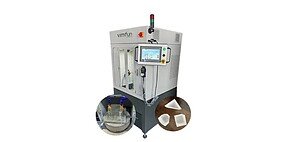
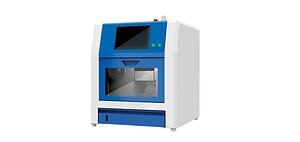
| Plataforma de máquina | Rotatorio horizontal (SH150-R / SH300-R para piezas de trabajo de metro completo) |
Los valores mostrados representan el envolvente de proceso estándar de VIMFUN para cuarzo de alta pureza, validado en múltiples ejecuciones de producción. Para esta preforma, la velocidad de alimentación se situó en el extremo inferior del rango, un compromiso deliberado por la estabilidad sobre la cavidad profunda. Ver velocidad del alambre, tensión y velocidad de alimentación y calibración de la tensión del cable para ver cómo interactúan estos parámetros.
El Resultado: Consistencia del Perfil en Toda la Longitud
El enfoque de alambre de diamante entregó las dos propiedades que la aplicación necesita simultáneamente:
- Consistencia del perfil a lo largo de toda la longitud de ~1 metro — las caras hexagonales permanecen en el mismo plano de extremo a extremo
- Daños materiales mínimos — reducción del astillado en las esquinas del hexágono, supresión de la iniciación de microfisuras, menor daño subsuperficial en comparación con el mecanizado abrasivo de cavidades profundas
- Sin costuras de ensamblaje — el orificio se produce como una única geometría continua, no apilada a partir de segmentos
Para la producción de preformas de PCF, esas tres propiedades se traducen directamente en un comportamiento de estirado de fibra más predecible y una menor variación en el rendimiento óptico de la fibra terminada. El cliente ya no arrastra la variación del paso de ensamblaje al horno de estirado.
Por qué el alambre de diamante funciona para perfiles internos profundos
Se reduce a cómo se aplica la fuerza a la pieza de trabajo. El rectificado abrasivo concentra la fuerza en una pequeña huella de la herramienta. El alambre de diamante distribuye la fuerza a lo largo de un elemento de corte flexible. Para materiales quebradizos en una cavidad profunda, esa única diferencia es lo que separa las microfisuras de los perfiles limpios.
Algunas otras cosas tienen que estar bien:
- Refrigeración y evacuación de virutas — adecuado refrigeración y lubricación mantiene la temperatura de la zona de corte estable en todo el metro, previniendo el agrietamiento inducido por estrés térmico
- Estabilidad de la tensión del alambre — la tensión uniforme a lo largo de una larga trayectoria de corte es lo que evita que las caras planas hexagonales se salgan del plano
- Velocidad de avance controlada — una baja velocidad de avance cambia el tiempo de ciclo por estabilidad; para materiales quebradizos y perfiles profundos, ese es el cambio correcto
Esto también funciona para cerámicas, vidrio óptico avanzado y cristales únicos, en cualquier lugar donde la distribución de la fuerza sea más importante que la rigidez de la herramienta. Los sobres de parámetros difieren. La mecánica subyacente no.
Industrias y aplicaciones
El corte con alambre de diamante para perfiles internos profundos sirve a los fabricantes en:
- Fotónica — PCF, fibra de núcleo hueco, preformas de fibra especial
- Producción de fibra óptica — conformado de preformas y control dimensional
- Materiales semiconductores — accesorios y componentes de cuarzo para el procesamiento de obleas
- Investigación avanzada — geometrías personalizadas para sistemas láser y entrega de haces
Si tiene una pieza de trabajo de cuarzo, cerámica o vidrio óptico con geometría interna a la que el mecanizado convencional no puede llegar limpiamente, se aplica el mismo enfoque. Para un caso relacionado en cerámicas con restricciones dimensionales estrictas, consulte nuestro estudio de caso de corte de anillos de cerámica de alúmina.
¿Podemos hacer esto para su aplicación?
Si alguna de estas opciones coincide con su aplicación, envíenos el dibujo de su pieza:
- Piezas de trabajo largas (> 500 mm) con perfiles internos
- Materiales frágiles (cuarzo, cerámicas avanzadas, vidrio óptico) que requieren cortes internos profundos
- Geometrías internas no circulares (hexagonales, cuadradas, formas personalizadas)
- Aplicaciones fotónicas, de semiconductores o de materiales avanzados donde el daño subsuperficial es una restricción
Envíenos el dibujo de su pieza de trabajo, incluyendo el material, la longitud, el perfil interno objetivo y los requisitos de tolerancia, y le devolveremos una evaluación de viabilidad del proceso en un plazo de 3 días hábiles. Cuando la geometría esté dentro de nuestro alcance, normalmente podemos ejecutar una pieza de muestra para su verificación antes de comprometernos con las herramientas de producción.
VIMFUN continúa apoyando a los fabricantes en las industrias fotónicas, de producción de fibra óptica, de materiales semiconductores y otras industrias de tecnología avanzada con soluciones de corte de alta precisión.