Introduction
In diamond wire saw cutting, Diamond wire tension is not simply a setup parameter—it is a dynamic control variable that directly influences cutting stability, surface integrity, and process repeatability. As cutting applications expand into advanced ceramics, optical glass, sapphire, and semiconductor materials, maintaining consistent wire behavior has become increasingly critical.
Traditional fixed mechanical tensioning methods, while simple, are often insufficient for modern precision cutting requirements. In contrast, closed-loop tension control systems provide active, real-time regulation of wire tension, enabling more stable cutting conditions under varying loads.
This article explains why closed-loop tension control is fundamentally superior from an engineering perspective, focusing on system behavior, vibration suppression, and process consistency rather than equipment branding or implementation details.
The Role of Wire Tension in Diamond Wire Saw Cutting
Wire tension determines how the cutting wire responds to mechanical and thermal loads during operation. From a mechanical standpoint, tension directly affects:
- Wire stiffness
- Natural vibration frequency
- Lateral displacement under cutting force
- Fatigue behavior over long cutting cycles
Inadequate or unstable tension allows excessive transverse vibration, while excessive tension increases the risk of premature wire failure. The challenge is not to maximize tension, but to maintain an optimal and stable tension throughout the entire cutting process.
Tension Stability Comparison: Fixed Mechanical vs. Dynamic Control
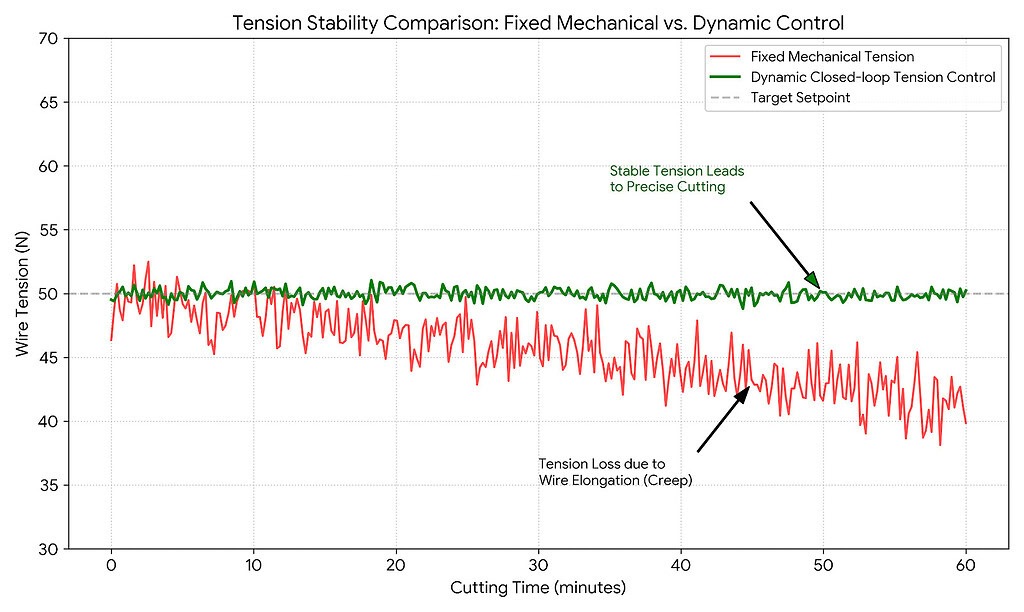
1. Diagram Analysis: Tension Stability Comparison
- Target Setpoint (Grey Dashed Line): Represents the ideal process target tension value.
- Fixed Mechanical Tension (Red Fluctuating Line): Illustrates the two primary flaws of traditional mechanical tension systems:
- Random Fluctuations: Tension instability caused by mechanical friction and response lag.
- Tension Drift: As cutting time progresses, the diamond wire elongates due to “creep.” Without feedback compensation, the actual tension continuously drops, resulting in reduced cutting precision.
- Dynamic Closed-loop Tension (Green Stable Line): Demonstrates the advantages of a closed-loop control system. It monitors tension in real-time and provides microsecond-level compensation, locking the tension near the target value to ensure cutting consistency.
Technical Comparison Table
| Feature | Fixed Mechanical Tension | Dynamic Closed-loop Tension |
| Stability | Experiences significant drift over time | Maintains high consistency throughout the process |
| Vibration Damping | Limited effect; highly susceptible to wire stretching | Excellent; consistently maintains optimal damping rigidity |
| Adaptability | Incapable of automatic adjustment to material variations | Real-time compensation for cutting load fluctuations |
| Wire Life | Vulnerable to impact loads, leading to breakage | Prolonged life by buffering peak tension levels |
Fixed Mechanical Tensioning: Inherent Limitations
How Fixed Tension Systems Work
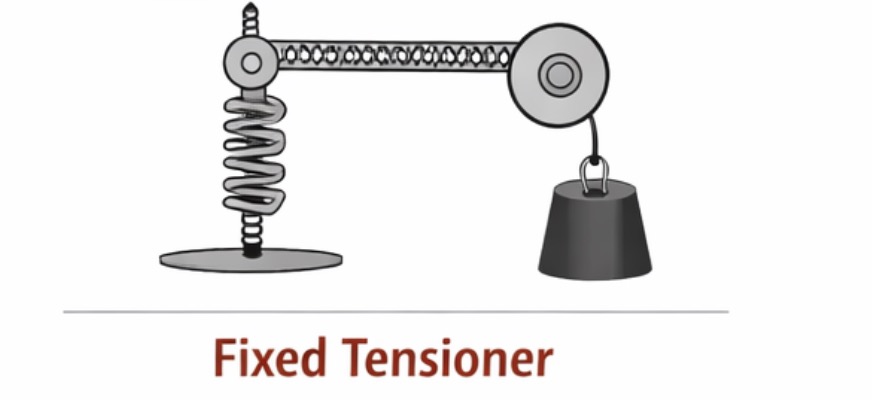
Fixed mechanical tensioning systems rely on static mechanisms such as springs, counterweights, or friction-based tensioners. The operator sets a nominal tension value before cutting begins, and the system applies this force passively.
Once cutting starts, the system does not actively respond to changes in cutting conditions.
Engineering Limitations of Fixed Tension
From a control theory perspective, fixed mechanical tensioning is an open-loop system. It lacks feedback and therefore cannot compensate for disturbances such as:
- Gradual wire diameter reduction due to wear
- Thermal expansion of the wire during prolonged cutting
- Variations in cutting force caused by material inhomogeneity
- Transient load changes during entry and exit phases
As a result, the actual wire tension experienced during cutting can deviate significantly from the intended setpoint, even if the initial setup is correct.
Closed-Loop Tension Control: Engineering Principles
What “Closed-Loop” Means in Practice
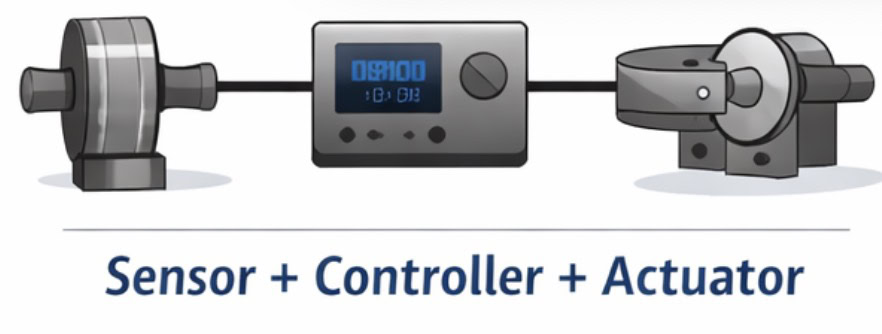
A closed-loop tension control system continuously measures actual wire tension using sensors and compares it to a target value. Any deviation triggers an immediate corrective response via an actuator, such as a servo-driven tensioning unit.
This feedback mechanism allows the system to actively maintain target tension, rather than passively assuming it remains constant.
From an engineering standpoint, this transforms tension control from a static setting into a real-time regulated process variable.
Compensation for Dynamic Cutting Loads
During cutting, the interaction between abrasive grains and the workpiece generates fluctuating forces. In brittle materials, these forces can vary rapidly due to microstructural differences or stress concentrations.
Closed-loop control compensates for these fluctuations by adjusting tension in response to measured deviations. This reduces the amplitude of wire vibration and stabilizes the cutting trajectory.
Impact on Wire Vibration and Process Stability
Vibration Suppression Through Tension Stability
Wire vibration is highly sensitive to tension variation. Even small changes in tension can shift the natural frequency of the wire, increasing susceptibility to resonance.
By maintaining consistent tension, closed-loop systems:
- Reduce transverse vibration amplitude
- Prevent excitation of unstable vibration modes
- Improve cutting consistency across the entire cut length
This is particularly important in long wire loops, where compliance and resonance effects are more pronounced.
Improved Cutting Repeatability
In industrial environments, repeatability is often more important than peak performance. Closed-loop tension control enables:
- More consistent kerf geometry
- Reduced surface waviness
- Stable cutting behavior across multiple workpieces
By minimizing tension drift, process results become less dependent on operator adjustments and environmental variations.
Influence on Surface Integrity and Material Quality
Surface integrity is a critical concern when cutting optical and semiconductor materials. Excessive wire vibration can introduce:
- Periodic surface waviness
- Subsurface microcracks
- Edge chipping and breakout
Because closed-loop tension control stabilizes wire motion, it directly contributes to improved surface quality. This reduces the need for downstream polishing or corrective processing and helps preserve material yield.
Effects on Wire Lifetime and Reliability
Wire breakage is often associated with localized overstressing caused by uneven tension distribution or sudden load spikes. Fixed tension systems cannot respond to these transient conditions.
Closed-loop systems mitigate this risk by distributing loads more evenly along the wire and avoiding abrupt tension peaks. Over long cutting cycles, this results in:
- Reduced fatigue accumulation
- More predictable wire life
- Lower risk of unexpected wire failure
From a maintenance and uptime perspective, this reliability improvement can be as important as cutting quality.
Integration With Other Process Controls
Closed-loop tension control is most effective when integrated with other process parameters, including:
- Feed rate regulation
- Wire speed control
- Cooling flow management
Together, these controls form a coordinated system that maintains cutting stability under a wide range of operating conditions. Tension control serves as a foundational element that supports the effectiveness of other process optimizations.
Conclusion
Closed-loop tension control is not an optional enhancement, but a fundamental requirement for stable, high-quality diamond wire saw cutting in modern applications. By actively maintaining consistent wire tension, closed-loop systems address the inherent variability of real-world cutting processes.
Compared with fixed mechanical tensioning, closed-loop control provides superior vibration suppression, improved surface integrity, enhanced repeatability, and greater operational reliability. As cutting applications continue to demand higher precision and tighter tolerances, the role of closed-loop tension control will only become more critical.