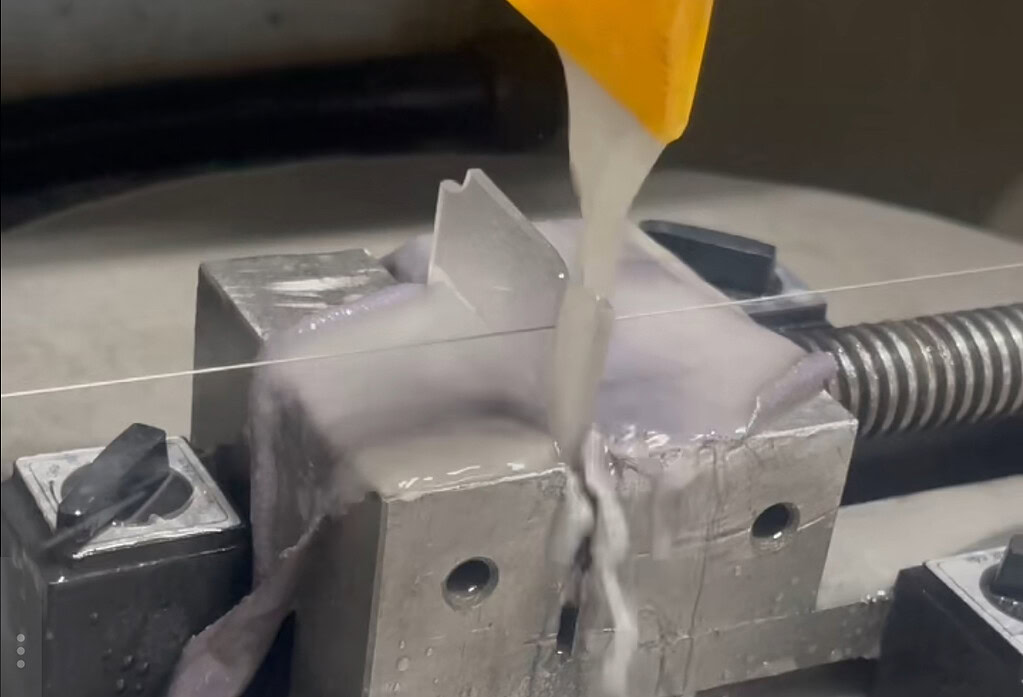
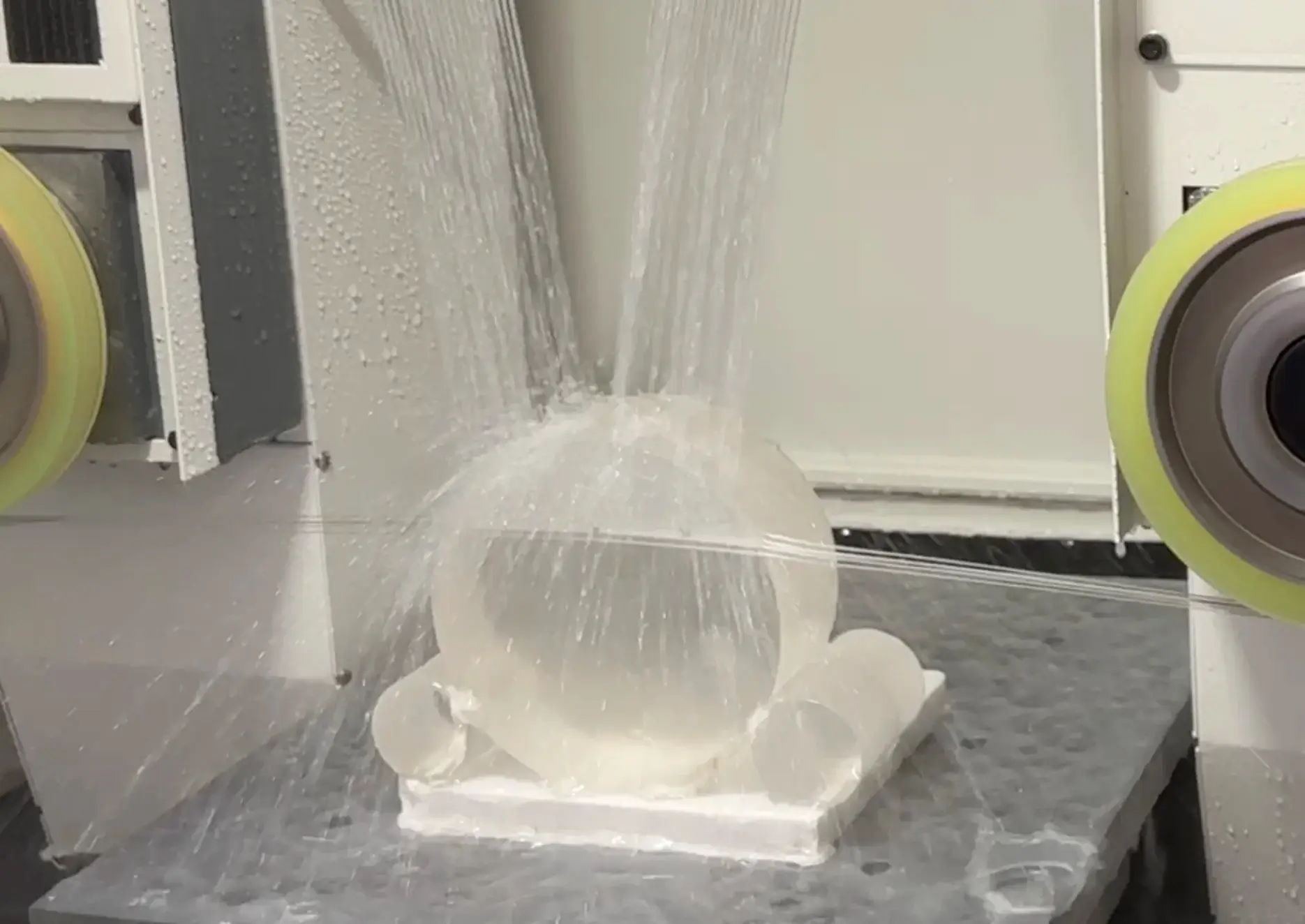
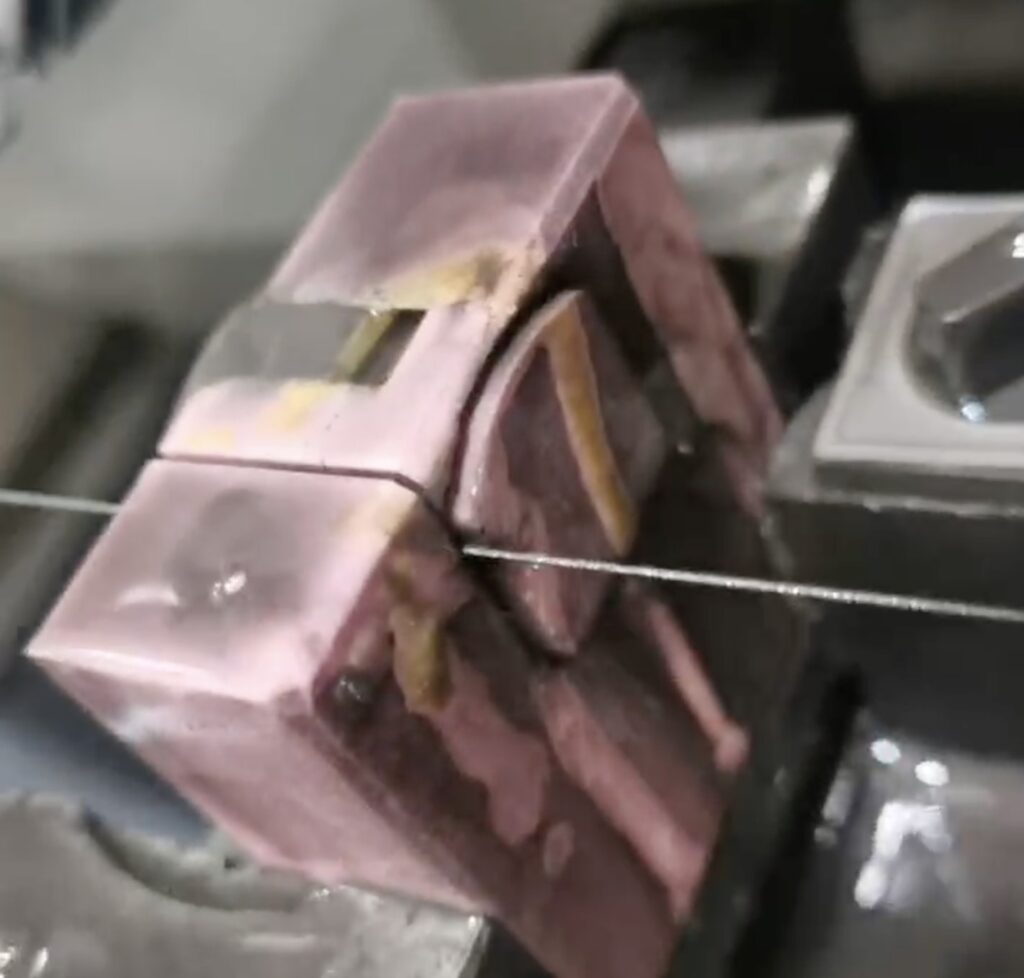
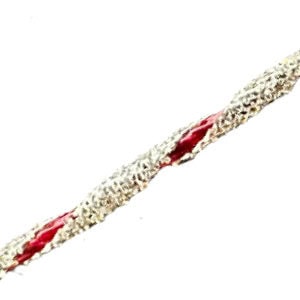
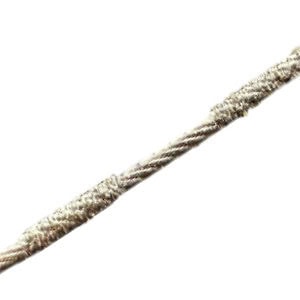
Diamond wire cutting is a precision machining method that uses a thin steel wire coated with industrial diamond abrasives to cut hard, brittle, and high-value materials. Instead of slicing through the workpiece like a saw blade, the diamond particles perform micro-abrasive cutting, removing material gradually and cleanly.
This technique is ideal for materials that are sensitive to heat, prone to chipping, or require extremely high dimensional accuracy.
Key characteristics:
Ultra-thin kerf (as low as 0.35 mm)
Low cutting force and low stress
No thermal damage or micro-cracks
Excellent surface finish
Compatible with almost all hard and brittle materials
How Cutting Diamond Wire Works?
Diamond wire cutting is fundamentally a combination of extremely sharp diamond abrasive particles and high-speed wire
1. Abrasive Micro-Cutting Mechanism
Each diamond grain on the wire acts like a microscopic cutting tool. As the wire moves at high speed, these grains chip away tiny amounts of material, forming a clean and narrow cut.
This is a cold cutting process, meaning:
No heat-affected zone (HAZ)
No melting or burning
No thermal stress or cracks
This makes it perfect for optical materials, ceramics, crystals, and composites.
2. Wire Linear Speed & Feed Speed
Wire Speed: Endless loop wires run at extremely high speeds, up to 80 m/s, ensuring sharp, fast cutting.
Feed Speed: Determined by material hardness. Examples:
Optical glass: ~10 mm/min
Graphite: much faster
Sapphire, ceramics: slower feed for best quality
Balancing wire speed and feed speed is essential for achieving optimal quality and throughput.
3. Tension Control
Proper tension keeps the wire:
Straight
Stable
Accurate
Sharp during cutting
Typical tension values for precision cutting:
0.4 mm wire → 120–130 N
0.5 mm wire → 130–140 N
Higher tension increases accuracy and speed, while lower tension reduces wire wear. Automatic tensioning systems ensure consistent performance throughout the cut.
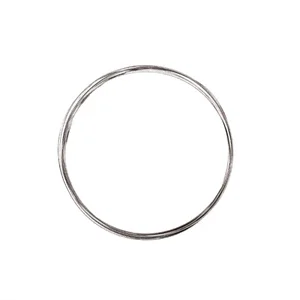
4. The Power of Endless (Loop) Diamond Wire
Traditional diamond wire is open-ended and must move back and forth. This creates several downsides.
Endless diamond wire solves these problems.
By joining the ends into a closed loop, the wire can run:
Continuously in one direction
At extremely high speeds—up to 80 m/s
With stable tension
With smoother, cleaner cutting results
This is the core principle behind modern high-precision diamond wire saws.
The Diamond Wire Cutting Process
1. Workpiece Mounting
The workpiece is fixed using clamps, fixtures, or adhesive. A flat base improves accuracy and reduces angle deviation.
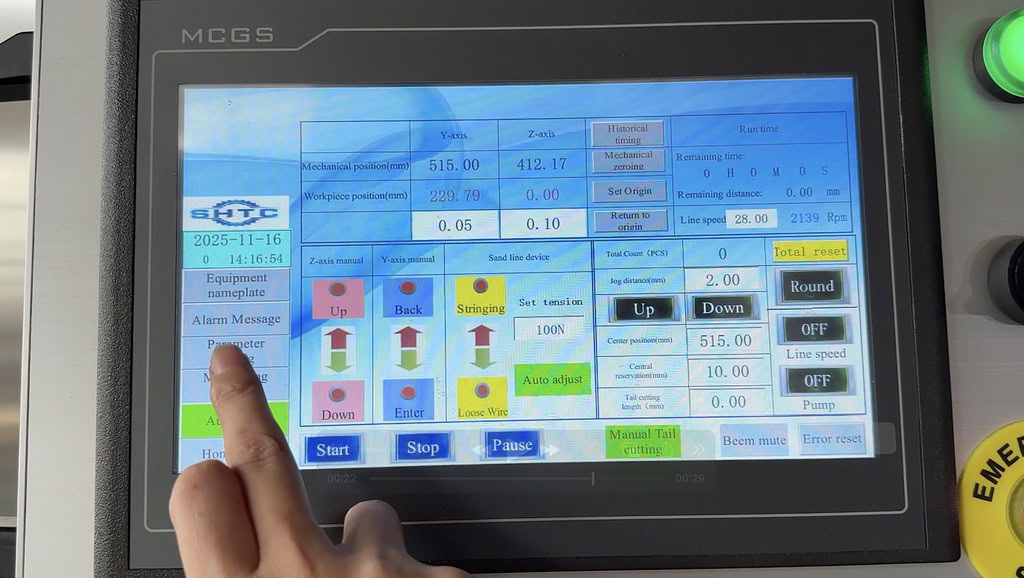
2. Setting Cutting Parameters
Operators configure:
Start position (X/Y/Z)
Cutting depth
Cutting thickness or slicing count
Wire speed
Feed speed
Tension (based on wire diameter)
These parameters directly affect surface finish, cutting time, and accuracy.
3. Cooling and Lubrication
Cooling fluid removes debris, reduces friction, and extends wire life. Recommended fluids:
White mineral oil
Industrial white oil
Both water-based and oil-based cooling are acceptable, depending on the application.
4. Cutting Execution
Once started:
The machine feeds the workpiece automatically
The wire moves continuously at high speed
Cooling circulates through the cutting zone
Sensors monitor wire movement
Modern machines include wire-break protection, which stops the machine instantly and prevents damage.
5. Completion and Reset
After finishing:
The wire stops
Axes return to origin
The operator removes the workpiece
Best practice: Release wire tension at shutdown to extend guide wheel lifetime.
What Materials Can Be Cut with Diamond Wire?
Diamond wire cutting is suitable for nearly all hard and brittle materials, including:
Optical glass
Sapphire
Silicon carbide (SiC)
Quartz
Ceramics (Al₂O₃, ZrO₂)
Graphite
Germanium crystals
Green ceramics
Composite materials
Diamond is the hardest known material, making it capable of cutting anything softer than itself.
Advantages of Diamond Wire Cutting
1. Ultra-Thin Kerf
The kerf width can be as narrow as 0.35 mm. This dramatically reduces material waste, especially for expensive optical or semiconductor materials.
2. High Precision
Diamond wire machines regularly achieve:
±0.03 – ±0.05 mm accuracy
Smooth, flat surfaces
Excellent parallelism and angle control
3. Superior Surface Quality
Very low wire marks
No reverse patterns (because the wire never reverses direction)
Minimal micro-cracking
Extremely clean, uniform surfaces
Continuous coating wires are especially effective for glass and optical applications.
4. Faster Cutting Speeds
Endless loop wires running at up to 80 m/s deliver:
Higher throughput
Shorter cycle times
Reduced processing cost
5. Longer Wire Life
Typical wire lifetime examples:
Graphite: ≈ 7 days (8 hours/day)
Optical glass: ≈ 3–4 days
Endless wire has lower wear because it avoids the stress of reversing.
Diamond Wire Cutting vs Other Cutting Methods
Method
Advantages of Diamond Wire
Slurry Wire Cutting
Cleaner process, simpler equipment, no slurry contamination
Blade Sawing
Thinner kerf, less chipping, better for brittle materials
Laser Cutting
No heat-affected zone, smoother edges, no burning
Common Issues of Diamond Wire Cutting
1. Wire Breaking
Typical causes:
Excessive wear
Too high tension
Too fast feed rate
Signs of wear:
Cutting time increases
Wire starts to bend slightly
Solutions:
Reduce feed speed
Increase tension slightly at the final stage
Replace worn guide wheels
2. Cutting Deviation
Usually caused by:
Wire bending
Excessive speed
Uneven workpiece mounting
Solutions:
Slow down feed
Stabilize tension
Ensure a flat mounting base
3. Poor Surface Finish
Improvement options:
Use a smaller wire diameter (0.3 mm)
Reduce feed speed
Use continuous diamond coating
Apply sufficient cooling
Vimfun Diamond Wire Saw
Who Uses Cutting Diamond Wire?
Diamond wire cutting is widely used where precision and material value are critical.
Semiconductors & electronics
Optical manufacturing
Sapphire substrate production
New energy materials
Graphite & carbon material machining
Ceramic & composite materials
Research labs & universities
Ready to Optimize Your Cutting Process?
✔ Need recommendations for your material?
Our engineers can suggest the best wire diameter, tension, and machine configuration.
✔ Want a test cut?
We provide free sample cutting to evaluate quality and efficiency.
✔ Interested in Endless Diamond Wire Saw technology?
Request specifications, catalogs, or a consultation with our application engineers.
Don’t worry! We know that obtaining cutting machines that meet your needs can be very challenging. Our professional cutting experts are always available to support you: