Why Continuous Wire Motion Is Gaining Attention in Manufacturing
Engineering Context
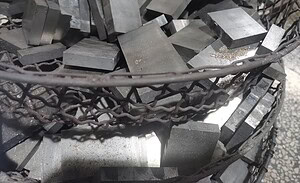
Cutting hard and brittle materials such as optical glass, sapphire, advanced ceramics, and silicon carbide remains a critical yet challenging step in many manufacturing processes.
Compared with ductile metals, these materials are far more sensitive to cutting-induced stress, vibration, and local force fluctuations. Even small variations during material removal can lead to surface defects, edge chipping, or dimensional inconsistency that must later be corrected through grinding or polishing.
As a result, manufacturing engineers increasingly evaluate cutting methods not only by throughput, but by process stability and repeatability.
Traditional Cutting Approaches and Their Limitations
Conventional cutting methods for hard and brittle materials often rely on tools that introduce direction changes or intermittent contact during the cutting process. Examples include blade-based slicing, grinding-assisted cutting, or other mechanically constrained tool paths.
While these approaches are widely used, they inherently involve:
- Changes in cutting direction or contact conditions
- Localized force concentration at the cutting interface
- Transient load fluctuations as the tool engages and disengages
From a manufacturing perspective, these behaviors can translate into:
- Variations in surface consistency
- Non-uniform kerf formation
- Increased sensitivity to setup and parameter drift
- Higher dependence on downstream finishing steps
When tighter tolerances and higher yield are required, these limitations become more pronounced.
Wire-Based Cutting as a Low-Stress Alternative
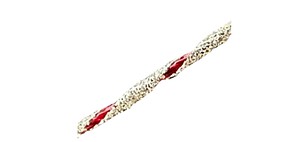
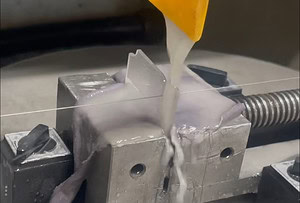
To reduce mechanical stress during cutting, wire-based cutting methods are commonly adopted for hard and brittle materials. Instead of relying on a rigid cutting edge, a thin abrasive wire removes material through controlled grinding action.
Key characteristics of wire-based cutting include:
- Lower cutting force compared to rigid blades
- Reduced stress concentration at the workpiece surface
- Improved adaptability to fragile or high-value materials
For many manufacturing applications, wire cutting provides a more forgiving process window than traditional rigid-tool cutting.
However, not all wire cutting methods behave the same during operation.
Why Wire Motion Behavior Matters
Beyond the choice of cutting medium, the motion behavior of the wire itself plays a significant role in process stability.
When cutting motion involves changes in direction or repeated acceleration and deceleration, the cutting interface experiences subtle but continuous disturbances. Over time, these disturbances can manifest as:
- Micro-vibration at the cutting zone
- Fluctuating contact pressure
- Variations in abrasive engagement
For brittle materials, even minor dynamic variations can influence surface quality and consistency.
This has led manufacturing teams to examine whether a more uniform and predictable wire motion could further stabilize the cutting process.
Continuous Single-Direction Wire Cutting: Process Overview
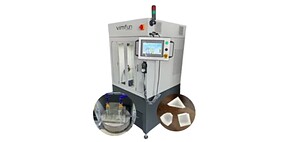
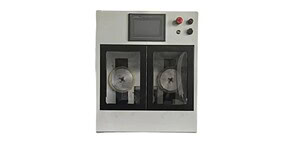
In continuous wire cutting, the abrasive wire forms a closed loop and runs continuously in a single direction throughout the cutting operation.
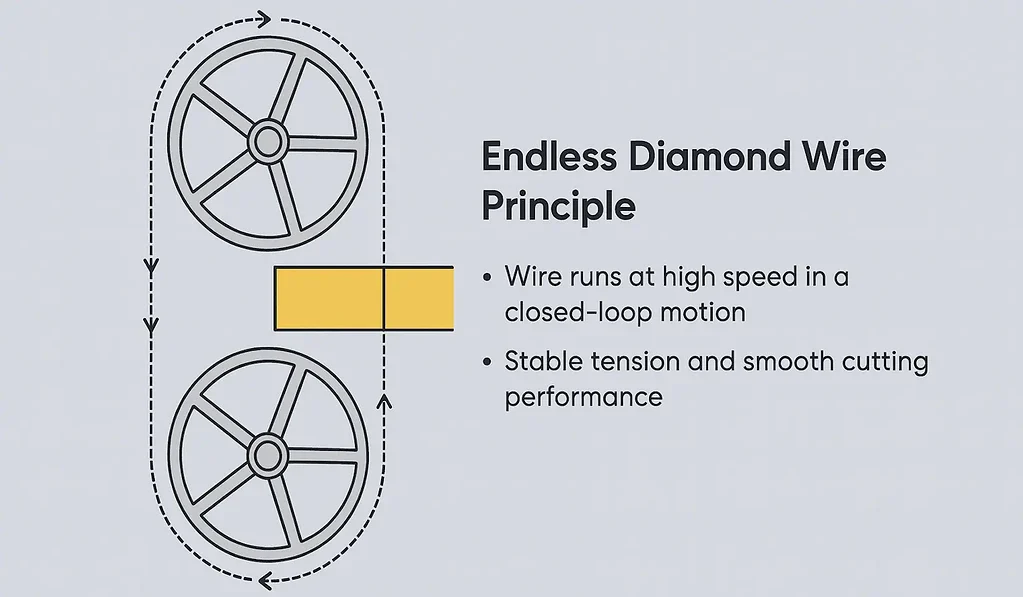
Unlike motion patterns that involve direction changes, continuous wire motion maintains:
- Constant linear speed through the cutting zone
- Stable tensile loading along the wire
- A consistent cutting interface between wire and material
From a kinematic standpoint, the cutting process becomes simpler and more predictable, with fewer transient events affecting the material removal behavior.
Manufacturing Benefits Observed in Practice
When applied to hard and brittle material cutting, continuous wire motion is commonly selected for its potential to:
- Reduce process variability during long cutting cycles
- Improve surface consistency across multiple parts
- Maintain a more uniform kerf geometry
- Minimize edge damage and micro-chipping
These benefits are particularly relevant in applications where repeatability and surface integrity are prioritized over peak cutting speed.
Typical use cases include precision slicing, optical component preparation, and advanced material processing where downstream finishing costs must be tightly controlled.
Engineering Considerations and Application Fit
Continuous wire cutting is not a universal replacement for all cutting methods. Its suitability depends on factors such as:
- Material hardness and brittleness
- Required surface quality
- Part geometry and size
- Production volume and takt time
For manufacturing engineers, the key takeaway is not that one method is categorically “better,” but that wire motion behavior is an important and often underappreciated process variable.
Understanding how continuous motion influences cutting stability can help guide more informed process selection and optimization.
Summary
In hard and brittle material manufacturing, cutting stability is increasingly critical to achieving consistent quality and predictable yield.
Wire-based cutting provides a low-stress alternative to traditional rigid-tool methods, and continuous single-direction wire motion further simplifies the cutting interface by eliminating direction-related disturbances.
By focusing on motion behavior rather than tool type alone, manufacturing teams can better evaluate cutting approaches that align with their process stability and quality objectives.