Introduction
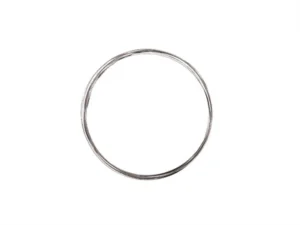
In the realm of precision subtractive manufacturing, the gap between a successful production run and a costly failure often lies in a single variable: the cutting tool. While modern endless diamond wire saws—like the Vimfun SG and SVI series—offer robust gantry structures and linear speeds exceeding 80 m/s, the machine is ultimately only as effective as the wire loop it drives.
Abrasive wire selection is not merely about choosing a diameter. It is a multi-dimensional engineering problem that involves balancing material hardness (Mohs scale), fracture toughness, required surface roughness (Ra), and economic yield (kerf loss). For a process engineer, selecting the wrong wire specification can lead to micro-cracking in Silicon Carbide (SiC) wafers, “bowing” in thick Sapphire blocks, or rapid abrasive stripping in Graphite machining.
This comprehensive guide breaks down the physics of abrasive wire selection, providing a structured methodology to match diamond grit size, core wire tensile strength, and coating technology to your specific application.
1. The Anatomy of Selection: Three Critical Variables
Before diving into specific materials, we must define the three configurable parameters of an endless diamond wire loop. Understanding the interplay between these variables is the first step in proper abrasive wire selection.
Variable A: The Core Wire Diameter (Tensile Foundation)
The steel core dictates the wire’s load-bearing capacity.
- The Trade-off: Thinner wires (0.30–0.45 mm) minimize material waste (kerf loss), which is vital for expensive materials like Germanium or NdFeB. However, thinner wires have lower tensile limits (typically 100–150 N), making them more susceptible to “bowing” or deflection during aggressive cuts.
- The Selection Rule: Always select the thickest wire that your kerf loss budget allows. For roughing or profiling cheap materials (e.g., Graphite), use 0.8 mm – 1.0 mm wires for maximum stability. For slicing semiconductor boules, 0.35 mm is the industry standard.
- Core wire strength, fatigue resistance, and electroplating consistency are determined during the fine cutting wire manufacturing process.
Variable B: Diamond Grit Size (The Cutting Teeth)
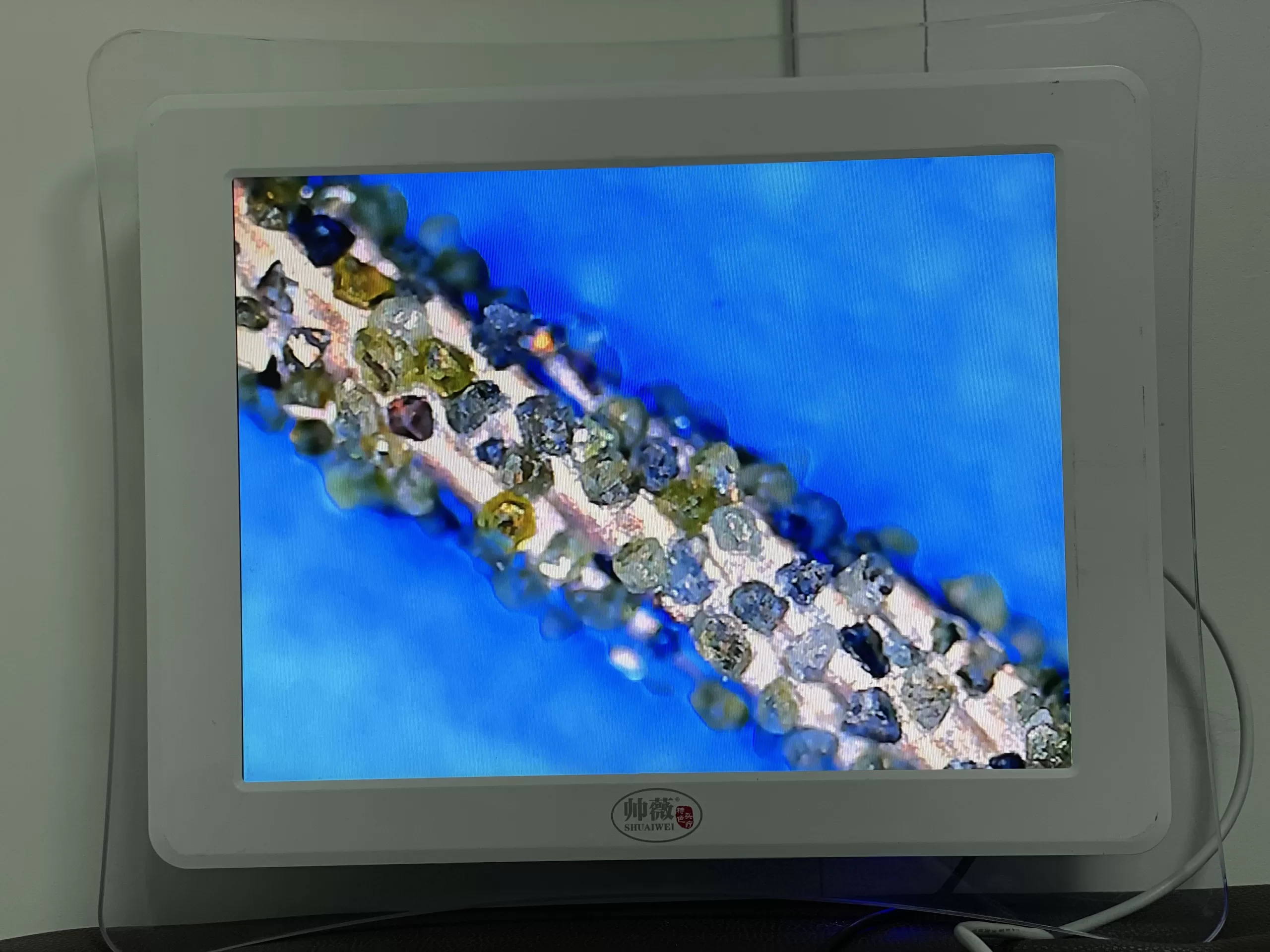
Grit size determines the “bite” of the wire and the resulting surface finish. It is measured in Mesh or Microns (e.g., D46, D64).A detailed engineering explanation of how diamond grit size influences cutting accuracy and subsurface damage is discussed in our grit size analysis.
- Coarse Grit (D126 – D181): High material removal rates (MRR) but rougher finish.
- Fine Grit (D46 – D64): Slower cutting but produces optical-grade surfaces (Ra ≤ 3.0 μm)1.
- The Vimfun Advantage: Our wires use polyhedral diamond particles (blocky shapes) rather than spherical ones. This ensures that even finer grits maintain aggressive cutting edges.
Variable C: Coating Technology (The Bond)
- Exposed Electroplating: The standard for endless loops. The diamonds protrude from the nickel matrix. This prevents “loading” (clogging) and reduces heat generation, enabling speeds of 80 m/s2.
- Resin/Impregnated: Rarely used in high-speed endless cutting due to poor heat dissipation at high velocities.
- The material composition and bonding behavior of electroplated coatings are analyzed in detail in our abrasive coating materials article.
2. Detailed Grit Size Selection Matrix
One of the most common questions in abrasive wire selection is: “What D-number should I use?” Below is a technical correlation table to guide your decision.
| Grit Designation (FEPA) | Approx. Mesh Size | Particle Size (microns) | Ideal Application Scenario | Expected Surface Finish (Ra) |
| D252 / D181 | 60/80 Mesh | ~180 – 250 μm | Roughing of soft stone, foam glass, or tire sections. | > 6.3 μm |
| D126 | 120/140 Mesh | ~120 μm | Fast cutting of Graphite, coarse Ceramics, and Marble. | ~ 3.2 – 6.3 μm |
| D91 | 170/200 Mesh | ~90 μm | General-purpose cutting for Glass and thick Ceramic plates. | ~ 1.6 – 3.2 μm |
| D64 | 230/270 Mesh | ~60 μm | Precision slicing of Sapphire, Quartz, and SiC. | ~ 0.8 – 1.6 μm |
| D46 | 325/400 Mesh | ~45 μm | Ultra-precision wafering (Silicon, InP). Minimal subsurface damage. | ≤ 0.8 μm |
Engineering Note: As you select a finer grit (e.g., moving from D126 to D64), you must typically increase the linear wire speed (e.g., from 40 m/s to 70 m/s) to maintain the same feed rate, as the chip load per particle decreases.
3. Material-Specific Selection Logic
Different materials fail differently under stress. Your abrasive wire selection must account for the material’s failure mode—whether it chips (brittle) or erodes (abrasive).
Scenario A: Semiconductor Materials (SiC, Silicon, GaN)
Challenge: Extreme hardness (SiC is Mohs 9.5) and high brittleness. The material is prone to micro-cracking and edge chipping.
- Wire Recommendation:
- Diameter: 0.35 mm – 0.45 mm3.
- Grit: D46 or D64.
- Why: A fine grit reduces the “impact force” of each individual diamond particle on the crystal lattice, preventing deep sub-surface cracks. The thin diameter reduces the total contact area, minimizing the normal force required to penetrate the material.
- Operational Note: Must run wet (Water-soluble coolant or Oil) to flush the sub-micron swarf.
Scenario B: Optical Components (Sapphire, Fused Silica, K9)
Challenge: Surface finish is paramount. Subsurface damage (SSD) must be minimized to reduce lapping/polishing time.
- Wire Recommendation:
- Diameter: 0.45 mm – 0.65 mm.
- Grit: D64 (Standard) or D46 (Premium).
- Why: Unlike semiconductors, optical blocks are often large (e.g., 200mm+ prisms). A slightly thicker wire (0.5 mm) provides better stiffness to prevent the cut from drifting over long distances, ensuring flatness.
- Speed: High velocity (60–80 m/s) is non-negotiable here to achieve the “grinding-like” finish4.
Scenario C: Graphite & Carbon Electrodes
Challenge: The material is soft (Mohs 1-2) but highly abrasive. It produces fine conductive dust that can clog coated wires.
- Wire Recommendation:
- Diameter: 0.8 mm – 1.0 mm5.
- Grit: D126 or D151 (Coarser).
- Why: Graphite does not require fine grit for a smooth finish because it is self-lubricating and homogenous. A coarser grit offers “chip clearance” room for the large volume of dust generated. A thicker core is selected purely for fatigue resistance against the abrasive wear.
- Environment: Dry Cutting is preferred. Select a wire with a robust nickel coating that resists dry heat.
Scenario D: Magnetic Materials (NdFeB)
Challenge: Expensive raw material; highly reactive to oxidation; brittle.
- Wire Recommendation:
- Diameter: 0.35 mm – 0.50 mm.
- Grit: D91 or D126.
- Why: Focus on yield (kerf loss). The grit can be aggressive because magnets are not as sensitive to micro-cracking as semiconductors, but the wire must be thin to save material.
4. The Impact of Tension on Selection
Abrasive wire selection is incomplete without considering the tensioning capability of your machine.
- Pneumatic vs. Servo Tension: Vimfun machines use pneumatic or servo tensioning systems to maintain constant tension (typically 100–250 N)6.
- The Breaking Point: Every wire has a breaking load. A 0.35mm wire may snap at 180 N, while a 0.8mm wire can withstand 400 N.
- Selection Advice: If your machine’s tension control is not precise (fluctuates >10%), do not select the thinnest wires (0.3mm). Stick to >0.5mm wires which have a higher safety margin against tension spikes.
5. Troubleshooting: Signs of Incorrect Selection
How do you know if you made the wrong abrasive wire selection? The process leaves clues.
- Wire Bowing (Belly Cut):
- Symptom: The cut is curved; the wire lags behind the guide wheels.
- Diagnosis: The wire diameter is too thin for the feed rate, or the diamond grit is too fine (dull) and cannot clear material fast enough.
- Fix: Switch to a coarser grit or reduce feed rate.
- Burn Marks on Material:
- Symptom: Discoloration on the cut surface (common in wood/composites) or thermal cracks in glass.
- Diagnosis: The wire is “loaded” (clogged). The grit spacing is too dense.
- Fix: Use a wire with “Exposed Grit” technology or lower diamond density to improve cooling flow.
- Rapid Diameter Loss (Stripping):
- Symptom: The wire cuts well for 1 hour then stops. The diamonds are gone.
- Diagnosis: The bond was too soft for the material (e.g., cutting SiC with a wire designed for graphite), or the core wire failed due to fatigue.
- Fix: Verify the plating hardness; ensure you are using High-Tensile core wire.
6. Economic Analysis: Cost vs. Performance
Engineering is also about economics. When validating your abrasive wire selection, consider the “Cost Per Cut” metric rather than just the wire price.
Cost Per Cut = (Wire Cost / Total Cut Area) + Kerf Loss Value
- Case Study: When cutting a 6-inch SiC ingot, a 0.35mm wire costs 20% more than a 0.5mm wire. However, the 0.35mm wire yields 2 extra wafers per ingot due to reduced kerf. The value of those 2 wafers ($1000+) far outweighs the extra wire cost ($50).
- Conclusion: For high-value materials, always select the thinnest possible wire. For low-value materials (graphite/stone), select the most durable (thicker) wire to minimize downtime.
Conclusion
Mastering abrasive wire selection transforms the diamond wire saw from a blunt instrument into a precision scalpel. The process requires a holistic view: matching the grit size (D46-D126) to the surface finish requirement, matching the wire diameter (0.35-1.0mm) to the material value and structural stability, and relying on exposed coating technology to manage the heat of 80 m/s operations.
Whether you are profiling dry graphite electrodes or wafering silicon carbide crystals, Vimfun offers a tailored loop specification to meet the challenge.
To discuss specific parameter settings for your selected wire, or to request a sample cutting test, please refer to our industrial applications page.
These selection principles are fundamental to the performance of industrial diamond wire systems used in precision cutting.
FAQ: Advanced Selection Queries
Q1: Can I use a Segmented Diamond Wire (Sintered) on Vimfun machines?
No. Vimfun machines are designed for Electroplated Endless Diamond Wire. Sintered/segmented wires are typically heavy, used for mining or large stone block squaring, and run at much lower speeds (~25 m/s). They cannot achieve the ±0.03 mm precision required for our applications.
Q2: How does the “Exposed Grit” affect the selection for soft materials?
For soft, gummy materials (like certain plastics or composites), exposed grit is crucial. Encapsulated wires will clog instantly. The exposed structure allows the debris to escape between the diamond peaks, preventing heat buildup.
Q3: What is the minimum breaking load for a 0.35mm wire?
A high-quality 0.35mm endless diamond wire typically has a breaking load of approximately 140-160 Newtons. We generally recommend setting the machine tension to 80-100 N to provide a safety factor.
Q4: Does wire length affect selection?
Yes. Longer loops (e.g., 4000mm vs 2000mm) dissipate heat better and have a longer total lifespan because each section of the wire engages with the material less frequently per minute. If your machine can accommodate a longer loop, it is always the superior choice for tool life.