Composite material wire cutting starts with the material structure, not just the machine. This guide explains how the matrix, reinforcement, lay-up and required cut affect wire selection, workholding and quality checks. Closed-loop diamond wire cutting is one option to evaluate for trimming or sectioning composite components; the process must be qualified on representative material.
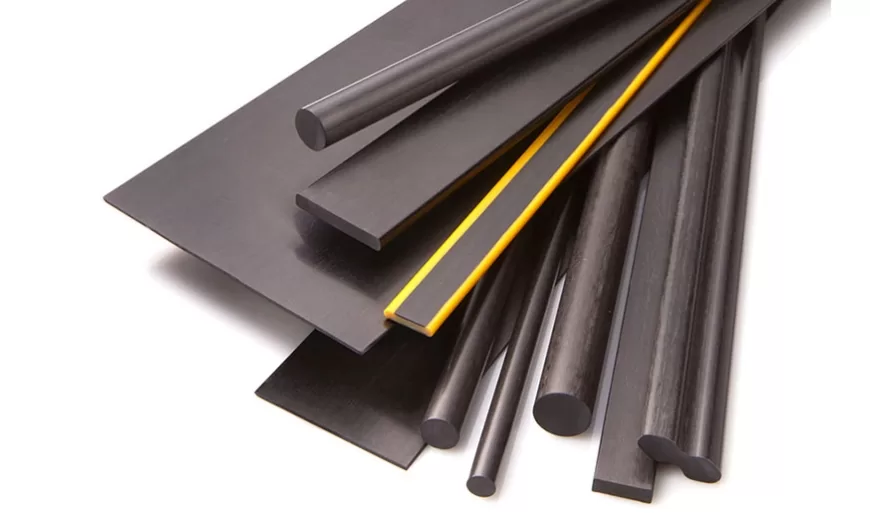
Table of Contents
The Crucial Role of Advanced Materials in Manufacturing
Advanced materials such as composite materials and high-performance alloys have always played a pivotal role in modern engineering. These materials are highly esteemed for their exceptional performance characteristics, but they pose unique challenges in their manufacturing and processing. Traditional machining methods often struggle to meet the demands for high precision, efficiency, and material preservation, driving the need for innovative machining techniques.
Identify the Composite Before Choosing a Cutting Process
Not all advanced materials are composites: a high-performance alloy is not automatically a metal-matrix composite. Identify both the matrix and the reinforcement before applying a cutting recipe.
| Material family | What to establish before cutting |
|---|---|
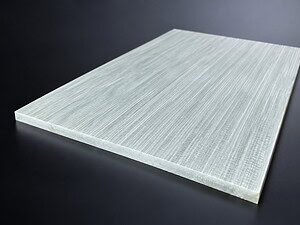
| CFRP and GFRP | Carbon- or glass-fibre reinforced polymer: record resin type, cure condition, fibre direction and laminate thickness. Inspect for delamination, uncut fibres and matrix damage. |
| Ceramic-matrix composites | Identify matrix, reinforcement and fibre architecture. Assess edge chipping, fibre pull-out and matrix cracking on the actual material. |
| Metal-matrix composites | Specify the metal matrix and reinforcing phase. Evaluate wire loading, wear, edge burrs and coolant compatibility; do not reuse polymer-composite settings. |
| Sandwich and hybrid structures | Record every layer, adhesive and core. Support thin skins and check interfaces for separation or core crushing. |
Delamination, Burrs and Thermal Damage: What to Check
A visually smooth edge is not enough. Inspect entry and exit edges for layer separation, fibre breakout or uncut fibres. For metal-containing composites, check burr formation as well. Examine the matrix and interfaces using a method agreed for the part.
Diamond wire sawing is abrasive rather than a thermal cutting process, but friction still generates heat. Do not promise zero thermal damage: resin softening or discoloration, wire loading and poor debris removal require investigation. Confirm whether coolant is compatible with the resin, adhesive and downstream process; if dry cutting is required, plan suitable dust extraction.
Published studies of unidirectional CFRP wire sawing and carbon-fibre/SiC composite wire sawing illustrate why fibre orientation and process conditions matter. Their results are not performance guarantees for the equipment shown here.
Limitations of Conventional Cutting Methods
Sawing, milling, grinding and other cutting methods can all be appropriate when matched to the composite and the required geometry. Compare them against the same drawing and acceptance criteria rather than assuming one process is always superior:
- Precision and Edge Condition: Fibre orientation, tool wear and workpiece support can affect dimensional accuracy, edge breakout and surface condition. Check both dimensions and damage on a representative cut.
- Material Waste: Compare measured kerf, trimming allowance and rejected parts. A narrow cutting tool does not automatically produce a narrower finished allowance if edge damage requires additional machining.
- Production Efficiency: Include fixturing, cutting, cleaning, inspection and finishing time when comparing processes. Cutting speed alone does not determine cost per accepted component.
The Revolution of Closed Diamond Wire Cutting Technology
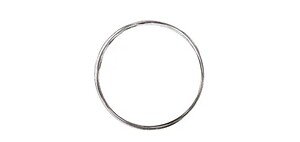
A closed diamond wire loop carries abrasive grains through the cut continuously. Its potential benefits should be evaluated against the composite structure and the selected machine configuration:
- Precise Material Cutting: Stable guiding, appropriate tension and supported workholding help control the cut path. Confirm achievable tolerances by measuring sample parts.
- Material Conservation: The innovative closed diamond wire cutting machines utilize thin wire profiles, minimizing material wastage. This is crucial when dealing with expensive high-performance materials as it reduces manufacturing costs.
- Enhanced Efficiency: Continuous wire motion can support a repeatable cutting cycle. Validate feed rate, wire life and handling time before estimating throughput.
- Surface Condition: Abrasive size, fibre orientation and wire condition influence the cut surface. Inspect roughness, fibre pull-out and matrix damage before reducing finishing allowances.
- Complex Geometries: Profile cutting depends on the machine axes, wire access and fixture clearance. A straight-cut setup cannot be assumed to produce every contour or closed internal feature.
- Diverse Applications: Different composite families require separate process evaluation. A successful cut in one laminate does not qualify a different matrix or reinforcement.
- Cost Efficiency: Evaluate wire consumption, yield, cycle time and finishing together to establish the actual cost per accepted part.
- Consistency: Record the approved setup and monitor wire wear and cut quality over repeated parts.
Applications of Closed Diamond Wire Cutting Technology in Material Processing
For equipment configurations, review the diamond wire saw guide. This article focuses on composite cutting requirements rather than a machine catalogue. Potential application areas include:
- Aerospace Industry: Composite panels and profiles may require trimming or sectioning. Qualification must address the drawing, laminate structure, allowable damage and traceability.
- Medical Sector: Specialized composite components require material compatibility, cleanliness and process validation. Cutting capability alone does not establish implant suitability or medical certification.
- Electronics Industry: Composite substrates and insulating components may require controlled sectioning. Check contamination restrictions, edge integrity and the need for subsequent finishing.
Future Outlook and Continuous Innovation
As technology continues to advance, closed diamond wire cutting technology will continue to evolve to meet growing manufacturing demands. Future innovations may include higher cutting speeds, increased precision, and broader material applicability. This will further enhance efficiency and sustainability in manufacturing, enabling us to harness the full potential of high-performance materials.
Wire Selection and Parameters to Confirm
Start with the material and drawing, then select a compatible wire and fixture. The table is a setup checklist, not a validated numeric recipe.
| Setup item | Selection and verification |
|---|---|
| Wire and abrasive | Confirm wire diameter, abrasive size and coating for the matrix and reinforcement. Measure actual kerf and inspect surface damage. |
| Wire speed | Stay within machine and wire ratings. Validate temperature, finish and wear rather than copying a speed from a different material. |
| Tension and feed | Set within approved limits; monitor wire deflection, cut deviation, vibration and entry/exit damage. |
| Fixture and orientation | Support both sides of the cut without crushing the laminate. Record fibre direction and the cut orientation. |
| Coolant or dry extraction | Check compatibility and debris removal. Inspect for wire loading and contamination, and include cleanup in cycle time. |
Review diamond wire loop options and the relationship between wire speed, tension and feed rate before agreeing on a sample-test setup.
Sample-Cut Acceptance Checklist
Use a sample with the production lay-up, thickness and cure condition. Record the cut orientation, fixture, wire specification and settings, then compare the result with the drawing:
- Measure dimensions, cut deviation and kerf using an agreed measurement method.
- Inspect both edges, the cut face and layer interfaces for damage.
- Record surface condition, finishing allowance and any cleaning requirement.
- Repeat cuts to assess consistency and wire wear; include handling and finishing in cycle time.
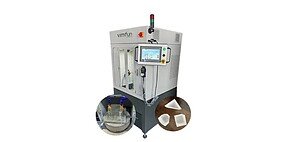
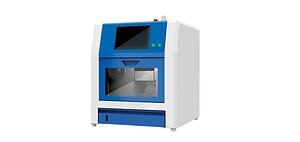
No measured sample results are claimed for the image on this page. Cutting tolerances, throughput and wire life remain subject to a documented test on your material.
Conclusion
Composite material wire cutting should be selected by matching the reinforcement and matrix to the cut geometry, fixture and acceptance criteria. Compare sample results with alternative processes using the same requirements for dimensions, surface condition, edge damage and production cost.
To assess a component, send the material grade, lay-up, dimensions, drawing and quality requirements with your sample cutting test request. Agree on the test method and measured results before finalizing a production setup.