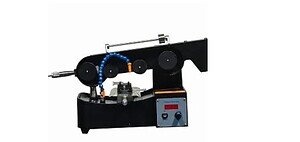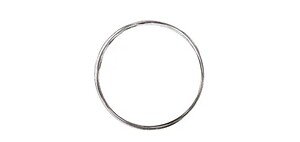
Circular diamond wire technology uses a closed abrasive loop that travels continuously around a controlled wheel path. The wire carries fixed diamond particles while the machine regulates speed, tension, feed and workpiece position. This creates a different process from a long spool-fed wire: the loop moves in one direction, returns through the machine and repeatedly passes through the cutting zone.
This article explains the technology rather than presenting a general product category. For available wire diameters, coating options and application matching, use the main diamond wire product and specification page.
What Is Circular Diamond Wire?
Circular diamond wire, also called an endless diamond wire loop, is a flexible cutting tool closed into a continuous path. Diamond abrasive fixed to the carrier wire removes material through many small grinding contacts. The loop itself does not define the final result: carrier construction, loop consistency, abrasive size, coating pattern, machine alignment and process settings all work together.
Wire Structure: Carrier, Abrasive and Bond
- Carrier wire: provides tensile support and flexibility as the loop bends around the drive and guide wheels.
- Diamond abrasive: creates the cutting contacts. Grain size and exposure affect removal behavior and surface condition.
- Bond or coating layer: holds abrasive on the carrier. Coverage pattern affects chip space, coolant access and cutting behavior.
- Loop closure: completes the circular path. Diameter consistency and flexibility through this zone are critical to stable running.
A smaller wire can reduce nominal material loss, but diameter alone does not determine kerf. Abrasive envelope, coating consistency, loop runout, tension, feed and machine vibration also contribute. Wire selection should therefore use the actual material and required result rather than a single catalogue value.
Three Circular Diamond Wire Coating Types
Vimfun applications commonly distinguish full-coated, half-coated and thread-coated wire structures. The following table is a practical selection guide; final wire diameter, abrasive and process settings should be confirmed through material testing.
| Coating type | Structural characteristic | Typical material or process fit | Примечание по выбору |
|---|---|---|---|
| Full-coated | Continuous abrasive coverage around the active wire surface | Hard and brittle materials such as glass, quartz, ceramics and silicon, commonly with water or coolant | Evaluate debris removal, coolant access, grain size and desired surface condition |
| Half-coated | Partial abrasive coverage that leaves additional clearance along the wire | Often evaluated for graphite and applications requiring more chip space | Confirm dry/wet method, dust collection and the graphite grade |
| Покрытие резьбой | Helical or thread-like abrasive path with open clearance between coated regions | Dusty materials and applications where water cannot be added | Match the open coating path to chip evacuation, dust control and edge requirements |
The three names describe coating layouts, not universal performance grades. A full-coated wire is not automatically the fastest, and a thread-coated wire is not automatically suitable for every dry process. Material grade, workpiece support and verified cutting results remain decisive.
Closed-Loop Motion and the Joint
The closed loop passes repeatedly through the same wheel path without the programmed forward-and-reverse cycle used by many reciprocating systems. Continuous one-direction motion can simplify the motion profile at the cut, but it also makes loop geometry and wheel alignment important. A loop with inconsistent circumference, local stiffness or runout can disturb tension and leave periodic marks.
Many loop-manufacturing routes include a closure or joining zone. It should not be described as automatically “joint-free.” The practical requirement is that this zone remains flexible, dimensionally consistent and compatible with the wheel diameter. Users should confirm loop construction with the supplier and inspect running behavior rather than relying on the word бесконечный alone. More product-specific information is available on the diamond wire loops page.
Wire Speed, Tension and Feed
Wire performance depends on a coordinated operating window. Increasing one parameter without considering the others can shorten wire life or reduce cut quality. The machine, wire and workpiece must be treated as one cutting system.
| Control variable | Primary role | If too low | If too high |
|---|---|---|---|
| Скорость движения проволоки | Sets abrasive contact frequency and debris transport | Low removal rate or unstable cutting behavior | More heat, wear, vibration or wheel demand |
| Натяжение | Stabilizes the wire path through the cut | Deflection, wandering or poor dimensional control | Higher load on the loop, joint, bearings and workpiece |
| Скорость подачи | Controls material engagement | Long cycle time and possible rubbing | Chipping, bow, overload or wire damage |
| Охлаждение или контроль пыли | Removes heat and cutting debris | Loading, contamination or unstable surface quality | Excess flow may disturb the process or complicate handling |
For a detailed parameter workflow, see скорость проволоки, натяжение и скорость подачи. Parameters should be transferred only after confirming material, wire construction, wheel path and workpiece dimensions.
Application Differences
| Material or application | Why circular wire may be evaluated | Вопрос к процессу для подтверждения |
|---|---|---|
| Кварц и оптическое стекло | Low thermal influence and controlled straight cutting | Chipping, coolant, flatness and required surface |
| Ceramics and sapphire | Fixed diamond abrasive for hard brittle materials | Material grade, internal stress, feed and support |
| Кремний и полупроводниковые материалы | Controlled kerf and low-force abrasive removal | Contamination limit, edge damage and cleaning |
| Графит | Dry-capable cutting structures can be considered | Coating type, dust extraction and graphite density |
| Garnet and gemstones | Small loops and compatible machines can support sample or profile work | Cracks, inclusions, fixture method and cut direction |
| Composite or advanced materials | Non-conductive workpieces can be processed mechanically | Layer behavior, delamination, abrasive loading and coolant permission |
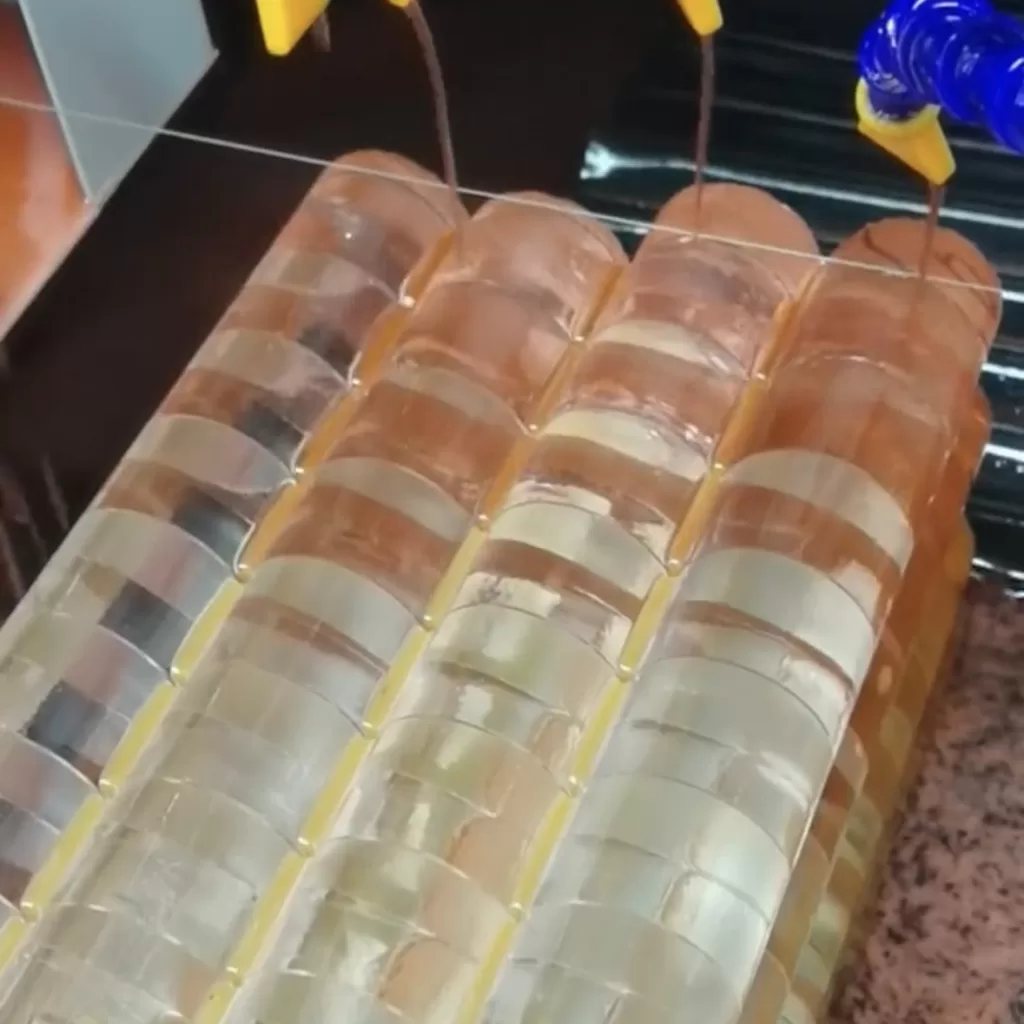
Application Video: Garnet Cutting
The following retained video shows a garnet cutting example. It demonstrates an application, not a universal parameter recommendation. Visible cracks, color zones and fixture conditions must be considered before selecting the cut path.
Practical Engineering Development
Useful development in circular diamond wire technology is less about fashionable labels and more about process consistency. Current engineering work typically focuses on stable loop circumference, controlled coating distribution, application-specific abrasive exposure, repeatable tension, improved wheel alignment and better monitoring of wire load and wear.
- Coating consistency: reduces local cutting variation around the loop.
- Application-specific wire structures: balance abrasive contact with coolant or chip clearance.
- Process monitoring: uses machine load, tension and cut behavior to identify an unstable operating window.
- Wet and dry process matching: adapts debris control to glass, ceramic, silicon, graphite or composite requirements.
Circular Diamond Wire Selection Checklist
- Record the material grade, dimensions, shape and internal defects.
- Define the cut path, depth, kerf allowance and required surface.
- Confirm whether water, coolant or dry dust collection is permitted.
- Match full, half or thread coating to debris behavior and process restrictions.
- Confirm loop circumference, wire diameter and machine wheel compatibility.
- Run a representative sample and record kerf, edge, flatness, surface, time and wire wear.
Часто задаваемые вопросы
Is circular diamond wire the same as spool diamond wire?
No. Circular wire is closed into a loop and travels around a continuous wheel path. Spool-fed systems manage a longer wire length between reels and may use different motion cycles.
Does an endless wire loop have no joint?
Loop construction depends on the manufacturing route. Many loops include a closure zone. The important criteria are flexibility, dimensional consistency and stable passage around the wheels.
Which coating is suitable for hard and brittle materials?
Full-coated wire is commonly evaluated for hard and brittle materials with water or coolant. Material grade, required surface, debris removal and sample results should confirm the final specification.
Which coating is suitable for dry, dusty cutting?
Thread-coated structures are often considered when open chip clearance and dry processing are important. Half-coated wire may also be evaluated for graphite. Dust extraction and material testing remain necessary.
Can one set of speed, tension and feed values work for every material?
No. The operating window changes with material, wire diameter, coating, loop length, wheel path, cut depth, coolant or dust control and acceptance criteria.
Заключение
Circular diamond wire technology combines a closed abrasive loop with controlled one-direction motion. Its performance comes from the complete system: carrier and abrasive structure, coating pattern, loop consistency, wheel alignment, tension, speed, feed and debris control. Full-coated, half-coated and thread-coated wires serve different material and process needs, so the correct option should be confirmed with the real workpiece and sample-cut evidence.