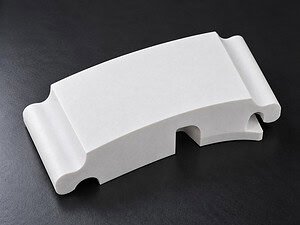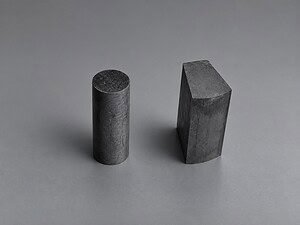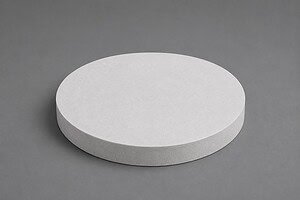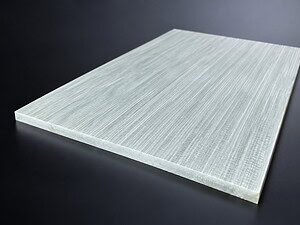
Choisissez le mauvais liquide de refroidissement pour la découpe d'aimants et vous le saurez en quelques heures. Sur le NdFeB, le liquide de refroidissement à base d'eau rend une surface fraîchement coupée grise avec de la corrosion de Nd(OH)₃. Sur la ferrite, le liquide de refroidissement à base d'huile crée un boue qui obstrue votre système de filtration sans aucun bénéfice — la ferrite ne se corrode pas dans l'eau. Et sur le SmCo, peu importe lequel vous utilisez, car le matériau résiste aux deux.
Nous avons effectué des milliers de travaux de découpe d'aimants sur nos scies à fil diamanté sans fin dans les trois familles de matériaux. Le choix du liquide de refroidissement pour la découpe d'aimants est la source la plus fréquente de défaillances de qualité évitables que nous constatons chez les nouveaux clients — et c'est la plus facile à corriger une fois que vous comprenez pourquoi chaque matériau réagit différemment.
Pourquoi le liquide de refroidissement est-il important lors de la découpe d'aimants ?
Le liquide de refroidissement dans la découpe au fil diamanté remplit quatre fonctions, et le classement par priorité varie en fonction du matériau :
Lubrification. Les grains de diamant sur le fil créent des frictions contre la pièce. Le liquide de refroidissement réduit cette friction, ce qui diminue la force de coupe, prolonge la durée de vie du fil et améliore l'état de surface. Les liquides de refroidissement à base d'huile ont une lubrification intrinsèquement meilleure que l'eau — la viscosité maintient un film mince entre le fil et la pièce même sous charge.
Dissipation de la chaleur. La découpe au fil diamanté génère moins de chaleur que le meulage ou la découpe à la lame, mais elle n'est pas nulle. La température localisée à chaque point de contact des grains peut atteindre momentanément 100–200 °C. Le liquide de refroidissement absorbe et évacue cette chaleur. L'eau a une capacité thermique massique environ 2 fois supérieure à celle de l'huile minérale (4,18 contre ~2,0 J/g·K), elle est donc objectivement meilleure pour le refroidissement. Pour la plupart des découpes d'aimants, cet avantage est académique — la génération de chaleur est suffisamment faible pour que l'un ou l'autre type fonctionne. Mais sur des sections transversales épaisses (au-dessus de 40 mm) à des vitesses d'avance plus élevées, le liquide de refroidissement à base d'eau maintient la zone de coupe sensiblement plus froide.
Évacuation des copeaux. Le fil entraîne le liquide de refroidissement dans la saignée de coupe, évacuant les particules de débris. Si les débris s'accumulent dans la saignée, les particules détachées sont re-coupées par le fil, rayant la surface coupée et accélérant l'usure du fil. Les liquides de refroidissement à faible viscosité (à base d'eau) évacuent plus efficacement à travers les saignées étroites. Les liquides de refroidissement à viscosité plus élevée (à base d'huile) transportent mieux les particules une fois qu'elles sont entraînées, mais pénètrent moins facilement dans les saignées étroites.
Protection de surface. C'est là que la chimie du matériau intervient. Sur les matériaux réactifs comme le NdFeB, le liquide de refroidissement doit empêcher l'oxydation de la surface fraîchement exposée pendant la coupe. Sur les matériaux chimiquement stables comme la ferrite et le SmCo, cette fonction est sans importance. Ce seul facteur — la protection de surface — est la raison pour laquelle la sélection du liquide de refroidissement dépend du matériau plutôt que d'être universelle.
Quel liquide de refroidissement pour la découpe d'aimants et quel matériau ?
Voici la matrice de décision que nous utilisons dans notre laboratoire d'application :
| Matériau | Liquide de refroidissement recommandé | Pourquoi | Pouvez-vous utiliser l'autre ? |
|---|---|---|---|
| NdFeB | À base d'huile (huile minérale blanche) | La phase de joint de grain riche en Nd réagit avec l'eau → corrosion | À base d'eau avec inhibiteur de corrosion (≥3%) possible mais risqué |
| Ferrite | À base d'eau | Chimiquement inerte à l'eau ; meilleur refroidissement et évacuation des copeaux | L'huile fonctionne mais crée des boues inutiles |
| SmCo | À base d'eau ou à base d'huile | Résistant à la corrosion ; l'un ou l'autre fonctionne | Flexibilité réelle — choisissez en fonction d'autres contraintes de processus |
Le tableau est simple, mais les conséquences d'une erreur ne le sont pas.
Que se passe-t-il lorsque vous utilisez un liquide de refroidissement à base d'eau sur du NdFeB ?
C'est l'erreur que nous constatons le plus souvent. Un atelier découpe la ferrite ou du silicium toute la journée avec un liquide de refroidissement à base d'eau, puis passe à un NdFeB travail sans changer le liquide de refroidissement. Les coupes semblent correctes à la sortie de la machine. Quatre heures plus tard, les surfaces coupées sont grises.
La chimie est simple. La phase riche en Nd (environ composition Nd₇₀Cu₃₀ à la limite du grain) réagit avec l'eau :
Nd + 3H₂O → Nd(OH)₃ + 1.5H₂↑
Cette réaction commence immédiatement sur les surfaces fraîchement exposées. Dans la première heure, une couche visible d'oxyde/hydroxyde se forme. En 24 heures, la corrosion pénètre le long des joints de grains à une profondeur de 5 à 20 μm, affaiblissant les liaisons intergranulaires. Les pièces qui semblaient parfaites après la coupe deviennent crayeuses et fragiles.
Le gaz hydrogène libéré par la réaction crée un autre problème facile à manquer. Dans un système de refroidissement fermé, des bulles d'hydrogène s'accumulent dans la zone de coupe, perturbant le film de liquide de refroidissement et créant des conditions de coupe à sec momentanées. Nous avons observé cela sur l'un de nos bancs d'essai : des pics intermittents de rugosité de surface que nous ne pouvions pas expliquer jusqu'à ce que nous remarquions de minuscules bulles dans la saignée. Le passage à l'huile a résolu le problème.
Si vous devez absolument utiliser un liquide de refroidissement à base d'eau sur le NdFeB (certains établissements l'exigent pour des raisons de sécurité incendie ou de conformité environnementale), ajoutez un inhibiteur de corrosion à une concentration minimale de 3%. Les inhibiteurs à base de nitrite de sodium fonctionnent, mais vérifiez la compatibilité avec votre chimie de placage en aval — certaines lignes de placage sont sensibles aux résidus de nitrite. Et déplacez les pièces coupées vers un revêtement d'huile ou un séchage dans les 30 minutes. Plus longtemps, c'est prendre un risque.
Pourquoi le liquide de refroidissement à base d'huile est la norme pour le NdFeB
L'huile minérale blanche (parfois appelée paraffine liquide ou huile de coupe) est le choix par défaut pour la coupe de NdFeB au fil diamanté car elle résout complètement le problème de corrosion. Le film d'huile exclut l'eau et l'oxygène de la surface fraîchement coupée, et la couche d'huile résiduelle sur les pièces coupées offre une protection temporaire contre la corrosion pendant la manipulation et le stockage.
Spécifications typiques pour l'huile de coupe pour NdFeB :
| Propriété | Plage typique | Notes |
|---|---|---|
| Viscosité (40 °C) | 5–15 mm²/s | Viscosité plus faible pour une meilleure pénétration de la saignée |
| Point d'éclair | >150 °C | Marge de sécurité pour un fonctionnement continu |
| Teneur en eau | <0.1% | Critique — même une trace d'eau cause des problèmes |
| Ensemble d'additifs | Anti-rouille, anti-mousse | Additifs standard pour huile de coupe |
Le débit est plus important que la viscosité. Sur nos SG20-R machines, nous faisons circuler l'huile à un débit de 2 à 4 L/min, dirigé vers le point d'entrée du fil dans la saignée. L'objectif est un film d'huile continu des deux côtés du fil tout au long de la coupe. Si vous voyez des zones sèches sur la surface de coupe après le passage du fil — visibles sous forme de taches mates par rapport aux zones brillantes mouillées par l'huile — augmentez le débit ou ajustez la position de la buse.
Une chose que nous avons apprise à nos dépens : le liquide de refroidissement à base d'huile se dégrade avec le temps. Pendant la coupe, de fines particules de NdFeB s'accumulent dans l'huile. Ces particules sont inférieures à 10 μm et ne se déposent pas facilement. Après 2 à 3 semaines d'utilisation continue, la charge de particules augmente la viscosité, réduit l'efficacité du refroidissement et crée un film granuleux qui accélère l'usure du fil. Nous changeons maintenant l'huile toutes les 2 semaines sur les machines à forte utilisation et filtrons en continu à travers un filtre à cartouche de 5 μm pendant le fonctionnement.
Peut-on utiliser un liquide de refroidissement à base d'eau sur la ferrite et le SmCo ?
Oui — et dans la plupart des cas, vous devriez.
La ferrite (SrFe₁₂O₁₉ / BaFe₁₂O₁₉) est un oxyde céramique. Elle est déjà complètement oxydée. L'eau ne lui fait rien chimiquement. Utiliser de l'huile sur la ferrite c'est comme mettre de la crème solaire sur un rocher — techniquement inoffensif mais inutile, et cela crée des problèmes de nettoyage dont vous n'avez pas besoin.
Avantages du liquide de refroidissement à base d'eau pour la coupe de ferrite :
- Meilleure dissipation de la chaleur (capacité thermique massique plus élevée)
- Évacuation des copeaux plus efficace (une viscosité plus faible pénètre mieux dans la saignée étroite)
- Nettoyage plus facile — les débris de ferrite se lavent à l'eau ; les débris à base d'huile collent à tout
- Coût de consommation plus bas — le concentré de liquide de coupe hydrosoluble coûte environ 15 à 30 $/gallon à des taux de dilution typiques de 5 à 10 %, contre 30 à 60 $/gallon pour l'huile de coupe dédiée
- Avantages environnementaux et d'élimination — les déchets de liquide à base d'eau sont plus simples à traiter et à éliminer conformément aux directives de l'EPA
SmCo est également résistant à la corrosion, donc le liquide de refroidissement à base d'eau fonctionne bien. Le seul scénario où nous utilisons de l'huile sur le SmCo est lorsque la même machine est prévue pour un travail sur NdFeB immédiatement après — il est plus rapide de rester sur l'huile que de rincer et de changer deux fois.

Comment gérer le liquide de refroidissement lors de la coupe de plusieurs matériaux magnétiques
C'est le véritable défi du liquide de refroidissement pour la coupe d'aimants. La plupart des ateliers qui coupent des aimants traitent plus d'une famille de matériaux. La question est de savoir comment gérer les transitions de liquide de refroidissement.
Scénario 1 : Machines dédiées par matériau. Si vous avez des machines séparées pour le NdFeB et la ferrite/SmCo, gardez l'huile sur la machine NdFeB et l'eau sur les autres. Simple, aucun changement nécessaire.
Scénario 2 : Une machine, plusieurs matériaux. C'est là que ça se complique.
La séquence sûre est la suivante : ferrite/SmCo d'abord (à base d'eau) → rinçage → NdFeB (à base d'huile).
Aller dans ce sens fonctionne car une petite quantité d'huile résiduelle dans un système à base d'eau a un effet minime sur la qualité de coupe de la ferrite. Mais une petite quantité d'eau résiduelle dans un système à base d'huile attaquera les surfaces de NdFeB.
La procédure de rinçage que nous recommandons :
- Videz le liquide de refroidissement à base d'eau du réservoir
- Faites passer 1 à 2 litres d'huile dans le système pour déplacer l'eau des conduites et des buses
- Essuyez la zone de travail, les roues de guidage et toutes les surfaces où des gouttelettes d'eau pourraient persister
- Remplir d'huile de coupe neuve
- Faire fonctionner la pompe pendant 2 minutes avant de charger la pièce NdFeB
Aller dans le sens inverse (huile NdFeB → eau ferrite) est moins risqué mais nécessite toujours un rinçage. Les résidus d'huile dans le liquide de refroidissement à base d'eau provoquent de la mousse, réduisent l'efficacité du refroidissement et peuvent créer un film sur la surface de coupe en ferrite qui interfère avec les processus de collage en aval.
Avertissement : nous avons eu des clients qui ont sauté le rinçage “ juste cette fois ” en passant de l'eau à l'huile. Trois fois sur cinq, cela se passe bien — la surface NdFeB absorbe juste assez d'huile des premières secondes de coupe pour se protéger. Deux fois sur cinq, l'eau résiduelle dans les conduites entre en contact avec la surface de coupe avant que le film d'huile ne s'établisse, et vous obtenez des points de corrosion. Cela ne vaut pas le coup de prendre ce risque sur des pièces de production.
La température du liquide de refroidissement pour la coupe d'aimants est-elle importante ?
Un brevet de TDK Corporation (US6386948) aborde spécifiquement le contrôle de la température du liquide de refroidissement pour la coupe d'aimants, recommandant 20–35 °C pour des résultats optimaux. D'après notre expérience, la température du liquide de refroidissement est un facteur secondaire pour la coupe d'aimants au fil diamanté — moins important que le type de liquide de refroidissement, le débit et la propreté.
Cela dit, il existe des scénarios où la température est importante :
Opérations estivales dans des ateliers non climatisés. Si la température ambiante fait monter le liquide de refroidissement au-dessus de 35 °C, la viscosité de l'huile diminue et le film lubrifiant s'amincit. Nous avons constaté une augmentation mesurable du taux d'usure du fil pendant les mois d'été dans les ateliers sans refroidissement. Un simple refroidisseur de réservoir ($500–1000) résout ce problème.
Démarrage à froid en hiver. La viscosité de l'huile augmente à basse température, réduisant le débit à travers les buses de liquide de refroidissement étroites. Si votre machine reste overnight dans un atelier non chauffé à 5 °C, les 10 premières minutes de coupe peuvent avoir un débit de liquide de refroidissement inadéquat. Faites fonctionner la pompe pendant 5 minutes avant de commencer la coupe pour réchauffer l'huile par circulation.
Production à haut volume. Les machines fonctionnant plus de 16 heures par jour avec un liquide de refroidissement à l'huile voient une augmentation progressive de la température due à l'énergie de coupe et à la chaleur de la pompe. Si elles ne sont pas contrôlées, les températures peuvent atteindre 45 à 50 °C à la fin du quart de travail. À ce stade, l'efficacité du refroidissement est sensiblement dégradée. Un refroidisseur à recirculation maintenant 25 ± 3 °C est standard pour les environnements de production.
Pour le liquide de refroidissement à base d'eau, la température est moins problématique car la capacité thermique élevée de l'eau s'autorégule mieux. Mais si vous êtes dans un environnement froid, vérifiez que votre concentré à base d'eau ne perd pas son efficacité d'inhibiteur de corrosion à basse température — certaines formulations nécessitent un minimum de 15 °C pour maintenir une protection complète.
Filtration du liquide de refroidissement : plus importante que ce que la plupart des gens pensent
La propreté du liquide de refroidissement pour la coupe de magnétite affecte directement trois choses : la durée de vie du fil, la qualité de surface et la longévité du liquide de refroidissement. Pourtant, la filtration est le composant le plus souvent sous-spécifié dans les configurations de coupe de magnétite.
Les copeaux de coupe de magnétite sont fins — généralement des particules de 1 à 20 μm. Ces particules restent en suspension dans le liquide de refroidissement et sont recirculées dans la zone de coupe. Lorsqu'elles passent entre le fil de diamant et la pièce, elles agissent comme un abrasif libre, créant des rayures aléatoires sur la surface coupée et accélérant l'usure du grain de diamant.
Pour les systèmes à base d'huile (NdFeB) :
Les copeaux de NdFeB sont métalliques et contiennent du fer, donc la séparation magnétique peut sembler logique. Mais rappelez-vous — les ébauches ne sont pas magnétisées pendant la coupe, et les copeaux sont trop fins pour que la plupart des séparateurs magnétiques les capturent efficacement. Nous recommandons une approche combinée : un pré-filtre à tamis grossier (50 μm) pour capturer les grosses particules et les fragments de fil, suivi d'un filtre à cartouche (5–10 μm) pour les copeaux fins. Changez le filtre à cartouche chaque semaine sur les machines à forte utilisation.
Un problème spécifique au NdFeB : les copeaux réagissent lentement avec l'humidité dans l'huile, générant de l'hydrogène gazeux. Dans un réservoir de liquide de refroidissement scellé, ce gaz s'accumule. Nous avons eu un cas où un réservoir scellé s'est suffisamment pressurisé pour faire sauter le couvercle — pas dangereux, mais surprenant et salissant. Utilisez un réservoir ventilé ou installez une valve de respiration.
Pour les systèmes à base d'eau (ferrite/SmCo) :
Les copeaux de ferrite sont céramiques et se déposent plus rapidement que les copeaux métalliques de NdFeB. Un réservoir de décantation avec des déflecteurs fonctionne bien comme première étape. Suivez avec un filtre à bande papier ou un filtre à poche à 10–25 μm. Les systèmes à base d'eau nécessitent une surveillance plus fréquente de la croissance biologique — les bactéries et les algues prospèrent dans le fluide de coupe chaud et riche en nutriments. Ajoutez un biocide selon les recommandations du fabricant du fluide, et vérifiez le pH chaque semaine (cible 8,5–9,5 pour la plupart des fluides de coupe hydrosolubles).
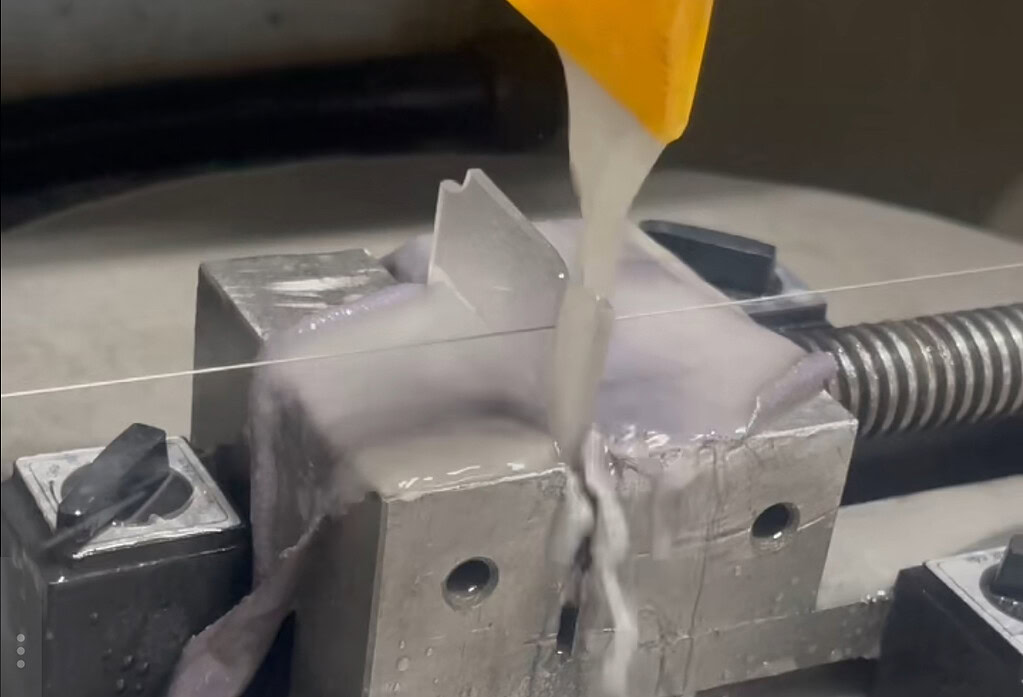
Problèmes et solutions pour le liquide de refroidissement de coupe de magnétite
Surfaces NdFeB grises ou décolorées : Contamination par l'eau dans le liquide de refroidissement à l'huile. Vérifiez les fuites dans le système de liquide de refroidissement, la condensation dans le réservoir (courante dans les environnements humides) et l'eau résiduelle d'une précédente opération de coupe de ferrite. Vidangez, rincez et remplissez avec de l'huile fraîche.
Moussage dans le liquide de refroidissement à base d'eau : Généralement causé par une contamination par l'huile d'une précédente opération de coupe de NdFeB, ou par l'utilisation d'une concentration trop élevée de fluide hydrosoluble. Réduisez la concentration à la plage recommandée par le fabricant (typiquement 5–8 %). Ajoutez un agent antimousse si nécessaire.
Augmentation de la rugosité de surface au fil du temps sans autres changements de paramètres : Contamination du liquide de refroidissement par des copeaux. Vérifiez l'état du filtre et la charge de particules du liquide de refroidissement. Si le liquide de refroidissement semble plus foncé que le liquide neuf, il est temps de le changer.
Odeur du liquide de refroidissement (à base d'eau) : Croissance bactérienne. Le liquide est devenu rance. Vidangez, nettoyez le réservoir avec un désinfectant et remplissez. Cela se produit plus rapidement dans les environnements chauds et lorsque les machines restent inactives pendant les week-ends avec un liquide stagnant. Faire fonctionner la pompe pendant 15 minutes par jour, même sur des machines inactives, aide.
Durée de vie du fil plus courte que prévu : Souvent lié au liquide de refroidissement. Vérifiez le débit (le liquide de refroidissement atteint-il réellement la zone de coupe ?), la propreté (la charge de copeaux est-elle élevée ?) et la concentration (pour ceux à base d'eau, est-elle trop diluée ?). Nous avons vu des clients blâmer le fil alors que le véritable problème était une buse obstruée réduisant le débit de liquide de refroidissement de 80 %.
Recommandations pratiques pour la configuration du liquide de refroidissement pour la coupe d'aimants
Pour un atelier qui débute dans les opérations de coupe d'aimants, voici ce que nous suggérons :
Atelier uniquement NdFeB : Système de liquide de refroidissement à base d'huile. Huile minérale blanche, viscosité 5–15 cSt à 40 °C. Filtration par cartouche de 5 μm. Réservoir ventilé. Changez l'huile toutes les 2 semaines ou lorsque la charge de particules augmente visiblement. Budget d'environ 200–400 €/an en huile consommable pour une seule SG20-R machine fonctionnant 8 heures/jour.
Atelier uniquement ferrite : Liquide de refroidissement à base d'eau. Fluide de coupe hydrosoluble de qualité à une concentration de 5–8 %. Filtration par bande de papier ou sac à 10–25 μm. Biocide selon les recommandations. Surveillez le pH chaque semaine. Budget d'environ 100–200 €/an en concentré de fluide.
Atelier matériaux mixtes : Décidez si vous allez utiliser des machines dédiées ou gérer les changements. Pour des volumes inférieurs à 20 heures/semaine au total, une seule machine avec changement est généralement économique. Au-delà, dédiez des machines. Gardez une liste de contrôle des changements écrite — la seule fois où quelqu'un saute une étape est la fois où les pièces NdFeB se corrodent.
Nous proposons découpe d'essai gratuite où nous pouvons démontrer la configuration du liquide de refroidissement pour votre matériau spécifique — envoyez-nous des échantillons et nous les couperons avec votre type de liquide de refroidissement préféré afin que vous puissiez évaluer à la fois la qualité de coupe et l'état de surface après coupe.